The history of Hertha BSC
Milestones and background from the club's history, in chronological order.
Categories
Competitions
Nicknames through the years Three names tell a story of near misses, late goals and an unbeaten season. Read the storiesClose the stories
1890–1899
Berliner Fußball-Club Hertha 1892 founded
Fritz and Max Lindner and Otto and Willi Lorenz found Berliner Fußball-Club Hertha 1892. The club takes its name from the excursion boat Hertha and adopts blue and white.
The four founders were still minors. Ernst Wisch, an uncle of the Lindner brothers, became chairman and registered the club.
1920–1929
Merger with Berliner Sport-Club
After losing the Schebera ground, Hertha merges with Berliner Sport-Club in 1923. Its football section plays as Hertha BSC at Gesundbrunnen.
The former Schebera ground lay north of Behmstrasse. The new Stadion am Gesundbrunnen was built on a separate site to the south.
A first German championship final
Hertha beat Hamburger SV 4–2 in the semi-final at the Deutsches Stadion to reach their first German championship final. Four further finals follow before the first title in 1930.
Second championship final ends in defeat
In Berlin, Hertha lose the German championship final 0–2 to 1. FC Nürnberg. It is the second of four consecutive final defeats.


1930–1939
First German championship
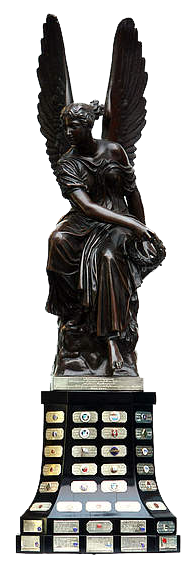
Hertha beat Holstein Kiel 5–4 in a high-scoring final at Düsseldorf’s Rheinstadion. Hans Ruch scores the late winner.
Hertha had lost four consecutive finals. The late 5–4 against Kiel brought the Viktoria trophy to Berlin at the fifth attempt.
Hertha reconstitutes as an independent club
After separating from Berliner Sport-Club, Hertha BSC reconstitutes as an independent association and retains its playing rights at Gesundbrunnen.
The separation from Berliner Sport-Club involved organisational reconstitution, not a mere spelling change.
Second championship against 1860 Munich
Hertha retain the German championship with a 3–2 win over 1860 Munich at Cologne’s original Müngersdorfer Stadion.
This was Hertha’s sixth consecutive final. Four defeats from 1926 to 1929 were followed by the titles of 1930 and 1931.


1940–1949
Post-war break in club organisation
Allied authorities dissolve the coordinated sports clubs. Hertha players temporarily compete with SG Gesundbrunnen, a separate sporting organisation rather than a mere alternative spelling of Hertha BSC.
Hertha players and footballers from Norden-Nordwest competed together as SG Gesundbrunnen in the post-war period.
Return to the Hertha BSC name
Following the post-war years under SG Gesundbrunnen, the football side resumes playing under the Hertha BSC name.
1960–1969
The Berlin Wall divides supporters from the club
The building of the Berlin Wall prevents many East Berlin supporters from attending matches at the Plumpe. Hertha must adapt to life in a divided city.
The loss of East Berlin spectators hit the club at Gesundbrunnen especially hard. The ground’s proximity to the sector border shaped everyday life.
Bundesliga debut at the Olympiastadion
As a founding Bundesliga member, Hertha play their first league match against 1. FC Nürnberg at the Olympiastadion. It ends 1–1.
More than 50,000 spectators watched the 1–1 draw. Helmut Schimmöller scored Hertha’s first Bundesliga goal from the penalty spot.
Forced relegation over payment breaches
The DFB federal court confirms forced relegation over prohibited player payments. Hertha must enter the Regionalliga despite staying up on the pitch.
The first ruling came on May 18, 1965. The DFB federal court decision on June 20 finally confirmed the exclusion.
Bundesliga attendance record against Cologne
A crowd of 88,075 watches Hertha beat 1. FC Köln 1–0 at the Olympiastadion, setting the Bundesliga attendance record.


1970–1979
Nine goals against Borussia Dortmund
Hertha beat Borussia Dortmund 9–1 at the Olympiastadion. The club’s biggest Bundesliga win is closely associated with Wolfgang Gayer, who scores four goals.
The Bundesliga bribery scandal reaches Hertha
Hertha lose 0–1 to Arminia Bielefeld. The match becomes part of the Bundesliga match-fixing scandal; numerous Hertha players are later sanctioned for accepting bribes.
Farewell to the Plumpe
Hertha win the last match played at Stadion am Gesundbrunnen 2–1 against Royal Antwerp. Selling the site helps the club through a financial crisis.
A larger farewell match against 1. FC Nürnberg planned for October was cancelled due to heavy rain. The Antwerp friendly remained the final game.
Bundesliga runners-up
Hertha finish the 1974/75 season second, their best Bundesliga position. This is a season summary rather than a title decided in a single final.
Cup final lost in the replay
 1. FC Köln1:1a.e.t.
 Hertha BSCDFB-Pokal Original match · May 28, 1977 · Location: Hannover Stadium: Niedersachsenstadion Neutral venue
After the first final ends 1–1 after extra time, Hertha lose the replay 0–1 to 1. FC Köln. Both matches take place at Niedersachsenstadion.
The final was replayed two days after the initial 1–1. From the following cup season, a penalty shoot-out replaced replays after draws.
UEFA Cup semi-final exit to Red Star
Hertha win the UEFA Cup semi-final return leg 2–1 against Red Star Belgrade. After losing the first leg 0–1, they go out on away goals.
Even a 2–0 lead in the Berlin return leg was not enough once Belgrade scored. Hertha had lost the first leg 0–1.
Second DFB-Pokal final lost
At Niedersachsenstadion, Hertha lose 0–1 after extra time to Fortuna Düsseldorf. It is the senior side’s second lost cup final.


1980–1989
Relegation to amateur football
In 1986 Hertha drop from the 2. Bundesliga into the then third-tier Oberliga Berlin. Two seasons in amateur football follow.
A football afternoon after the fall of the Wall
Two days after the Berlin Wall opens, Hertha draw 1–1 with SG Wattenscheid 09 at the Olympiastadion. Supporters from East and West celebrate together.
The second-division match took place less than 48 hours after the Berlin Wall opened. Many visitors came to the Olympiastadion from East Berlin.


1990–1999
Hertha and Union reunite on the pitch
Weeks after the Berlin Wall falls, Hertha and Union Berlin meet in a friendly at the Olympiastadion. Hertha win 2–1 as tens of thousands from both halves of the city celebrate together.
Return to the Bundesliga
A 1–1 draw away to Alemannia Aachen secures Hertha’s Bundesliga promotion. The DFB dates the match May 2; a club retrospective gives May 1 instead.
The DFB fixture record gives May 2 as the match date; a Hertha retrospective gives May 1. The match card follows the DFB data centre.
A sold-out second-division showdown
A sold-out Olympiastadion crowd of 75,000 watches Hertha beat 1. FC Kaiserslautern 2–0. It strengthens the promotion bid; promotion itself is secured in May at Unterhaching.
Promotion secured at Unterhaching
A 2–1 win at SpVgg Unterhaching mathematically secures Hertha’s Bundesliga promotion on second-division matchday 31. Mainz and Stuttgarter Kickers had dropped points beforehand.
Ante Čović scored in the first half and Michel Dinzey soon after the break. Unterhaching’s reply did not prevent early promotion.
Chelsea beaten in Berlin
Hertha beat Chelsea FC 2–1 in the first Champions League group stage, an early high point of their debut campaign.
Wosz beats AC Milan
In Hertha’s first Champions League season, Dariusz Wosz scores the winner in a 1–0 victory over AC Milan at a sold-out Olympiastadion.
Dariusz Wosz capitalised on a Milan defensive error for the only goal. Hertha led their first-round group after four matches.
The fog match against Barcelona
Dense fog envelops Hertha’s Champions League match against FC Barcelona at the Olympiastadion. After falling behind early, Hertha earn a 1–1 draw.
A red ball was used in the second half because of poor visibility. Even then the dense fog made the match unusually difficult to follow.


2000–2009
First League Cup triumph
Hertha beat Schalke 04 by 4–1 at Mannheim’s Carl-Benz-Stadion to win the League Cup for the first time.
The final took place in Mannheim. A Schalke own goal and goals by Marcelinho, Alex Alves and Michael Hartmann settled it.
Four Goor goals in a 6–0 win over Hamburg
Bart Goor scores four times as Hertha beat Hamburger SV 6–0. The home win is among the most striking attacking performances of the club’s Bundesliga years.
League Cup title retained
Hertha beat Schalke 04 by 4–1 again, this time at Bochum’s Ruhrstadion, retaining the League Cup.
The final was played at Bochum’s Ruhrstadion. Hertha thus won consecutive League Cup finals against the same opponent by the same score.
Voronin fires Hertha to the top
Andriy Voronin scores twice as Hertha beat Bayern Munich 2–1 at home. The result is a high point of the club’s 2008/09 campaign.

2010–2019
Immediate promotion at Duisburg
A 1–0 win away to MSV Duisburg confirms Hertha’s return to the Bundesliga with three matchdays remaining.
2. Bundesliga title secured
A 2–0 win away to Erzgebirge Aue secures the 2010/11 second-division title. Bundesliga promotion had already been confirmed two matchdays earlier.
Adrián Ramos scored early and Rob Friend added a second before half-time. This match secured the title; the later trophy presentation was not the deciding match.
The Hertha flag returns as the crest
The free-standing blue-and-white flag returns to the shirt for the 2012/13 season. In November 2012, Hertha announces that it will replace the circular club badge across the organisation from the following season. In May 2014, the free-standing flag is explicitly written into the statutes as the official club crest.
Pitch invasion and relegation in Düsseldorf
1:2Bundesliga relegation play-off First leg · May 10, 2012 · Location: Berlin Stadium: Olympiastadion Berlin2:2Bundesliga relegation play-off Second leg · May 15, 2012 · Location: Düsseldorf Stadium: ESPRIT arenaRaffael equalises at 2–2 in the relegation play-off return leg at Fortuna Düsseldorf. Düsseldorf supporters invade the pitch before the final whistle. After a roughly 20-minute interruption, referee Wolfgang Stark has the final 90 seconds played. The draw, following a 1–2 first-leg defeat, relegates Hertha.
Änis Ben-Hatira (22nd minute) and Raffael (85th) cancel out Düsseldorf leads. Earlier interruptions caused by pyrotechnics from the Hertha section lead to seven minutes of added time. A whistle after the ball goes out for a goal kick is mistaken for the final whistle, and Fortuna supporters run onto the pitch. The teams and referee retreat to the dressing rooms. After the pitch is cleared, Stark resumes play for about a minute and a half. The DFB sports court rejects Hertha’s protest against the result on May 21, and the DFB federal court rejects its appeal on May 25. The 2–2 stands: Düsseldorf go up and Hertha go down.
First home promotion at the Olympiastadion
Pierre-Michel Lasogga’s late goal in a 1–0 win against SV Sandhausen secures promotion with four matchdays left. For the first time, Hertha celebrate promotion at the Olympiastadion.
Lasogga scored in the 86th minute. With four matches left, the teams outside the promotion places could no longer close the gap.
Back in the cup semi-final after 35 years
Hertha win the DFB-Pokal quarter-final 3–2 away to 1. FC Heidenheim. The senior team reach the competition’s last four for the first time in 35 years.
The dream of a home cup final ends
Hertha lose the DFB-Pokal semi-final 0–3 to Borussia Dortmund at the Olympiastadion. Their chance to contest the final at their home ground is gone.
First win over Bayern in nine years
Hertha beat Bayern Munich 2–0 at the Olympiastadion, their first competitive victory over the Bavarians since February 2009.
First all-Berlin Bundesliga derby
Hertha play Union Berlin in the clubs’ first Bundesliga derby. The match at the Alte Försterei ends in a 0–1 defeat for Hertha.




2020–2029
Derby victory behind closed doors
In their first Berlin home match after the pandemic suspension, Hertha beat Union 4–0. COVID restrictions keep spectators out of the Olympiastadion.
Survival in the relegation play-off
Hertha BSC0:1 Hamburger SVBundesliga relegation play-off First leg · May 19, 2022 · Location: Berlin Stadium: Olympiastadion BerlinHamburger SV0:2Hertha BSCBundesliga relegation play-off Second leg · May 23, 2022 · Location: Hamburg Stadium: Volksparkstadion
After losing the home first leg 0–1, Hertha win 2–0 away to Hamburger SV. A 2–1 aggregate victory keeps them in the Bundesliga.
After losing the Berlin first leg, Hertha needed two goals in Hamburg. They overturned the tie in the return leg and stayed up.
Relegation after the Bochum match
A 1–1 draw against VfL Bochum confirms Hertha’s relegation from the Bundesliga. Keven Schlotterbeck equalises in stoppage time.
Lucas Tousart put Hertha ahead. Keven Schlotterbeck’s stoppage-time equaliser ended the Berlin side’s remaining survival chance.
Cup night against HSV goes to penalties
Hertha equalise late in normal time and again in extra time against Hamburger SV. After a 3–3 draw, they win the shoot-out 5–3 and reach the DFB-Pokal quarter-finals.
Remembering president Kay Bernstein
The unexpected death of president Kay Bernstein shakes the club. The former supporters’ representative had helped shape the “Berliner Weg”.
A cup night in mourning for Kay Bernstein
Weeks after the death of president Kay Bernstein, Hertha lose the DFB-Pokal quarter-final 1–3 to 1. FC Kaiserslautern in a packed Olympiastadion.
134 years of Berlin club history
Hertha marks the founding of Berliner Fußball-Club Hertha 1892 on July 25, 1892. The club’s story spans championships, ruptures and new beginnings.