


The history of VfB Leipzig
Milestones and background from the club's history, in chronological order.
Categories
Competitions
Nicknames through the years Three names tell a story of near misses, late goals and an unbeaten season. Read the storiesClose the stories
1890–1899
Sportbrüder: the earliest roots
Johannes Kirmse, Albert Rößler and fellow sports enthusiasts establish Sportbrüder, a cycling and athletics club. Its later merger with VfB provides the club tradition dating back to 1893.
Theodor Schöffler establishes VfB
Theodor Schöffler and fellow footballers from ATV Leipzig establish Verein für Bewegungsspiele. Oskar Knothe and Georg and Otto Braune are among its founders. Regular training and combination play underpin the club’s early success.
A 3–1 win in the first match
VfB win their first match 3–1 against Leipziger Ballspiel-Club at the Lindenau ground, which becomes central to the club’s early development.
Merger creates VfB Sportbrüder
Sportbrüder and VfB merge as VfB Sportbrüder, bringing together the football club founded in 1896 and the organisation established in 1893.

1900–1909
A founding member of the DFB
VfB take part in the founding assembly of the German Football Association at Leipzig’s Mariengarten. Johannes Kirmse, Theodor Schöffler, Ernst Raydt and Johannes Röthig help promote a national governing body.
The name VfB Leipzig is adopted
The club drops Sportbrüder from its name and becomes VfB Leipzig, the name under which it wins three German championships and the national cup.
Theodor Schöffler dies
Theodor Schöffler dies aged 26. The founder, player and coach does not live to see his side win the Central German and national championships a few weeks later.
First Central German championship
A 4–0 victory over Dresdner SC brings VfB their first Central German title and a place in the inaugural German championship finals.
The first step towards the national title
VfB beat Britannia Berlin 3–1 in the quarter-final of the first German championship at Sportpark Friedenau.
Six goals secure the first final
A 6–3 win over Altona 93 in Leipzig-Lindenau sends VfB into the first German championship final.
The first German football champions
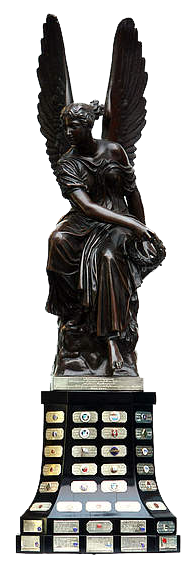
VfB beat DFC Prag 7–2 at Altona’s Exerzierweide. Level at 1–1 at half-time, Leipzig pull away after the interval and become the first club to win the Viktoria trophy.
Central German title without a final
VfB are awarded another Central German championship. The regional competitions are not completed in time and no association final takes place.
Another run towards the final
The defending champions reach the national semi-final by beating Viktoria 96 Magdeburg 1–0 at the Lindenau ground.
Back in the final after extra time
VfB defeat Duisburger Spielverein 3–2 after extra time and qualify for another national final.
The championship final that never took place
The planned final against Britannia Berlin in Kassel is cancelled. Following Karlsruher FV’s protest over the venue of their quarter-final, the championship is annulled. No German champion is crowned in 1904.

A third Central German title
Dresdner SC refuse to play the scheduled final in protest. VfB are declared Central German champions without a match taking place.

A 9–1 start to the championship finals
VfB beat Norden-Nordwest Berlin 9–1 in the quarter-final at Wacker’s old Debrahof ground.
A 3–2 win over Hertha
VfB beat BFC Hertha 92 3–2 at Viktoria-Platz in Berlin-Mariendorf to reach another championship final.
German champions for the second time
VfB defeat 1. FC Pforzheim 2–1 in the Nuremberg final. Heinrich Riso scores the late winner to secure the club’s second national championship.
A fourth Central German championship
A 1–0 victory over Viktoria 96 Magdeburg at Wacker’s ground secures a fourth Central German title.
The defending champions lose to Freiburg
VfB lose 3–2 to Freiburger FC in the German championship semi-final. Freiburg go on to win the title.




1910–1919
A 4–1 win over Erfurt brings title number five
VfB beat SC Erfurt 4–1 in the Central German final, returning to the top of the association after two seasons without the title.
A sixth association title against Wacker Halle
A 3–1 victory over Wacker Halle retains the Central German championship and qualifies VfB for the national finals.
The 1910 champions are eliminated
 Karlsruher FV0:2
 VfB LeipzigGerman Championship Location: Frankfurt am Main Stadium: Sportplatz an der Roseggerstraße Neutral venue
VfB beat Karlsruher FV 2–0 at Frankfurt’s Roseggerstraße ground, eliminating the defending champions and reaching the final.
Viktoria defeat VfB in the final
VfB lose the final 3–1 to Viktoria 89 Berlin at the Dresden Hygiene Exhibition ground and finish as national runners-up.
The academic side also win a national title
VfB Leipzig also win the German Academic Championship in 1913, a competition for academic football sides that adds to the club’s national successes that year.
A 6–0 win over Coburg in the overall final
After winning Division A, VfB face Division B winners Coburger FC in Erfurt. A 6–0 victory in the overall final secures their seventh Central German championship.
A third German championship
VfB beat Duisburger Spielverein 3–1 at the MTV ground on Munich’s Marbachstraße. Following their successes in 1903 and 1906, Leipzig win the Viktoria for a third time.
Duisburg beaten again in the semi-final
VfB beat the previous year’s runners-up Duisburger Spielverein 1–0 at Sportpark Connewitz to reach another final.
Fürth win the marathon final
The last German championship final before the First World War ends with a 3–2 extra-time victory for SpVgg Fürth in Magdeburg. VfB lose an exceptionally long final.
Central German champions during the war
Although the First World War severely disrupts football, the Central German championship continues. VfB beat Halle 96 2–0 in the final to win their eighth association title.


1920–1929
Unbeaten for a ninth association title
VfB finish first in a single round-robin involving six district champions, collecting eight points with a 10–2 goal record. Three wins and two draws bring their ninth association title.
Land for a new home in Probstheida
VfB acquire land for a new stadium in Probstheida, preparing a larger home after their years in Lindenau.
VfB-Stadion opens
The new stadium in Probstheida opens with VfB losing 3–2 to Victoria Hamburg. The ground becomes the lasting home of football in this part of Leipzig.
Guts Muts win at the new VfB-Stadion
VfB lose the Central German championship final 1–0 to Guts Muts Dresden at their new home ground. The Dresden club win the association title and go on to the national championship finals.
A tenth Central German title
VfB beat 1. SV Jena 2–0 in the final at Wacker’s ground. Their tenth Central German title brings a return to the national championship finals.
The eleventh and final Central German title
A 4–0 victory over Chemnitzer BC at Wacker’s ground brings VfB their eleventh Central German championship. They remain the association’s record champions.



1930–1939
Central German cup winners
VfB beat SC Wacker Leipzig 2–1 in the Central German association cup final, adding a regional cup to their eleven association championships.
Dresdner SC win the association final
A week after their cup win, VfB lose the Central German championship final 2–1 to Dresdner SC at Wackerstadion.
The wooden stand is extended
VfB extend their stadium’s wooden stand. It becomes a defining feature of the ground and remains a prominent part of the later Bruno-Plache-Stadion.
Nazi control of the club leadership
The board resigns and Dr Herbert Fricke takes charge as Vereinsführer. Nazi rule replaces the club’s democratic structures with the leadership principle.
Gyula Kertész loses his coaching post
Jewish coach Gyula Kertész is dismissed, officially for financial reasons. His dismissal takes place amid antisemitic exclusion following the Nazi takeover, and he is unable to continue his coaching career in Germany.
A 5–0 start to the cup run
VfB beat 1. SV Jena 5–0 in the Tschammerpokal, starting their successful run through the national rounds.
Extra time produces no winner in Gleiwitz
VfB draw 2–2 after extra time at SV Vorwärts Gleiwitz. A replay is required to decide which club advances.
A 3–0 victory in the replay
VfB beat Vorwärts Gleiwitz 3–0 in the replay to advance to the next cup round.
The Berlin champions are eliminated
VfB beat Berliner SV 1892 2–0 in the last sixteen of the Tschammerpokal.
Four goals in the Peine quarter-final
Leipzig win 4–2 at VfB Peine to reach the Tschammerpokal semi-final.
A 5–1 win over Wormatia secures the final
Leipzig beat Wormatia Worms 5–1 at VfB-Stadion, recovering from an early deficit to reach the national cup final.
1936 cup winners after a January final
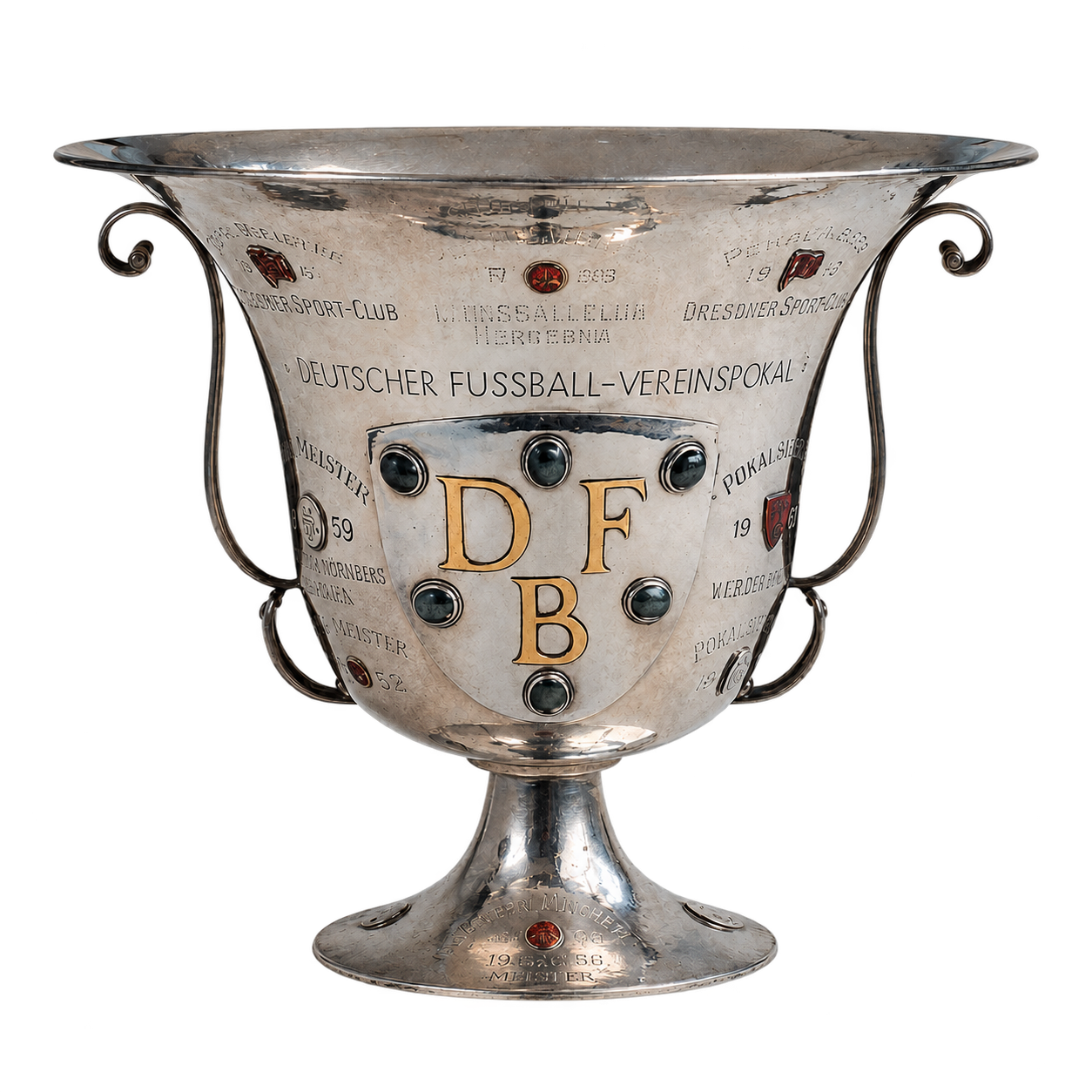
VfB defeat favourites Schalke 04 2–1 at Berlin’s Olympiastadion, with Jakob May and Herbert Gabriel scoring for Leipzig. Played in January 1937, the final concludes the 1936 cup competition.



1940–1949
A new beginning as SG Probstheida
Former VfB players and officials establish SG Probstheida, including Herbert Gabriel, a scorer in the 1937 cup final. Football resumes at the old ground under the new conditions of the post-war period.
Dissolution after the war
After the Second World War, the existing sports clubs are dissolved. The old VfB loses its organisation and traditional name, bringing the club’s first era to an end.
1950–1959
The Probstheida line continues at SC Rotation
SG Probstheida develop through BSG Erich Zeigner and BSG Einheit Ost into a DDR-Oberliga side. Leipzig’s football reorganisation in 1954 places this line at SC Rotation.
1960–1969
Reorganisation creates SC Leipzig
Another reorganisation of Leipzig football creates SC Leipzig from players of SC Rotation and SC Lokomotive. This Probstheida side forms the basis of 1. FC Lok in 1966.
1. FC Lokomotive Leipzig is established
SC Leipzig’s football section becomes the independent 1. FC Lokomotive Leipzig. The club plays under this name until 1991 and becomes an established force in East German football.
1990–1999
The name VfB Leipzig returns
1. FC Lokomotive Leipzig adopts the name VfB Leipzig again. Having qualified for the 2. Bundesliga, the club enters reunified German professional football under its historic name.
A move to the Zentralstadion
Safety problems prevent VfB from using Bruno-Plache-Stadion for second-division football from early 1992. The side moves to the Zentralstadion, also its home during the Bundesliga season.
Survival secured against 1860 Munich
VfB beat TSV 1860 Munich 1–0 on the final day of the southern relegation round. Janusz Turowski’s early goal secures second-division survival, while their direct rivals go down.
Promotion to the Bundesliga
In front of 38,000 spectators, VfB beat Mainz 05 2–0 with second-half goals from Jürgen Rische and Dirk Anders. Leipzig finish the 46-match season third on 58 points and reach the Bundesliga for the first time.
Six goals in the Bundesliga debut
VfB’s first Bundesliga match ends 3–3 against Dynamo Dresden at the Zentralstadion, opening their only season in the division with a point.
First Bundesliga victory in Dortmund
Jürgen Rische’s early goal earns VfB a 1–0 win at Borussia Dortmund. Their first Bundesliga victory comes away at the Westfalenstadion.
First Bundesliga home win
A 1–0 victory over Karlsruher SC is VfB’s first Bundesliga home win. Steffen Heidrich scores the only goal at the Zentralstadion.
Bundesliga relegation is confirmed
After the previous day’s 2–0 defeat to 1. FC Nürnberg, VfB can reach a maximum of 24 points. Dynamo Dresden beat Schalke 1–0 to reach 25 despite a four-point deduction. Fifteen other clubs are now beyond Leipzig’s reach, confirming Bundesliga relegation.
Farewell after one Bundesliga season
VfB close the season with a 3–2 defeat to Bayer Leverkusen. Their only Bundesliga campaign brings three wins, eleven draws and twenty defeats. Relegation had already been confirmed on April 9.
Back at Bruno-Plache-Stadion
After several years at the Zentralstadion, VfB return to Probstheida in 1995. Bruno-Plache-Stadion once again becomes the first team’s home.
A victory that is later annulled
Following the 3–2 defeat to Chemnitz on June 11, the DFB orders a replay over Ronald Werner’s dismissal. VfB win it 1–0, but in July FIFA’s intervention leads to the original 3–2 result being reinstated.
A goalless decider sends VfB to the Regionalliga
VfB draw 0–0 with Wattenscheid 09 in the direct battle for survival. Leipzig finish fifteenth on 39 points, one behind Wattenscheid, and are relegated from the 2. Bundesliga.
The first insolvency filing
VfB file for insolvency. Financial problems threaten the future of the club, now playing in the Regionalliga.


2000–2009
An insolvency plan allows the club to continue
Creditors approve an insolvency plan in April, allowing VfB to continue playing despite persistent financial and sporting pressure.
Regionalliga qualification becomes impossible
Babelsberg and Rot-Weiß Erfurt each win 1–0 to reach 54 points. Seven clubs are therefore beyond VfB’s maximum of 51, calculated from 42 points before their final three fixtures. Even seventh place and a route through the qualification play-offs are now out of reach.
Season review: ninth despite a final-day 4–0 win
VfB finish their Regionalliga season with a 4–0 victory over Dresdner SC. Leipzig end the 1999/2000 campaign ninth, miss the new two-division Regionalliga and subsequently play in the fourth-tier Oberliga Nordost Süd.
Penalties decide the Saxony Cup final
The final at the Erzgebirgsstadion ends 2–2 after extra time against Erzgebirge Aue. VfB lose the shoot-out 5–3. Marco Kurth and Markus Richter score Leipzig’s goals during the match, but Aue keep the cup.
A new 1. FC Lok is founded
As VfB again struggle for survival, supporters establish a new 1. FC Lokomotive Leipzig. The new club lays the foundation for football’s continuation in Probstheida.
The second insolvency proceeding
A second insolvency proceeding opens against VfB. Their Oberliga results are removed from the standings and the remaining fixtures no longer count towards the table.
VfB’s final match
A 4–2 victory over VfB Auerbach is the first team’s final match. Played at Bruno-Plache-Stadion, it does not count towards the Oberliga standings. The club organisation survives until its merger in 2021.


2020–2029
Merger with 1. FC Lok
Members approve the merger of VfB Leipzig with 1. FC Lokomotive Leipzig. The organisation remaining after VfB stopped playing becomes part of today’s successor club.