


The history of Preston North End
Milestones and background from the club's history, in chronological order.
Categories
Competitions
Nicknames through the years Three names tell a story of near misses, late goals and an unbeaten season. Read the storiesClose the stories
1860–1869
Roots in cricket
The roots lie in Preston North End Cricket Club, founded in 1863. The name refers to the northern part of Preston; football becomes the club’s main activity later.
1870–1879
Deepdale becomes home
The club leases land opposite Moor Park. It becomes Preston North End’s lasting home, initially for cricket and other sports and later for football.
The first recorded football match
Preston North End loses 1–0 to Eagley at Deepdale. Football is still a new addition to the existing sporting activities; this is the club’s first recorded association-football match.


1880–1889
The football club takes shape
In May 1880, Preston North End commits to football. The football club develops from its older cricket roots, and its crest carries the foundation year 1880. Under William Sudell, ambitions soon grow to build a leading side.
The road to professionalism
The Football Association permits payment of players under restrictions. Preston is a driving force in northern professional football, allowing Sudell’s side to openly rely on paid players, including recruits from Scotland.
Disappointment in the first cup final
Preston reaches its first FA Cup final as favourite but loses 2–1 to West Bromwich Albion at the Kennington Oval. The setback comes just before the greatest season in the club’s history.
A founder member of the Football League
Preston is one of the Football League’s twelve founder clubs and opens the new competition with a 5–2 win over Burnley FC. Regular league fixtures give professional football a new, lasting framework.
The first English league champion
A 4–1 win over Notts County takes Preston to 35 points. Aston Villa simultaneously loses 4–0 at Burnley FC and can reach no more than 34. The first Football League championship is therefore decided.
The final league record is 18 wins, four draws and no defeats from 22 matches. The side becomes famous as The Invincibles.
The unbeaten Double
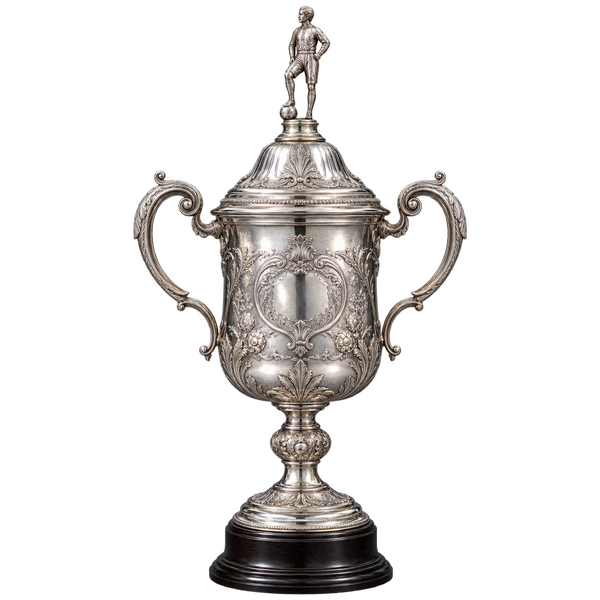
A 3–0 win over Wolverhampton Wanderers at the Kennington Oval brings Preston the FA Cup as well. Following its unbeaten league championship, the club completes the first Double without conceding a goal throughout the cup competition.




1890–1899
The championship is retained
Preston wins 1–0 at Notts County and finishes with 33 points ahead of Everton’s 31. This victory in the last outstanding league fixture finally secures the second championship.
A company for the club
The club company is incorporated as The Preston North End Football Club Limited. This legal organisation follows the established football tradition and its early championships.
1920–1929
A penalty decides the final
Preston loses the FA Cup final 1–0 to Huddersfield Town at Stamford Bridge. Billy Smith settles the match with a penalty; the clubs meet again in the final sixteen years later.
1930–1939
Wembley brings no trophy yet
Preston takes the lead against Sunderland in the FA Cup final but loses 3–1. The side featuring Bill Shankly narrowly misses a return to major cup success before reaching the final again a year later.
George Mutch ends the wait
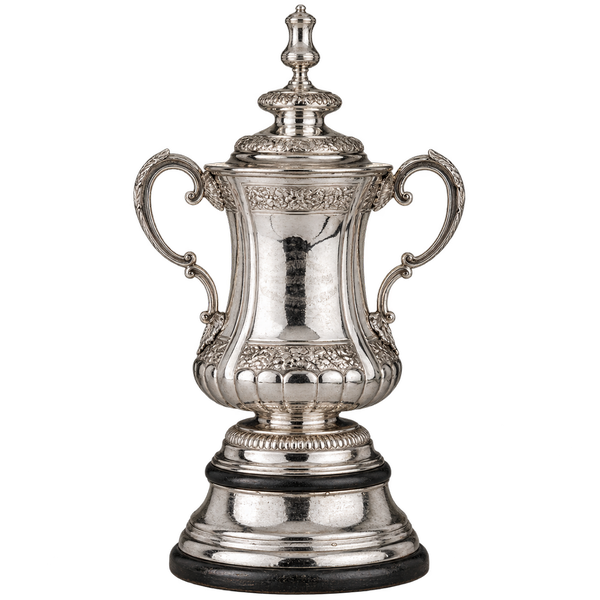
George Mutch converts a penalty near the end of extra time against Huddersfield Town. The 1–0 victory brings Preston its second FA Cup after 1889. This is the first FA Cup final televised live.

1940–1949
Cup success in wartime football
After a 1–1 draw at Wembley, Preston wins the replay against Arsenal FC 2–1 at neutral Ewood Park. The Football League War Cup belongs to wartime football while regular national competitions are suspended.
Tom Finney’s league debut
After the war, Tom Finney makes his regular league debut aged 24. The 3–2 win over Leeds United begins a career that shapes Preston for a decade and a half, with the versatile forward staying loyal to his hometown club.


1950–1959
Fourteen consecutive league wins
The 3–2 win at Leicester City is Preston’s fourteenth consecutive league victory. The run equals a Football League record and embodies the resurgence of the side built around Tom Finney.
Goal average costs the championship
Arsenal FC’s 3–2 win over Burnley FC ends Preston’s hopes of a third championship. Both clubs finish on 54 points, but the goal-average rule then in force favours Arsenal FC. Preston finishes runner-up.
Finney’s only FA Cup final
Preston loses a fluctuating FA Cup final 3–2 to West Bromwich Albion. Tom Finney remains without this major trophy, although his performances earn his first Footballer of the Year award that year.


1960–1969
Farewell to Tom Finney
Tom Finney plays his final league match for Preston in a 2–0 win over Luton Town. He finishes his club career with 210 goals in 472 competitive appearances. His loyalty, skill and versatility make him Deepdale’s defining figure.
A late Wembley defeat
Preston leads West Ham United twice in the FA Cup final. Ronnie Boyce’s late goal settles the match 3–2 for the London club. The Second Division side misses the trophy despite an impressive cup run.


1970–1979
Alan Ball senior leads Preston back
A 3–0 win over Rotherham United makes Preston Third Division champion. Its 63 points overtake Fulham, which has already completed its season on 62. Under Alan Ball senior, Preston regains confidence after its first relegation to the third tier.
Ball’s description of the travelling supporters as the “Gentry” becomes part of club culture. Today’s Gentry Day also remembers Preston supporters who have died.

1980–1989
Supporters help avert the club’s closure
During the financial crisis of 1983/84, £250,000 is raised. Donations and support around the club prevent Preston North End from closing, although its difficulties on the pitch initially continue.
The Football League votes to retain Preston
After finishing second from bottom in the Fourth Division, Preston must apply for re-election to the Football League. A majority of fellow clubs votes to retain it. A fresh start follows that summer under John McGrath, with an artificial pitch at Deepdale.
1990–1999
The dramatic comeback against Torquay
 Torquay United2:0
 Preston North EndFootball League Third Division Play-Offs First leg · May 15, 1994 · Location: Torquay Stadium: PlainmoorPreston North End4:1a.e.t.Torquay UnitedFootball League Third Division Play-Offs Second leg · May 18, 1994 · Location: Preston Stadium: Deepdale
After losing the first leg 2–0, Preston beats Torquay United 4–1 after extra time in the return. Paul Raynor’s late goal secures a 4–3 aggregate win and a place in the final. Afterwards, supporters take pieces of the artificial pitch home as souvenirs.
Wycombe turns the promotion final around
Preston leads 2–1 at half-time but loses the play-off final 4–2 to Wycombe Wanderers. Despite Ian Bryson’s spectacular overhead-kick goal, the club remains in the fourth tier.
Promotion without the play-offs
A 2–0 win at Hartlepool United takes Preston to 83 points and secures automatic promotion. Gary Peters leads the club from the fourth-tier Third Division into the Second Division. Gillingham can still draw level on points in the race for the title.
Third Division champions
Preston beats Exeter City 2–0 and finishes as champion with 86 points. Celebrations after the previous victory at Hartlepool are now mathematically confirmed: before the last match, Gillingham could still draw level on points.


2000–2009
Champions despite defeat
 Cambridge United2:0
 Preston North EndFootball League Second Division Match 1 · April 24, 2000 · Location: Cambridge Stadium: Abbey Stadium
Preston loses 2–0 at Cambridge but nevertheless becomes Second Division champion. Gillingham draws 2–2 at Millwall FC and Wigan 1–1 at Luton. Neither challenger can now reach Preston’s 89 points, as David Moyes takes the club back to the second tier.
Bolton stops the next promotion
 Bolton Wanderers3:0Preston North EndFootball League First Division Play-Offs Location: Cardiff Stadium: Millennium Stadium Neutral venue
In its first year back in the second tier, Preston reaches the play-off final. David Moyes’s side loses 3–0 to Bolton Wanderers at the Millennium Stadium, missing a return to the top flight.
One step short of the Premier League again
Under Billy Davies, Preston reaches another promotion final in Cardiff. Bobby Zamora scores the only goal for West Ham United, leaving Preston in the Championship after a 1–0 defeat.
Deepdale’s redevelopment is complete
The new Invincibles Pavilion opens for the 2–0 win over Crystal Palace. The fourth rebuilt stand completes Deepdale’s transformation into a modern 23,404-seat stadium while preserving the club’s historic home.




2010–2019
Eleven years in the second tier end
1:0The 1–0 defeat by Cardiff City and Crystal Palace’s 1–0 win over Leeds United confirm Preston’s relegation. With no more than 45 points still attainable, safety is now out of reach. Phil Brown cannot reverse the difficult season.
Preston mourns Sir Tom Finney
Sir Tom Finney dies aged 91. Supporters place flowers, shirts and scarves by his statue, and thousands later line the funeral procession through Preston. His name remains inseparable from the club and Deepdale.
Beckford ends the play-off curse
Jermaine Beckford scores a hat-trick against Swindon Town in the final, with Paul Huntington adding the other goal in a 4–0 win. After ten unsuccessful play-off campaigns, Simon Grayson takes Preston back to the Championship.


2020–2029
The 5,000th league match
Preston becomes the first club to play 5,000 English Football League matches. The milestone falls in the pandemic-extended 2019/20 season, with the home game against Derby County ending in a 1–0 defeat.
A point preserves Championship status
Preston surrenders a 2–0 lead at Bristol City but claims a decisive point in the 2–2 draw. Luton’s simultaneous 5–3 defeat at West Bromwich Albion leaves its rival on 49 points, while Preston reaches 50 and stays in the Championship.
Graham Alexander returns as head coach
Preston appoints Graham Alexander as its new head coach. Following two spells as a player, the former club captain returns to Deepdale for a third time and takes responsibility for the next stage on the pitch.


