


The history of Luton Town
Milestones and background from the club's history, in chronological order.
Categories
Competitions
Nicknames through the years Three names tell a story of near misses, late goals and an unbeaten season. Read the storiesClose the stories
1880–1889
Founded at a public meeting
A public meeting at the Town Hall founded Luton Town. George Deacon and John Charles Lomax helped drive its creation; the original club colours were navy blue and pink.
1890–1899
A professional pioneer in the south
After beginning to pay players in 1890, Luton became fully professional in 1891, pioneering professional football in southern England.
A Southern League founder
Luton was one of the Southern League’s nine founder members, finishing runner-up to Millwall Athletic in each of its first two seasons.
First Football League match
After election to the Football League, Luton opened its first Second Division campaign with a 1–1 draw at Leicester Fosse.

1900–1909
Withdrawal from the Football League
Heavy travel costs, falling attendances and poor results strained the club. Luton did not seek re-election and returned to the Southern League.
Kenilworth Road opens
A goalless draw with Plymouth Argyle began Luton’s stay at Kenilworth Road, following its move from Dunstable Road.

1920–1929
Back in the Football League
Southern League clubs formed the Football League’s new Third Division in 1920. Luton returned to the League and adopted white shirts with black shorts.
Fire destroys the main stand
A fire destroyed the main stand, dressing rooms and offices. The club replaced its equipment and rebuilt the stand later that year.
1930–1939
Tottenham beaten in the FA Cup
Third-tier Luton beat Tottenham Hotspur 2–0 in a cup run that took the club to the quarter-finals for the first time.
Joe Payne scores ten
Joe Payne scored ten goals in a 12–0 win over Bristol Rovers, setting the Football League record for an individual match. The result also became Luton’s record victory.
Eddie Parris makes club history
Eddie Parris made his Luton debut in a 3–2 win over Northampton Town. The Wales international was the club’s first Black player.
Champions and promotion to the second tier
A 2–0 victory over Torquay United secured the Third Division South title and promotion. Joe Payne scored both goals, completing a league season of 55 goals.
War interrupts league football
The outbreak of the Second World War halted regular league football. Luton played in regional wartime competitions before the national league resumed in 1946.




1940–1949
Dally Duncan takes charge
Dally Duncan took charge as manager, developing the side that would take Luton into England’s top division for the first time in 1955.
1950–1959
First promotion to the First Division
Luton won 3–0 at Doncaster. Rotherham United’s simultaneous 1–1 draw at Port Vale meant superior goal average secured Luton’s first promotion to the top flight.
First FA Cup final
Luton lost its first FA Cup final 2–1 to Nottingham Forest. Dave Pacey pulled a goal back after Forest had taken an early two-goal lead.


1960–1969
The fall to the fourth tier
Following relegations in 1960 and 1963, Luton also fell out of the Third Division. An 8–1 defeat at Scunthorpe and Reading’s 4–2 win over Peterborough confirmed the drop to the fourth tier.
Bruce Rioch fires Luton to promotion
Bruce Rioch’s goal in a 1–0 win at Halifax Town secured promotion from the Fourth Division, beginning the climb back through the leagues under Allan Brown.
Fourth Division champions
Four days after securing promotion, Luton clinched the title by beating Crewe Alexandra 4–0. Bruce Rioch scored twice.



1970–1979
Back in the Second Division
A goalless draw at Mansfield Town delivered the point needed for promotion, taking Luton from the fourth tier to the second in three seasons.
Malcolm Macdonald moves to Newcastle
Luton sold leading striker Malcolm Macdonald to Newcastle United for £180,000, providing relief for the club’s strained finances.
Orange becomes the club’s signature
Luton introduced orange home shirts with navy and white details, establishing a colour combination that became central to the club’s identity.
Back in the top flight
A 1–1 draw at West Bromwich Albion secured promotion to the First Division. Barry Butlin put Luton ahead, and a late equaliser could not deny the achievement.
Tottenham’s win confirms relegation
Two days after Luton’s final match, Tottenham Hotspur beat Leeds United 4–2. Tottenham overtook Luton, sending the club back to the second tier after one season.
David Pleat takes charge
David Pleat succeeded Harry Haslam. His rebuilding work and attacking style shaped the club’s next successful era.


1980–1989
Four goals secure promotion
A 4–1 win over Shrewsbury Town secured a return to the First Division. Ricky Hill restored the lead after Shrewsbury had equalised, sparking the decisive late surge.
Second Division champions
A 3–2 victory over Queens Park Rangers put Luton beyond Watford’s reach. The club won the Second Division, eventually finishing the season with 88 points.
Antic saves Luton at Maine Road
Raddy Antic’s late goal secured the necessary 1–0 win at Manchester City. Luton survived and its opponent went down, prompting David Pleat’s famous celebration on the pitch.
An artificial pitch at Kenilworth Road
Luton installed an artificial pitch in the summer. Used until 1991, the unusual surface became a defining feature of the top-flight years.
Violence overshadows the cup tie
Severe crowd violence overshadowed Luton’s 1–0 FA Cup quarter-final win over Millwall FC. Spectators and police were injured, fuelling the debate over stadium safety.
Away supporters banned
Luton introduced a membership scheme and banned away supporters. Refusing to relax the rule for the League Cup led to exclusion from the 1986/87 competition.
Defeat in the Full Members Cup final
Luton lost 4–1 to Reading in the Wembley final, one of three visits to the stadium during an eventful season.
First major cup triumph
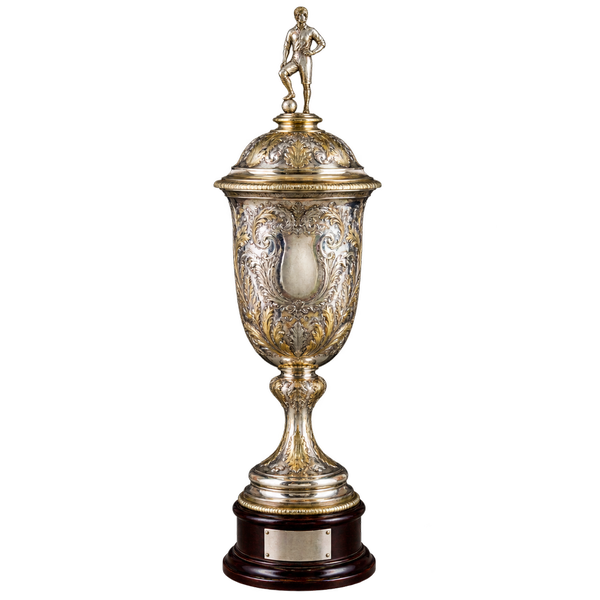
Luton won the League Cup by beating Arsenal FC 3–2. Andy Dibble saved a penalty with Luton 2–1 behind; Danny Wilson equalised before Brian Stein scored the late winner.
Back in the League Cup final
The holders reached the final again, but an early lead against Nottingham Forest was not enough as Luton lost 3–1.




1990–1999
Final-day survival
Luton won 3–2 at Derby County. Nottingham Forest’s simultaneous 3–0 victory at Sheffield Wednesday kept Luton in the First Division on goal difference.
Relegation before the Premier League began
A 2–1 defeat at Notts County ended ten seasons in the top flight, leaving Luton outside the newly created Premier League for its inaugural campaign.
An FA Cup semi-final as a second-tier club
Second-tier Luton reached the FA Cup semi-finals, where a 2–0 defeat by Chelsea FC at the old Wembley ended the run.
Relegated to the third tier
A 3–1 home defeat by Barnsley confirmed relegation from the First Division. Tony Thorpe’s goal could not turn the match around.
Financial crisis and receivership
Boardroom disputes and heavy debts pushed Luton into receivership. Financial pressures forced further player sales.




2000–2009
Back in the Football League’s bottom tier
A 1–0 defeat by Rotherham United confirmed the drop to the fourth-tier Third Division. Joe Kinnear’s arrival had not been enough to halt the decline.
Promotion at the first attempt
A 3–1 win at Swansea City secured an immediate return to the Second Division. Matthew Taylor, Peter Holmes and Steve Howard scored for Joe Kinnear’s side.
Supporters establish Trust in Luton
Supporters formed Trust in Luton in response to John Gurney’s takeover. By acquiring and calling in debts, the Trust helped remove Gurney from control that summer.
Promotion without playing
Tranmere Rovers lost 1–0 at Brentford FC, making it impossible to dislodge Luton from the automatic promotion places and confirming its return to the Championship.
League One title secured
A 2–1 win at Wrexham secured the title with two games remaining. Curtis Davies and Chris Coyne overturned a deficit; Luton eventually finished on 98 points.
An eight-goal cup tie against Liverpool FC
Luton led Champions League winners Liverpool FC 3–1 in the FA Cup, but the eventual cup winners fought back to win 5–3.
Relegated from the Championship
A 1–0 defeat at Derby County confirmed relegation from the Championship after two seasons in the second tier.
Administration and a ten-point deduction
Luton entered administration again. The resulting ten-point deduction deepened its difficulties in League One.
The 2020 consortium secures the club’s future
The supporter-backed 2020 consortium took the club out of administration. Gary Sweet and new chairman Nick Owen were leading figures in the fresh start.
Starting the season on minus 30 points
Luton began 2008/09 with a 30-point deduction: ten for irregular payments to agents and another twenty for breaching the Football League’s insolvency rules.
A second successive relegation
A 2–1 home defeat by Brighton & Hove Albion confirmed relegation to League Two, Luton’s second successive drop.
Wembley triumph against Scunthorpe
Claude Gnakpa’s extra-time goal secured a 3–2 final victory over Scunthorpe United and Luton’s first Football League Trophy.
Relegated out of the Football League
Eight days after the cup triumph, a goalless draw with Chesterfield confirmed relegation. Luton’s uninterrupted 89-year spell in the Football League was over.




2010–2019
Promotion denied on penalties
After 120 goalless minutes, Luton lost the Conference play-off final 4–3 on penalties to AFC Wimbledon at the City of Manchester Stadium.
York win the Wembley final
Andre Gray put Luton ahead early, but York City won the Conference play-off final 2–1. The return to the Football League remained out of reach.
A non-league club beats Premier League opposition
Scott Rendell’s goal earned a 1–0 FA Cup win at Norwich City, the first time since 1989 that a non-league club had eliminated top-flight opposition.
The Trust protects the club’s identity
The club gave the Supporters Trust rights protecting its identity. Changes to the name, crest, colours, nickname and mascots require the Trust’s consent.
Back in the Football League after five years
Cambridge United lost 2–0 at Kidderminster Harriers, confirming Luton as Conference Premier champions and promotion winners. A ten-point lead was unassailable with Cambridge having three games left.
Promotion to League One
Olly Lee’s equaliser in a 1–1 draw at Carlisle United supplied the decisive point. Exeter City’s 2–2 draw with Crawley Town confirmed Luton’s promotion.
Back-to-back promotion to the Championship
Portsmouth FC’s 3–2 defeat by Peterborough United and Sunderland AFC’s 2–1 loss at Fleetwood Town secured Luton’s promotion, returning the club to the Championship after twelve years.
Champions under Mick Harford
Luton beat Oxford United 3–1 while Barnsley lost 2–1 at Bristol Rovers, securing the League One title for the side managed by Mick Harford since January.





2020–2029
Survival in the extended season
Luton beat Blackburn Rovers 3–2 on the final day to secure survival. Two own goals and a penalty helped in a Championship season extended into July by the pandemic.
Wembley after overturning Sunderland AFC’s lead
Luton overturned a 2–1 first-leg deficit in the play-off semi-final. Gabriel Osho and Tom Lockyer scored in a 2–0 second-leg victory that booked a place in the final.
Luton reach the Premier League
Following a 1–1 draw after extra time against Coventry City, Luton won the play-off final 6–5 on penalties. The club returned to the top flight 31 years after its last relegation.
First Premier League victory
A 2–1 win at Everton FC delivered Luton’s first Premier League victory. Tom Lockyer and Carlton Morris scored at Goodison Park.
Premier League relegation confirmed
A 4–2 home defeat by Fulham FC confirmed relegation. The goal-difference deficit had already made survival highly unlikely, but the outcome became mathematically final on this day.
A second relegation in two years
Luton lost 5–3 at West Bromwich Albion on the Championship’s final day. Hull City’s 1–1 draw away to Portsmouth FC brought the point that sent Luton down on goal difference, with both clubs finishing level on points.
The Lea is diverted at Power Court
Diverting the River Lea marked visible progress on the planned new stadium at Power Court. The project envisaged 25,000 seats, while Kenilworth Road remained Luton’s home.
Jack Wilshere becomes manager
Jack Wilshere took charge following Matt Bloomfield’s departure. The former England international had spent part of his childhood in Luton’s youth system.
Second EFL Trophy triumph
Luton beat Stockport County 3–1 in the Wembley final. Emilio Lawrence and two-goal Nahki Wells overturned an early deficit to secure the club’s second title in the competition.


