The history of Hansa Rostock
From Empor through the 1991 double and Bundesliga years to relegations, returns and state cup victories.
Categories
Competitions
Nicknames through the years Three names tell a story of near misses, late goals and an unbeaten season. Read the storiesClose the stories
1950–1959
Empor brings top-flight football to Rostock
In autumn 1954, the top-flight side of BSG Empor Lauter was transferred to Rostock and incorporated into the newly formed SC Empor. Its first home match at the old Ostseestadion ended 0–0 against BSG Chemie Karl-Marx-Stadt, beginning the Rostock football tradition that would become Hansa.


1960–1969
An independent football club is formed
Hansa Rostock was founded in the Deutsche Post cultural hall at Neumarkt. SC Empor’s football section became an independent club, chaired by Heinz Neukirchen, while retaining its sporting tradition from 1954. The cog crest designed by Karl-Heinz Kuhn became the new club’s defining symbol.
First top-flight victory as Hansa
The former Empor side began the second half of the season with its first Oberliga match as Hansa Rostock. A 2–0 home win over Rot-Weiß Erfurt at the old Ostseestadion launched the new era, with Herbert Pankau scoring the first goal under the Hansa name.
European debut against Nice
After finishing second in the Oberliga, Hansa entered European competition for the first time. Horst Saß’s side beat OGC Nice 3–0 at the old Ostseestadion in the Inter-Cities Fairs Cup. Werner Drews and Jürgen Decker, who scored twice, delivered a winning international debut.
A famous victory over Inter
After Roberto Boninsegna gave Inter Milan an early lead, Hansa turned the Fairs Cup home match around. Helmut Hergesell equalised and Gerd Sackritz struck late for a 2–1 victory. Beating the Italian giants became one of the club’s defining European memories.


1970–1979
Political interference on the touchline
During the 0–2 defeat by Carl Zeiss Jena, regional SED leader Harry Tisch demanded two substitutions. When Heinz Werner refused, Tisch announced the coach’s dismissal while the match was still being played. Werner’s tenure officially ended nine days later, exposing the political pressures surrounding elite football in East Germany.
Hansa subsequently moved repeatedly between the Oberliga and DDR-Liga. Former players Helmut Hergesell and Jürgen Heinsch took coaching roles, preserving close ties with earlier generations. More lasting stability in the top flight returned in the late 1980s.

1980–1989
A second-tier side reaches the cup final
As a DDR-Liga side, Hansa reached the FDGB Cup final. Werner Voigt’s team held Lokomotive Leipzig to 1–1 at half-time in Berlin’s Stadion der Weltjugend, before losing 1–4. Reaching the final was a major achievement, but Hansa’s wait for a first cup victory continued.

1990–1999
Hansa becomes a registered association
Hansa Rostock entered the register of associations in June 1990. Amid political and economic change, the club reorganised as a registered association while retaining its football tradition and Hansa name. Registration did not mark a new sporting foundation.
The final Oberliga champions
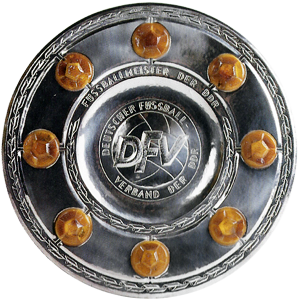
A 3–1 win over 1. FC Dynamo Dresden secured the final East German Oberliga championship and a place in the first unified Bundesliga. Two free kicks from Juri Schlünz and a goal by Henri Fuchs settled the leading clash. Uwe Reinders guided Hansa to its greatest league achievement.
Cup victory completes the double
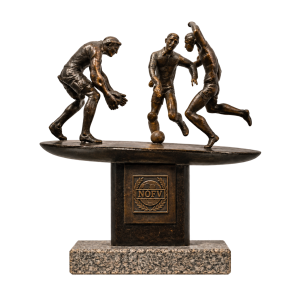
After five losing finals, Hansa won the East German cup for the first time. In the competition’s last final, the side defeated Eisenhüttenstädter FC Stahl 1–0 at Berlin’s Friedrich-Ludwig-Jahn-Sportpark. Jens Wahl scored the winner, completing the 1991 league and NOFV Cup double.
An emphatic Bundesliga debut
Hansa’s first Bundesliga match ended in a 4–0 home victory over Nuremberg at the old Ostseestadion. The unified league had admitted the two leading Oberliga clubs, and Rostock made a striking start. The emphatic opening win captured the optimism of summer 1991.
Barcelona beaten, but the tie is lost
Hansa faced Barcelona in the European Cup. After losing 0–3 at Camp Nou, Rostock won the return match 1–0 through Michael Spies. It was not enough to advance, but beating the eventual European champions remained a memorable achievement.
Frankfurt’s title dream ends, but Hansa go down
Hansa beat title contenders Eintracht Frankfurt 2–1 in the season finale. Wattenscheid’s simultaneous 3–2 victory over Borussia Mönchengladbach meant Rostock still went down. An exhilarating first Bundesliga campaign ended in relegation, while Hansa played a decisive role in the dramatic title race.
Back in the Bundesliga
After three years in the second division, Hansa secured promotion with a 3–0 victory over Hannover. Rocco Milde, Steffen Baumgart and Stefan Beinlich scored before 25,600 spectators. Frank Pagelsdorf’s side reached 44 points and could no longer be pushed out of the three promotion places.
Second-division champions on the final day
A week after securing promotion, Hansa won 1–0 at Nuremberg to claim the second-division championship. The final record was 19 wins, eight draws and seven defeats, with 66 goals scored and 30 conceded. Under the two-points-for-a-win system, Rostock finished first with 46 points.
58,492 attend a home match in Berlin
Following a stadium suspension, Hansa hosted Eintracht Frankfurt at Berlin’s Olympiastadion. A crowd of 58,492 set the club’s home attendance record. Carsten Klee equalised for 1–1, turning the relocated fixture into an impressive demonstration of Hansa’s support.
Hansa win the DFB Indoor Cup
At Munich’s Olympiahalle, Ewald Lienen’s Hansa won the DFB Indoor Cup final 4–3 against Schalke 04. Sergej Barbarez scored twice, with Timo Lange and Yasser also on target. The technically accomplished side added a nationwide trophy to the club’s honours.
The miracle of Bochum
Bochum’s 2–1 lead on the final day left Hansa facing relegation. Victor Agali equalised before Sławomir Majak scored the winner in the 82nd minute. The 3–2 away victory took Rostock to 38 points and safety, producing one of the most emotional moments of Andreas Zachhuber’s tenure.





2000–2009
The new Ostseestadion is inaugurated
Replacing the old terraces and main stand created a football-only ground with four covered stands on the familiar site. Hansa lost the inaugural Bundesliga match against Bayer Leverkusen 0–3 on August 4, 2001. The new stadium brought supporters closer to the pitch and shaped the club’s subsequent home life.
Ten Bundesliga seasons come to an end
A 1–1 draw with Arminia Bielefeld on the penultimate day ended Hansa’s survival hopes. With 30 points and one match remaining, 15th place was beyond reach. Borussia Mönchengladbach’s simultaneous goalless draw with Hertha also secured its survival. Rostock’s ten consecutive Bundesliga seasons came to an end.
Pagelsdorf leads Hansa back to the top flight
At a sold-out Ostseestadion, Hansa beat Unterhaching 3–1 in the season finale to return to the Bundesliga as second-division runners-up. It was Frank Pagelsdorf’s second promotion with Rostock. The home victory secured the required margin over the chasing clubs.
A short-lived Bundesliga return
A 1–2 home defeat by Bayer Leverkusen confirmed relegation on the penultimate day. Hansa remained on 27 points and could no longer reach safety. The Bundesliga return lasted one season, leaving Rostock facing another rebuilding effort in the second division.
Nine goals against Koblenz
Hansa beat TuS Koblenz 9–0 at the DKB-Arena. Six second-half goals followed a 3–0 lead at the break. It was the largest victory in the history of the single-division 2. Bundesliga and an extraordinary high point in an otherwise difficult season.


2010–2019
Play-off defeat brings a first drop to the third tier
 FC Ingolstadt 041:0Hansa Rostock2. Bundesliga relegation play-off First leg · May 14, 2010 · Location: Ingolstadt Stadium: Tuja-Stadion
Following a 0–1 defeat at Ingolstadt, Hansa also lost the second leg of the second-division play-off 0–2. Marco Kostmann’s side was beaten 0–3 on aggregate. Rostock dropped into the 3. Liga for the first time, marking a major sporting setback.
Promotion is secured without Hansa playing
Wehen Wiesbaden lost 0–1 at home to Rot-Weiß Erfurt. The last remaining challenger could therefore no longer reach Hansa’s 70 points, with a maximum of 67 available from three remaining matches. Peter Vollmann’s team secured automatic promotion before its next fixture.
A nine-goal match confirms relegation
Despite taking an early 2–0 lead, Hansa lost 4–5 at Union Berlin. Rostock stayed on 26 points and could no longer reach Karlsruhe’s existing total of 30 with one match left. Only a year after promotion, Hansa returned to the 3. Liga.
Erfurt’s victory keeps Hansa up
2:1Hansa lost its final match at Dresden 1–2 and remained on 41 points. Rot-Weiß Erfurt’s 1–0 win over Unterhaching proved decisive: the direct rival stayed on 39 points and went down. Rostock survived in 17th place, the club’s lowest league finish.
Members approve the professional football spin-off
At the members’ meeting, 95 per cent of the 909 eligible members present approved separating professional football into a GmbH & Co. KGaA. The planned ownership was 55 per cent for the club and 45 per cent for Rolf Elgeti. The registered association and its football tradition continued.


2020–2029
Back in the second division after nine years
In front of 7,500 permitted spectators, Hansa drew 1–1 with Lübeck. Ingolstadt’s 3–1 victory over 1860 Munich also produced 71 points, but Rostock retained second place with a goal difference of 19 against 16. Jens Härtel’s side ended nine years in the third tier with automatic promotion.
A third relegation to the 3. Liga
Hansa needed to beat Paderborn in the season finale to have a chance of reaching the play-off place. After Nils Fröling opened the scoring, the visitors turned the match around for a 2–1 victory. Rostock finished 17th with 31 points, ending three second-division seasons with a third relegation to the 3. Liga.
Hansa retain the state cup
At Greifswald’s Volksstadion, Hansa beat SV Pastow 3–0 in the state cup final. Lukas Kunze, Emil Holten and Maximilian Krauß scored for Daniel Brinkmann’s side. Retaining the trophy added another success in Mecklenburg-Vorpommern’s leading cup competition.