


The history of Middlesbrough FC
Milestones and background from the club's history, in chronological order.
Categories
Competitions
Nicknames through the years Three names tell a story of near misses, late goals and an unbeaten season. Read the storiesClose the stories
1870–1879
Cricketers establish the club
Members of the local cricket club founded Middlesbrough Football Club in 1876. Football gave them a sport for the winter months. These beginnings developed into the Teesside club tradition known as Boro.
1880–1889
The dispute over professionalism
A dispute over paid players led to the formation of the breakaway Middlesbrough Ironopolis in 1889. The two clubs then existed alongside each other. Merger negotiations failed, and Ironopolis folded in 1894 after its own Football League season.
1890–1899
The first FA Amateur Cup
Middlesbrough defeated Old Carthusians 2–1 in the final at Headingley. Winning the FA Amateur Cup established the club among England’s leading amateur sides.
Amateur Cup winners again
Middlesbrough won the final against Uxbridge 2–1 at Crystal Palace. It was a second FA Amateur Cup in four editions. A year later the club made a lasting move into professional football.
Election to the Football League
Middlesbrough was elected to the Football League’s Second Division. Its renewed commitment to professionalism began a lasting career in the English league system.
The first Football League match
Middlesbrough’s first league fixture was away at Lincoln. A 3–0 defeat at Sincil Bank marked a difficult beginning: Boro went without an away win in its first Football League season.



1900–1909
Into the First Division for the first time
Glossop beat Preston North End 3–1. Preston could no longer displace Middlesbrough from the two promotion places. Boro reached the First Division for the first time.
Ayresome Park becomes the new home
The first league match at the new Ayresome Park ended in a 3–2 defeat by Sunderland. Archibald Leitch’s ground replaced the club’s previous home at Linthorpe Road. Ayresome became the club’s centre for the next 92 years.
The first £1,000 footballer scores
Middlesbrough had signed Alf Common from Sunderland for a record £1,000 in February. On his debut he scored the only goal, a penalty, in a 1–0 win at Sheffield United. It was Boro’s first away victory for almost two years.


1910–1919
The highest top-flight finish
Middlesbrough ended the season with a 3–1 win at Aston Villa. Its final position was third in the First Division, still the club’s highest league finish.

1920–1929
The first relegation from the First Division
A 1–1 draw at West Bromwich Albion confirmed relegation. After more than two decades in the First Division, Middlesbrough returned to the second tier.
Camsell’s team wins the title
 Blackpool FC2:2
 Middlesbrough FCFootball League Second Division Match 1 · April 23, 1927 · Location: Blackpool Stadium: Bloomfield Road
A 2–2 draw at Blackpool secured promotion, while Chelsea’s 3–0 defeat at Barnsley also confirmed the championship. George Camsell shaped the campaign and finished it with 59 league goals, then a Football League record.
Level on points is not enough
Middlesbrough FC0:3 Sunderland AFCFootball League First Division Match 1 · May 5, 1928 · Location: Middlesbrough Stadium: Ayresome Park
Middlesbrough lost 3–0 to Sunderland while Manchester United beat Liverpool 6–1. Boro finished on 37 points but had an inferior goal average to its decisive rivals. Relegation came after just one top-flight season.
An immediate return
Middlesbrough FC1:0 Nottingham ForestFootball League Second Division Match 1 · April 20, 1929 · Location: Middlesbrough Stadium: Ayresome Park
 Notts County1:2
 Grimsby TownFootball League Second Division Match 2 · April 20, 1929 · Location: Nottingham Stadium: Meadow Lane
Boro beat Nottingham Forest 1–0. Together with Grimsby’s 2–1 victory at Notts County, this secured a return to the First Division. The team responded to relegation with an immediate promotion.
The second second-tier title
Middlesbrough beat Grimsby Town 3–0 in their direct meeting. This confirmed a second Second Division championship. The resulting top-flight spell lasted until 1954.



1930–1939
War interrupts league football
The Second World War brought the newly started Football League season to an end. Regular national league football did not return until 1946. Middlesbrough played in regionally organised competitions during the war.
1950–1959
The long top-flight spell ends
A 3–1 defeat at Arsenal confirmed relegation. The top-flight spell dating from 1929 ended. Two decades outside the highest division followed.
Brian Clough’s league debut
Brian Clough made his Football League debut in a 1–1 draw against Barnsley. The centre-forward became one of the most prolific players in the club’s history. His later managerial career made him a defining figure in English football.

1960–1969
Into the third tier for the first time
Bury beat Carlisle United 2–1. Middlesbrough’s relegation was confirmed without Boro playing that day. The club entered the Third Division for the first time.
O’Rourke’s hat-trick brings promotion
Middlesbrough beat Oxford United 4–1. John O’Rourke scored a hat-trick and John Hickton added the other goal. Stan Anderson’s team returned after a single season in the Third Division.

1970–1979
Jack Charlton’s early promotion
 Middlesbrough FC1:0
 Oxford UnitedFootball League Second Division Match 1 · March 23, 1974 · Location: Middlesbrough Stadium: Ayresome Park
Middlesbrough beat Oxford United 1–0 while Sheffield Wednesday won at Orient. Together the results secured promotion in March. Jack Charlton, who had taken charge in 1973, brought the club back to the First Division after twenty years.
Charlton combined a clear playing structure with a new visual identity. The white chest band on the red shirts became an enduring Boro symbol.
The championship is confirmed too
A 1–0 victory at Luton secured the Second Division championship. Middlesbrough finished the season with 65 points under the two-points-for-a-win system, fifteen ahead of the runner-up.
The first Anglo-Scottish Cup
A 1–0 home victory over Fulham in the first leg was followed by a goalless draw at Craven Cottage. Middlesbrough won the inaugural Anglo-Scottish Cup 1–0 on aggregate.


1980–1989
Four other results confirm relegation
Birmingham, Leeds, West Bromwich Albion and Sunderland won their matches. Together these results confirmed Middlesbrough’s relegation. Boro’s own win at Swansea that day could no longer prevent a return to the second tier.
Back in the Third Division
A 2–1 defeat at Shrewsbury confirmed relegation. Sporting difficulties coincided with growing financial problems. Middlesbrough faced a summer in which the club’s survival was at risk.
The club’s existence is threatened
Insolvency led to the appointment of a provisional liquidator. Ayresome Park was locked during the crisis. Staff and supporters saw the club on the brink of extinction.
Boro plays on – at Hartlepool
A consortium led by Steve Gibson enabled the club tradition to continue through a new operating company. With Ayresome Park still locked, the first fixture of the season was played at Hartlepool’s Victoria Ground. A 2–2 draw against Port Vale became a symbol of Boro’s survival.
Promotion is secured
Swindon could only draw 0–0 against Walsall. It could no longer displace Middlesbrough from the two automatic promotion places. Bruce Rioch’s young team returned immediately to the Second Division.
A second successive promotion
 Bradford City2:1
 Middlesbrough FCFootball League Second Division – Play-offs Match 1 · May 15, 1988 · Location: Bradford Stadium: Valley ParadeMiddlesbrough FC2:0a.e.t.Bradford CityFootball League Second Division – Play-offs Match 2 · May 18, 1988 · Location: Middlesbrough Stadium: Ayresome ParkMiddlesbrough FC2:0
 Chelsea FCFootball League Second Division – Play-offs Match 3 · May 25, 1988 · Location: Middlesbrough Stadium: Ayresome ParkChelsea FC1:0Middlesbrough FCFootball League Second Division – Play-offs Match 4 · May 28, 1988 · Location: London Stadium: Stamford Bridge
After overcoming Bradford City, Middlesbrough faced top-flight Chelsea in the play-off final. A 2–0 win at Ayresome Park was enough despite a 1–0 defeat in London. Only two years after its financial crisis, Boro was back in the First Division.
Back in the Second Division after one season
Middlesbrough lost 1–0 at Sheffield Wednesday. Together with Luton’s win over Norwich and Aston Villa’s draw against Coventry, the result confirmed relegation. Bruce Rioch’s first return to the First Division lasted just one season.


1990–1999
The first Wembley final
Middlesbrough reached the Full Members’ Cup final, then marketed as the Zenith Data Systems Cup. Chelsea won 1–0 at Wembley. It was Boro’s first final at the stadium.
Promotion into the new Premier League
Middlesbrough won 2–1 at Wolverhampton while Leicester lost to Newcastle. Together these results secured automatic promotion. Boro became one of the first participants in the newly established Premier League.
The first Premier League spell is brief
Sheffield United won 2–0 at Everton. Middlesbrough could no longer catch enough clubs to survive. Its first Premier League season ended in relegation.
Bryan Robson takes charge
Bryan Robson took charge as player-manager in 1994. Steve Gibson became chairman and drove the rebuilding programme. Sporting ambition and plans for a new stadium changed the club’s prospects.
Farewell to Ayresome Park
Middlesbrough won its final league match at Ayresome Park, beating Luton Town 2–1. John Hendrie scored both goals. The crowd celebrated the impending promotion as 92 years at this home came to an end.
Bolton’s draw makes the title certain
Stoke City and Bolton Wanderers drew 1–1. Bolton could now reach no more than 79 points, while Middlesbrough already had 81. The championship and the season’s only automatic promotion place were now mathematically certain.
The first day at the Riverside
Middlesbrough opened its new football home with a 2–0 win over Chelsea. Craig Hignett scored the first goal and Jan Åge Fjørtoft the second. The Riverside Stadium beside the Tees replaced Ayresome Park.
Juninho inspires the Riverside
Juninho Paulista made his debut in a 1–1 draw against Leeds United. The signing from São Paulo set up Jan Åge Fjørtoft’s goal and delighted supporters with his skill. The Brazilian playmaker became one of the club’s defining figures.
Ravanelli’s debut hat-trick
Fabrizio Ravanelli scored a hat-trick on his Premier League debut. A 3–3 draw with Liverpool opened a season of famous names and high expectations, but also serious setbacks.
The League Cup final is lost in a replay
 Leicester City1:1a.e.t.Middlesbrough FCFootball League Cup Match 1 · April 6, 1997 · Location: London Stadium: Wembley Stadium Neutral venueLeicester City1:0a.e.t.Middlesbrough FCFootball League Cup Match 2 · April 16, 1997 · Location: Sheffield Stadium: Hillsborough Neutral venue
A 1–1 draw against Leicester at Wembley led to a replay in Sheffield. Steve Claridge’s extra-time goal decided the final for Leicester. Middlesbrough missed out on a first major professional trophy.
A three-point deduction and relegation
A 1–1 draw at Leeds was not enough to stay up. Middlesbrough was relegated with 39 points. January’s three-point penalty for failing to fulfil the Blackburn fixture proved decisive in the final standings.
Chelsea wins the FA Cup final
Roberto Di Matteo put Chelsea ahead in the opening minute. The final ended 2–0 to the London club. It closed a season of two lost cup finals and relegation for Middlesbrough.
Another League Cup final against Chelsea
As a second-tier club, Middlesbrough returned to the League Cup final. Chelsea won 2–0 after extra time. For the third time in a year, Boro was beaten in a major final.
Four goals secure the return
A 4–1 win against Oxford United secured automatic promotion. Middlesbrough returned to the Premier League after one year away. This time the club stayed in the top flight for eleven seasons.


2000–2009
The first major professional trophy
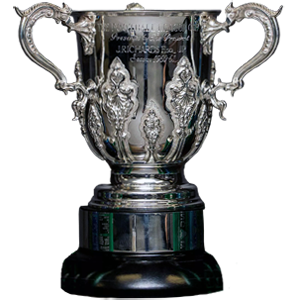
Joseph-Désiré Job and Boudewijn Zenden gave Middlesbrough an early lead. Bolton pulled a goal back, but the 2–1 scoreline held. Steve McClaren’s team won the League Cup and qualified for the UEFA Cup.
The first UEFA Cup match
Middlesbrough won its UEFA Cup debut 3–0 against Baník Ostrava. Jimmy Floyd Hasselbaink scored once and Mark Viduka twice. Boro’s first season in a UEFA competition began at the Riverside.
The comeback against Basel
After losing 2–0 at Basel, Middlesbrough fell behind again in the return leg. Four goals overturned the tie. Massimo Maccarone’s late strike made it 4–1 on the night and 4–3 on aggregate, sending Boro into the semi-finals.
Maccarone heads Boro into the final
A 1–0 defeat in Bucharest was followed by another two-goal deficit at the Riverside. Middlesbrough nevertheless won 4–2. Maccarone’s late header secured a 4–3 aggregate victory and the club’s first European final.
Sevilla ends the European dream
Middlesbrough lost 4–0 to Sevilla in the Eindhoven final. After a close first half, three late goals made the outcome emphatic. Reaching the final remained the club’s greatest European achievement.
The end of eleven Premier League seasons
A 2–1 defeat at West Ham United confirmed relegation. Middlesbrough returned to the Championship after eleven consecutive Premier League seasons.


2010–2019
Norwich stops promotion at Wembley
 Brentford FC1:2
 Middlesbrough FCFootball League Championship – Play-offs Match 1 · May 8, 2015 · Location: London Stadium: Griffin ParkMiddlesbrough FC3:0Brentford FCFootball League Championship – Play-offs Match 2 · May 15, 2015 · Location: Middlesbrough Stadium: Riverside StadiumMiddlesbrough FC0:2
 Norwich CityFootball League Championship – Play-offs Match 3 · May 25, 2015 · Location: London Stadium: Wembley Stadium Neutral venue
Middlesbrough beat Brentford in both semi-final legs. Norwich’s two early goals in the final went unanswered. A 2–0 defeat extended Boro’s stay in the Championship.
A draw against Brighton is enough
Middlesbrough drew 1–1 with Brighton in their direct meeting. Both clubs finished with 89 points, but Boro’s superior goal difference decided the second automatic promotion place. Aitor Karanka brought the club back to the Premier League after seven years.
Relegated again after one season
A 3–0 defeat at Chelsea confirmed relegation. The Premier League return lasted one season. Middlesbrough had scored too rarely despite a comparatively solid defence.


2020–2029
Manchester United and Tottenham are eliminated
After a 1–1 draw at Manchester United, Middlesbrough won the shoot-out 8–7. Josh Coburn then decided the Tottenham match in extra time. Two Premier League clubs were beaten by the second-tier side in the FA Cup.
Coventry ends Carrick’s promotion bid
 Coventry City0:0Middlesbrough FCEFL Championship – Play-offs First leg · May 14, 2023 · Location: Coventry Stadium: Coventry Building Society ArenaMiddlesbrough FC0:1Coventry CityEFL Championship – Play-offs Second leg · May 17, 2023 · Location: Middlesbrough Stadium: Riverside Stadium
After a goalless first leg, Coventry won 1–0 at the Riverside. Middlesbrough was eliminated in the play-off semi-final. Michael Carrick’s first season as head coach had taken the club to fourth place.
Chelsea overturns the League Cup semi-final
Middlesbrough won the first leg 1–0 through Hayden Hackney’s goal. At Stamford Bridge, Chelsea won 6–1. Boro’s run ended with a 6–2 aggregate defeat.
An unusual return to the play-off final
Middlesbrough FC0:0 Southampton FCEFL Championship – Play-offs Match 1 · May 9, 2026 · Location: Middlesbrough Stadium: Riverside StadiumSouthampton FC2:1a.e.t.Middlesbrough FCEFL Championship – Play-offs Match 2 · May 12, 2026 · Location: Southampton Stadium: St Mary’s Stadium
 Hull City1:0Middlesbrough FCEFL Championship – Play-offs Match 3 · May 23, 2026 · Location: London Stadium: Wembley Stadium Neutral venue
Middlesbrough lost the semi-final to Southampton 2–1 on aggregate. After Southampton was expelled for unauthorised filming of training sessions, Boro was reinstated into the final. Hull City won it 1–0 with a late goal, leaving Middlesbrough in the Championship.
Southampton had won the semi-final on the pitch but lost its place in the final through expulsion. Its appeal against the disciplinary ruling was dismissed.
The new crest is introduced
Middlesbrough introduced a new round crest for its 150th anniversary. It restores 1876 as the founding year and combines the lion with details inspired by the Tees and Roseberry Topping. An additional gold anniversary version is used only during the 2026–27 season.
A win in the 150th-anniversary fixture
Middlesbrough beat Wolverhampton 1–0 in its official anniversary fixture. Will Lankshear headed the winner. Boro wore a special blue anniversary kit and celebrated 150 years of history at the Riverside.


