The history of Rot-Weiss Essen
Milestones and background from the club's history, in chronological order.
Categories
Competitions
Nicknames through the years Three names tell a story of near misses, late goals and an unbeaten season. Read the storiesClose the stories
1900–1909
The roots in Vogelheim
Rot-Weiss Essen traces its tradition to Sportverein Vogelheim in 1907. A group including the Melches brothers turned football played on various pitches into an organised club in northern Essen.
February 1, 1907 is the club’s traditional birthday. Football enthusiasts had met before then; a formal legal foundation on that particular day is not recorded. From 1910, the Vogelheim players competed as the second football team of Turnerbund Bergeborbeck.
1910–1919
SuS Emscher becomes independent
The footballers left Turnerbund Bergeborbeck and formed Spiel- und Sportverein Emscher. They joined the West German football association in 1913 and registered as Spiel und Sport 1912, Essen Bergeborbeck in 1921.
1920–1929
A permanent home on the future Hafenstraße
From 1920, the club played at Vogelheimer Straße 97, later renamed Hafenstraße. The football pitch gradually developed into the ground that would shape club life for decades.
Rot-Weiss Essen takes shape
In 1923, most of Turnerbund Bergeborbeck’s footballers joined SuS 12. In December, the new football section was first mentioned under the name Rot-Weiss Essen.
The development brought together footballers from Vogelheim and Bergeborbeck. Turnerbund continued as a separate association, while Georg Melches became a central figure in building Rot-Weiss Essen. The club emblem appeared on its newsletter by early 1925.
1930–1939
First promotion to the Gauliga Niederrhein
A 3–2 victory over VfR Ohligs secured promotion to the Gauliga Niederrhein. Rot-Weiss Essen had reached the highest regional division of the period for the first time.


1940–1949
Rebuilding amid the ruins
Meeting on the muddy pitch in front of the ruined stand, members resolved to rebuild. The Hafenstraße ground had suffered severe damage during the Second World War.
Rebuilding made the later sporting rise possible. Modern stands and facilities followed during the 1950s. The main stand constructed between 1954 and 1957 combined spectator seating with spaces for the club’s everyday activities.
1950–1959
The first DFB-Pokal triumph
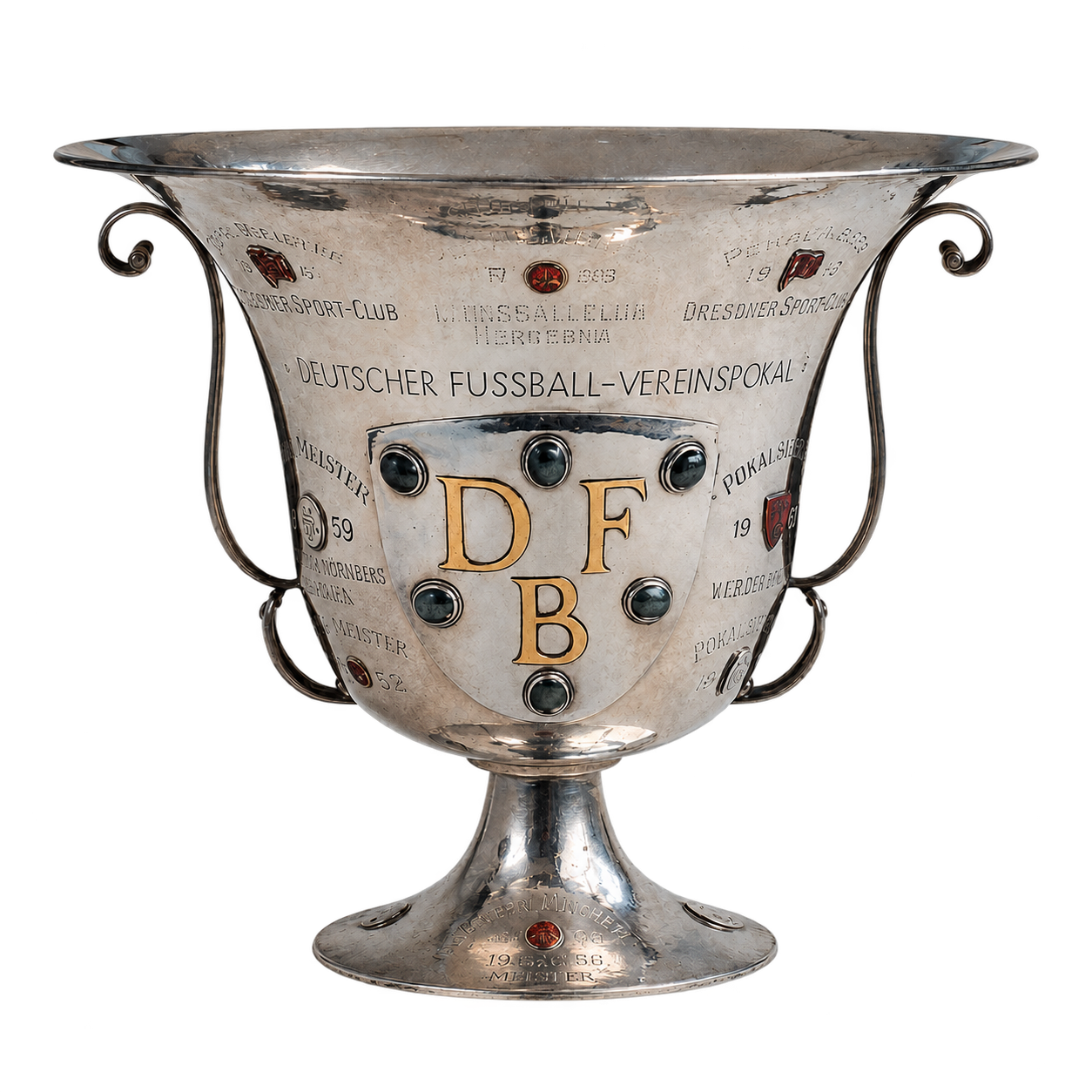
Rot-Weiss Essen beat Alemannia Aachen 2–1 in the final at Düsseldorf’s Rheinstadion to win their first national cup title.
The team featuring August Gottschalk, Helmut Rahn and goalkeeper Fritz Herkenrath embodied the club’s most successful era. Winning the cup strengthened Essen’s position among the leading clubs in West German football.
German champions after a 4–3 final
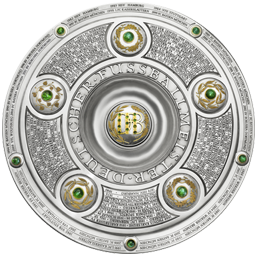
RWE defeated Kaiserslautern 4–3 at Hannover’s Niedersachsenstadion. Franz Islacker scored three goals, including the winner in the 85th minute, with Fred Röhrig contributing Essen’s other goal.
Under coach Fritz Szepan, Rot-Weiss Essen won the 1954/55 German championship. Essen recovered from an early deficit, built a lead and were then pegged back to 3–3 before Islacker settled the final.
Germany’s European Cup debut
The 4–0 defeat by Hibernian at Hafenstraße was the first European Cup match played by a German club. RWE had been invited to the new competition before the German championship final.
The first European adventure ends
A 1–1 draw at Easter Road could not turn the tie around. Rot-Weiss Essen lost 5–1 on aggregate to Hibernian, with Fritz Abromeit scoring the club’s first European Cup goal.
A floodlight first for the Ruhr
RWE inaugurated the first stadium floodlights in the Ruhr with a 4–0 win over Racing Strasbourg. It was also the club’s 100th international friendly.
Georg Melches made international matches part of the club’s development. They brought sporting exchanges and revenue for ground improvements, while the new lights made evening matches possible.


1960–1969
Promotion to the Bundesliga
Despite losing 1–0 to St. Pauli, RWE won their promotion group. Both clubs finished with eight points, but Essen’s superior goal average secured their first place in the Bundesliga.
Relegation after the first Bundesliga season
A goalless home draw with Eintracht Braunschweig confirmed relegation. With 25 points and one match remaining, RWE could no longer reach safety.
A second Bundesliga promotion
A 3–1 victory over Osnabrück secured a return to the Bundesliga. RWE had 13 points from seven group matches and, with one game left, no rival could overtake them.


1970–1979
Four goals conceded at Bökelberg
A 4–3 defeat at Borussia Mönchengladbach confirmed another relegation. With two points awarded for a win, even victory in the final match could no longer secure survival.
A draw in Darmstadt secures promotion
A 2–2 draw at Darmstadt 98 took RWE to ten points in the promotion round. With two matches remaining, first place in the group was secure.
The team featuring Willi Lippens returned to the top flight. The ensuing Bundesliga spell lasted until 1977 and became the club’s longest uninterrupted stay.
An 8–1 defeat ends the Bundesliga era
The home defeat by Eintracht Frankfurt made relegation certain. With two games remaining, RWE could no longer gain enough points to reach a safe position.


1980–1989
The replay confirms relegation
RWE lost the replayed season finale 3–2 at Schalke. Their 29 points left them in the relegation places, sending the club into the third tier for the first time in the post-war era.
Five goals secure a return to professional football
A 5–1 win over ASC Schöppingen secured one of the two promotion places. Played at a neutral ground in Münster, the match brought RWE back to the 2. Bundesliga.


1990–1999
A licence withdrawal rather than sporting relegation
RWE were denied a 2. Bundesliga licence in 1991 because of their financial situation. The enforced move to the Oberliga Nordrhein led to many players leaving, and Jürgen Röber took charge of rebuilding the team.
German amateur champions after extra time
RWE beat SpVgg 05 Bad Homburg 3–2 after extra time in the final. The German amateur championship was the club’s first national title since becoming German champions in 1955.
After the licence withdrawal, Röber assembled a new team. The title gave the club fresh sporting confidence and became one of the defining achievements of that difficult period.
Röber’s team returns to the second tier
A 3–1 victory at Preußen Münster secured first place in the promotion group. After two years outside professional football, RWE returned to the 2. Bundesliga.
Another licence withdrawal in 1993/94
Following the club’s disclosure of agreements with creditors that had not been declared, the DFB withdrew RWE’s licence. Their second-half league fixtures did not count towards the standings, and they subsequently entered the Regionalliga West/Südwest.
Two goals book the trip to Berlin
A 2–0 victory over Tennis Borussia took RWE into the DFB-Pokal final. The home semi-final win provided a sporting high point amid the severe licence crisis.
Almost 30,000 Essen supporters at the cup final
RWE lost 3–1 to Werder Bremen at Berlin’s Olympiastadion. Almost 30,000 Essen supporters travelled to the final, making the day a special chapter in the club’s supporter culture despite the defeat.
The occasion helped establish a friendship between supporters of the two clubs. Three Essen fans had even walked to Berlin, demonstrating their commitment to a club struggling financially.
The first Lower Rhine Cup victory
A 3–1 final victory over Bocholt gave RWE their first Lower Rhine Cup. The regional title opened another route into the DFB-Pokal.
A major effort brings promotion
 SC Verl3:0
 Wuppertaler SVRegionalliga West/Südwest Match 2 · May 19, 1996 · Location: Verl Stadium: Stadion an der Poststraße
RWE beat Eintracht Trier 2–0 while Wuppertal lost 3–0 at Verl. Together, the results secured Essen’s promotion to the 2. Bundesliga with two of their own matches remaining.
Under Rudi Gores, the team found stability during the run-in. The club also had to overcome a difficult financial licensing process before their sporting success led back to the second tier.
A draw in Mannheim is not enough
A 3–3 draw at Waldhof Mannheim made relegation inevitable. RWE could reach no more than 34 points from their final three matches, below the total needed for safety.
A second successive relegation
A 4–1 defeat at LR Ahlen confirmed another relegation. One year after leaving the 2. Bundesliga, RWE also dropped out of the Regionalliga into the fourth-tier Oberliga Nordrhein.
An immediate return to the Regionalliga
A 2–1 win at SCB Preußen Köln secured immediate promotion. With 64 points and one match of their own left, RWE could no longer be displaced from the top of the Oberliga Nordrhein.



2000–2009
Seven goals seal promotion
RWE defeated Schalke II 7–0. The match, played in Bochum, secured a return to the 2. Bundesliga with two games remaining.
Ahlen ends hopes of survival
A 3–1 defeat at LR Ahlen confirmed relegation from the 2. Bundesliga. With 33 points and one match left, the safe positions were out of reach.
A goalless match brings another promotion
A 0–0 draw with Werder Bremen II was enough for promotion. RWE had 73 points and could no longer fall out of the promotion places before the final match.
Relegation in the centenary year
 Kickers Offenbach1:1
 Eintracht Braunschweig2. Bundesliga Match 2 · May 20, 2007 · Location: Offenbach am Main Stadium: Stadion am Bieberer Berg
RWE lost the season finale 3–0 at Duisburg. Offenbach’s simultaneous 1–1 draw with Braunschweig kept the Kickers one point ahead of Essen and confirmed relegation.
Missing out on the new 3. Liga
A 1–0 defeat by Lübeck left RWE outside the qualifying places for the new 3. Liga. Braunschweig simultaneously beat Dortmund II 2–0 and Magdeburg won 2–1 at Wuppertal, sending Essen into the newly fourth-tier Regionalliga.


2010–2019
Insolvency and the move to the fifth tier
In early June 2010, RWE applied for insolvency proceedings. After losing their Regionalliga licence, the first team competed in the fifth-tier NRW-Liga in 2010/11.
The insolvency plan sought to preserve the existing association. Supporters, partners and the city backed the rebuilding effort, with Michael Welling taking executive responsibility in October 2010.
The first step out of the crisis
A 2–1 win at Sportfreunde Siegen secured RWE’s return to the Regionalliga. Waldemar Wrobel’s side sealed promotion with five matches remaining.
The club emerges from insolvency
The insolvency proceedings were lifted with effect from June 30. Following approval of the insolvency plan, the existing association could operate independently again and begin a debt-free future.
The first men’s match in the new stadium
RWE lost 1–0 after extra time to Union Berlin in the DFB-Pokal at the new Stadion Essen. Simon Terodde settled the first men’s first-team match at the new home in the 120th minute.
The opening celebration had taken place on August 12. Built next to the old Georg-Melches-Stadion, the new ground initially had three stands, with the fourth added in 2013. Since 2022 it has been named Stadion an der Hafenstraße.
Supporters preserve the old Hafenstraße
Since May 2015, the supporter-led GMS-Initiative has developed a place of remembrance on the site of the former stadium. Exhibits and information boards keep the old Hafenstraße’s history visible beside the new ground.


2020–2029
The cup upset against Leverkusen
RWE beat Bayer Leverkusen 2–1 after extra time to reach the DFB-Pokal quarter-finals for the first time since 1994. The Regionalliga side produced one of the season’s major upsets against Bundesliga opposition.
Back in professional football after twelve years
RWE won the season finale 2–0 against Rot Weiss Ahlen while Preußen Münster beat Köln II 2–1. Both clubs finished on 87 points, with Essen’s superior goal difference deciding the championship and promotion.
The final goal differences were +51 for Essen and +47 for Münster. After twelve years outside the professional leagues, 2022/23 became Rot-Weiss Essen’s first season in the 3. Liga.
Three goals bring an eleventh Lower Rhine Cup
RWE beat Rot-Weiß Oberhausen 3–0 in the final in front of their home crowd. The club retained the Lower Rhine Cup and won the competition for the eleventh time.
A twelfth cup triumph in the derby
RWE won the final 2–1 at MSV Duisburg. Essen lifted the Lower Rhine Cup for the third consecutive year, with a record final crowd of 27,719 watching the derby.
Back at Easter Road seventy years later
A friendly at Hibernian recalled the European Cup debut of 1955. RWE lost 3–2 after leading 2–0, with around 2,100 Essen supporters making the trip to Edinburgh.
A late victory earns a play-off place
RWE won 3–2 at Ulm and finished third. Duisburg’s simultaneous 1–1 draw with Viktoria Köln kept MSV behind Essen, securing a place in the promotion play-off against a 2. Bundesliga club.
Fürth stops the promotion bid
Rot-Weiss Essen1:0 Greuther Fürth2. Bundesliga Relegation Play-off First leg · May 22, 2026 · Location: Essen Stadium: Stadion an der HafenstraßeGreuther Fürth2:0Rot-Weiss Essen2. Bundesliga Relegation Play-off Second leg · May 26, 2026 · Location: Fürth Stadium: Sportpark Ronhof | Thomas Sommer
After winning the first leg 1–0, RWE lost the return match at Fürth 2–0. Greuther Fürth won the play-off 2–1 on aggregate, leaving Essen in the 3. Liga for 2026/27.