


The history of Blackburn Rovers
Milestones and background from the club's history, in chronological order.
Categories
Competitions
Nicknames through the years Three names tell a story of near misses, late goals and an unbeaten season. Read the storiesClose the stories
1870–1879
Blackburn Rovers is founded
Seventeen men met at the St. Leger Hotel on King William Street to form a football club. John Lewis and Arthur Constantine organised the meeting, attended largely by former Blackburn Grammar School pupils.
The founders wanted to play under Association Football rules. Connections with local business and education helped the young club establish itself in the expanding football culture of industrial Lancashire. Blue and white became its lasting colours.
1880–1889
The first FA Cup final
Rovers became the first club from outside London and the Home Counties to reach the FA Cup final. Old Etonians won 1–0 at Kennington Oval, but the run demonstrated the growing strength of northern football.
The first FA Cup comes to Blackburn
Rovers defeated Scottish amateur club Queen’s Park 2–1. James Brown and Jimmy Forrest scored the goals that delivered the club’s first FA Cup.
The independent town rivals Blackburn Olympic had won the trophy a year earlier. Rovers now began their own great Cup sequence. Their team included Fergus Suter, an influential Scottish figure in the early development of English professional football.
The first successful defence
Queen’s Park were again the opponents in the final. A 2–0 win at Kennington Oval retained the FA Cup and strengthened Rovers’ position among England’s leading clubs.
A third consecutive FA Cup
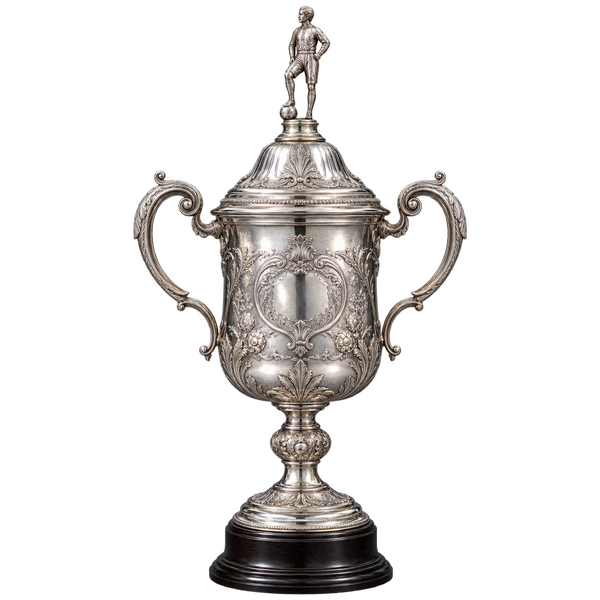
After a goalless final at Kennington Oval, the replay at Derby settled the competition. A 2–0 victory over West Bromwich Albion secured a third consecutive FA Cup. It was the first final match staged outside London.
Only Wanderers had previously won three successive FA Cups. The Football Association recognised Rovers’ achievement with a silver commemorative shield. Sowerbutts and Brown scored in the replay.
Ten goals on the league debut
Rovers were one of the twelve founder members of the Football League. Their first league match at Leamington Road ended in a 5–5 draw with Accrington.



1890–1899
Townley’s final hat-trick
William Townley scored three times in the 6–1 victory over The Wednesday, the first hat-trick in an FA Cup final. Rovers lifted the trophy for the fourth time.
Ewood Park becomes the lasting home
A goalless draw with Accrington began Rovers’ permanent home era at Ewood Park. The club left Leamington Road and developed a close connection with its new ground over subsequent generations.
Rovers had played occasional matches at Ewood before the move. It was the relocation in 1890 that made the ground the permanent home. The later freehold purchase tied up substantial funds and initially strained finances.
Five Cup wins in eight years
A 3–1 win over Notts County brought a fifth FA Cup. Dewar, Southworth and Townley scored for Rovers, whose five victories since 1884 marked an exceptional Cup era.

1910–1919
The first English league title
A 4–1 victory over West Bromwich Albion secured Rovers’ first league championship. Their 48 points were beyond reach, with no rival able to finish above 47.
Under Robert Middleton and captain Bob Crompton, the former Cup specialists became league champions. Crompton shaped the club over decades as a player and later in other roles.
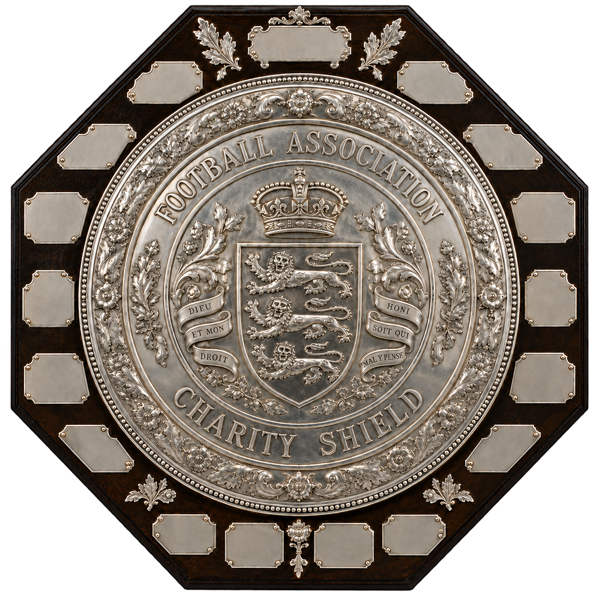
The Charity Shield and support for Titanic families
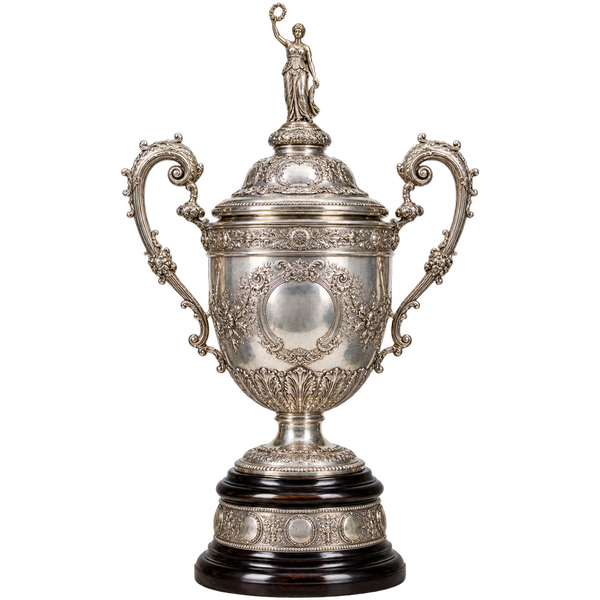
Rovers beat Queens Park Rangers 2–1 at White Hart Lane to win the Charity Shield. Match proceeds went to the relief fund for the victims of the Titanic disaster.
The second championship is secured
A goalless draw at Newcastle United took Rovers to 48 points and secured their second English championship. Their challengers could no longer reach that total.
Bob Crompton remained a central figure in the team. The First World War soon interrupted regular league football, leaving the two championships as the high points of this early league generation.




1920–1929
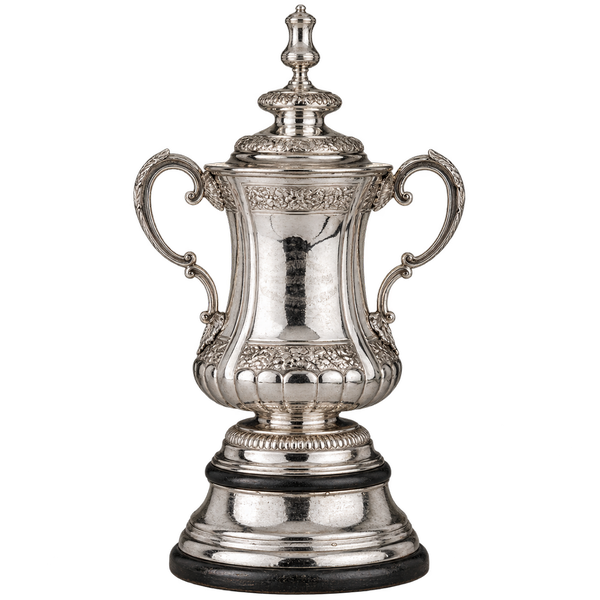
The sixth FA Cup
Rovers beat Huddersfield Town 3–1 at Wembley. Jack Roscamp scored twice and Tommy McLean once. The sixth FA Cup ended a 37-year wait for another victory in the competition.
Rovers faced the favoured Huddersfield Town side as outsiders. They wore Blackburn’s town arms for the final. Roscamp’s early goal set the direction of one of the club’s great Cup occasions.
Everton wins the Charity Shield
As FA Cup winners, Rovers faced league champions Everton at Old Trafford. A 2–1 defeat denied the club a second Charity Shield.

1930–1939
Victory cannot prevent the first relegation
 Everton FC4:3
 Birmingham FCFootball League First Division Match 2 · April 25, 1936 · Location: Liverpool Stadium: Goodison Park
Rovers won 4–2 at Aston Villa but could finish on only 35 points. Everton’s 4–3 win over Birmingham and West Bromwich Albion’s 2–2 draw at Brentford removed the final chance of survival.
Rovers had belonged to the top division since the Football League was founded. A first second-tier era now began. A strong performance in the penultimate league game could not repair the damage of the wider season.
The return is interrupted by war
The Second World War brought the regular league programme to a halt. Rovers’ newly achieved return to the First Division could resume in normal league seasons only after the war.
Back to the top flight as Second Division champions
A goalless draw at Sheffield United secured the title and promotion. Rovers completed their season on 55 points, beyond the reach of Sheffield United and Sheffield Wednesday.


1940–1949
Four goals are not enough for survival
A 4–0 win over Sheffield United could not keep Rovers in the First Division. Sunderland’s simultaneous 3–0 victory over Middlesbrough took them beyond Rovers’ maximum possible total of 34 points.
Ten years in the Second Division followed. Local talents such as Ronnie Clayton and Bryan Douglas developed into important figures at the club during this period.


1950–1959
The direct contest settles promotion
A 4–3 win at Charlton Athletic returned Rovers to the First Division. In the final league match they overtook their direct rivals and secured the second promotion place.

1960–1969
The last FA Cup final of the great post-war era
Rovers lost 3–0 to Wolverhampton Wanderers at Wembley. Dave Whelan broke his leg in the first half, and with substitutions unavailable Rovers had to continue with ten players.
As in 1928, the team wore the town arms in the final. The Cup run was among the high points of the generation associated with Ronnie Clayton and Bryan Douglas.
Eight goals on Boxing Day
Rovers’ 8–2 away victory over West Ham United became part of the memory of an exceptionally high-scoring Boxing Day. Boleyn Ground witnessed one of this Blackburn side’s most striking performances.
The long absence from the top flight begins
After losing 1–0 to West Bromwich Albion, Rovers could reach only 30 points. Aston Villa’s 2–1 win over Burnley and Northampton’s 1–1 draw at Tottenham made relegation certain.
Rovers would not play top-flight football again until 1992. The following decades were shaped by financial constraints and repeated attempts to rebuild their sporting position.


1970–1979
Into the Third Division for the first time
A 2–0 defeat at Queens Park Rangers reduced Rovers’ maximum possible total to 28. Charlton’s simultaneous 1–1 draw with Sunderland ended the chance of survival and sent Rovers into the Third Division for the first time.
The Lancashire rose becomes the shirt badge
The red Lancashire rose with the initials B.R.F.C. became the regular shirt badge. After long periods without a consistent badge, the club gained a lasting visible symbol of its regional roots.
The early Maltese cross and town arms worn in Cup finals preceded it. From 1989 the round crest combined the rose with the club name, founding year and Arte et Labore motto.
Promotion is secured
A 2–0 win over Chesterfield secured promotion from the Third Division. Under Gordon Lee the club returned to the Second Division after four seasons away.
Third Division champions
A goalless draw with Wrexham supplied the point needed for the title. Rovers finished on 60 points, ahead of Plymouth Argyle, and crowned their promotion season as Third Division champions.
A Boxing Day win in the Lancashire derby
A 3–2 victory at Burnley was one of the season’s highlights. The win at Turf Moor gave the rivalry between the two Lancashire clubs a memorable holiday occasion.
Back to the third tier
Rovers lost 3–1 to Newcastle United. Cardiff’s 2–1 win over Luton Town took their rivals beyond Blackburn’s maximum possible total of 32 points and made relegation certain.




1980–1989
Howard Kendall leads Rovers back
A 2–1 win at Bury secured an immediate return to the Second Division. Howard Kendall, the club’s first player-manager, had turned a difficult start into a strong promotion campaign.
Another Wembley trophy
A late Colin Hendry goal won the Full Members’ Cup for Rovers. The Second Division side defeated First Division opponents Charlton Athletic 1–0.
The advantage does not last
 Blackburn Rovers3:1
 Crystal PalaceFootball League Second Division · Play-offs First leg · May 31, 1989 · Location: Blackburn Stadium: Ewood ParkCrystal Palace3:0a.e.t.Blackburn RoversFootball League Second Division · Play-offs Second leg · June 3, 1989 · Location: London Stadium: Selhurst Park
After winning the first leg 3–1, Rovers lost 3–0 after extra time at Crystal Palace. Palace won the final 4–3 on aggregate, leaving Blackburn in the Second Division.


1990–1999
Jack Walker changes the outlook
Blackburn-born businessman and supporter Jack Walker took control of the club. With Kenny Dalglish as manager and major investment in the team and stadium, a new period of ambition began.
The redevelopment of Ewood Park and renewal of the team went together. Walker wanted to return his home-town club to the top, while Dalglish provided the leadership for the first step back to the top flight.
Wembley opens the road to the Premier League
Mike Newell’s penalty settled the play-off final against Leicester City 1–0. After 26 years Rovers returned to the top flight and became founder members of the new Premier League.
The return was the first major sporting success of the Walker and Dalglish era. Further strengthening of the team would soon turn Blackburn from promoted club into title contenders.
Into the Charity Shield as runners-up
Manchester United had won the league and FA Cup Double. Rovers therefore appeared at Wembley as league runners-up, losing 2–0.
The first European match
Rovers hosted Trelleborgs FF in the UEFA Cup. Their first European match ended in a 1–0 defeat at Ewood Park.
Trelleborg ends the first European campaign
A 2–2 draw in the return was not enough after the home defeat. Trelleborg won 3–2 on aggregate, ending Blackburn’s first European campaign in the first round.
Champions despite defeat at Liverpool
Rovers lost 2–1 at Anfield, but Manchester United could manage only a 1–1 draw at West Ham United. With 89 points to United’s 88, Rovers won the Premier League and their third English championship.
Jack Walker’s ambition became reality under Kenny Dalglish. Alan Shearer and Chris Sutton formed the strike partnership known as SAS, supported by a team that made Blackburn champions again 81 years after their previous league title.
The champions lose to Everton
Rovers returned to the Charity Shield as Premier League champions. A Vinny Samways goal gave FA Cup winners Everton a 1–0 victory at Wembley.
The Champions League debut
As English champions, Rovers entered the Champions League for the first time. The opening match at Ewood Park ended in a 1–0 defeat to Spartak Moscow.
Relegation four years after the title
A goalless draw with Manchester United left Rovers on 34 points. Victory in their final match could bring only 37, making relegation from the Premier League certain.




2000–2009
Remembering Jack Walker
Jack Walker died aged 71. The supporter and benefactor had enabled the return to the top flight and the 1995 championship. His name remained closely connected with Ewood Park and the memory of that era.
The return is secured at Deepdale
A 1–0 victory at Preston North End took Rovers to 90 points and secured automatic promotion. Bolton Wanderers could reach only 89. Graeme Souness brought Blackburn back to the Premier League after two years away.
The first League Cup
Rovers won their first League Cup by beating Tottenham Hotspur 2–1. Matt Jansen and Andy Cole scored at the Millennium Stadium as the promoted club crowned its first season back in the top flight with a trophy.


2010–2019
Venky’s takes over
Venky’s London Limited acquired the club from the Walker Trust. The change of ownership ended the period directly shaped by Jack Walker and his estate.
The Premier League era ends
A 1–0 defeat to Wigan Athletic made relegation certain. With one match left, Rovers could reach only 34 points. The club’s second Premier League era ended after eleven seasons.
The away win is not enough
3:0Rovers won 3–1 at Brentford. Nottingham Forest beat Ipswich Town 3–0 and finished above Blackburn on goal difference with both on 51 points. Birmingham’s 1–0 win at Bristol City secured 53 points for the other rivals.
Forest finished with a goal difference of −10 and Rovers with −12. The 1995 Premier League champions had to enter League One. Tony Mowbray remained in charge of the rebuilding effort.
Mulgrew heads Rovers back
Charlie Mulgrew’s header in a 1–0 win at Doncaster secured automatic promotion to the Championship. Under Tony Mowbray, Rovers returned to the second tier at the first attempt.


2020–2029
Szmodics secures survival
Two Sammie Szmodics goals earned Rovers a 2–0 win at champions Leicester City and secured survival on the final day. Blackburn remained in the Championship.
The difficult season ended under John Eustace with 53 points. Szmodics finished as the Championship’s leading scorer with 27 league goals.
150 years of Blackburn Rovers
150 years after the foundation, Rovers looked back on a story stretching from early Lancashire football to the Premier League championship. An official anniversary book celebrated the players, supporters and personalities who shaped the club.
