The history of Kickers Offenbach
Milestones and background from the club's history, in chronological order.
Categories
Competitions
Nicknames through the years Three names tell a story of near misses, late goals and an unbeaten season. Read the storiesClose the stories
1900–1909
Founded at the Rheinischer Hof
Kickers are founded at the Rheinischer Hof on Offenbach’s Herrnstraße on May 27, 1901.
Local football produces a club whose red and white colours and attachment to the town become central to its identity. Its earliest pitches precede the later permanent home on Bieberer Berg.
1920–1929
The first league game on Bieberer Berg
Kickers beat Union Niederrad 2–1 on Bieberer Berg.
Regular league football thus begins at the ground before its formal inauguration, establishing the home that will shape the club for generations.
The stadium is inaugurated
A 5–3 defeat by Wacker München marks the stadium’s formal inauguration.
The former parade ground gains a wooden main stand. Bieberer Berg becomes the enduring centre of Offenbach club life.
The union with VfR
Kickers and VfR Offenbach unite as VfR Kickers.
The merger is intended to pool their sporting strength, but the two club cultures and their separate grounds prove difficult to unite permanently. The partnership becomes a distinct, limited period in their histories.
Offenbacher Kickers again
The union with VfR ends in 1925 and Kickers return to their own club name.
VfR also becomes independent again. The separation ends the joint organisation while preserving the older Kickers tradition.


1930–1939
Manfred Weinberg opposes a Nazi rally
Board member Manfred Weinberg helps prevent Adolf Hitler from using the stadium for an election rally.
The club later forces Weinberg and other Jewish members out. Both resistance and exclusion form part of Kickers’ history.
1940–1949
Six goals in the second regional final
 Kickers Offenbach6:3
 1. FC KaiserslauternGauliga Südwest Second leg · April 21, 1940 · Location: Offenbach am Main Stadium: Stadion am Bieberer Berg
Following a 1–1 draw at Kaiserslautern, Kickers win the return match on Bieberer Berg 6–3.
They secure their second Gauliga Südwest championship after 1934. The overall title follows victory in the Mainhessen section and earns a place in the German championship finals.
The Southwest championship is retained
Kickers Offenbach3:2 FV SaarbrückenGauliga Südwest First leg · March 9, 1941 · Location: Offenbach am Main Stadium: Stadion am Bieberer Berg
A 3–2 home win over FV Saarbrücken is followed by a 2–2 draw at Kieselhumes.
Kickers retain the overall Gauliga Südwest championship. It is the last season before the competition is split during the war, after which Offenbach play in Hessen-Nassau.
Schalke halt Offenbach’s first semi-final run
Kickers lose 6–0 to Schalke 04 at the Glückauf-Kampfbahn.
Their first German championship semi-final ends against the eventual champions. The sporting achievements of these years take place against the background of war and Nazi rule.
A new start after the war
Kickers reconstitute themselves on September 9 after the war.
They continue the tradition established in 1901. The club become founding members of Oberliga Süd and remain in this regional top division until the Bundesliga is introduced.
Paul Oßwald takes charge
Paul Oßwald begins his long first spell in charge at Offenbach.
By 1958 he has led Kickers to two southern championships and the 1950 national final. His work establishes OFC among the leading clubs of the post-war years.
Grass arrives on Bieberer Berg
The previously grassless pitch receives its first turf.
Coach Paul Oßwald travels to England to select suitable seed. The work changes conditions on Bieberer Berg during a successful sporting period.
The southern champions lose to Mannheim
VfR Mannheim beat Kickers 2–1 in the national semi-final, played on neutral ground in Gelsenkirchen.
Offenbach had won Oberliga Süd by eleven points; regional runners-up Mannheim now prevail and go on to become German champions.
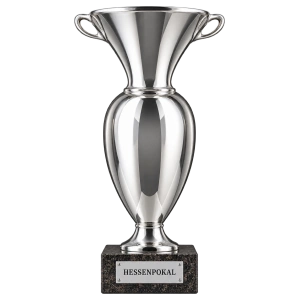
The first Hessenpokal
On December 26, Kickers beat Eintracht Frankfurt 4–1 in the final.
Anton Picard scores twice at Frankfurt’s Bornheimer Hang, with Albert Wirsching and Emil Maier also on target. The first state cup begins a long line of Offenbach successes in the competition.



1950–1959
A first German championship final
Kickers lose 2–1 to VfB Stuttgart at Berlin’s Olympiastadion.
Horst Buhtz reduces a two-goal half-time deficit, but Offenbach cannot find an equaliser. Under Paul Oßwald, the southern German champions of 1949 have now reached the national championship’s deciding match.
Schalke end the cup run
Kickers lose the DFB-Pokal semi-final against Schalke 04 on neutral ground in Wuppertal 2–1.
A place in the final eludes them. The cup run nevertheless forms part of a strong Offenbach season that also brings a second Oberliga Süd championship.
A title under floodlights
Kickers beat Eintracht Braunschweig 5–3 in the German Floodlit Cup final.
The home victory decides the second and last edition of the private invitational competition launched the previous year by Offenbach president Ludwig Mohler.
A Hessian final in Berlin
Kickers lose their second German championship final 5–3 to Eintracht Frankfurt after extra time.
The score is 2–2 after 90 minutes, and Siegfried Gast’s extra-time goal cannot prevent defeat. The derby before 75,000 spectators becomes one of the defining matches in the club’s history.


1960–1969
The Bundesliga starts without OFC
Kickers are left out when the remaining southern places in the new Bundesliga are awarded.
From 1963/64 they must play in Regionalliga Süd, ending their top-flight status. The decision becomes a lasting rupture and the starting point of the struggle to reach the Bundesliga.
Finally in the Bundesliga
A 2–0 win over TuS Neuendorf secures Kickers’ first Bundesliga promotion.
Offenbach reach 12 points in their promotion group, while Leverkusen finish their fixtures on ten and can no longer overtake them. The failed attempts of the previous years finally give way to success.

1970–1979
A second promotion to the Bundesliga
Kickers Offenbach4:1 FK PirmasensBundesliga promotion round Match 1 · June 24, 1970 · Location: Offenbach am Main Stadium: Stadion am Bieberer Berg
 VfL Wolfsburg1:0
 VfL BochumBundesliga promotion round Match 2 · June 24, 1970 · Location: Wolfsburg Stadium: VfL-Stadion am Elsterweg
Kickers finish their promotion round as group winners with a 4–1 victory over FK Pirmasens.
Their second promotion to the Bundesliga is secured. Challengers Bochum lose 1–0 at Wolfsburg on the same day and can no longer catch Offenbach even with a game still to play.
Three goals in the cup derby
Kickers beat Eintracht Frankfurt 3–0 in the quarter-final at Frankfurt’s Waldstadion.
Winfried Schäfer, Helmut Schmidt and Klaus Winkler score. The emphatic derby win becomes a central step towards the cup triumph later that month.
Extra time brings a place in the cup final
Kickers beat 1. FC Nürnberg 4–2 after extra time in the semi-final.
Victory on Bieberer Berg takes the club into their first DFB-Pokal final. Ten days later they will face 1. FC Köln in Hanover.
The DFB-Pokal comes to Offenbach
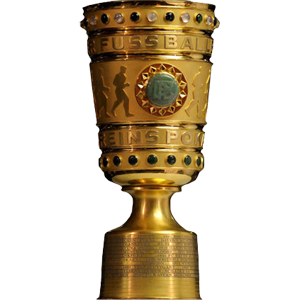
Kickers beat 1. FC Köln 2–1 at the Niedersachsenstadion to win the DFB-Pokal.
Klaus Winkler and Horst Gecks score, while Karl-Heinz Volz saves a penalty. Delayed by the World Cup, the final still belongs to 1969/70: OFC entered the competition as a second-tier club but have already returned to the Bundesliga by the time it is played.
A European night on Bieberer Berg
Kickers win their first European match 2–1 against RFC Brugeois.
Helmut Kremers overturns a deficit with two goals. The cup triumph has opened the door to the European Cup Winners’ Cup; 1970/71 remains OFC’s only season in a UEFA club competition.
Recordings shake the Bundesliga
President Horst-Gregorio Canellas plays recordings of conversations about bribery offers at his birthday party.
The Bundesliga scandal becomes public. Canellas is himself involved and is banned by the DFB, before being pardoned in 1976. The affair damages confidence in professional football far beyond Offenbach.
Unbeaten on the way back to the Bundesliga
Kickers Offenbach6:0 FC St. PauliBundesliga promotion round Match 1 · June 25, 1972 · Location: Offenbach am Main Stadium: Stadion am Bieberer Berg
 SV Röchling Völklingen1:2
 Rot-Weiss EssenBundesliga promotion round Match 2 · June 25, 1972 · Location: Völklingen Stadium: Stadion Völklingen
A 6–0 win over St. Pauli completes the promotion round and takes Kickers back to the Bundesliga for a third time.
Essen also win 2–1 at Völklingen. Offenbach and Rot-Weiss Essen both finish on 13 points, with OFC first on their superior goal record. The team had already gone through all 36 Regionalliga Süd matches unbeaten.
Six goals against the European champions
Offenbach open the Bundesliga season by beating reigning German and European champions Bayern Munich 6–0.
The match is played at Frankfurt’s Waldstadion. Otto Rehhagel’s team go top of the Bundesliga for the first time; it remains Kickers’ biggest Bundesliga victory.



1980–1989
Braunschweig turn the play-off around
Kickers Offenbach1:0 Eintracht BraunschweigBundesliga promotion play-offs First leg · June 5, 1981 · Location: Offenbach am Main Stadium: Stadion am Bieberer BergEintracht Braunschweig2:0Kickers OffenbachBundesliga promotion play-offs Second leg · June 10, 1981 · Location: Braunschweig Stadium: Städtisches Stadion an der Hamburger Straße
After winning 1–0 on Bieberer Berg, OFC lose the return match in Braunschweig 2–0.
The attempted return to the Bundesliga ends in disappointment. The two matches decide the final promotion place after the last season of the second division’s separate northern and southern sections.
Another attempt ends in the play-off
Kickers Offenbach0:1 Bayer 04 LeverkusenBundesliga promotion play-offs First leg · June 4, 1982 · Location: Offenbach am Main Stadium: Stadion am Bieberer BergBayer 04 Leverkusen2:1Kickers OffenbachBundesliga promotion play-offs Second leg · June 9, 1982 · Location: Leverkusen Stadium: Ulrich-Haberland-Stadion
Promotion also slips away against Bayer 04 Leverkusen: a 1–0 home defeat is followed by a 2–1 loss at the Ulrich-Haberland-Stadion.
Third place in the newly unified second division is not enough. A second successive play-off disappointment adds to the importance of the next campaign.
A fourth Bundesliga promotion
A late comeback against SpVgg Fürth delivers promotion.
Martin Kubosch equalises before Walter Krause heads the winner in a 3–2 victory. Lothar Buchmann’s Kickers return to the Bundesliga with two matches remaining; it remains their most recent promotion to the top flight.
Five goals on the return to the second division
Kickers beat SpVgg Bayreuth 5–0 on the last day of the promotion round.
After two years in Oberliga Hessen, they return to the second division. Both Offenbach and Bayreuth go up from the southern group, with the win ending OFC’s spell in amateur football.
Licence withdrawal and an Oberliga restart
Kickers lose their second-division licence in 1989.
After sporting relegations in 1984 and 1985 and an intervening return to the second division, the club must rebuild in Oberliga Hessen again. Financial difficulties become a major influence on its future.


1990–1999
A third-tier club reach the cup semi-final
Despite losing their league licence the previous year, Kickers reach the DFB-Pokal semi-final.
They lose 1–0 to Kaiserslautern before 28,000 spectators on Bieberer Berg, with Tom Dooley scoring. The outsiders’ run ends against the eventual cup winners.
Supporters fight to save Bieberer Berg
During the crisis years from 1991 to 1998, selling or demolishing the stadium is considered.
Supporter protests and the Offenbach-Post’s “Rettet den Bieberer Berg” campaign help prevent it. Saving their home becomes an important part of Offenbach supporter culture.
The amateur title narrowly slips away
Kickers lose the German Amateur Championship final 1–0 to Preußen Münster on their own ground.
A national title eludes them. The final nevertheless reflects the ambitions of a club seeking a route back to a higher level.
Messinese decides the replay
Kickers Offenbach2:0 FC MemmingenRegionalliga promotion play-offs Location: Stuttgart Stadium: Gottlieb-Daimler-Stadion Neutral venue
Two goals from substitute Giuseppe Messinese give Kickers a 2–0 replay victory over FC Memmingen.
At Stuttgart’s Gottlieb-Daimler-Stadion they secure a return from the fourth-tier Oberliga to the Regionalliga. A floodlight failure in the abandoned previous match had prolonged a dramatic promotion contest.
Back-to-back promotions slip away
Kickers Offenbach1:2 Tennis Borussia BerlinSecond division promotion round Match 2 · May 31, 1998 · Location: Offenbach am Main Stadium: Stadion am Bieberer Berg
After a 4–0 defeat at Siegen, Kickers also lose 2–1 to Tennis Borussia Berlin.
Their attempt to follow promotion from the Oberliga with an immediate step into the second division ends. The three-club group also decides the last German Amateur Championship.
Oliver Roth strikes in added time
Kickers Offenbach2:0 Eintracht TrierSecond division promotion round Match 1 · June 6, 1999 · Location: Offenbach am Main Stadium: Stadion am Bieberer Berg
 VfL Osnabrück1:2Kickers OffenbachSecond division promotion round Match 2 · June 19, 1999 · Location: Osnabrück Stadium: Piepenbrock-Stadion an der Bremer Brücke
Offenbach overturn a deficit to win the deciding promotion match at Osnabrück 2–1.
Dirk Vollmar equalises and Oliver Roth scores in added time. Following an earlier 2–0 win over Eintracht Trier, Kickers win the three-club round and return to the second division after ten years.


2000–2009
Championship and a second-division return
Sasa Ciric scores in the 1–0 win at Mainz as Kickers finish the season as Regionalliga Süd champions.
Promotion is decided on the same day that challengers FC Augsburg lose 2–1 to Regensburg. Thousands of travelling Offenbach supporters celebrate at the Bruchwegstadion; Hans-Jürgen Boysen’s team remain in the second division for three seasons.
A museum created by supporters
A private collection becomes the Kickers-Fan-Museum.
Thorsten Franke and a volunteer team preserve shirts, pennants and memorabilia. Club history gains a home of its own, sustained by the supporters themselves.
Relegation on the final day
A 3–0 defeat at Osnabrück and 1. FC Kaiserslautern’s simultaneous 3–0 win over Köln seal relegation from the second division on the final day.
Kickers enter the relegation places for the first time that season. The following campaign takes them into the newly founded 3. Liga.
Huber decides the Hessenpokal final
Alexander Huber’s header just before half-time delivers a 1–0 final win over Darmstadt 98.
Kickers lift their seventh Hessenpokal on Bieberer Berg. The third-division club secure another place in the DFB-Pokal.


2010–2019
Mehic strikes in added time
Kickers beat Hessen Kassel 2–1 in the Hessenpokal final at Fulda.
Steffen Haas’ opener is cancelled out late on before Sead Mehic secures the eighth state cup in added time. The final at Johannisau remains in the balance until the closing moments.
Dortmund lose the shoot-out
After 120 goalless minutes, third-tier Kickers beat Borussia Dortmund 4–2 on penalties.
Wolfgang Wolf’s team knock the eventual German champions out of the DFB-Pokal. Bieberer Berg witnesses one of OFC’s memorable modern cup nights.
Farewell to Waldemar Klein on Bieberer Berg
Supporters, companions and public figures gather on Bieberer Berg to say farewell to honorary president Waldemar Klein.
The funeral ceremony reflects his special place at the club. A foundation is also announced to carry forward his name and work.
Football celebrates the new stadium
Following the new stadium’s inauguration on June 29, Kickers celebrate its completion with a friendly against Bayer Leverkusen.
The visitors win 3–0. Four new stands and 20,500 places replace the old ground while retaining proximity to the pitch and the terrace culture.
Licence refusal and insolvency
In June 2013 the professional team lose their place in the 3. Liga after a licence is refused.
The football company files for insolvency and play continues in Regionalliga Südwest. A safe mid-table sporting finish cannot shield the club from the financial consequences.
Wolfsburg end a run of three cup wins
Kickers Offenbach2:0 Greuther FürthDFB-Pokal Match 1 · August 18, 2012 · Location: Offenbach am Main Stadium: Sparda-Bank-Hessen-StadionKickers Offenbach2:0
 Union BerlinDFB-Pokal Match 2 · October 31, 2012 · Location: Offenbach am Main Stadium: Sparda-Bank-Hessen-StadionKickers Offenbach2:0
 Fortuna DüsseldorfDFB-Pokal Match 3 · December 18, 2012 · Location: Offenbach am Main Stadium: Sparda-Bank-Hessen-StadionKickers Offenbach1:2
 VfL WolfsburgDFB-Pokal Match 4 · February 26, 2013 · Location: Offenbach am Main Stadium: Sparda-Bank-Hessen-Stadion
After three 2–0 wins over Greuther Fürth, Union Berlin and Fortuna Düsseldorf, Kickers lose the quarter-final to Wolfsburg 2–1.
The third-tier club had eliminated two Bundesliga sides and a second-division opponent. The new stadium witnesses a memorable cup campaign.
Endres secures the tenth Hessenpokal
Following a 1–1 draw with Darmstadt 98, Kickers win the penalty shoot-out 3–1.
Goalkeeper Daniel Endres saves twice. Their tenth Hessenpokal follows the first Regionalliga season after the licence refusal and gives the rebuilding effort a sporting success.
Champions with four games remaining
A 2–0 win over Saarbrücken makes Kickers Regionalliga Südwest champions early.
Their lead is now 13 points with only four fixtures remaining. Rico Schmitt’s team cannot be caught, although the title does not itself bring automatic promotion.
Magdeburg end the promotion dream
 1. FC Magdeburg1:0Kickers OffenbachThird division promotion play-offs First leg · May 27, 2015 · Location: Magdeburg Stadium: MDCC-ArenaKickers Offenbach1:31. FC MagdeburgThird division promotion play-offs Second leg · May 31, 2015 · Location: Offenbach am Main Stadium: Sparda-Bank-Hessen-Stadion
A 1–0 defeat at Magdeburg is followed by a 3–1 home loss in the return match of the promotion play-off.
Despite their commanding league season, Kickers remain in the fourth tier. The two defeats expose the severity of a system requiring champions to clear another hurdle.
Cup celebrations at Haiger
Kickers beat third-division Wehen Wiesbaden 2–1 in the final.
On neutral ground at Haiger they secure an eleventh Hessenpokal and a return to the DFB-Pokal. It is a sporting high point just weeks before insolvency proceedings return.
Provisional insolvency administration again
The professional football company enters insolvency proceedings again.
Court-appointed provisional administrator Andreas Kleinschmidt introduces himself at the club office on May 30, 2016. Just a year after the strong championship campaign, financial stabilisation is once more the central concern.





2020–2029
Remembrance at the stumbling stone
The club, city and local history group remember Manfred Weinberg and the persecuted Jewish members at his stumbling stone.
Cleaning it together links remembrance with opposition to antisemitism.
A twelfth state cup
Kickers beat TSV Steinbach Haiger 1–0 at Gießen’s Waldstadion.
The final brings the Hessenpokal back to Offenbach after six years. Their twelfth title also secures a place in the following season’s DFB-Pokal.
Remembering Hermann Nuber
Kickers mourn honorary captain Hermann Nuber, who dies aged 87.
As a player and coach, the “Iron Hermann” embodied loyalty to OFC. The main stand named during his lifetime and his bust preserve his memory.
A plaque commemorates Manfred Weinberg
A plaque about Manfred Weinberg is unveiled outside the Hermann-Nuber-Tribüne.
The city, club and remembrance working group make his story and the club’s Jewish history visible in public. The unveiling accompanies the home game against Steinbach Haiger.
A thirteenth Hessenpokal
Kickers beat Türk Gücü Friedberg 3–2 in the final in Frankfurt.
Their thirteenth Hessenpokal triumph returns them to the DFB-Pokal. The long Regionalliga era gains another successful cup occasion.
A cup upset against Magdeburg
Kickers beat second-division Magdeburg 2–1 on Bieberer Berg.
Alexander Sorge opens the scoring and Valdrin Mustafa restores the lead after the equaliser. The win takes Offenbach into the second round of the DFB-Pokal and gives their supporters another memorable evening.
125 years of Kickers Offenbach
Kickers mark their 125th birthday with a formal anniversary ceremony.
The celebrations connect memories of championship finals, the cup triumph and Bundesliga football with the present in the Regionalliga. Bieberer Berg and the attachment of supporters remain the shared point of reference.