The history of Chemnitzer FC
Milestones and background from the club's history, in chronological order.
Categories
Competitions
Nicknames through the years Three names tell a story of near misses, late goals and an unbeaten season. Read the storiesClose the stories
1890–1899
Roots in Chemnitzer SC Britannia
Chemnitzer SC Britannia begin a football tradition explicitly embraced by the later CFC. The club become Chemnitzer BC 1899 in April 1900. The independent football club Karl-Marx-Stadt is founded in 1966.
1900–1909
The Chemnitz predecessor help found the DFB
Britannia are among the founding members of the German Football Association in Leipzig. Their early role in organising German football becomes part of the heritage of the later Chemnitz club.
1930–1939
Chemnitzer BC restart after bankruptcy
After Chemnitzer BC 1899 go bankrupt, Chemnitzer BC 1933 are newly established. The financial break interrupts the club’s legal history while the local football tradition continues.
1940–1949
SG Chemnitz Nord emerge after the war
The dissolution of the earlier sports clubs after the Second World War reshapes football in Chemnitz. SG Chemnitz Nord become an important stage in its sporting restart and the later development towards CFC.
Football under the Fewa name
The post-war development leads to BSG Fewa Chemnitz. Football is now organised within a works sports association, a structure that will shape sport in East Germany for decades.
1950–1959
Fewa become Chemie Chemnitz
The football section compete as BSG Chemie Chemnitz. This stage precedes the later independent football club and forms part of the sporting heritage they explicitly preserve.
Chemnitz becomes Karl-Marx-Stadt
The state-ordered renaming of the city also changes BSG Chemie’s place name. Karl-Marx-Stadt remains the name associated with the city’s leading football side until the political changes of 1989–90.
SC Motor Karl-Marx-Stadt are founded
SC Motor Karl-Marx-Stadt are established, with the official founding celebration following on March 3. The performance-oriented football section become part of the sports club from which FCK emerge ten years later.
1960–1969
The Motor suffix is dropped
The sports club adopt the name SC Karl-Marx-Stadt. Their footballers continue in the Oberliga, a few years before becoming an independent football club.
FC Karl-Marx-Stadt are founded
The football section leave SC Karl-Marx-Stadt to form an independent football club. January 15, 1966 remains the founding date of today’s CFC, whose earlier sporting heritage reaches further back.
A crowd of 28,000 at the Fischerwiese
FCK beat Vorwärts Berlin 3–2 in front of around 28,000 at the Dr.-Kurt-Fischer-Stadion. Such large crowds help bring about a move to the bigger Sportforum for major fixtures.
A major step towards the title before 45,000
A 2–0 win against Lok Leipzig extends FCK’s advantage in the championship race. The Sportforum hosts one of the season’s defining afternoons, although the title is not yet mathematically secured.
FCK clinch the East German title in Rostock
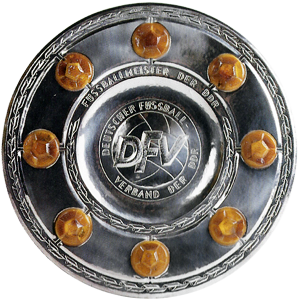
Rolf Lienemann’s goal secures a 1–0 win at Hansa Rostock and makes the championship mathematically certain with two games remaining. Horst Scherbaum’s side, including Dieter Erler and Eberhard Vogel, claim the only East German title in Chemnitz football history.
A European Cup debut against Anderlecht
As East German champions, FCK make their European Cup debut. Before 45,000 at the Ernst-Thälmann-Stadion, Belgian champions RSC Anderlecht prove too strong in a 3–1 away win.
The first European campaign ends in Belgium
Karl-Marx-Stadt also lose the return against RSC Anderlecht, this time 2–1. Their first European campaign ends in the opening round, illustrating the gap to the continent’s leading sides.
A first FDGB Cup final
FCK reach their first FDGB Cup final at Dresden’s Rudolf-Harbig-Stadion. A clear 4–0 win for 1. FC Magdeburg denies Karl-Marx-Stadt a second major trophy after their league championship.




1970–1979
Relegation three years after the title
On the final day, FCK lose their home match against Wismut Aue 2–1, played in Halle because of a ground suspension. Nineteen points are insufficient for survival, and the former champions must leave the Oberliga.
A 4–0 win over Glauchau seals the return
A clear home win against Chemie Glauchau secures an immediate return to the Oberliga. After 27 matches, Karl-Marx-Stadt lead Motor Wema Plauen by eight points; only six points remain available under the two-points-for-a-win system.
Survival with help from Jena
Karl-Marx-Stadt beat Vorwärts Stralsund 2–0 but also need help from Jena. Former FCK player Eberhard Vogel gives Carl Zeiss a 2–1 lead over Stahl Riesa from the penalty spot; Jena eventually win 3–1. FCK survive one point above Riesa and Stralsund.
A cup to end the season
A few weeks after securing survival, FCK beat BFC Dynamo 2–0 in the Fuwo Cup final. The tournament, held on this occasion only, brings Karl-Marx-Stadt another national honour.
Four goals in the regional derby
A 4–0 victory over Wismut Aue gives FCK an emphatic derby success. The performance at the Fischerwiese becomes one of the memorable encounters in this long-standing Saxon rivalry during the 1970s.
The new scoreboard records five FCK goals
Karl-Marx-Stadt inaugurate their electronic scoreboard with a 5–1 win over Wismut Aue. After falling behind, FCK unleash a second-half scoring burst, combining an improvement to their ground with a celebrated derby victory.



1980–1989
Magdeburg again defeat FCK in the final
Fourteen years after their first final, Karl-Marx-Stadt again face Magdeburg in the FDGB Cup final. At Berlin’s Stadion der Weltjugend, this final also ends in a 4–0 defeat.
Four goals at Dresden’s Dynamo-Stadion
FCK win a high-scoring Oberliga match at Dynamo Dresden 4–3. The away success reflects the progress made under Hans Meyer, whose side return to European competition at the end of the season.
One goal decides the third cup final
Karl-Marx-Stadt lose their third FDGB Cup final 1–0 to BFC Dynamo. Despite the narrow defeat, the club enjoy a strong season and finish third in the Oberliga.
The serial champions are beaten
A few weeks after losing the cup final, FCK gain revenge with a 2–1 win over BFC Dynamo. The result is a notable success in the last full East German season before the political upheaval.
A first UEFA Cup victory
Sven Köhler’s goal decides the first leg against Boavista Porto 1–0. After their 1967 campaign, FCK achieve their first victory in the UEFA Cup at the Sportforum.
Extra time decides the tie in Porto
The first-leg advantage is gone after ninety minutes. In extra time, Steffen Heidrich and Ulf Mehlhorn answer the Portuguese side’s second goal; a 2–2 draw takes FCK through a European tie for the first time.
A narrow deficit in Sion
Thomas Laudeley gives Karl-Marx-Stadt the lead at the Tourbillon. Sion turn the match around after the break to win 2–1, but the away goal keeps FCK firmly in contention for the return.
Four goals bring a UEFA Cup last-sixteen place
An assertive performance turns the tie against Sion around. A 4–1 home win following the 2–1 first-leg defeat takes Karl-Marx-Stadt into the last sixteen, making autumn 1989 the high point of their European history.
Wienhold puts FCK ahead in Turin
Lutz Wienhold’s opening goal raises hopes of an upset at the Stadio Comunale. Late goals from Salvatore Schillaci and Pierluigi Casiraghi turn the match in Juventus’s favour for a narrow 2–1 win.
Juventus end the European run
Juventus also win the return, 1–0 at the Sportforum, ending FCK’s run in the last sixteen. The Turin side go on to win the UEFA Cup, while Karl-Marx-Stadt’s encounters with the favourites become a special part of club memory.



1990–1999
FCK become Chemnitzer FC
Following the restoration of the city’s name, the club also adopt Chemnitz again. FC Karl-Marx-Stadt become Chemnitzer FC, combining sporting continuity with political and social change.
European football under the new name
As the last East German runners-up, the club now named Chemnitzer FC face Borussia Dortmund in the UEFA Cup. The first leg at the Westfalenstadion ends in a 2–0 defeat.
The return on the eve of reunification
On the day before German reunification, Chemnitz also lose the return against Dortmund 2–0. The club’s third campaign in a UEFA competition ends in the opening round.
A draw secures a place in the 2. Bundesliga
A 1–1 draw against HFC Chemie secures fifth place in the NOFV-Oberliga on the final day and direct admission to the 2. Bundesliga. The unification of the East and West German league systems begins a new sporting era.
Werder fall after extra time
Second-tier Chemnitz beat Werder Bremen 2–1 after extra time in the DFB Cup quarter-final. Victory at the Sportforum puts the club into the last four of the unified German cup competition for the first time.
Hertha’s second team end the dream of a final
Before 56,540 at the Olympiastadion, CFC lose the DFB Cup semi-final 2–1 to Hertha BSC II. After beating Werder, Chemnitz’s deepest run in the competition ends one step short of the final.
Victory is not enough for second-tier survival
Chemnitz beat Lübeck 2–1 on the final day but leave the 2. Bundesliga after five years. Mainz beat Bochum 1–0 while Hertha draw 0–0 at Wattenscheid. CFC finish fifteenth with 42 points, below Hertha on goal difference despite having the same points total.
A first Saxony Cup for Chemnitz
A 3–0 win over Dresdner SC brings the first team their first Saxony Cup. Success at the Fischerwiese begins a long sequence of state cup victories and secures a place in the DFB Cup.
A shoot-out keeps the cup in Chemnitz
The final against Erzgebirge Aue remains 1–1 after extra time. CFC win the shoot-out 4–3 and retain the Saxony Cup for the first time.
Kujat’s goal brings a return to the 2. Bundesliga
 VfL Osnabrück1:0Chemnitzer FC2. Bundesliga promotion play-offs First leg · May 30, 1999 · Location: Osnabrück Stadium: Bremer BrückeChemnitzer FC2:0VfL Osnabrück2. Bundesliga promotion play-offs Second leg · June 6, 1999 · Location: Chemnitz Stadium: Stadion an der Gellertstraße
After losing 1–0 at the Bremer Brücke, CFC turn the promotion tie against Osnabrück around. Danilo Kunze and Ronny Kujat score in a 2–0 second-leg win. Three years after relegation, Chemnitz return to the second tier.
A successful second-tier homecoming
In their first home game after promotion, Chemnitz beat Borussia Mönchengladbach 2–0. The Fischerwiese, modernised for the second-tier return, is sold out with 12,500 spectators.
Floodlights arrive at the Fischerwiese
The second-tier match against 1. FC Köln is the floodlit premiere at Gellertstraße. Four new masts make evening games possible, although the match ends in a 3–1 defeat.


2000–2009
The mathematical escape route ends in Ahlen
A 5–2 defeat at LR Ahlen makes CFC’s second relegation certain. With eleven points and six matches left, they can reach only 29. Fourteen rivals already have at least 30 points before the match, placing survival beyond reach.
Sachsen Leipzig win after extra time
At Leipzig’s Zentralstadion, Chemnitz lose the Saxony Cup final 2–1 after extra time. CFC have to wait until the following year for their next state cup success.
Defeat by Wattenscheid ends survival hopes
The postponed home match against Wattenscheid ends in a 3–1 defeat. With 21 points and four games left, CFC can reach only 33 points. Fifteen rivals already have more, leaving Chemnitz relegated from the Regionalliga to the Oberliga.
A cup triumph in Plauen
CFC win the Saxony Cup final at VFC Plauen 1–0. During a difficult period for the club, their third state cup success provides a sporting lift and another DFB Cup place.
Sachsen Leipzig are beaten in the final
A 1–0 win over FC Sachsen Leipzig brings the Saxony Cup back to Chemnitz. Before 7,750 at the Fischerwiese, the club claim their fourth title in the competition.
Regionalliga football after restructuring
CFC begin the new Regionalliga Nord with a 1–1 draw against Energie Cottbus II. After two Oberliga seasons, the club return to the Regionalliga, which now forms the fourth tier following the introduction of the 3. Liga.


2010–2019
A high-scoring cup derby against Aue
CFC beat Erzgebirge Aue 3–2 in the Saxony Cup final. The Regionalliga side win the state cup for the fifth time, securing another appearance on the national cup stage.
Chemnitz upset St. Pauli
Fourth-tier Chemnitz beat Bundesliga side St. Pauli 1–0 in the DFB Cup first round. The home victory makes the Fischerwiese the scene of another cup upset.
Stuttgart need extra time
After beating St. Pauli, CFC also compete strongly against VfB Stuttgart. The Bundesliga side need extra time to settle the second-round tie 3–1.
Förster’s goal seals a first promotion to the 3. Liga
Benjamin Förster decides the home game against RB Leipzig with his twenty-fifth league goal of the season. A 1–0 win on the penultimate day secures Gerd Schädlich’s side the Regionalliga Nord championship and their first promotion to the 3. Liga, established in 2008.
RB Leipzig prevent a double
Shortly after securing promotion, Chemnitz lose the Saxony Cup final at RB Leipzig 1–0. CFC miss the opportunity to crown a successful season with a second trophy.
Nine goals in the final at the Pfaffenberg
Third-tier Chemnitz need extra time against sixth-tier VfL Hohenstein-Ernstthal. A 5–4 win brings a sixth Saxony Cup, but the underdogs turn the match into one of the competition’s most unusual finals.
RB Leipzig win the final despite Chemnitz’s lead
Chemnitz lead the Saxony Cup final 2–1 at half-time. RB Leipzig turn the match around after the interval to win 4–2, denying CFC a successful defence of the trophy.
A farewell before the stadium rebuild
A goalless friendly against Kaiserslautern provides a farewell evening before the phased stadium rebuild. Construction starts shortly afterwards, with CFC continuing to play home matches at the site during the work.
Extra-time cup success in Neugersdorf
FC Oberlausitz take CFC into extra time. Chemnitz prevail 3–2 away from home to win the Saxony Cup for the seventh time.
Ten goals and a shoot-out on a cup night
After 3–3 in normal time and 5–5 after extra time, the tie against Mainz is decided from the spot. Chemnitz win the shoot-out 5–4. Anton Fink converts the decisive kick to end one of the most spectacular cup ties in club history.
An eighth Saxony Cup at Zwickau’s Sportforum
CFC win the final against FSV Zwickau 2–0 at the Sportforum Sojus 31. Chemnitz retain the cup and extend their record to eight titles.
The new stadium opens against Gladbach
Following June’s open day, Borussia Mönchengladbach visit for the official opening match. The 1–0 defeat is secondary to the occasion: after rebuilding between 2014 and 2016, CFC have a fully renewed football arena at their familiar home.
A ninth cup after victory at Lok
A 2–1 win at the Bruno-Plache-Stadion sees Chemnitz beat Lok Leipzig in the Saxony Cup final. Their ninth title underlines CFC’s prominent place in the competition.
Bayern visit the sold-out new stadium
A crowd of 15,015 watch the DFB Cup tie against Bayern Munich. The record champions win 5–0, while the occasion sets an early attendance landmark at the new stadium.
CFC file for insolvency
Financial difficulties lead to an application for insolvency proceedings, which open on June 29. The club begin a restructuring process lasting several years, seeking to secure the association’s future and reorganise professional football.
The points deduction becomes final
The DFB deduct nine points from CFC following the insolvency application. The club do not appeal against the ruling issued on April 23, which becomes final on May 2. With the deduction, survival in the 3. Liga is beyond reach and Chemnitz must restart in the Regionalliga.
A separate company for professional football
Chemnitzer FC Fußball GmbH is established. Separating the professional operation creates a new economic structure during the restructuring process, while the registered association continues to exist.
A memorial ceremony causes a major controversy
Before the 4–4 draw against Altglienicke, a stadium ceremony commemorates Thomas Haller, a co-founder of the Hoonara hooligan group. The public tribute draws widespread criticism; managing director and match organiser Thomas Uhlig resigns the next day. The episode shapes debate about responsibility and the club’s supporter culture.
A draw against Meuselwitz secures the return
A 1–1 draw on matchday 32 makes CFC Regionalliga Nordost champions with games to spare. Daniel Frahn’s opening goal and the visitors’ equaliser leave Chemnitz with the decisive point. They return to the 3. Liga after one year.
A tenth Saxony Cup completes the double
Three weeks after winning the league, Chemnitz beat FSV Zwickau 2–0 in the cup final. A tenth Saxony Cup accompanies promotion, completing a double in 2018/19.
Hamburg prevail from the penalty spot
After a 2–2 draw with Hamburger SV, extra time produces no winner. CFC lose the shoot-out 6–5, going out after a hard-fought cup night against higher-division opposition.




2020–2029
Four goals against Rostock are not enough
CFC beat Hansa Rostock 4–2 on the final day. A simultaneous goalless draw between Waldhof Mannheim and Zwickau leaves FSV above Chemnitz on goal difference with the same points total. The return to the 3. Liga lasts one season.
An eleventh title in Eilenburg
In the Saxony Cup final delayed by the pandemic, Chemnitz beat FC Eilenburg 2–1. CFC retain the previous year’s trophy and win the competition for the eleventh time.
The insolvency proceedings end
After almost three years, the insolvency proceedings involving Chemnitzer FC e.V. come to an end. Completing the restructuring gives the association a renewed economic basis for rebuilding.
The final behind closed doors ends in extra time
At the Sportschule Egidius Braun ground, Chemnitz lose the Saxony Cup final against Lok Leipzig 1–0 after extra time. Pandemic restrictions keep spectators away. Following wins in 2019 and 2020, CFC miss a third successive cup triumph.
Sky blue brings responsibility
The members’ meeting adopts Chemnitzer FC’s mission statement. The club set out their values and responsibilities as a member-led association with a long football heritage. Subsequent review and development of the statement accompany their social renewal.
Chemnitz make it a dozen
Before more than 10,000 spectators, CFC come from behind to beat Chemie Leipzig 2–1 in the Saxony Cup final. A twelfth title further extends the club’s record in the competition.
Union Berlin need extra time
Chemnitz push Bundesliga side Union Berlin to the limit in the DFB Cup. Union need extra time to prevail 2–1, with the Regionalliga club narrowly missing another cup upset.
Lok Leipzig win the final
Defending champions Chemnitz lose the Saxony Cup final at Lok Leipzig 3–0. CFC relinquish the trophy after claiming their twelfth success the previous year.
The Gellertstraße gains the eins name
Energy company eins become the stadium’s naming partner. The home ground adopt the name eins-Stadion – An der Gellertstraße, retaining the familiar reference to Gellertstraße.
Sixty years as an independent football club
Chemnitzer FC mark sixty years since their foundation as FC Karl-Marx-Stadt. The anniversary connects memories of the East German champions and European nights with the club history continued under the Chemnitz name since 1990.