


The history of Cardiff City
Milestones and background from the club's history, in chronological order.
Categories
Competitions
Nicknames through the years Three names tell a story of near misses, late goals and an unbeaten season. Read the storiesClose the stories
1890–1899
Beginnings beside the river
Members of Riverside Cricket Club formed Riverside AFC in the summer of 1899 to keep playing sport together during winter. Bartley Wilson organised the new club. Its first shirts had chocolate and amber quarters, and its home was Sophia Gardens.
The club grew out of the community life of Riverside. Wilson remained the driving force behind its development from a local amateur club into the professional representative of the Welsh capital.
Riverside AFC’s first match
Riverside AFC hosted Barry West End at Sophia Gardens and lost 9–1. Wilson and his colleagues continued arranging friendlies despite that difficult start. Entry into the Cardiff & District League followed in 1900/01.


1900–1909
Joining forces with Riverside Albion
Riverside AFC merged with neighbouring Riverside Albion. The union strengthened the future Cardiff City, whose own foundation remained in 1899.
Riverside AFC becomes Cardiff City
After Cardiff gained city status in 1905, Wilson wanted the club to carry its city’s name. Following progress through amateur football, the regional association approved the name Cardiff City on September 5, 1908.
1910–1919
The move into professional football
Cardiff City was incorporated as a company while preparing to turn professional. Jack Evans became its first professional player and Davy McDougall its player-manager. City joined the Southern League’s Second Division for 1910/11.
Professionalisation continued the club tradition established in 1899. A suitable football ground was as important to that step as the recruitment of experienced players.
Ninian Park opens its gates
Ninian Park opened with a friendly against English champions Aston Villa. Cardiff City lost 2–1, with Jack Evans scoring for the hosts. Blue shirts and white shorts marked the start of an almost century-long relationship between club and ground.
How the Bluebirds got their name
A production of Maurice Maeterlinck’s play The Blue Bird at the New Theatre in October 1911 inspired the nickname Bluebirds. It became associated with the club’s blue shirts and an enduring part of its identity.
Fred Stewart builds a successful side
Fred Stewart arrived from Stockport County in May 1911 to take charge. Billy Hardy was among his first signings. Alongside trainer George Latham, Stewart built the side that would take Cardiff City from the Southern League to the English top flight and Wembley.
The first Welsh Cup comes to Cardiff
Following a goalless final against Pontypridd at Ninian Park, Cardiff City won the replay 3–0 at Ynys Field in Aberdare. City became the first club from South Wales to lift the Welsh Cup.
The first Southern League promotion
A 3–0 win over Luton Town on Good Friday secured Cardiff City’s first professional promotion. Jack Burton scored twice and his brother George once. The final record for 1912/13 also made City Southern League Second Division champions: eighteen wins, five draws and just one defeat.
The First World War interrupts league football
Regular league football stopped after the 1914/15 season. Players and club members served in the war. Fred Keenor was wounded on the Somme but later returned to play; Lord Ninian Crichton-Stuart, after whom the ground was named, was killed in 1915.


1920–1929
Cardiff City is elected to the Football League
The Football League’s members elected Cardiff City to the Second Division. Entry came through election after City had finished fourth in the 1919/20 Southern League. Fred Stewart remained in charge as the club entered its new league.
Five goals on the Football League debut
Cardiff City won its first Football League match 5–2 at Stockport County. That winning start began a season which immediately took the newcomers to the top end of the Second Division.
Immediate promotion to the First Division
A 2–0 win over Wolverhampton secured promotion in Cardiff City’s first Football League season. Fred Stewart’s side finished runners-up in the Second Division.
A Welsh club in the English top flight
Cardiff City made its First Division debut against Tottenham. The 1–0 defeat at Ninian Park began a difficult opening run of six losses, before a strong recovery carried City to fourth place.
Len Davies scores the first league hat-trick
Len Davies scored Cardiff City’s first Football League hat-trick in a 6–3 win over Bradford City. The Cardiff-born forward went on to become the club’s record scorer with 181 league and cup goals.
The championship slips away on goal average
Cardiff City drew 0–0 at Birmingham, with Len Davies missing a penalty. Huddersfield beat Nottingham Forest 3–0 on the same day. Both clubs finished with 57 points, but Huddersfield’s narrowly superior goal average decided the championship.
At the time, goals scored were divided by goals conceded. Cardiff’s 61–34 record produced a ratio of about 1.794, compared with Huddersfield’s 60–33 and approximately 1.818. Second place remains City’s highest finish in the English top flight.
The first FA Cup final
Cardiff City reached its first FA Cup final. Fred Tunstall scored the only goal for Sheffield United at Wembley. Although beaten, Stewart’s side showed how far the club had come since election to the Football League.
The heaviest league defeat
Cardiff City lost 11–2 at Sheffield United on New Year’s Day. The Bramall Lane score remained the club’s heaviest league defeat, a severe setback between its first two Wembley finals.
The FA Cup leaves England
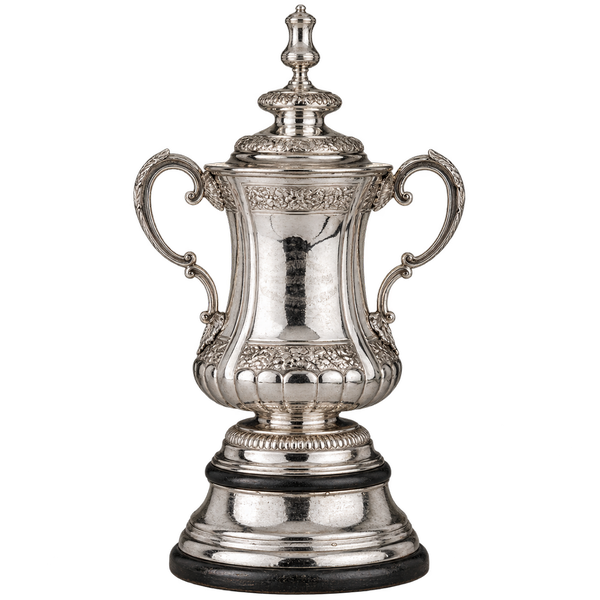
Hughie Ferguson scored the only goal of the final against Arsenal. Captain Fred Keenor received the trophy from King George V. Cardiff City became the first club from outside England to win the FA Cup.
The first FA Cup final broadcast live on radio brought the victory to listeners far beyond Wembley. The side featuring Keenor, Billy Hardy, Tom Farquharson and Ferguson received a triumphant welcome in Cardiff.
Two national cups in one season
A 2–0 win over Rhyl at the Racecourse Ground added the Welsh Cup. Len Davies and Sam Irving scored. Cardiff City held the English and Welsh national cups in the same season.
The Charity Shield also goes to Cardiff
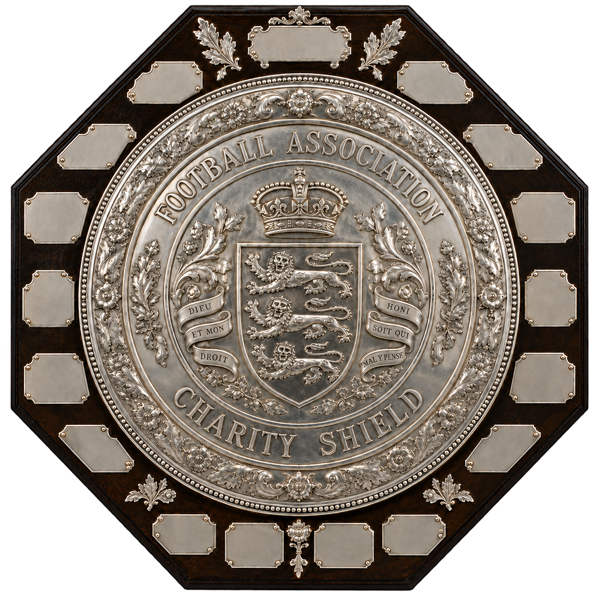
Cardiff City beat Corinthian FC 2–1 at Stamford Bridge. Hughie Ferguson and Len Davies overturned a deficit late in the match. The Charity Shield completed a year of three cup successes.
First relegation despite the best defensive record
Burnley’s 3–2 win over Huddersfield made Cardiff City’s relegation certain. City eventually finished with the fewest goals conceded in the First Division, but only twenty-five goals scored.







1930–1939
The fall into the Third Division South
Cardiff’s 0–0 draw at Millwall and Preston’s goalless match against Swansea confirmed a second relegation in three years. The 1927 FA Cup winners now faced football in the Third Division South.
Nine goals against Thames
Cardiff City set its league scoring record with a 9–2 win over Thames AFC at Ninian Park. Walter Robbins scored five times. Former Cardiff forward Len Davies scored one of the visitors’ two goals.
Fred Stewart’s long tenure ends
The club accepted Fred Stewart’s resignation after twenty-two years. The great successes of the 1920s had given way to relegations and financial hardship. Bartley Wilson initially took charge himself.
Fire destroys the main stand
The central stand at Ninian Park was destroyed by fire in January 1937. The damage added to the problems of a club already enduring difficult sporting and financial times.
Another war and rebuilding with young players
The Second World War again interrupted regular league football. Manager Cyril Spiers recruited young local players, laying foundations for the post-war recovery. Former Cardiff player Jackie Pritchard was killed in the war in 1943.


1940–1949
Dynamo Moscow visits Ninian Park
During its celebrated tour of Britain, Dynamo Moscow won 10–1 at Ninian Park. Cardiff City experienced the Soviet visitors’ technical quality in one of the most unusual friendlies in its history.
Champions and promoted after the war
A 2–0 win at Exeter made Cardiff City Third Division South champions and secured promotion. Billy McCandless’s side finished with sixty-six points and went unbeaten in its final twenty-one league matches.


1950–1959
A return to the English top flight
Cardiff City won its final league game 3–1 against Leeds. The victory secured second place and promotion, with superior goal average separating City from Birmingham on equal points. Cardiff returned to the First Division after twenty-three years.
57,893 spectators against Arsenal
A goalless league match against Arsenal drew 57,893 spectators to Ninian Park. It remained the largest attendance for a Cardiff City home match at the old ground.
Five years in the First Division come to an end
A 3–2 home defeat by Manchester United confirmed Cardiff City’s relegation. After five seasons in the top flight, the club returned to the Second Division.
Steve Mokone scores on his debut
South African forward Steve Mokone scored on his Cardiff City debut in a 3–2 win over Liverpool. A pioneer of South African football in Europe, Mokone’s spell in Cardiff was brief.
Four goals on Shankly’s Liverpool debut
Cardiff City won 4–0 at Anfield in Bill Shankly’s first match as Liverpool manager. The away victory was a memorable result for Bill Jones’s side on its way towards promotion.


1960–1969
Graham Moore delivers promotion
Graham Moore’s goal in a 1–0 win over Aston Villa secured Cardiff City’s promotion. Bill Jones’s side returned to the top flight after three years in the Second Division.
Sixteen goals in the Welsh Cup
Cardiff City beat Knighton Town 16–0 in the fifth round of the Welsh Cup. Derek Tapscott scored six goals. It became the biggest victory in the club’s history.
The final First Division spell ends
A 2–2 draw at Aston Villa was not enough to prevent Cardiff City’s relegation. The club left the First Division after two seasons and would not return to the top flight until promotion to the Premier League in 2013.
The first European campaign
As Welsh Cup winners, Cardiff City entered the European Cup Winners’ Cup for the first time. A 0–0 draw at Esbjerg was followed by a 1–0 win at Ninian Park through Peter King. Jimmy Scoular’s side reached the quarter-finals in its first European season.
John Toshack scores at sixteen
John Toshack scored on his debut in a 3–1 win over Leyton Orient, aged sixteen years and 236 days. The young Cardiff-born striker became a Wales international before later moving to Liverpool.
One goal short of a European final
Cardiff City reached the Cup Winners’ Cup semi-finals. A 1–1 draw in Hamburg was followed by a 3–2 home defeat against HSV. Franz-Josef Hönig’s late goal ended City’s hopes of reaching the final.
Norman Dean gave Cardiff an early lead in the first leg, while goalkeeper Bob Wilson repeatedly kept Hamburg out. In front of 43,070 at Ninian Park, the return remained in the balance until the final minute. City had never come closer to a European final, and has not done so since.


1970–1979
Brian Clark defeats Real Madrid
 Real Madrid2:0
 Cardiff CityUEFA Cup Winners’ Cup Second leg · March 24, 1971 · Location: Madrid Stadium: Estadio Santiago Bernabéu
Brian Clark’s header gave Cardiff City a 1–0 win over Real Madrid in the Cup Winners’ Cup quarter-final first leg. It became one of Ninian Park’s most famous nights. Real won the return 2–0 to progress on aggregate.
Back in the third tier
Cardiff City lost 2–1 to Bolton at Ninian Park, confirming relegation from the Second Division. The club faced its first third-tier season since 1947.
An immediate return under Jimmy Andrews
A 1–0 victory at Bury secured an immediate return to the Second Division. Jimmy Andrews led Cardiff City back after a single season, with Phil Dwyer and Brian Attley central to the defence.
Robin Friday’s spectacular arrival
Robin Friday scored twice on his debut in a 3–0 win over Fulham, whose side included George Best and Bobby Moore. Friday’s short and turbulent spell at Cardiff later became part of football folklore.


1980–1989
Buchanan’s strike rescues the derby
Cardiff City trailed Swansea 3–1 late in the match. Peter Kitchen pulled one back before John Buchanan thundered in the equaliser from a tapped free-kick. The derby against John Toshack’s Swansea became a cherished memory for many supporters.
Len Ashurst’s first rescue attempt falls short
A 3–2 home loss to Luton confirmed Cardiff City’s relegation. Len Ashurst had brought renewed energy after taking charge, but could not prevent the drop into the Third Division.
Ashurst takes Cardiff straight back up
A 2–0 win over Leyton Orient secured Cardiff City’s automatic promotion. The side featuring the Bennett brothers, Roger Gibbins, Jeff Hemmerman and Andy Dibble returned to the Second Division after one season.
The first of two consecutive relegations
A 2–1 defeat at Wimbledon confirmed Cardiff City’s relegation from the Second Division. After Len Ashurst’s departure, the club slipped deeper into crisis under Alan Durban.
Into the Fourth Division for the first time
Cardiff lost 3–1 at Wolverhampton while Newport beat Darlington 3–0. Those results confirmed a second consecutive relegation. Cardiff City fell into the fourth tier of the English league system for the first time.
Frank Burrows ends the fourth-tier spell
A 2–0 win over Crewe Alexandra secured Cardiff City’s promotion. Frank Burrows’s side returned to the Third Division after two seasons and also won the Welsh Cup that spring.




1990–1999
The recovery ends at Bury
A 2–0 defeat at Bury confirmed Cardiff City’s return to the Fourth Division. After only two seasons, the club was back in the Football League’s lowest division.
Rochdale’s win makes promotion certain
Rochdale beat York City 1–0. Without playing that day, Cardiff City could no longer be displaced from an automatic promotion place. Eddie May had taken the club back into the third tier.
Champions on the final day
Cardiff City won 3–0 at Scunthorpe to secure the Third Division title, then the fourth tier after the 1992 reorganisation. Eddie May’s side added another major success a year after winning the Welsh Cup.
Nathan Blake knocks Manchester City out
Nathan Blake’s strike gave Cardiff City a 1–0 victory over Manchester City in the FA Cup fourth round. Mark Grew saved Keith Curle’s penalty. It was a celebrated cup upset for the third-tier club against Premier League opposition.
League restructuring intensifies the relegation battle
A 2–0 defeat at Brentford confirmed Cardiff City’s relegation. The reduction in Premier League size meant five clubs went down from the third tier in 1994/95. May’s return after Terry Yorath’s brief spell could not rescue the season.
Frank Burrows earns another promotion
A goalless draw against Scunthorpe secured Cardiff City’s promotion with one game remaining. In his second spell in charge, Burrows took the club back into the third tier.


2000–2009
Promotion lasts only one season
Cardiff City lost 4–1 at Gillingham, confirming relegation. Billy Ayre had replaced Frank Burrows following his resignation, but could not prevent an immediate return to the fourth tier.
Sam Hammam takes over the club
Sam Hammam took control of Cardiff City. New investment changed a club which had just fallen back into the fourth tier. Young Welsh players including Robert Earnshaw, Danny Gabbidon and James Collins became central to the rebuilding.
Fortune-West’s hat-trick helps secure promotion
Leo Fortune-West scored all three Cardiff goals in a 3–3 draw at York. Barnet’s 3–0 win over Rochdale and Mansfield’s 2–0 victory against Leyton Orient made automatic promotion certain. Alan Cork’s side left the fourth tier behind.
Scott Young defeats the Premier League leaders
Cardiff City beat Leeds United 2–1 in the FA Cup third round. Graham Kavanagh equalised with a free-kick before Scott Young struck the winner in the eighty-seventh minute. John Charles, a hero of both clubs, had led the teams onto the pitch.
The FAW Premier Cup in the South Wales derby
Cardiff City beat Swansea City 1–0 at Ninian Park in the FAW Premier Cup final. After losing the finals in 1998 and 2000, City won the invitation competition for the first time.
The derby opens the way to the Millennium Stadium
Peter Thorne’s goal gave Cardiff City a 1–0 first-leg win over Bristol City. Neil Alexander’s goalkeeping helped preserve the advantage in a goalless return at Ashton Gate. City reached the promotion final.
Andy Campbell decides the promotion final
Substitute Andy Campbell scored the only goal in extra time against Queens Park Rangers. At the Millennium Stadium, Cardiff City returned to the second tier after eighteen years away. Robert Earnshaw finished the season with thirty-five competitive goals, including thirty-one in the league.
Joe Ledley takes Cardiff to the FA Cup final
Joe Ledley’s early goal decided the semi-final against Barnsley. Cardiff City won 1–0 at Wembley to reach its first FA Cup final since 1927. The run had also included a 2–0 away victory at Middlesbrough.
Portsmouth ends the cup dream
Kanu scored the only goal of the FA Cup final for Portsmouth. Cardiff City lost 1–0, but its third appearance in the final brought Dave Jones’s side recognition far beyond the Championship.
The last league match at Ninian Park
A 3–0 defeat by Ipswich Town brought Cardiff City’s league football at Ninian Park to an end. Since 1910 the ground had witnessed title races, cup victories, European nights and crises. The side prepared to move across Sloper Road.
A new home on Leckwith Road
 Cardiff City4:0
 Scunthorpe UnitedMatch 2 · August 8, 2009 · Location: Cardiff Stadium: Cardiff City Stadium
Cardiff City Stadium officially opened with a goalless friendly against Celtic. Built on a separate site, the new ground replaced Ninian Park. The first league fixture brought a 4–0 win over Scunthorpe United.
The ground became the centre of a new era for the club. Expansion of the Ninian Stand in 2014 increased its size, while Wales internationals and major concerts also became part of its programme.





2010–2019
Blackpool wins a high-scoring final
Cardiff City led twice in the Championship play-off final but lost 3–2 to Blackpool. All five goals came before half-time. Dave Jones’s side missed out on a first promotion to the Premier League.
Liverpool wins only on penalties
Cardiff City led through Joe Mason in the League Cup final. Ben Turner’s late equaliser made it 2–2 and forced a shootout, which Liverpool won 3–2. Malky Mackay’s second-tier side pushed the favourites to the limit.
Red replaces blue: a controversial change
The club unveiled red home shirts and a new dragon-led crest. Backed by Vincent Tan, the change aimed to strengthen international marketing but met resistance from many supporters. Attachment to blue and the Bluebird became the focus of a long campaign.
Back in the top flight after fifty-one years
A 0–0 draw with Charlton secured Cardiff City’s first promotion to the Premier League. Malky Mackay’s side ended a fifty-one-year wait for top-flight football.
Championship champions
A 1–1 draw at Burnley made Cardiff City Championship champions. Craig Conway’s goal earned the decisive point. The season ended with eighty-seven points and the club’s first second-tier title.
A major win on the Premier League home debut
Cardiff City won its first Premier League home match 3–2 against Manchester City. Aron Gunnarsson equalised before two headed goals from Fraizer Campbell gave the promoted club a celebrated victory.
Newcastle and Sunderland confirm relegation
0:1Cardiff City lost 3–0 at Newcastle. Sunderland’s simultaneous 1–0 win at Manchester United made relegation certain. City’s first Premier League campaign ended with an immediate return to the Championship.
Blue home shirts return
Following the previous day’s decision, Cardiff City returned to blue and beat Fulham 1–0 through Sean Morrison. Restoring the traditional home colours was an important success for supporters who had campaigned against the red rebrand.
The Bluebird returns to prominence
Cardiff City unveiled its new crest for the 2015/16 season. The Bluebird became the central motif again, with a small dragon adding a Welsh connection. The design accompanied the permanent return to blue home shirts.
Warnock’s side returns to the Premier League
A 0–0 draw with Reading and Birmingham’s 3–1 win over Fulham secured Cardiff City’s automatic promotion. Neil Warnock’s side finished second in the Championship with ninety points. Sol Bamba, Sean Morrison and goalkeeper Neil Etheridge were central figures.
Mourning Emiliano Sala
Emiliano Sala and pilot David Ibbotson were killed in a plane crash over the English Channel. The Argentine striker had been announced as Cardiff’s new signing only two days earlier. Supporters in Cardiff and Nantes mourned him together.
The second Premier League season also ends in relegation
A 3–2 defeat by Crystal Palace confirmed Cardiff City’s relegation. An own goal by Martin Kelly and Bobby Decordova-Reid’s late strike were not enough to earn a point. After a single season, the club returned to the Championship again.




2020–2029
Farewell to Peter Whittingham
Peter Whittingham died aged thirty-five. From 2007 to 2017, his skill, set pieces and goals helped define Cardiff City. For many supporters, he was one of the most important players in the club’s modern history.
Back in the third tier after twenty-two years
A goalless home match against West Bromwich Albion confirmed Cardiff City’s relegation to League One. Interim manager Aaron Ramsey had taken charge shortly before. A spell in the top two divisions dating back to the 2003 promotion final came to an end.
An immediate return to the Championship
Cardiff City won 3–1 at Reading. Stockport County’s 3–3 draw at Exeter made automatic promotion certain. Brian Barry-Murphy’s side took the club straight back from League One to the Championship at the first attempt.
Noah Anyadike becomes the youngest player
Noah Anyadike made his debut in the 2–1 League Cup defeat by Norwich City, aged fifteen years and ninety-eight days. He became the youngest first-team player in Cardiff City’s history.

