The history of Derby County
Milestones and background from the club's history, in chronological order.
Categories
Competitions
Nicknames through the years Three names tell a story of near misses, late goals and an unbeaten season. Read the storiesClose the stories
1880–1889
From cricket to football
Derby County began in 1884 as the football section of Derbyshire County Cricket Club. The team initially played at the cricket club’s Racecourse Ground. The County name and ram linked the new club to Derbyshire.
A founder member of the Football League
Derby was one of the Football League’s twelve founder members. The team opened with a 6–3 win at Bolton. Regular competitive fixtures between the founding clubs established the English league game.


1890–1899
Derby Midland joins County
In June 1891 the independent railway club Derby Midland joined Derby County. Midland had existed since 1881 and played alongside County. Its players and local railway football tradition became part of Derby County.
Nine goals against Wolverhampton
Derby beat Wolves 9–0 at the Racecourse Ground. It remains the club’s biggest league victory. The record dates from the Football League’s earliest years.
A first visit to the Baseball Ground
Derby first staged a league match at the Baseball Ground against Sunderland, losing 1–0. The Racecourse Ground initially remained its home. Three years later the Baseball Ground became the club’s permanent ground.
Steve Bloomer begins his league career
Steve Bloomer made his league debut for Derby in a 3–1 win at Stoke. The forward became the defining player of the club’s early history. His 332 competitive goals for County remain a club record.
A test match saves the top-flight place
Derby beat Notts County 2–1 in a neutral test match at Filbert Street and retained its First Division place. The test-match system then decided movement between the top two divisions.
The Baseball Ground becomes home
County moved permanently from the Racecourse Ground to the Baseball Ground. The first home match of the season was a 2–0 win over Sunderland, with Bloomer scoring both goals. The compact ground remained the Rams’ home for more than a century.
A first FA Cup final
Derby lost the FA Cup final 3–1 to Nottingham Forest at Crystal Palace. The club was still waiting for a first cup triumph.
A second final without the trophy
Derby lost the FA Cup final 4–1 to Sheffield United at Crystal Palace. The club was still waiting for a first cup triumph.




1900–1909
Bury wins emphatically
Derby lost the FA Cup final 6–0 to Bury at Crystal Palace. It was County’s third final in six years, but the trophy continued to elude the club.
A first relegation
A 3–1 defeat by Bristol City, together with wins for Notts County and Bury, confirmed Derby’s first relegation. County could no longer escape the bottom two. Its uninterrupted top-flight spell since the Football League began was over.


1910–1919
Bloomer returns
Steve Bloomer returned to Derby after his spell at Middlesbrough. County marked his return to the Baseball Ground with a 5–0 win over Lincoln City. The experienced forward subsequently helped the club regain its top-flight place.
Champions on goal average
 Chelsea FC1:0
 Bradford Park AvenueFootball League Second Division Match 1 · April 27, 1912 · Location: London Stadium: Stamford Bridge
 Wolverhampton Wanderers2:0
 Burnley FCFootball League Second Division Match 2 · April 27, 1912 · Location: Wolverhampton Stadium: Molineux
Chelsea beat Bradford Park Avenue 1–0 while Burnley lost 2–0 at Wolves. Those results secured Derby’s promotion and Second Division title. County had already completed its season; superior goal average separated Derby from Chelsea on equal points.
Derby and Chelsea finished on 54 points; Burnley had 52. Wins were worth two points, and ties were broken by goals scored divided by goals conceded. Derby’s 74–28 scoring record gave it the best ratio.
A goalkeeper scores from the spot
Goalkeeper Ernest Scattergood scored Derby’s goal from the penalty spot in a 1–1 draw at Manchester City. The unusual scorer earned a place in club history. The match was played at Hyde Road, before City moved to Maine Road.
Derby’s survival hopes end at Liverpool
Manchester United’s 2–1 win at Liverpool mathematically confirmed Derby’s relegation, although County did not play that day. After two top-flight seasons the club returned to the Second Division.
Promotion is secured
Fulham’s 4–1 win over Hull secured Derby’s immediate promotion. County could no longer be displaced from the top two. The Second Division title followed in the last regular league season before the wartime suspension.
A second Second Division title
A 2–0 win over Preston secured the Second Division championship. Derby’s success came during the First World War. Regular Football League competition was then suspended until 1919.


1920–1929
Back in the Second Division
A 1–0 defeat at Aston Villa confirmed Derby’s relegation. County had spent two seasons in the First Division after regular league football resumed. A longer rebuilding period followed.
George Jobey takes charge
George Jobey became Derby County’s manager in 1925. His team won promotion in his first season. His long tenure subsequently returned County to the leading group of English clubs.
Returning to the First Division
A 1–0 win over Oldham secured promotion to the First Division. George Jobey brought Derby back after five seasons in the second tier. The club remained there until after the Second World War.


1930–1939
War interrupts the league
The outbreak of the Second World War brought the regular Football League season to an end after Derby had played only three matches. Regional wartime competitions replaced the normal programme. Regular league football did not return until 1946.
1940–1949
The FA Cup comes to Derby
Derby beat Charlton 4–1 after extra time in the FA Cup final. Jack Stamps scored twice in the additional period. The club’s first major cup triumph came in the first FA Cup competition after the Second World War.
Bert Turner put Derby ahead with an own goal and shortly afterwards equalised for Charlton. Peter Doherty and Stamps decided the match in extra time. A ball bursting during the game became a famous curiosity of this Wembley final.


1950–1959
A long top-flight spell ends
Derby lost 1–0 to Preston at the Baseball Ground, confirming relegation from the First Division. Its top-flight membership dating from 1926 came to an end after the cup triumph and post-war years.
Into the third tier for the first time
A 2–1 defeat by Stoke confirmed another relegation. Derby entered the Third Division North for the first time. In two years the club had fallen from the first to the third tier.
Boston springs a cup upset
Non-league Boston United won 6–1 at the Baseball Ground in the FA Cup second round. The heavy defeat became one of Derby’s best-known cup setbacks. County was then playing in the Third Division North.
Northern champions and back in Division Two
A 2–0 win over Southport secured the Third Division North title and promotion. Harry Storer brought County back to the Second Division after two years. The team finished the season with 111 league goals.


1960–1969
Kevin Hector arrives at Derby
Kevin Hector joined County from Bradford Park Avenue in September 1966. The £40,000 fee was then a club record. He became Derby’s record appearance-maker and a central figure in both championship teams.
Clough and Taylor begin their era
Brian Clough and Peter Taylor took charge in June 1967. They transformed a long-standing second-tier club into league champions. New signings, clear roles and confident leadership changed County fundamentally.
Back in the top flight
Derby beat Bolton 5–1 while Charlton defeated Middlesbrough 2–0. Together those results made promotion certain. County returned to the top flight after 16 years.
Going up as champions
A 1–0 win at Millwall also secured the Second Division title. Clough’s side finished seven points clear. Promotion began the most successful period in the club’s history.
A packed Baseball Ground
A crowd of 41,826 watched Derby beat Tottenham 5–0. It remains the club’s attendance record. The emphatic victory underlined the promoted side’s new strength in the top flight.


1970–1979
The first Watney Cup
Derby won the inaugural Watney Cup. A 5–3 extra-time victory at Fulham and a 1–0 win over Sheffield United preceded a 4–1 final triumph over Manchester United. The invitation competition took place before the league season.
Winning the Texaco Cup
After a goalless first leg at Airdrieonians, Derby won the return at the Baseball Ground 2–1 to take the Texaco Cup. The final formed part of the British and Irish invitation competition.
English champions for the first time
Liverpool drew 0–0 at Arsenal and Leeds lost 2–1 at Wolves. Only those two results confirmed Derby as English champions. County had already completed its league fixtures and followed the final decisions from afar.
Derby finished on 58 points. In five years Clough and Taylor had taken the club from the second tier to the national championship. The title also opened the way to the European Cup.
Eliminating Benfica
 Derby County3:0
 BenficaEuropean Champion Clubs’ Cup First leg · October 25, 1972 · Location: Derby Stadium: Baseball GroundBenfica0:0Derby CountyEuropean Champion Clubs’ Cup Second leg · November 8, 1972 · Location: Lisbon Stadium: Estádio da Luz
Derby won the first leg of its European Cup second-round tie against Benfica 3–0. A 0–0 draw at the old Estádio da Luz completed the aggregate victory. County eliminated the former European champions without conceding.
Clough and Taylor leave County
Brian Clough and Peter Taylor resigned in October 1973. Many supporters protested at the departure of the successful management pair. Dave Mackay took charge and continued the work with the championship generation.
The European Cup semi-final against Juventus
Derby’s European Cup run ended against Juventus. A 3–1 defeat in Turin was followed by a goalless home draw. Reaching the semi-final remains the club’s greatest achievement in the European Cup.
A second English championship
Ipswich’s 1–1 draw at Manchester City confirmed Derby as English champions before County’s final fixtures. Dave Mackay brought the club back to the summit three years after its first title.
The Charity Shield follows
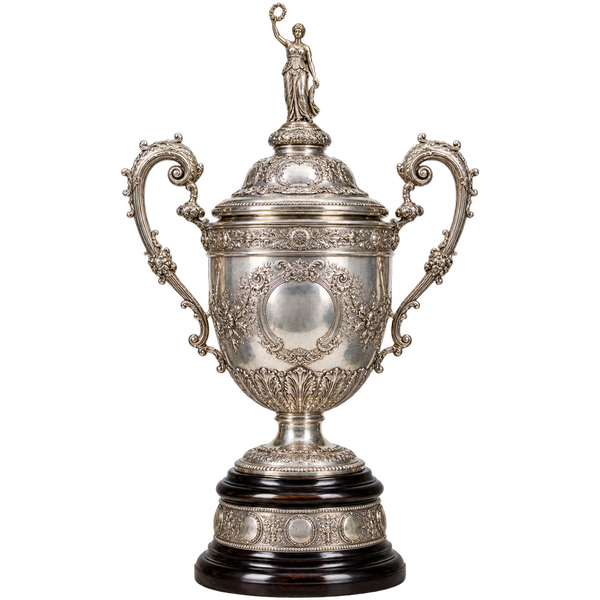
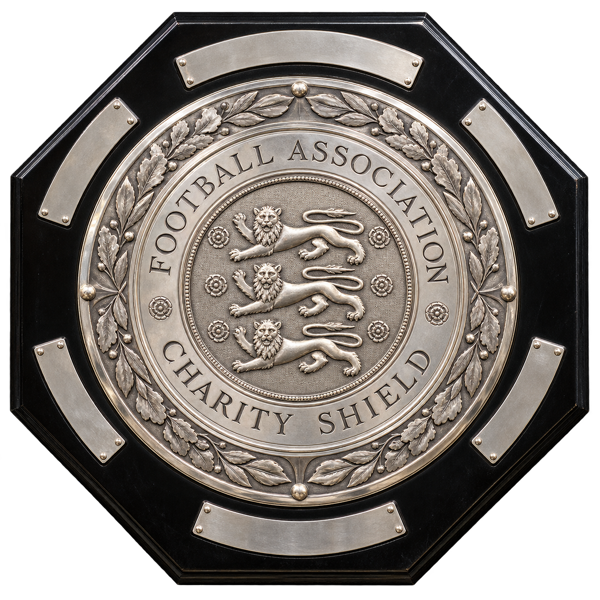
As English champions Derby met FA Cup holders West Ham at Wembley. Goals from Kevin Hector and Roy McFarland secured a 2–0 victory. County won the FA Charity Shield.
Madrid overturns a great European night
Derby County4:1 Real MadridEuropean Champion Clubs’ Cup First leg · October 22, 1975 · Location: Derby Stadium: Baseball GroundReal Madrid5:1a.e.t.Derby CountyEuropean Champion Clubs’ Cup Second leg · November 5, 1975 · Location: Madrid Stadium: Santiago Bernabéu
Charlie George scored a hat-trick in Derby’s 4–1 win over Real Madrid. Real then won the return 5–1 after extra time, taking the tie 6–5 on aggregate. One of the Baseball Ground’s most famous nights ultimately ended in a painful European exit.
Twelve goals in the UEFA Cup
Derby beat Finn Harps 12–0 at the Baseball Ground. Kevin Hector scored five, Charlie George and Leighton James three each, and Bruce Rioch one. The club’s biggest competitive victory came in a European competition.






1980–1989
The championship era ends in relegation
 Everton FC2:0
 Southampton FCFootball League First Division Match 1 · April 26, 1980 · Location: Liverpool Stadium: Goodison Park
 Stoke City1:0
 Brighton & Hove AlbionFootball League First Division Match 2 · April 26, 1980 · Location: Stoke-on-Trent Stadium: Victoria Ground
Everton’s win over Southampton and Stoke’s victory over Brighton made Derby’s relegation certain. Five years after its second championship County lost its top-flight place. The club had to rebuild in the Second Division.
Hector signs off with a goal
Kevin Hector scored in his final competitive Derby appearance, a 3–2 win over Watford. He finished with 589 appearances and 201 goals for County. His two spells spanned the championship years and the subsequent rebuilding period.
The club faces closure
In 1984 Derby County faced an existential financial crisis. Proceedings in the High Court threatened the club’s survival, but liquidation was averted in April. The rescue did not immediately resolve its financial problems.
Arthur Cox leads the rebuild
Arthur Cox took charge in May 1984. He built a new team in difficult financial circumstances. Successive promotions subsequently took Derby back to the top flight.
The club falls into the Third Division
Oldham’s 2–1 win over Grimsby confirmed Derby’s relegation. County had already completed its fixtures and could no longer reach safety. A fall into the third tier accompanied the financial crisis.
The first step back
Derby beat Rotherham 2–1 to secure promotion from the Third Division. Cox’s team had completed the first step back. Its return to the second tier laid the foundation for another promotion.
Two promotions in two years
A 2–1 win over Leeds secured automatic promotion to the First Division. Only the top two places provided direct promotion that season. Cox had taken County from the third tier to the top flight in two years.
Second Division champions
A 4–2 win over Plymouth also secured the Second Division title. Derby’s climb ended with a championship. The team returned to the First Division after seven years away.




1990–1999
Lionel Pickering takes over
Lionel Pickering took over the club from Robert Maxwell in November 1991. Investment in the team opened new sporting opportunities. The construction of Pride Park later formed part of this ownership era.
Losing the First Division place
A 3–1 defeat at Manchester United confirmed relegation. After four top-flight seasons Derby faced another rebuild. The team finished bottom of the division.
Blackburn blocks the promotion route
 Derby County2:1
 Blackburn RoversFootball League Second Division Second leg · May 13, 1992 · Location: Derby Stadium: Baseball Ground
Derby lost the first play-off leg 4–2 at Blackburn. A 2–1 home victory was not enough, as Rovers advanced 5–4 on aggregate. County missed its chance to reach the newly forming Premier League.
Cremonese wins the Wembley final
Derby reached the Anglo-Italian Cup final at Wembley. Cremonese won 3–1, leaving County without the trophy in the English-Italian competition.
Leicester wins the promotion final
 Derby County1:2
 Leicester CityFootball League First Division Match 3 · May 30, 1994 · Location: London Stadium: Wembley Stadium Neutral venue
Derby beat Millwall 2–0 and 3–1 in the semi-final legs. Tommy Johnson put County ahead in the Wembley final, but Leicester turned the game around to win 2–1. Promotion again eluded Derby.
Jim Smith and Steve McClaren arrive
Jim Smith took charge in 1995 and appointed Steve McClaren as his assistant. The pair won promotion in their first season. Their approach also shaped the following Premier League years.
Van der Laan secures Premier League football
Derby beat Crystal Palace 2–1 at the Baseball Ground. Robin van der Laan scored the decisive goal. The victory secured a return to the top flight and the club’s first promotion to the Premier League.
Wanchope’s Old Trafford debut
Paulo Wanchope scored after a long solo run on his Derby debut. County won 3–2 at Manchester United. The Costa Rican newcomer’s performance became one of the best-known moments of Derby’s Premier League years.
The last league match at the Baseball Ground
Derby lost 3–1 to Arsenal in its last league match at the Baseball Ground. Ashley Ward scored County’s final league goal at the old home. After more than a century the club prepared to move.
The Queen opens Pride Park
Queen Elizabeth II opened the new Pride Park Stadium. The modern ground replaced the Baseball Ground as the first team’s home. County moved from its old inner-city stadium to former railway land.
The first match at Pride Park
Sampdoria was the first opponent at the new stadium. Derby lost the friendly 1–0. Football at Pride Park began after its official opening.
The first completed league win at Pride Park
Derby beat Barnsley 1–0 in the first league match completed at the new stadium. County began establishing Pride Park as its footballing home.


2000–2009
Six Premier League years come to an end
Derby lost 2–0 at Liverpool, confirming relegation. Its Premier League spell dating from 1996 was over. The club had to rebuild in the second tier.
Derby mourns Brian Clough
Brian Clough died in September 2004. Derby remembered the manager who had led the club to its first English championship. His partnership with Peter Taylor remained central to the Rams’ collective memory.
Preston ends the play-off run
 Derby County0:0
 Preston North EndFootball League Championship Second leg · May 19, 2005 · Location: Derby Stadium: Pride Park Stadium
Derby lost the play-off semi-final first leg 2–0 at Preston. A goalless return at Pride Park could not overturn the deficit. Despite a strong season under George Burley, County remained in the Championship.
Pearson scores the promotion winner
 Southampton FC1:2Derby CountyFootball League Championship Match 1 · May 12, 2007 · Location: Southampton Stadium: St Mary’s StadiumDerby County1:0
 West Bromwich AlbionFootball League Championship Match 3 · May 28, 2007 · Location: London Stadium: Wembley Stadium Neutral venue
After a 2–1 win at Southampton and a 3–2 extra-time defeat at home, Derby won the shoot-out 4–3. Stephen Pearson then scored Wembley’s only goal against West Brom. Billy Davies brought County back to the Premier League.
The season’s only league win
Kenny Miller’s goal gave Derby a 1–0 win over Newcastle. It was County’s only Premier League victory of 2007/08. The team finished the season with eleven points.
Relegation is confirmed in March
Derby drew 2–2 with Fulham while Birmingham beat Manchester City 3–1. Together the results confirmed County’s relegation in March. Its return to the Championship came after a single season.
Nigel Clough takes charge
Nigel Clough became Derby County manager after a long spell at Burton Albion. The son of Brian Clough brought continuity following the turbulent Premier League and relegation years.
United advances in the League Cup
Derby won the League Cup semi-final first leg 1–0 against Manchester United. A 4–2 defeat in the return meant a 4–3 aggregate exit. The second-tier club had seriously challenged the eventual winners in the opening match.


2010–2019
Ten men turn the derby around
After an early red card for Frank Fielding, Derby fell behind at Nottingham Forest. Jamie Ward and Jeff Hendrick turned the match around for a 2–1 win. Victory after playing almost the entire game with ten men became a treasured derby memory.
Mason Bennett becomes the youngest player
Mason Bennett made his competitive debut in a 2–0 defeat at Middlesbrough. Aged 15 years and 99 days, he became Derby’s youngest player. His appearance highlighted the work of the academy.
A late goal costs promotion
 Brighton & Hove Albion1:2Derby CountyFootball League Championship Match 1 · May 8, 2014 · Location: Brighton Stadium: American Express Community StadiumDerby County0:1
 Queens Park RangersFootball League Championship Match 3 · May 24, 2014 · Location: London Stadium: Wembley Stadium Neutral venue
Derby beat Brighton 2–1 and 4–1 in the semi-final. County could not score against ten-man Queens Park Rangers in the Wembley final. Bobby Zamora’s late winner gave QPR a 1–0 victory and ended Derby’s promotion hopes.
The fightback against Hull falls short
Hull won the semi-final first leg at Derby 3–0. County won the return 2–0 but could not complete the recovery. Hull reached the promotion final 3–2 on aggregate.
Derby remembers Steve Bloomer
A blue plaque honoured Steve Bloomer at his former Derby home. The memory of County’s record scorer also lives on in the stadium song “Steve Bloomer’s Watchin’”. Generations of supporters connect his story with the club’s identity.
Fulham turns the semi-final around
Derby won the first semi-final leg against Fulham 1–0. At Craven Cottage Fulham overturned the tie with a 2–0 victory. County again missed the Premier League promotion final.
A shoot-out win at Old Trafford
Derby drew 2–2 at Manchester United and won the ensuing shoot-out 8–7. This League Cup round went directly to penalties without extra time. Frank Lampard’s team eliminated the favourites at their own ground.
The Elland Road comeback
After losing the home leg 1–0, Derby won 4–2 at Leeds. County overturned the play-off semi-final to advance 4–3 on aggregate. Jack Marriott scored twice in the return.
Aston Villa wins at Wembley
Aston Villa beat Derby 2–1 in the promotion final. Martyn Waghorn’s late goal could not produce an equaliser. After its dramatic semi-final comeback County remained in the Championship.


2020–2029
A 3–3 draw and help from Cardiff
Derby drew 3–3 with Sheffield Wednesday on the final day. Rotherham could only draw 1–1 at Cardiff. Together the results preserved County’s Championship place; a point at Pride Park alone would not have guaranteed safety.
Supporters stand behind the team
A day after the announcement of impending administration, Derby beat Stoke 2–1. Max Bird scored his first senior goal on his 21st birthday. Support at Pride Park rallied behind the threatened team.
Derby enters administration
Quantuma was appointed as administrator. Administration brought a twelve-point league deduction and put the club’s future in doubt. Players, staff and supporters faced months of uncertainty over a rescue.
The points deduction reaches 21
An agreement with the EFL brought a further nine-point deduction for breaches of financial rules. Combined with the twelve points for administration, the immediate deduction totalled 21. A further three-point penalty remained suspended.
Relegation to League One
 Queens Park Rangers1:0Derby CountyEFL Championship Match 1 · April 18, 2022 · Location: London Stadium: Kiyan Prince Foundation Stadium
Derby lost 1–0 at QPR while Reading gained a point in a 4–4 draw with Swansea. Reading was then beyond County’s reach. Despite the team’s resistance, both results confirmed relegation after the 21-point deduction.
Clowes rescues Derby County
Clowes Developments completed its takeover and brought the club out of administration. David Clowes preserved the continuation of Derby County’s tradition. After the prolonged survival crisis County could begin again in League One.
Paul Warne takes charge
Paul Warne and his coaching staff moved from Rotherham to Derby. He took charge of the League One rebuilding project. His team subsequently returned the club to the Championship.
Returning to the Championship
Derby beat Carlisle 2–0 on the final day to secure automatic promotion. Max Bird and James Collins scored at Pride Park. Two years after relegation County returned to the Championship as runners-up.
John Eustace takes over the survival fight
John Eustace was appointed manager, returning to a club he had previously represented as a player. His task was to preserve County’s Championship place.
A point and West Brom’s win secure safety
Derby drew 0–0 with Stoke while West Brom beat Luton 5–3, keeping the Hatters below County. Together the results secured Derby’s survival on 50 points.
The season ends in eighth place
Derby lost its final match 2–1 to Sheffield United. County finished eighth in the Championship and missed the play-offs. Twenty wins marked considerable progress from the previous season’s relegation battle.