


The history of Wolverhampton Wanderers
Milestones and background from the club's history, in chronological order.
Categories
Competitions
Nicknames through the years Three names tell a story of near misses, late goals and an unbeaten season. Read the storiesClose the stories
1870–1879
St Luke’s is formed
In November 1876 pupils and teachers at St Luke’s School in Blakenhall organised the football club St Luke’s. This team began the tradition continued by Wolverhampton Wanderers.
St Luke’s becomes Wolverhampton Wanderers
St Luke’s joined with Blakenhall Wanderers in August 1879. The continuing club thereafter used the name Wolverhampton Wanderers.
1880–1889
A founding member of the Football League
Wolverhampton Wanderers was one of twelve clubs that founded the Football League in Manchester in April 1888. It joined the first organised English league championship.
The first match at Molineux
After moving to Molineux, Wolves beat Aston Villa 1–0 in their first match there. The ground has remained the club’s home.
First league match at Molineux
Five days after the ground’s opening match, Wolves hosted Notts County in the first league game at Molineux and won 2–0.


1890–1899
The Football League’s first penalty
John Heath converted the first penalty in Football League history during a 5–0 home win over the original Accrington club.
First FA Cup triumph
Wolves defeated Everton FC 1–0 in the FA Cup final at Fallowfield Stadium in Manchester, winning the club’s first major cup trophy.


1900–1909
FA Cup winners from the second tier
At Crystal Palace, Wolves beat Newcastle United 3–1 in the FA Cup final. Competing in the Second Division at the time, the club won its second FA Cup.

1920–1929
Wolves buy the Molineux freehold
Wolves became a limited company in 1923 and bought the Molineux freehold, bringing the ground into the club’s ownership.
1930–1939
Stan Cullis makes his Wolves debut
Stan Cullis made his Wolves debut in a 3–2 home defeat to Huddersfield Town. As player and manager he would become central to the club’s most successful era.
10–1 against Leicester: a league record
The 10–1 victory over Leicester City at Molineux remains the club’s largest league win.
Molineux attendance record
A crowd of 61,315 saw Wolves beat Liverpool FC 4–1 in the FA Cup fifth round, setting Molineux’s attendance record.
Defeat in the last pre-war FA Cup final
Wolves reached the 1939 FA Cup final as favourites but lost 4–1 to Portsmouth FC at the original Wembley. The competition was then suspended during the Second World War.


1940–1949
Stan Cullis becomes manager
Former captain Stan Cullis took charge in June 1948. His Wolves teams went on to win three English league titles and two FA Cups.
A third FA Cup after the war
Wolves beat Leicester City 3–1 in the final at the original Wembley Stadium. Stan Cullis led the club to its third FA Cup triumph.
First Charity Shield is shared
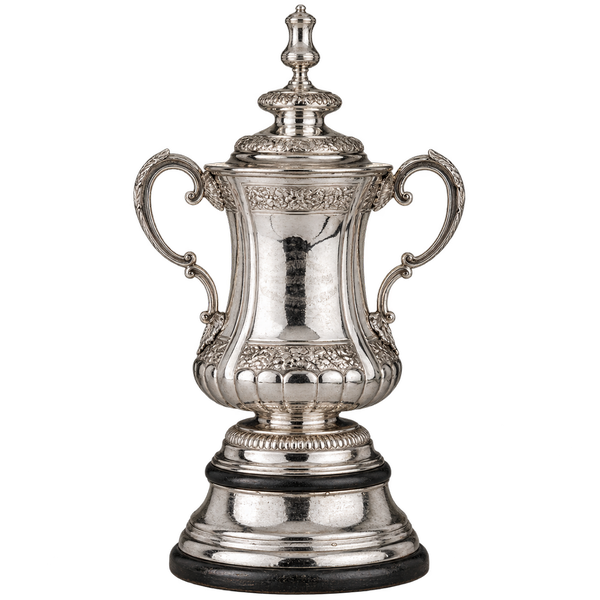
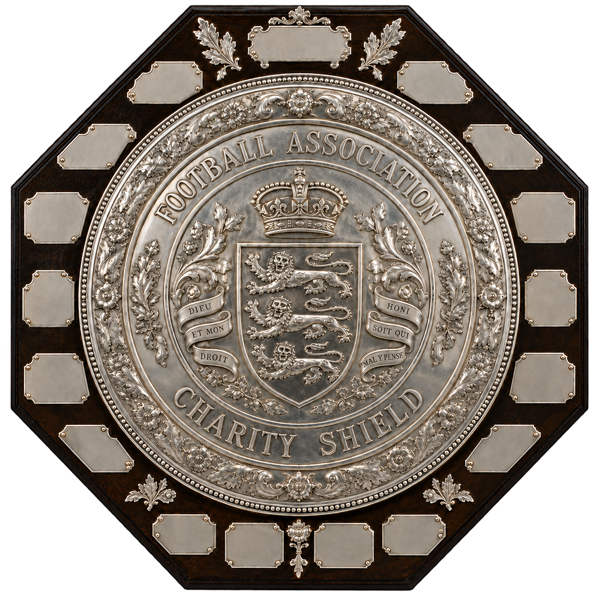
As FA Cup holders, Wolves drew 1–1 with league champions Portsmouth FC at Highbury. The two clubs shared the FA Charity Shield.
1950–1959
First English league championship
On the final day Wolves beat Tottenham Hotspur 2–0 at Molineux to secure their first First Division championship. Stan Cullis’s side finished four points ahead of West Bromwich Albion.
A legendary night against Honvéd
In a televised friendly at Molineux, Wolves came back from 2–0 down to beat Budapest Honvéd 3–2. The visitors included several Hungary internationals, and the match became a landmark in European football history.
Real Madrid beaten at Molineux
Wolves beat Real Madrid 3–2 at Molineux in one of the ground’s celebrated floodlit friendlies.
Second championship clinched against Preston
Wolves clinched their second English title by beating nearest challenger Preston North End 2–0 at Molineux. The side finished the season with 103 league goals.
European Cup debut
Wolves made their European competition debut against Schalke 04. The first leg at Molineux ended 2–2, and Schalke advanced 4–3 on aggregate.
Third championship and title defence
After Wolves beat Leicester City 3–0, Manchester United could no longer catch them. Stan Cullis’s side thus retained the First Division championship.
Red Star knocked out
After a 1–1 draw in Belgrade, Wolves beat Red Star 3–0 at Molineux to reach the European Cup quarter-finals.


1960–1969
Barcelona end Wolves’ quarter-final run
After a 4–0 defeat at Camp Nou, Wolves lost the return against Barcelona 5–2 at Molineux and exited the European Cup in the quarter-finals.
A fourth FA Cup
Wolves beat Blackburn Rovers 3–0 at the original Wembley Stadium to lift their fourth FA Cup. Norman Deeley scored twice.
Five past Austria Vienna
Wolves overturned a 2–0 first-leg deficit against Austria Vienna in the Cup Winners’ Cup, winning 5–0 at Molineux to reach the semi-finals.
Rangers end the European run
Wolves drew 1–1 with Rangers in the Cup Winners’ Cup semi-final second leg at Molineux. Following a 2–0 first-leg loss, they went out.
An 8–1 opening-day victory
Wolves opened the league season with an 8–1 win over Manchester City at Molineux, their largest Football League opening-day victory.
Stan Cullis’s managerial era ends
Stan Cullis’s 16-year spell as Wolves manager ended in September 1964. His teams had won three league titles and two FA Cups.


1970–1979
Wolves begin the inaugural UEFA Cup
Wolves began the inaugural UEFA Cup with a 3–0 home win over Académica Coimbra, the first step towards that season’s final.
Ferencváros beaten for a final place
A 2–1 win over Ferencváros at Molineux, following a 2–2 first-leg draw, sent Wolves to the first UEFA Cup final.
Leeds beaten on the final league day
Wolves won their final league match of 1971/72 against Leeds United 2–1 at Molineux, denying Leeds the chance to add the league title to their FA Cup.
First UEFA Cup final
Wolves reached the inaugural UEFA Cup final against Tottenham Hotspur. A 2–1 home defeat was followed by a 1–1 draw at White Hart Lane; Spurs won 3–2 on aggregate.
First League Cup
Wolves defeated Manchester City 2–1 in the Wembley final to win the League Cup for the first time.
Andy Gray arrives for a record fee
Wolves signed striker Andy Gray from Aston Villa for a then British-record transfer fee. He scored the winner in the 1980 League Cup final months later.
Wolf-head badge appears on the shirt
Wolves first wore a shirt bearing the wolf-head badge in a home match against Coventry City, which ended in a 3–0 defeat.






1980–1989
Second League Cup
Andy Gray’s goal gave Wolves a 1–0 final victory over Nottingham Forest and the club’s second League Cup.
Financial crisis and rescue
After a receiver was appointed in July, a takeover bid was accepted on 30 July 1982. The company changed while the football club’s sporting tradition continued.
A second fight for survival
Wolves played in the Fourth Division in 1986. A further financial crisis threatened the club, which survived with support from the city.
Steve Bull and Andy Thompson sign
Graham Turner signed Steve Bull and Andy Thompson from West Bromwich Albion. Bull became Wolves’ record goalscorer, while Thompson was a key figure in the club’s recovery.
Steve Bull’s first Wolves goal
Steve Bull scored his first Wolves goal in a 1–0 Football League Trophy win away to Cardiff City at Ninian Park.
A Wembley triumph after the crisis
Wolves beat Burnley FC 2–0 in the Football League Trophy final at the original Wembley Stadium. The cup win became a visible sign of the club’s recovery.
Steve Bull reaches 100 Wolves goals
Steve Bull passed 100 competitive goals for Wolves with a hat-trick in a 3–0 home win over Bristol City.


1990–1999
Sir Jack Hayward takes over
Sir Jack Hayward bought the club in 1990 and funded the modernisation of Molineux. The rebuild shaped the ground and Wolves’ subsequent development.
Rebuilt Molineux formally reopened
After three stands had been rebuilt, Molineux was formally reopened with a friendly against Kispest Honvéd. Andy Thompson scored Wolves’ equaliser in the 1–1 draw.
Steve Bull’s final Wolves goal
Steve Bull scored the only goal against Bury at Molineux. It was his final goal and his 306th competitive goal for Wolves, a club record.


2000–2009
Promotion in the play-off final
Wolves beat Sheffield United 3–0 in the First Division play-off final at Cardiff’s Millennium Stadium. The club returned to England’s top flight for the first time since 1984.
First Premier League victory
After seven winless games, Wolves earned their first Premier League victory when Colin Cameron scored in a 1–0 home win over Manchester City.
Champions Manchester United beaten
Kenny Miller scored as Wolves beat reigning champions Manchester United 1–0 at Molineux, a standout result of the club’s first Premier League season.
Promotion secured against QPR
Sylvan Ebanks-Blake scored the only goal against Queens Park Rangers at Molineux, securing Wolves’ promotion to the Premier League. The side also went on to win the Championship.


2010–2019
United’s unbeaten run ends
Wolves beat Manchester United 2–1 at Molineux, ending the visitors’ 29-match unbeaten league run.
103 points in League One
A 3–0 win over Carlisle United at Molineux completed Wolves’ 2013/14 campaign with 103 points, then a record for England’s third tier. The league title and promotion had already been secured before this match.
Fosun takes ownership
Fosun acquired Wolverhampton Wanderers from Steve Morgan in 2016, beginning another sporting rebuild under new ownership.
Nuno Espírito Santo appointed
Wolves appointed Nuno Espírito Santo as head coach. In his first season he led the side to the Championship title and promotion to the Premier League.
Return to the Premier League confirmed
Fulham FC’s 1–1 draw with Brentford FC at Craven Cottage made Wolves’ promotion mathematically certain on 14 April. Wolverhampton Wanderers did not play again until the following day, when they celebrated at home.
Championship title clinched at Bolton
A week after securing promotion, Wolves won 4–0 away at Bolton Wanderers to clinch the Championship title.
Premier League return at Molineux
In their first Premier League match since 2012, Wolves drew 2–2 with Everton FC at Molineux. Raúl Jiménez scored a late equaliser.
Diogo Jota’s Premier League hat-trick
Diogo Jota scored three times in a 4–3 win over Leicester City at Molineux, including the stoppage-time winner: Wolves’ first Premier League hat-trick.
Manchester United knocked out of the FA Cup
Wolves beat Manchester United 2–1 at Molineux to reach the FA Cup semi-finals for the first time since 1998.
A narrow FA Cup semi-final defeat
Wolves led Watford FC 2–0 at the new Wembley Stadium but lost 3–2 after extra time. A first FA Cup final since 1960 slipped away.
European return after 39 years
Wolves played their first European tie since 1980 against Belfast’s Crusaders, winning the Europa League qualifier 2–0 at Molineux.
A league double over Manchester City
After a 2–0 away win, Wolves beat defending champions Manchester City 3–2 at Molineux, coming back from two goals down to complete the league double.


2020–2029
Four goals against RCD Espanyol de Barcelona
Diogo Jota scored a hat-trick in Wolves’ 4–0 home win over RCD Espanyol de Barcelona in the Europa League round of 32. Wolves later reached the quarter-finals.
Europa League quarter-final in Duisburg
Wolves reached the 2019/20 Europa League quarter-finals. In the single-match final tournament at Duisburg, Sevilla FC scored late to win 1–0.
Relegated after eight Premier League years
Crystal Palace’s 0–0 draw with West Ham United mathematically confirmed Wolves’ relegation on 20 April. West Ham had 33 points; with five matches left Wolverhampton could reach at most 32.
Return to the Championship
Wolves opened the 2026/27 Championship campaign with a 2–2 draw against Blackburn Rovers at Molineux. Returning striker Raúl Jiménez equalised in stoppage time.


