


The history of 1860 Munich
Milestones and background from the club's history, in chronological order.
Categories
Competitions
Nicknames through the years Three names tell a story of near misses, late goals and an unbeaten season. Read the storiesClose the stories
1840–1849
Roots in the revolutionary year
Sixty-six men establish Münchner Turnverein at the Buttler brewery in Munich. This first foundation becomes the root of the later club, although association football is not yet part of its activities.
1850–1859
The gymnastics club is banned
The crackdown following the failed revolution reaches Münchner Turnverein through the ban on Bavarian men’s gymnastics clubs. Organised club activities are interrupted, while former members remain in contact.
1860–1869
Re-established under a cautious name
The gymnasts re-establish their organisation as Verein zur körperlichen Ausbildung, choosing a cautious name while restrictions remain. The date becomes the club’s recognised foundation day, with 1860 later central to its identity.
1890–1899
Football grows out of the games section
A newly formed games section brings more ball sports into the club. The football department traces its foundation to 1899, with early training taking place at the municipal playing field on Schyrenplatz.
1900–1909
The first public football match
The football side faces 1. Münchner FC 1896 on the Schyrenwiese and loses 4–2. After its early training years, the club is now playing public matches against outside opposition.


1910–1919
The lion becomes the club crest
The lion is adopted as the official club crest in 1911. Associated with courage and endurance, it becomes central to the club’s appearance and to its enduring nickname, Die Löwen — the Lions.
A football home on Grünwalder Straße
A 4–0 win over MTV München von 1879 is the first match at the new ground on Grünwalder Straße. The venue’s formal opening follows on 21 May with an athletics meeting.

1920–1929
Gymnastics and sports go separate ways
The separation of gymnastics from other sports demanded by the German gymnastics movement splits the club. The footballers belong to Sportverein München von 1860, alongside a separate gymnastics organisation.
1930–1939
A first German championship final
SV 1860 leads Hertha BSC 2–1 at half-time in the German championship final in Cologne. Two late Berlin goals turn the match into a 3–2 defeat, leaving the Munich club national runners-up.
The branches reunite
The sports club dissolves and its departments rejoin the gymnastics club, restoring Turn- und Sportverein München von 1860. This reunification takes place amid the Nazi regime’s political control of organised sport.
The statutes exclude Jewish members
Under club leader Fritz Ebenböck, the club adopts the Nazi standard statutes and their so-called Aryan paragraph. The provision forces out Jewish members and embeds racial exclusion in the club’s rules.
The stadium passes to the city
Facing heavy debts, 1860 sells its stadium to the City of Munich for 357,560 Reichsmarks. The club gives up ownership of its principal ground while continuing to play there.

1940–1949
The first national cup triumph
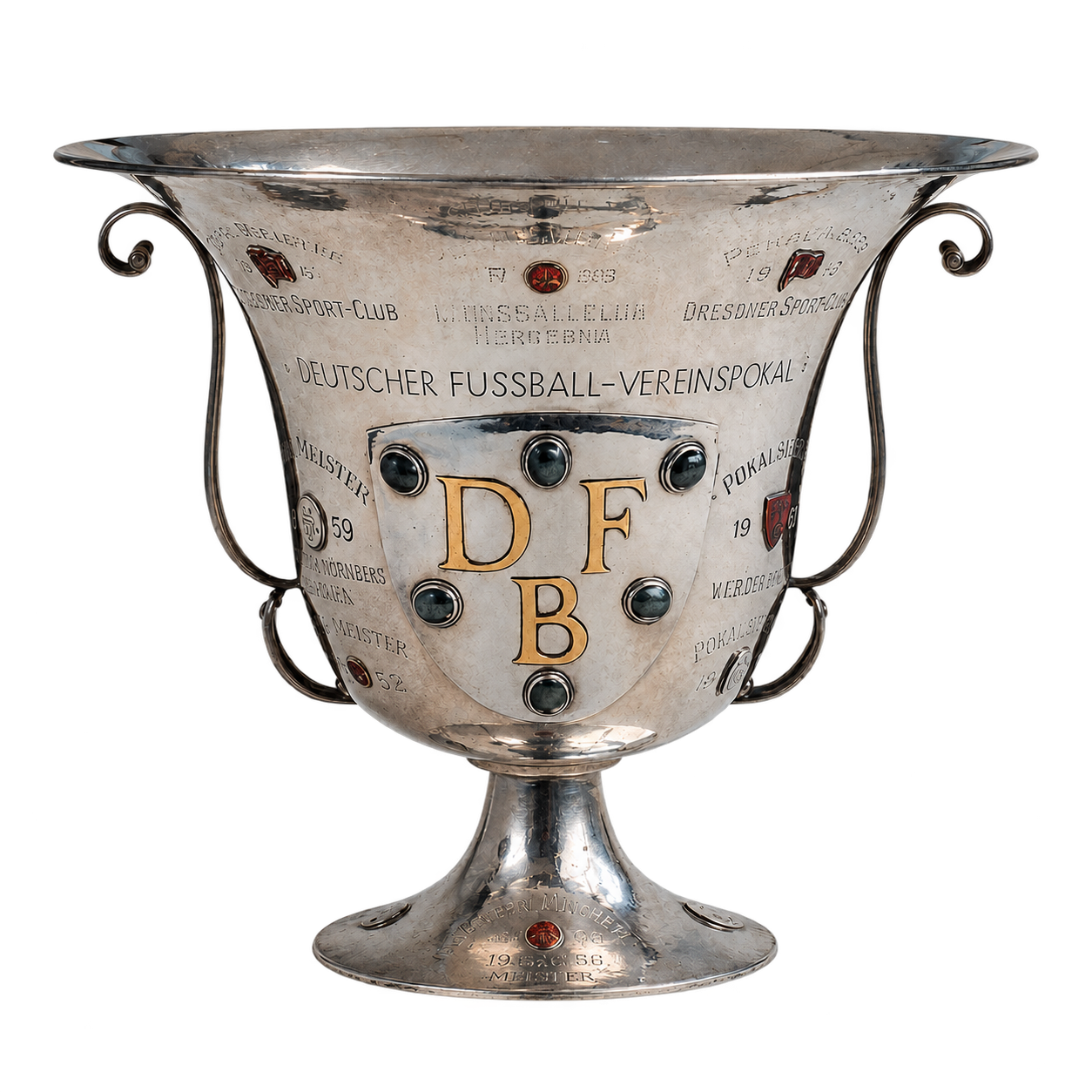
1860 defeats Schalke 04 2–0 in the Tschammerpokal final at Berlin’s Olympic Stadium. Late goals from Ernst Willimowski and Bertl Schmidhuber bring the footballers their first national trophy, following their regional league title in 1941.
Air raids devastate the sporting home
Air raids in September and October severely damage the Grünwalder ground. The war destroys facilities and claims lives among the footballers, leaving both the venue and club life to be rebuilt after 1945.
A fresh start in Oberliga Süd
1860 is among the founding members of Oberliga Süd. The new regional top division restores regular football beyond local opposition after the war and shapes the Lions’ sporting fortunes until 1963.
More than 58,000 pack the Grünwalder
More than 58,000 spectators crowd into the still war-damaged ground for the Oberliga meeting with Nürnberg. Otto Thanner and Bertl Schmidhuber score in a 2–1 victory, creating the crowd record remembered as a defining Grünwalder occasion.


1950–1959
A draw at Schweinfurt cannot prevent relegation
A 1–1 draw at Schweinfurt, together with Aschaffenburg’s 1–0 win over Ulm, confirms the Lions’ first relegation from Oberliga Süd. With 22 points and one match left, safety is beyond reach despite the subsequent 5–2 win over Nürnberg.
Back to the Oberliga as second-tier champions
Coached by Max Schäfer, 1860 wins II. Division Süd and returns to the Oberliga after two seasons away. The final record is 53 points for and 15 against, with 90 goals scored and 37 conceded; Kurt Mondschein contributes 25 goals.
A second Oberliga relegation is confirmed
A 3–0 defeat at Schwaben Augsburg ends the hope of staying up. With two matches remaining, 1860 has only 17 points and can no longer reach the safety positions, whose occupants already have at least 22.
103 goals power an immediate return
1860 wins II. Division Süd again and goes up with Reutlingen. The season ends with 103 goals scored, 47 conceded and 52 points for against 16; this time the Lions remain in the top regional division until the Bundesliga begins.


1960–1969
Pelé and Santos visit for the centenary
1860 marks its centenary by hosting Pelé’s Santos at a packed Grünwalder Stadion. A 9–1 defeat demonstrates the visitors’ class, but their appearance remains an exceptional occasion in the anniversary celebrations.
Max Merkel begins the great era
The demanding and ambitious Max Merkel takes charge of the side. Working with president Adalbert Wetzel, he lays the foundations for the run of success stretching from the southern championship to the national title.
Southern champions in the final Oberliga season
A 2–0 win at Bayern Hof secures the final Oberliga Süd championship for 1860. The Lions reach 44 points and are beyond the reach of Eintracht Frankfurt even with Frankfurt’s outstanding replay still to be played.
Chosen for the new Bundesliga
The DFB selects 1860 among the 16 founding Bundesliga clubs. The southern championship proves decisive in Munich’s selection contest, and the Lions represent the city in the new national top division’s inaugural season.
Bundesliga football begins against Braunschweig
The Lions’ first Bundesliga match ends 1–1 against Eintracht Braunschweig at Grünwalder Straße. Rudi Brunnenmeier scores the Munich goal, opening the club’s account in the new competition.
German cup winners for a second time
1860 beats Eintracht Frankfurt 2–0 in the cup final at Stuttgart’s Neckarstadion. Otto Luttrop and Fredi Heiß score the goals, earning the club a place in the European Cup Winners’ Cup.
A European debut in Luxembourg
The Lions’ first European campaign begins away to Union Luxembourg. A 4–0 win at the Stade Municipal starts a run that carries them all the way to the Wembley final that season.
A play-off takes the Lions to Wembley
 1860 Munich3:1
 AC TorinoEuropean Cup Winners’ Cup Match 2 · April 27, 1965 · Location: München Stadium: Städtisches Stadion an der Grünwalder Straße1860 Munich2:0AC TorinoEuropean Cup Winners’ Cup Match 3 · May 5, 1965 · Location: Zürich Stadium: Letzigrund Neutral venue
A 2–0 defeat in Turin and a 3–1 home win leave the semi-final level under the rules of the time. 1860 wins the deciding match 2–0 in neutral Zurich; away goals do not yet settle this tie.
No crowning moment at Wembley
Nearly 98,000 spectators watch the European final against West Ham United at Wembley. Two Alan Sealey goals give the English club a 2–0 win, ending 1860’s first appearance in a European final.
The Lions win the first Bundesliga derby
1860 wins the first Munich derby in the Bundesliga 1–0 against newly promoted Bayern. Timo Konietzka’s early goal provides a start that foreshadows the two Munich clubs’ involvement in the title race.
German champions on home ground
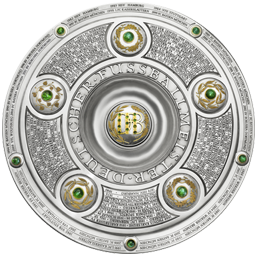
A 1–1 draw with Hamburger SV makes 1860 German football champions for the first time. After the crucial win at Dortmund a week earlier, a point is sufficient; the Lions finish on 50 points, ahead of Dortmund and Bayern.
A win over Real is not enough
1860 Munich1:0 Real MadridEuropean Cup First leg · November 17, 1966 · Location: München Stadium: Städtisches Stadion an der Grünwalder Straße
Hans Küppers gives the Lions a 1–0 first-leg win over reigning European champions Real Madrid. A 3–1 defeat at the Bernabéu in the return match nevertheless ends 1860’s European Cup campaign in the second round.



1970–1979
The first Bundesliga relegation
A 2–1 defeat at MSV Duisburg in the penultimate fixture ends 1860’s last mathematical chance of survival. Four years after the championship, the first Bundesliga era closes and the Lions drop into the second-tier Regionalliga Süd.
An extraordinary crowd at the Olympic Stadium
The Regionalliga meeting with Augsburg ends 1–1 at the Olympic Stadium. At least 80,000 spectators attend, demonstrating the Lions’ drawing power even while playing in the second tier.
Three matches to return to the Bundesliga
1860 Munich2:0 Arminia BielefeldBundesliga promotion play-offs Match 3 · June 11, 1977 · Location: Frankfurt am Main Stadium: Waldstadion Neutral venue
1860 answers a 4–0 defeat at Bielefeld with a 4–0 win at Munich’s Olympic Stadium. A third match at Frankfurt’s Waldstadion breaks the deadlock: the Lions win 2–0 and return to the Bundesliga after seven years.
Relegation is confirmed at Bremen
A 2–0 defeat at Werder Bremen confirms an immediate return to the second tier. Following Bochum’s win the previous evening, every club in a safety position has at least 27 points; 1860 can reach only 25 from its remaining three matches.
Southern champions and back in the top flight
A 3–1 win over Saarbrücken at the Olympic Stadium secures the 2. Bundesliga Süd title and automatic promotion. The lead over Bayreuth is only one point before the final fixture, so the home victory settles the race.




1980–1989
Seven goals conceded in a relegation defeat
Survival remains possible until the final day, but the Lions lose 7–2 at Karlsruhe despite taking an early lead. 1860 finishes 16th and returns to the second tier after two Bundesliga seasons.
A licence refusal ends professional football
Despite finishing fourth in the second division, the heavily indebted club is denied a licence by the DFB. 1860 drops into the third-tier Bayernliga, and leading scorer Rudi Völler moves to Bremen.
Liselotte Knecht becomes president
Liselotte Knecht becomes the first woman to lead the parent club. Her presidency falls within the footballers’ long Bayernliga period and the efforts to stabilise the financially troubled organisation.

1990–1999
An entire Bayernliga season unbeaten
A 4–1 victory over Augsburg completes an unbeaten Bayernliga season. Twenty-two wins and ten draws produce 54 points for and ten against, before Karsten Wettberg’s side moves on to the promotion round.
Wettberg’s Lions return to professional football
1860 beats Borussia Neunkirchen 2–1 in the final promotion-round match to make its return to the second division certain. After nine years in the Bayernliga, Karsten Wettberg’s side earns promotion through another unbeaten campaign.
Wildmoser appoints Werner Lorant
Following the return to the Bayernliga, president Karl-Heinz Wildmoser appoints Werner Lorant as coach. The partnership shapes the coming years: Lorant stays until 2001 and guides the Lions back to the Bundesliga in two seasons.
The play-off group ends in relegation
After narrowly missing direct safety, 1860 receives another chance in a three-club group with Fortuna Köln and Havelse. A 2–0 defeat in Cologne ends that opportunity and sends the club back to the Bayernliga after one second-division season.
A point against Ulm opens the second division
A 1–1 draw with SSV Ulm is enough for 1860 to win its promotion group. The Lions stay ahead of their direct rivals and return immediately to the second division, completing the first step of their rapid rise.
From the Bayernliga to the Bundesliga
Peter Pacult scores the only goal in the third minute at Meppen. The final-day win secures third place and a second successive promotion, returning the Lions to the Bundesliga after 13 years away.
German indoor Masters winners
1860 beats Hamburger SV 6–3 in the DFB indoor Masters final at Dortmund’s Westfalenhalle. The trophy reflects the side’s technical ability around playmaker Piotr Nowak and becomes one of the honours of the Lorant era.
Back on the UEFA Cup stage
A late Abédi Pelé goal gives 1860 a 1–0 win over FC Jazz in Tampere. Decades after its great European campaigns, the club is back in the UEFA Cup, following the away victory with a 6–1 home win.
Thomas Riedl ends the derby drought
Thomas Riedl scores the only goal against Bayern at the Olympic Stadium. After more than two decades without a Bundesliga derby victory, the Lions can celebrate beating their city rivals again.





2000–2009
Two derby wins in one season
1860 also wins the return derby, this time 2–1 as the nominal away side. For the first time, the Lions win both Bundesliga meetings with Bayern in the same season, giving an already strong campaign a special emotional highlight.
Leeds blocks the path to the Champions League
After finishing fourth in the Bundesliga, 1860 enters the Champions League’s third qualifying round. A 2–1 defeat at Elland Road is followed by a 1–0 home loss; Leeds reaches the group stage and the Lions move into the UEFA Cup.
Professional football is transferred to a company
The club transfers its professional football operations to TSV München von 1860 GmbH & Co. KGaA. The registered association and the company take on different responsibilities while continuing the same 1860 football tradition.
Wildmoser’s presidency ends
Karl-Heinz Wildmoser resigns after twelve years as president amid investigations into the Allianz Arena project, with Karl Auer taking over. The case against the father is later dropped for lack of suspicion, while his son is convicted in the bribery affair.
Ten Bundesliga seasons come to an end
A 1–1 draw with Hertha and a missed late penalty leave a mathematical chance before the last fixture. A 3–1 defeat at the Bökelberg ends it, relegating 1860 after ten consecutive Bundesliga seasons.
The Lions open the Allianz Arena
1860 wins the official Allianz Arena opening match 3–2 against Nürnberg. Patrick Milchraum scores the first goal, and the following season brings the Lions’ move to Fröttmaning.
The stadium stake is sold
To ease its financial position, 1860 transfers its 50 per cent stake in the stadium company to Bayern for eleven million euros. An initial repurchase option is later relinquished, leaving the Lions as tenants of their former joint project.


2010–2019
Hasan Ismaik invests in the club
Hasan Ismaik takes a 60 per cent stake in the football company through his investment vehicle, helping bridge an immediate financial crisis. Voting rights are limited to 49 per cent to comply with the 50+1 rule, beginning a partnership that shapes the coming years.
Bülow saves the Lions in stoppage time
After a goalless first leg at Kiel, 1860 falls behind in the return play-off. Daniel Adlung equalises and Kai Bülow scores in stoppage time for a 2–1 victory, preserving the Lions’ place in the second division.
Regensburg ends the second-division era
A 1–1 draw at Regensburg is followed by a 2–0 home defeat to Jahn at the Allianz Arena. The play-off ends thirteen years in the second division, before the licensing crisis deepens the club’s fall.
Without a licence, straight into the Regionalliga
The financial requirements for admission to the third division are not met by the deadline. Instead of playing in the 3. Liga, 1860 must restart in the fourth-tier Regionalliga Bayern, adding an administrative drop to its sporting relegation.
Back at the Grünwalder for good
1860 wins its first Regionalliga home match 3–1 against Wacker Burghausen. With the Allianz Arena era over, the Grünwalder becomes the first side’s permanent home again and the centre of its rebuilding effort.
The championship is secured at Pipinsried
A 3–0 win at Pipinsried clinches the Regionalliga Bayern championship. Daniel Bierofka’s side earns a place in the promotion play-offs, with the title alone not yet enough to return to the third division.
A 2–2 draw seals the return to the third tier
 1. FC Saarbrücken2:31860 MunichPromotion play-offs to the 3. Liga First leg · May 24, 2018 · Location: Völklingen Stadium: Hermann-Neuberger-Stadion1860 Munich2:21. FC SaarbrückenPromotion play-offs to the 3. Liga Second leg · May 27, 2018 · Location: München Stadium: Städtisches Stadion an der Grünwalder Straße
Following a 3–2 win over Saarbrücken in Völklingen, a 2–2 home draw is enough. 1860 wins the promotion play-offs 5–4 on aggregate and returns to professional football after one Regionalliga season.



2020–2029
A first Bavarian Toto Cup triumph
Fabian Greilinger’s 90th-minute equaliser makes it 1–1 against Würzburg. The match goes straight to penalties, where Marco Hiller saves twice; the Lions win the shoot-out 4–1 to claim their first Bavarian Toto Cup.
Promotion hopes end at Ingolstadt
1860 loses 3–1 at Ingolstadt on the final day in the direct contest for the play-off place. Michael Köllner’s side finishes fourth with 66 points, narrowly missing the opportunity to return to the second division.
Another licensing rupture
1860 announces that it has missed the deadline for the required liquidity proof and will restart in Regionalliga Bayern. The DFB confirms the refusal of third-division admission on 11 June, making this another financially driven drop.
The FA emblem as an interim solution
For the restart, the football operating company temporarily uses the historic FA emblem on playing kit. The parent club stresses that its official lion crest remains unchanged; the interim arrangement concerns commercial usage rights.
The Regionalliga restart begins with a draw
1860 begins the new football operation with a 2–2 draw at Schweinfurt. Playing under the wholly club-owned operating company, the Lions start another sporting rebuild in Regionalliga Bayern.
Brand rights and football operations under the club
After insolvency proceedings open for the KGaA and its management company, the association and its operating subsidiary agree to acquire key assets. The club obtains the lion trademarks and the subsidiary takes over operating assets, continuing the football operation while some commercial rights questions remain unresolved.

