


The history of Rot-Weiß Oberhausen
Milestones and background from the club's history, in chronological order.
Categories
Competitions
Nicknames through the years Three names tell a story of near misses, late goals and an unbeaten season. Read the storiesClose the stories
1900–1909
Oberhausener Spielverein is founded
Members of Emschertaler SV and Oberhausener TV 1873 establish Oberhausener Spielverein on December 18, beginning the tradition of Rot-Weiß Oberhausen. Emschertaler SV had existed since 1902 without being formally registered.
1920–1929
The gymnastics club’s football section joins
The entire football section of Oberhausener TV 1873 joins the football club. The separation between gymnastics and independently organised football brings the local footballers together.
Merger creates Spielvereinigung Oberhausen-Styrum
The club merges with Styrumer SV 1908 to form Spielvereinigung Oberhausen-Styrum. Its Styrum partner had developed from Viktoria Styrum and Unterstyrumer Ballspielverein.
A breakaway establishes 1. FC Mülheim-Styrum
Only months after the merger, members leave the combined club and establish 1. FC Mülheim-Styrum. The two clubs subsequently develop independent football traditions.
The future Stadion Niederrhein opens
Oberhausen opens Städtisches Stadion am Grafenbusch on the Emscher island. It becomes the lasting home of Rot-Weiß Oberhausen, with its setting between the river and the Rhine–Herne Canal defining the ground’s character.
1930–1939
The Rot-Weiß Oberhausen name is adopted
In June, the combined club adopts the name SC Rot-Weiß Oberhausen. The initials RWO and the clover emblem become defining symbols of the club.
First promotion to the Gauliga
After missing admission during the 1933 league reorganisation, Rot-Weiß reaches Gauliga Niederrhein a year later, returning to the highest regional level.
A first spell in the Gauliga ends
Third-place finishes in 1936 and 1937 are followed by relegation from Gauliga Niederrhein. Rot-Weiß must seek a route back from the level below.
An immediate return is achieved
Rot-Weiß Oberhausen returns to Gauliga Niederrhein after just one year and remains at the regional top level until wartime reorganisation.
1940–1949
Football in a wartime playing association
From August, RWO, Alstader SV Elmar 09 and Viktoria Oberhausen form Kriegssportgemeinschaft Oberhausen. They complete 1943/44 under this name, before the war brings competition to a halt the following season.
Independent football resumes after the war
Rot-Weiß Oberhausen resumes independent competition under its own name after the war. The end of the wartime playing association and the revival of regional football open a new chapter.
A first post-war Lower Rhine championship
Rot-Weiß wins the Lower Rhine championship in the first post-war season, beating VfL Benrath 2–0 in the final. With football still organised regionally, this is the highest available seasonal title.
A founding member of Oberliga West
Rot-Weiß joins the newly established Oberliga West, bringing together leading clubs from western Germany. Oberhausen finishes fifth in each of its first two seasons.
The Lower Rhine championship is retained
After winning its district league, RWO finishes the Lower Rhine final round level on points with Fortuna Düsseldorf. A 3–1 victory in the deciding match at Duisburg-Hamborn on June 7 secures another Lower Rhine championship, followed by participation in the British Zone finals.
Reaching the British-zone semi-finals
 TSV Braunschweig2:3a.e.t.
 Rot-Weiß OberhausenBritish Zone Championship Match 1 · June 22, 1947 · Location: Hannover Stadium: Hindenburgstadion Neutral venue
 Hamburger SV3:1Rot-Weiß OberhausenBritish Zone Championship Match 2 · July 6, 1947 · Location: Duisburg Stadium: Wedaustadion Neutral venueRot-Weiß Oberhausen1:4
 VfR Köln 04 rrh.British Zone Championship Match 3 · July 13, 1947 · Location: Oberhausen Stadium: Am Vinzenzhaus
A 3–2 extra-time victory over TSV Braunschweig takes RWO into the semi-finals. Hamburger SV then wins 3–1 in Duisburg, before VfR Köln 04 rrh. beats Oberhausen 4–1 in the third-place match.


1950–1959
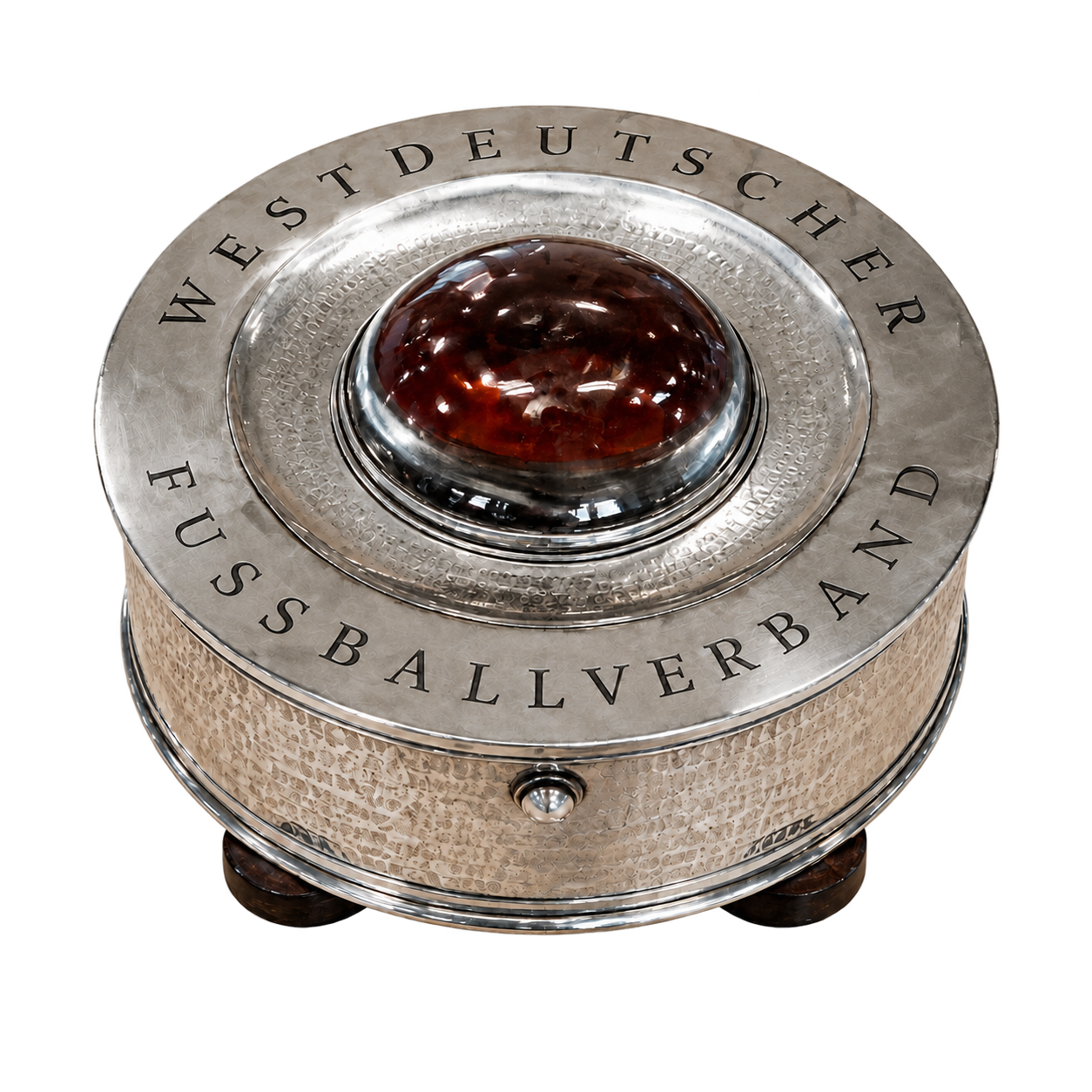
Western German Cup winners
Rot-Weiß wins the Western German Cup with a 3–0 victory away to Preußen Krefeld in the final. Werner Günther opens the scoring in front of around 10,000 spectators, helping secure an early cup success beyond the local leagues.
The Oberliga place is lost
After finishing thirteenth in the Oberliga, RWO enters an additional qualification round. A 5–0 defeat against Alemannia Aachen ends its chance of claiming either of the two qualifying places. With two points and one match remaining, Oberhausen can no longer catch Aachen or Schwarz-Weiß Essen. Six years in the second tier follow.
Returning to the Oberliga as runners-up
Second place in 2. Liga West earns a return to the Oberliga. Rot-Weiß ends the second-tier spell that began in 1951 and again competes against western Germany’s leading clubs.
A community to preserve club tradition
In November, Edmund Hendus establishes the Traditionsgemeinschaft. Also known as Kameradschaft der Alten, it brings former players and long-serving members together, making shared memories a lasting part of club life.


1960–1969
The Bundesliga begins without Oberhausen
RWO is not selected for the new Bundesliga. After finishing tenth in the final Oberliga season, the club enters the second-tier Regionalliga West and must earn a route into the national top flight.
Western champions under Adi Preißler
A 2–0 win over Arminia Bielefeld secures the Regionalliga West championship with a match to spare. RWO has 53 points, while Essen and Bochum can reach only 51. Under Adi Preißler and president Peter Maaßen, the western title is followed by the Bundesliga promotion round.
Goal average opens the Bundesliga door
A 0–0 draw against Freiburger FC secures a first Bundesliga promotion. Both clubs finish on eleven points, but Oberhausen’s 17 goals for and nine against give it a better goal average than Freiburg’s 16 and ten.
Three goals on the Bundesliga debut
RWO wins its first Bundesliga match 3–1 against Eintracht Frankfurt at Stadion Niederrhein, beginning a new chapter in the club’s history with a victory.


1970–1979
Eight goals against Hamburger SV
After six winless games, RWO overwhelms Hamburger SV 8–1. Hans Schumacher scores four goals and Franz Krauthausen two, with Wolfgang Sühnholz and Lothar Kobluhn also scoring. It remains Oberhausen’s biggest Bundesliga victory.
Lothar Kobluhn becomes leading scorer
Lothar Kobluhn leads the Bundesliga scoring chart with 24 goals in 1970/71. The midfielder finishes ahead of the major clubs’ star forwards, earning one of the outstanding individual honours in RWO history.
The Bundesliga scandal also affects RWO
Rot-Weiß Oberhausen is also caught up in the match-fixing scandal surrounding the 1970/71 season. Its consequences include a subsequent suspension for then-coach Günter Brocker, casting a shadow over the club’s Bundesliga years.
Four years in the Bundesliga come to an end
A 3–0 defeat against Fortuna Düsseldorf, together with Schalke’s 2–0 win over Stuttgart, confirms relegation. RWO has nineteen points and can reach only 23 from its two remaining games, leaving safety beyond reach.
Tennis Borussia ends hopes of an immediate return
Tennis Borussia Berlin’s 3–1 promotion-round win over St. Pauli puts it beyond RWO’s reach. Oberhausen can finish on no more than nine points and ultimately takes second place in the group after also finishing runner-up in Regionalliga West.
A first relegation from the second tier
A goalless derby against 1. FC Mülheim and Erkenschwick’s 2–2 draw with DJK Gütersloh confirm relegation. RWO can reach only 28 points, while Erkenschwick now has 29. Too few clubs remain within reach for Oberhausen to escape the four relegation places. Its first season in 2. Bundesliga Nord ends with a drop to the third tier.
Oberliga champions and back in the second tier
Winning Oberliga Nordrhein earns RWO a return to 2. Bundesliga Nord, four years after relegation from the second tier.
Frankfurt finally stops the cup run
Playing in the third tier, RWO reaches the DFB-Pokal quarter-finals before losing narrowly, 2–1, away to Bundesliga club Eintracht Frankfurt. It is one of the club’s major cup runs before the 1999 semi-final.


1980–1989
Missing out on the single-division second tier
RWO misses admission when the two second-division sections are combined into a single national league. The team returns to Oberliga Nordrhein after two seasons in the second tier.
A second Oberliga Nordrhein title
RWO wins Oberliga Nordrhein again. Unlike in 1979, an additional promotion round now follows, with the champions competing against other Oberliga winners for a second-division place.
Returning through the promotion round
Rot-Weiß Oberhausen0:0 SC Charlottenburg2. Bundesliga promotion round Match 1 · June 18, 1983 · Location: Oberhausen Stadium: Stadion Niederrhein
 Eintracht Heessen3:2
 FC St. Pauli2. Bundesliga promotion round Match 2 · June 18, 1983 · Location: Hamm
On the final day, a 0–0 draw with SC Charlottenburg and the other results secure one of the northern group’s two promotion places. Oberhausen returns to the 2. Bundesliga for a five-season spell.
Licence withdrawal ends the second-tier spell
RWO loses its second-division licence in 1988 and must return to Oberliga Nordrhein. Administrative relegation after five seasons in the second tier triggers a serious sporting and financial crisis.
The fall into the Verbandsliga
Following licence withdrawal, a rebuilt RWO squad also fails to survive in the Oberliga. A further relegation takes the club into Verbandsliga Niederrhein and the fourth tier.
1990–1999
Oberliga champions on the way back
Winning Oberliga Nordrhein takes RWO into Regionalliga West/Südwest. Following the collapse of the late 1980s, promotion is an important step back towards a higher level of national football.
A first Lower Rhine Cup triumph
RWO beats FC Remscheid 2–0 in the final to win its first Lower Rhine Cup, adding a cup success to the club’s recovery in the Regionalliga.
The last played amateur championship final
RWO loses 2–1 to SSV Reutlingen at Stadion Niederrhein. Branko Granic gives Oberhausen the lead, but Reutlingen turns the final around and wins through a late penalty for handball. It is the competition’s last played final.
A second Lower Rhine Cup
RWO beats SV Straelen 2–0 after extra time in the cup final, adding another regional cup triumph to its promotion to the 2. Bundesliga.
Aachen’s win makes RWO champions
Siegen’s 3–1 defeat against Alemannia Aachen settles the title and promotion in RWO’s favour. Oberhausen already has 68 points, while Siegen can reach only 65. The club returns to the 2. Bundesliga after ten years.
The rebuilt ground reopens for the new champions
A day after the title is secured, the redeveloped Stadion Niederrhein is reopened. RWO beats Preußen Münster 1–0, with the renewed stands ready for the coming return to the second tier.
Hamburg is beaten in a penalty shoot-out
After a 3–3 draw following extra time, RWO wins the shoot-out against Hamburger SV 4–3. The second-division club reaches the quarter-finals and continues an exceptional cup run.
Gladbach is eliminated too
A 2–0 win over Borussia Mönchengladbach sends RWO into the DFB-Pokal semi-finals for the first time. Another Bundesliga side follows Hamburger SV out of the competition.
The cup adventure ends at Parkstadion
RWO moves its semi-final against Bayern München to Parkstadion in Gelsenkirchen. A crowd of 47,300 sees Oberhausen lose 3–1, ending the club’s greatest DFB-Pokal run one round short of the final.
Bielefeld’s victory helps secure survival
Arminia Bielefeld’s 3–0 win over Gütersloh removes a direct rival’s final chance of overtaking RWO. The promoted club survives in the 2. Bundesliga, adding league safety under Aleksandar Ristić to its cup semi-final appearance.




2000–2009
A quarter-final away to Schalke
Another major cup night takes RWO to Gelsenkirchen, this time as Schalke 04’s visitor at its new arena. A 2–0 defeat ends Oberhausen’s DFB-Pokal campaign in the quarter-finals.
Two points short of the Bundesliga
A 3–2 final-day win over Osnabrück is not enough. Mainz beats Trier 3–0 and takes the promotion place. Jørn Andersen’s team ends the season on 53 points, two short of third place.
One hundred years of RWO
For its centenary, the club presents Adi Preißler as its coach of the century and names an all-century eleven. Players including Willy Jürissen, Karl-Heinz Feldkamp, Lothar Kobluhn and Willi Demski connect the celebration with different eras of club history.
The draw against Ahlen confirms relegation
A 2–2 draw with LR Ahlen leaves RWO able to reach no more than 36 points, confirming relegation with two games still to play. The club ultimately finishes sixteenth.
The entire board resigns
Two days after a 4–0 home defeat against Hamburger SV II, the long-serving board resigns together. Following a poor start in the Regionalliga, an emergency board takes over the task of stabilising the club’s finances and sporting position.
A parallel match confirms a second relegation
Hamburger SV II’s 3–0 win at 1. FC Köln II ends Oberhausen’s last mathematical chance of survival. Even a maximum of 39 points cannot leave enough rivals below RWO. Relegation to Oberliga Nordrhein follows the previous year’s drop from the second division.
Bruns leads RWO back as champions
A 2–0 win over Union Solingen seals the championship and an immediate return to Regionalliga Nord. On the same day, closest rival Alemannia Aachen II loses 3–1 away to VfB Homberg. With a match remaining, Hans-Günter Bruns’s team has 69 points, while Aachen can reach only 64.
Sommers, Binder and Luginger take responsibility
The newly elected supervisory board appoints Hajo Sommers, Thorsten Binder and Jürgen Luginger to the executive board. Sommers becomes chairman, Binder takes responsibility including the stadium and supporters, and Luginger oversees football.
The leading-scorer trophy arrives at last
In spring, kicker presents Lothar Kobluhn with the leading-scorer trophy for his 24 Bundesliga goals in 1970/71. More than 36 years after the achievement, he finally receives the physical award.
Back-to-back promotions reach the second tier
A 3–0 win away to Union Berlin secures second place and promotion to the 2. Bundesliga. Hans-Günter Bruns’s team completes successive promotions from the Oberliga through the Regionalliga.
A win over Freiburg secures survival
RWO beats already promoted SC Freiburg 1–0. Reaching 42 points secures survival before the final day, and the newly promoted club ultimately finishes an impressive ninth.




2010–2019
Luginger resigns and Bruns returns
Jürgen Luginger resigns a day after a 1–0 defeat away to Rot Weiss Ahlen. Nine league games without a victory have drawn RWO into relegation danger. Hans-Günter Bruns returns as coach to halt the slide during the club’s second season back in the second tier.
The final day brings relegation to the third tier
0:1A 3–1 defeat in Cottbus and Osnabrück’s 1–0 win in Ingolstadt settle the battle for the play-off place. RWO remains on 28 points and finishes seventeenth, ending its three-season spell in the 2. Bundesliga.
Another relegation leads to the Regionalliga
A 2–1 defeat against SSV Jahn Regensburg coincides with victories for Unterhaching and Babelsberg. RWO can reach only 41 points and loses its place in the 3. Liga. The club returns to Regionalliga West in 2012.
Basler resigns after a 3–0 defeat
Mario Basler resigns after a home defeat against previously winless 1. FC Köln II. Peter Kunkel moves up from the RWO reserve side to take charge of the first team.
Selling the club offices provides breathing space
In October, RWO sells its club offices to the municipal company OGM. The sale provides funds for a financially strained club and helps stabilise its continued participation in the Regionalliga.
Mike Terranova takes charge of the first team
A 1–0 defeat away to Borussia Dortmund II is the fourth loss without scoring at the start of the season. Andreas Zimmermann is relieved of his duties three days later. Mike Terranova steps up from the under-23 side, beginning what becomes a long spell in charge of the Shamrocks.
Derby victory brings a third Lower Rhine Cup
In front of around 13,000 spectators at Stadion Niederrhein, RWO beats Rot-Weiss Essen 2–1 in the final. A third Lower Rhine Cup ends a twenty-year wait for another victory in the competition.
The final push ends in second place
RWO draws 3–3 with Verl on the final day, while Viktoria Köln beats Gladbach II 1–0 to secure the title. Oberhausen’s strong second half of the season ends without promotion.




2020–2029
Essen wins the cup final
RWO loses the Lower Rhine Cup final 2–0 to Rot-Weiss Essen at Stadion an der Hafenstraße. It is also Mike Terranova’s final match before moving to lead RWO’s youth development programme.
Another final chance goes unconverted
Rot-Weiss Essen is again the final opponent. RWO loses 3–0 at Hafenstraße and misses a fourth Lower Rhine Cup. Another appearance in the final therefore does not bring a return to the DFB-Pokal.
Uhlig succeeds Sommers
Marcus Uhlig takes over as executive chairman early in the year. Hajo Sommers is honoured with the gold merit badge as he leaves after many years of service, marking a new phase in the club’s leadership.
The season ends in second place
RWO ends the 2025/26 season with a 2–2 draw away to 1. FC Bocholt. The final position is second in Regionalliga West. Sebastian Gunkel’s team again finishes near the top but remains in the fourth tier.
A stadium visit supporting social inclusion
Rot-Weiße Ader invites people from homelessness services and other social organisations to the home game against Bocholt. Marking awareness days for homelessness and mental health, the shared stadium visit promotes solidarity and inclusion. RWO wins the match 3–1.
