


The history of Burnley FC
Milestones and background from the club's history, in chronological order.
Categories
Competitions
Nicknames through the years Three names tell a story of near misses, late goals and an unbeaten season. Read the storiesClose the stories
1880–1889
From rugby to football
The members of Burnley Rovers voted to switch to association football. Rovers was dropped from the name shortly afterwards, creating Burnley Football Club from the rugby club. Its first football home was at Calder Vale Road.
An early move towards professionalism
Burnley employed professional players as early as 1883. The club joined the movement pressing for paid football to be permitted. The Football Association finally legalised professionalism in 1885.
Football begins at Turf Moor
Burnley moved to Turf Moor at the cricket club’s invitation. Its first football match at the new home ended in a 6–3 defeat by Rawtenstall. The shared sports ground became the club’s permanent centre.
A founder member of the Football League
Burnley was one of the Football League’s twelve founder members. The club lost its opening match 5–2 at Preston. The new league established regular national championship fixtures as the basis of professional football.
Tait scores in the first home league match
Burnley beat Bolton 4–1 in its first home league match. William Tait scored three goals. His hat-trick was one of the new Football League’s earliest milestones.


1890–1899
Nine goals against Darwen
Burnley beat Darwen 9–0. The result remained the club’s biggest league victory. Turf Moor witnessed an exceptional afternoon in the early Football League.
The test matches end in relegation
After nine top-flight seasons Burnley dropped into the Second Division. The test series brought a win and a defeat against Newton Heath and a draw away to Notts County. The final 1–0 home defeat by Notts County confirmed relegation.
The first Second Division title
 Gainsborough Trinity0:0
 Burnley FCFootball League Second Division Match 1 · April 9, 1898 · Location: Gainsborough Stadium: The Northolme
 Leicester Fosse1:1
 Newcastle UnitedFootball League Second Division Match 2 · April 9, 1898 · Location: Leicester Stadium: Filbert Street
A goalless draw at Gainsborough and Newcastle’s 1–1 draw at Leicester Fosse secured Burnley’s championship. The club could no longer be displaced from the top. Promotion still depended on test matches.
Back after the final test matches
 Stoke0:0Burnley FCFootball League Second Division Match 4 · April 30, 1898 · Location: Stoke-on-Trent Stadium: Victoria Ground
Burnley beat Blackburn in both test matches, lost to Stoke and drew the return game 0–0. That draw secured promotion. The goalless match became notorious because a draw suited both clubs; the league subsequently abolished test matches and expanded both divisions.


1900–1909
Preston confirms Burnley’s relegation
Preston beat Blackburn 2–0. Burnley could no longer reach a safe First Division position, despite not playing that day. Its second top-flight spell ended after two seasons.
1910–1919
Claret and blue become the identity
In 1910 Burnley adopted claret shirts with light blue sleeves. The colours were inspired by the successful Aston Villa side. They shaped the nickname The Clarets and became the club’s lasting visual identity.
Returning after thirteen years
Leicester Fosse2:3 Burnley FCFootball League Second Division Match 3 · April 19, 1913 · Location: Leicester Stadium: Filbert Street
Burnley won 3–2 at Leicester Fosse. Barnsley’s draw with Clapton Orient and Birmingham’s defeat at Leeds City made promotion certain. The club returned to the top flight after thirteen years.
The FA Cup comes to Burnley
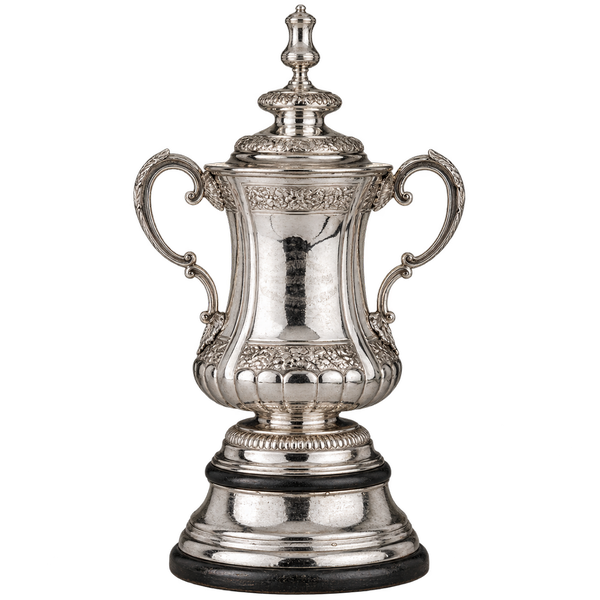
Burnley beat Liverpool 1–0 in the FA Cup final. Bert Freeman scored the winning goal at Crystal Palace. Captain Tommy Boyle received the trophy from King George V.



1920–1929
English champions for the first time
A 1–1 draw at Everton secured Burnley’s first English championship. After losing its opening three matches, the team put together a thirty-match unbeaten league run. John Haworth’s side crowned an exceptional season.
Tottenham wins the Charity Shield
As league champions Burnley visited FA Cup winners Tottenham. Spurs won 2–0 at White Hart Lane. The club missed out on an additional trophy to accompany its championship.
Turf Moor’s record attendance
A crowd of 54,775 watched Burnley beat Huddersfield 1–0 in the FA Cup. The packed terraces set Turf Moor’s attendance record. The figure remains a reminder of the ground’s great standing terraces.
Louis Page scores six
Louis Page scored six times in a 7–1 victory at Birmingham. It was his first appearance at centre-forward for Burnley. His six goals remained the club’s individual scoring record in a league match.



1930–1939
Six goals are not enough for survival
 Middlesbrough FC3:1
 Bolton WanderersFootball League First Division Match 4 · May 3, 1930 · Location: Middlesbrough Stadium: Ayresome ParkNewcastle United1:0
 West Ham UnitedFootball League First Division Match 5 · May 3, 1930 · Location: Newcastle upon Tyne Stadium: St James’ Park
Burnley beat Derby 6–2 but was relegated nevertheless. Grimsby won at Huddersfield, Middlesbrough beat Bolton and Newcastle defeated West Ham; Sheffield United comfortably beat Manchester United. Those results left Burnley in the bottom two despite its own victory.
War interrupts the league
The Second World War halted regular Football League competition. Burnley played regional wartime football with guest players. The national league did not return until 1946.



1940–1949
Charlton wins the final in extra time
Second Division Burnley reached the FA Cup final. Charlton won 1–0 after extra time at Wembley through Chris Duffy’s goal. The club was still waiting for a second cup triumph.
Five goals bring a return to the top flight
A 5–0 win at West Ham secured Burnley’s promotion. The club returned to the top flight after seventeen years. The final defeat was followed by a successful conclusion to the first post-war league season.


1950–1959
Jimmy McIlroy arrives from Glentoran
Burnley signed Jimmy McIlroy from Glentoran. His technique and vision made him a defining figure at Turf Moor. The Northern Ireland international later became central to the championship team.
Harry Potts takes charge
Former Burnley player Harry Potts became manager. He guided a team containing many home-grown players to the English championship. His name later became part of Turf Moor’s address.
1960–1969
Champions on the final evening
Burnley won its final league match 2–1 at Manchester City. Brian Pilkington and Trevor Meredith scored at Maine Road. Victory put Harry Potts’ side on top and secured its second English championship.
A shared Charity Shield
Burnley and Wolverhampton drew 2–2 at Turf Moor. Under the rules of the time the league champions and cup winners shared the Charity Shield. Both clubs were recorded as winners.
Reims is beaten in the first European tie
 Stade Reims3:2
 Burnley FCEuropean Champion Clubs’ Cup Second leg · November 30, 1960 · Location: Paris Stadium: Parc des Princes
Burnley won its European debut 2–0 against Reims at Turf Moor. A 3–2 defeat in the return match at the Parc des Princes in Paris still allowed it to advance. The club reached the quarter-finals with a 4–3 aggregate victory.
Hamburg turns the quarter-final around
 Hamburger SV4:1Burnley FCEuropean Champion Clubs’ Cup Second leg · March 15, 1961 · Location: Hamburg Stadium: Volksparkstadion
Burnley beat Hamburg 3–1 in the first leg. HSV then won 4–1 at the Volksparkstadion. The club’s first European adventure ended in a 5–4 aggregate defeat.
Tottenham prevents a cup triumph
After finishing second in the league Burnley also reached the FA Cup final. Jimmy Robson equalised Tottenham’s opener, but Spurs won 3–1. A successful season ended without a trophy.
McIlroy’s departure causes protests
Jimmy McIlroy’s transfer to Stoke caused disappointment and protests among supporters. The sale separated Burnley from a particularly popular player. For many fans it marked a turning point after the great successes.
Stuttgart beaten in the Fairs Cup
Burnley eliminated Stuttgart in the Inter-Cities Fairs Cup. The two legs produced a 3–1 aggregate victory. The club continued its second European campaign successfully.
Lausanne beaten in the Fairs Cup
 FC Lausanne-Sport1:3Burnley FCInter-Cities Fairs Cup First leg · October 19, 1966 · Location: Lausanne Stadium: Stade de la Pontaise
Burnley eliminated Lausanne in the Inter-Cities Fairs Cup. The two legs produced a 8–1 aggregate victory. The club continued its second European campaign successfully.
Napoli beaten in the Fairs Cup
Burnley eliminated Napoli in the Inter-Cities Fairs Cup. The two legs produced a 3–0 aggregate victory. The club continued its second European campaign successfully.
Frankfurt ends the European run
After drawing 1–1 at the Waldstadion, Burnley lost the return leg against Eintracht Frankfurt 2–1. Its Fairs Cup campaign ended in the quarter-finals. Andy Lochhead’s goals had helped take the club into the last eight.



1970–1979
The long top-flight spell ends
Burnley lost 2–1 to Derby, confirming relegation after 24 years in the First Division. The club had to rebuild after the championship era.
Promotion under Jimmy Adamson
A 2–0 win over Sunderland secured promotion. Jimmy Adamson brought the club back to the First Division after two years. The team guaranteed itself one of the three promotion places before the season ended.
Second Division champions
A 1–1 draw at Preston also secured the championship. Burnley could no longer be displaced from first place. Adamson’s team returned to the top flight as Second Division champions.
A Charity Shield at Maine Road
Burnley won the Charity Shield 1–0 at Manchester City. Colin Waldron scored the only goal. The Second Division champions accepted an invitation after the regular title holders declined to participate.
Newcastle wins the Texaco final
Burnley reached the Texaco Cup final. Newcastle won 2–1 after extra time at St James’ Park. Paul Fletcher’s goal was not enough to win the trophy.
Back in the second tier again
A 1–0 defeat by Manchester United confirmed relegation. Burnley’s return to the First Division had lasted three seasons. A longer period away from the top flight followed.
Winning the Anglo-Scottish Cup
Burnley won the first leg of the final 4–1 at Oldham. A 1–0 home defeat did not prevent a 4–2 aggregate victory. The club won the 1978–79 Anglo-Scottish Cup.




1980–1989
Into the third tier for the first time
 Notts County1:2
 Watford FCFootball League Second Division Match 2 · April 12, 1980 · Location: Nottingham Stadium: Meadow Lane
Burnley could only draw 1–1 with Bristol Rovers. Together with Watford’s 2–0 win at Notts County, this confirmed relegation. The club entered the Third Division for the first time.
Brian Miller brings Burnley back
Burnley won 4–1 at Southend to secure promotion. Brian Miller brought the club back to the Second Division after two years. The team guaranteed itself one of the three automatic promotion places.
Carlisle’s victory confirms Burnley’s title
Carlisle won 1–0 at Chester but remained behind Burnley on equal points. The club had already completed its season with 80 points and a superior goal difference. The Third Division championship was now confirmed.
One year in the Second Division
Burnley lost 1–0 at Crystal Palace, confirming relegation. The previous year’s promotion had lasted for only one season.
The first fall into the Fourth Division
Swansea and Bristol City drew 0–0. That result confirmed Burnley’s relegation even though the club did not play that day. A first season in the fourth tier lay ahead.
The Orient game saves the league place
Burnley beat Orient 2–1 while Lincoln lost 2–0 at Swansea. The club retained its Football League place. After a dramatic final day the founder member avoided the first automatic relegation into non-league football.
Back at Wembley
A year after fighting to stay in the league, Burnley reached the Associate Members’ Cup final. Wolverhampton won 2–0. The crowd of 80,841 set a competition attendance record at the time.


1990–1999
Torquay stops the promotion bid
Burnley lost the first play-off leg 2–0 at Torquay. A 1–0 win at Turf Moor came too late and was not enough. Torquay reached the final with a 2–1 aggregate victory.
Champions of all four divisions
A 2–1 win at York secured the title and promotion. Burnley returned to the third tier after seven seasons in Division Four. After Wolverhampton, it became the second club to win all four professional Football League divisions.
A promotion victory at Wembley
 Burnley FC2:1
 Stockport CountyFootball League Second Division Match 3 · May 29, 1994 · Location: London Stadium: Wembley Stadium Neutral venue
After a goalless home leg, Burnley won 3–1 at Plymouth. Jimmy Mullen’s team then beat Stockport 2–1 in the Wembley final. Its second promotion in three years brought a return to the second tier.
New seated stands at Turf Moor
The reconstruction of the Longside and Bee Hole End fundamentally changed Turf Moor in the mid-1990s. New stands replaced large standing terraces. One stand was named after Jimmy McIlroy.
The return is brief
Burnley lost 2–1 to Portsmouth while Sunderland beat Swindon 1–0. Together those results confirmed relegation. The club’s second-tier return lasted only one season.


2000–2009
Stan Ternent’s team wins promotion
 Wrexham1:0
 Gillingham FCFootball League Second Division Match 2 · May 6, 2000 · Location: Wrexham Stadium: Racecourse Ground
Burnley won 2–1 at Scunthorpe while Gillingham lost 1–0 at Wrexham. Automatic promotion was secured. Stan Ternent brought the club back to the second tier after five years.
Liverpool is beaten at Turf Moor
Burnley beat Liverpool 1–0 in the FA Cup. Djimi Traoré’s own goal decided the match. The second-tier club claimed one of its best-known cup victories against a favourite.
Owen Coyle takes charge
Owen Coyle took charge of Burnley in November 2007. His team reached the Premier League two years later. Cup successes and play-off promotion made his tenure a turning point.
A shoot-out victory at Stamford Bridge
Burnley held Chelsea to 1–1 after extra time. The club won the penalty shoot-out 5–4. The away victory continued a remarkable League Cup run.
Tottenham ends the dream in extra time
After losing 4–1 at White Hart Lane, Burnley led the return game 3–0 after 90 minutes. Two late extra-time goals nevertheless sent Tottenham to the final. Burnley won the match 3–2 but lost the tie 6–4 on aggregate.
Wade Elliott sends Burnley to the Premier League
Burnley FC1:0 Sheffield UnitedFootball League Championship Match 3 · May 25, 2009 · Location: London Stadium: Wembley Stadium Neutral venue
Burnley beat Reading 1–0 and 2–0 in the semi-final legs. Wade Elliott’s goal decided the Wembley final against Sheffield United. The club returned to the top flight after 33 years and reached the Premier League for the first time.
The first Premier League match
Burnley’s Premier League debut ended in a 2–0 defeat at Stoke. The match was played at the Britannia Stadium. A new top-flight spell began after more than three decades.
The champions lose at Turf Moor
Robbie Blake’s goal gave Burnley a 1–0 win over Manchester United. Brian Jensen saved Michael Carrick’s penalty. The club’s first Premier League home evening brought its first victory.




2010–2019
Liverpool confirms relegation
Burnley lost 4–0 to Liverpool, confirming relegation from the Premier League. Its first season in the competition initially remained its only one.
Sean Dyche begins his era
Sean Dyche took charge after Eddie Howe returned to Bournemouth. He developed a stable team with a strong collective identity. Two promotions and a return to Europe made him the defining manager of this era.
Dyche brings the club back
Burnley beat Wigan 2–0 to secure promotion. Ashley Barnes and Michael Kightly scored. Dyche’s team returned to the Premier League after four years.
A victory cannot prevent relegation
0:2Burnley won 1–0 at Hull. Later results involving Sunderland, Aston Villa, Leicester and Newcastle nevertheless confirmed relegation. Victory could not prevent a return to the Championship.
Straight back to the Premier League
Brighton and Derby drew 1–1. Sam Vokes then scored in Burnley’s 1–0 win over QPR to secure an immediate return. The remaining match between Brighton and Middlesbrough could no longer push the club out of the top two.
Championship champions at Charlton
Burnley won 3–0 at Charlton to secure the Championship title. The team remained unbeaten in its final 23 league matches. Its immediate return to the top flight ended with a championship.
Back to Europe after 51 years
Everton’s 1–1 draw with Southampton guaranteed Burnley a top-seven finish. The club qualified for the Europa League. Dyche’s team finished seventh, its best top-flight position in decades.
Aberdeen is beaten in extra time
Burnley returned to European football with a 1–1 draw at Aberdeen. The club won the return match 3–1 after extra time at Turf Moor. The first hurdle in Europa League qualifying was cleared.
Jack Cork decides the Başakşehir tie
 Istanbul Basaksehir0:0
 Burnley FCUEFA Europa League First leg · August 9, 2018 · Location: Istanbul Stadium: Başakşehir Fatih Terim Stadyumu
Başakşehir and Burnley drew 0–0 in Istanbul. Jack Cork scored the only goal in extra time in the return match. The club reached the Europa League play-off round.
Olympiacos prevents a group-stage place
 Olympiacos FC3:1Burnley FCUEFA Europa League First leg · August 23, 2018 · Location: Piraeus Stadium: Georgios Karaiskakis Stadium
Burnley lost the first leg 3–1 in Piraeus. A 1–1 draw at Turf Moor was not enough to overturn the deficit. A 4–2 aggregate defeat ended the return to Europe before the group stage.


2020–2029
ALK Capital takes a majority stake
ALK Capital acquired an 84 per cent stake in the club. Alan Pace became chairman. The change of ownership opened a new chapter in the club’s tradition dating from 1882.
Survival is secured at Fulham
Burnley won 2–0 at Fulham. The club’s survival was secured while Fulham was relegated. Ashley Westwood and Chris Wood decided the match at Craven Cottage.
Dyche’s long tenure ends
Burnley dismissed Sean Dyche during the relegation battle. His tenure had begun in October 2012. Mike Jackson subsequently took temporary charge of the team.
The final day brings relegation
1:2Burnley lost 2–1 to Newcastle while Leeds won 2–1 at Brentford. Relegation was confirmed after six Premier League seasons. Both results decided the battle for the last safe place.
Vincent Kompany starts the rebuild
Vincent Kompany became Burnley’s manager. He reshaped the squad and introduced a more possession-based style. His first season brought a return to the top flight.
Promotion with seven games to spare
After Luton drew 0–0 at Millwall, Burnley won 2–1 at Middlesbrough. Ashley Barnes and Connor Roberts scored to secure automatic promotion. Seven league games still remained.
The title is secured at Blackburn
Manuel Benson’s goal gave Burnley a 1–0 win at Blackburn. The Championship title was secured. The team subsequently finished the season with 101 points.
Tottenham confirms relegation
Burnley took the lead at Tottenham but lost 2–1. The result confirmed relegation. Its immediate promotion had brought only one Premier League season.
Scott Parker takes charge
Scott Parker became the new manager after Kompany left for Bayern Munich. An exceptionally reliable defence became the foundation of the next promotion.
Promotion against Sheffield United
Burnley beat Sheffield United 2–1 to secure automatic promotion. Josh Brownhill scored both goals. Parker brought the club back to the Premier League in his first season.
One hundred points and thirty clean sheets
A 3–1 win over Millwall completed Burnley’s season with 100 points. The team conceded only sixteen goals in 46 league matches and kept thirty clean sheets. Leeds won the title on goal difference with the same points total.
Manchester City confirms another relegation
Burnley lost 1–0 to Manchester City at Turf Moor. Relegation from the Premier League was confirmed. Again, the club returned to the Championship after only one top-flight season.
Nicky Hayen becomes the new head coach
Nicky Hayen took charge of Burnley after his spell at KRC Genk. He signed a three-year contract. The new head coach began preparations for the 2026–27 Championship season.


