


The history of Atlético Madrid
Milestones and background from the club's history, in chronological order.
Categories
Competitions
Nicknames through the years Three names tell a story of near misses, late goals and an unbeaten season. Read the storiesClose the stories
1900–1909
A Madrid club with Basque roots
On April 26, 1903, Athletic Club supporters living in Madrid establish a local branch. Initially wearing blue and white, Athletic Club de Madrid develop into a distinct Madrid football tradition. Enrique Allende becomes the first president.
A separate legal foundation
The Madrid club are registered as a separate association in 1907. Their link with Athletic Club in Bilbao continues as organisational and sporting independence grows. The name Athletic Club de Madrid, retained until 1939, connects that development with the club’s founding roots.
1910–1919
The beginning of red and white
Athletic Madrid first wear red and white stripes on January 22, 1911 against Sociedad Gimnástica Española in the Rodríguez Arzuaga Cup. The match is abandoned after Gimnástica withdraw. The colours become central to the enduring identity of the Colchoneros.
An enclosed ground of their own
The new Narváez street ground, known as Campo de O’Donnell, opens with a friendly against Athletic. The Bilbao visitors win 4–0. The enclosed ground, with a stand and other sports facilities, substantially improves the Madrid club’s infrastructure.
Madrid takes its place on the badge
A new badge introduced in 1917 combines red and white stripes with Madrid’s bear and strawberry tree, surrounded by seven stars. It joins the shared club colours to a clear Madrid identity and shapes later versions of the crest.


1920–1929
The first regional title
A 2–1 away win over Racing Madrid on January 23, 1921 seals Athletic’s first regional championship with a game remaining. Victory at Martínez Campos opens the route to the Spanish cup championship and its final.
The first Spanish cup final
Athletic Madrid’s first Spanish cup final is against the club whose Madrid branch had given rise to them. Athletic win 4–1 at the original San Mamés. Despite defeat, reaching the final marks an important step in Madrid’s independent sporting development.
Moving into the first Metropolitano
Athletic Madrid open the Stadium Metropolitano with a 2–1 win over Real Sociedad, with Monchín Triana scoring the first goal. The large ground and its distinctive Gradona become central to the club’s history for over four decades, interrupted by war and rebuilding.
Champions at the Stadium Metropolitano
Athletic secure their second regional title by beating Real Sociedad Gimnástica Española 3–1 on February 22, 1925. It is the club’s first championship celebration at the Stadium Metropolitano, with the lead already unassailable before their last fixture.
A lead is not enough at Mestalla
Athletic lead Barcelona 2–0 in the final, but the Catalans recover to force extra time and win 3–2. After 1921, Madrid’s second attempt to lift the Spanish cup again ends in defeat.
A derby settles a three-way contest
Athletic, Real Madrid and Racing finish level in the regional championship, requiring an additional three-club group. Having beaten Racing, Athletic defeat Real Madrid 3–1 at Chamartín on January 22, 1928 to claim their third regional title.
Founder members of the Primera División
Athletic are one of the ten founder members of the first nationwide Primera División. They begin with a 3–2 win away to Arenas at Ibaiondo. Regular national league football now joins the regional championships and Spanish cup that had previously defined the calendar.


1930–1939
The first relegation
Athletic lose 2–1 at Arenas on the final day while CD Europa win 4–3 away to Real Unión to move above them. Athletic finish bottom with twelve points and drop into the Segunda División after two top-flight seasons.
A return through league expansion
Athletic finish the 1933/34 second-division season behind Sevilla. When the Primera División expands from ten to twelve clubs for 1934/35, Madrid are admitted as well. After four seasons away, they return to the highest division.
War and ruined infrastructure
The Spanish Civil War interrupts the national league. The Metropolitano is badly damaged, and both the team and the club organisation require rebuilding after the conflict. The subsequent sporting restart is closely connected to the political and military circumstances of post-war Spain.
A relegation that is never carried out
A 3–2 home defeat to Sevilla leaves Athletic in a relegation place on the final day. The Civil War begins months later and interrupts the league. When national competition resumes in 1939, the club secure a top-flight place through a deciding match instead.
The union with Aviación Nacional
An agreement with Aviación Nacional creates Athletic-Aviación Club on October 4, 1939. The weakened Madrid club join forces with a side associated with the air force. The military connection is also reflected in the winged badge.
Regional champions after the Civil War
Athletic-Aviación beat Madrid 3–0 in the regional championship’s final round. Both clubs finish with 15 points, with the decisive derby victory confirming Athletic-Aviación as champions. Their fourth regional championship is played entirely in autumn 1939.
The decider against Osasuna
With Oviedo initially unable to enter the league after wartime destruction, an additional top-flight place is decided. Athletic-Aviación beat Osasuna 3–1 at Mestalla. The threatened relegation of 1936 is never carried out, and the club restart national league football in the highest division.


1940–1949
The first Spanish league championship
Ricardo Zamora’s Athletic-Aviación beat Valencia 2–0 at Vallecas while Sevilla draw 3–3 away to Hércules. The combined results decide the championship on the final day, leaving the Madrid club with 29 points to Sevilla’s 28.
An early Super Cup predecessor
 Español3:3
 Athletic-Aviación ClubCopa de los Campeones de España First leg · September 1, 1940 · Location: Barcelona Stadium: Estadi de SarriàAthletic-Aviación Club7:1EspañolCopa de los Campeones de España Second leg · September 15, 1940 · Location: Vallecas Stadium: Estadio de Vallecas
After a 3–3 draw at Espanyol, Athletic-Aviación win 7–1 at Vallecas. Their 10–4 aggregate victory secures the Copa de los Campeones de España, a one-off early predecessor of the Spanish Super Cup contested by the league and cup winners.
Athletic becomes Atlético
The state-mandated replacement of foreign-language club names changes Athletic-Aviación to Club Atlético-Aviación in 1941. The Spanish Atlético form remains when the air-force connection and Aviación suffix are later dropped.
The title is retained
Atlético-Aviación retain the title with a 3–0 win over Oviedo at the old Vallecas ground. Manín scores twice and Campos adds the third. The champions remain unbeaten throughout the second half of the league season, while Pruden leads the scoring with 33 goals.
A regional cup won in the derby
 Real Madrid1:0Club Atlético-AviaciónCastilian Federation President’s Cup First leg · June 15, 1941 · Location: Madrid Stadium: Estadio de Chamartín (1924–1946)Club Atlético-Aviación3:0Real MadridCastilian Federation President’s Cup Second leg · June 22, 1941 · Location: Vallecas Stadium: Estadio de Vallecas
Atlético-Aviación lose the first leg of the Castilian Federation President’s Cup final 1–0 at Real Madrid. A 3–0 return-leg victory at Vallecas wins the tie and adds a regional cup to the reigning Spanish champions’ successful season.
Returning to the rebuilt Metropolitano
After years at Chamartín and Vallecas, Atlético-Aviación return to their rebuilt ground. The Metropolitano reopens with a 2–1 league derby win over Real Madrid, watched by about 40,000 spectators.
The Atlético de Madrid name
The Atlético-Aviación name ends on January 1, 1947. The club become Club Atlético de Madrid, and the wings disappear from the badge. Red and white stripes and Madrid’s city symbols once again form the core of the crest.
A tournament ends after six years
The last outstanding match of the four-club tournament begun in 1941 is finally played on September 14, 1947. Atlético beat Valencia 4–0 at the Metropolitano to finish one point above them. Basabe and Silva each score twice to secure the Copa Presidente FEF.




1950–1959
Eight goals on the road to the title
A 4–4 draw with Valencia at the Metropolitano secures the title only in combination with Deportivo’s 2–2 draw at Athletic. Helenio Herrera leads Atlético to their third championship, with Juncosa, Ben Barek, Silva, Carlsson and Escudero forming an outstanding attack.
Ten goals and a replay
 Atlético de Bilbao5:5a.e.t.
 Atlético MadridCopa Eva Duarte Match 1 · October 12, 1950 · Location: Madrid Stadium: Nuevo Chamartín Neutral venueAtlético de Bilbao2:0Atlético MadridCopa Eva Duarte Match 2 · November 1, 1950 · Location: Madrid Stadium: Nuevo Chamartín Neutral venue
The first Copa Eva Duarte final ends 5–5 after extra time. Athletic and Atlético meet again at Nuevo Chamartín to settle the contest, and two Zarra goals give the Basque club a 2–0 replay victory.
Ben Barek equalises at Nervión
A draw away to challengers Sevilla is enough for Atlético. Ben Barek makes it 1–1 at the old Nervión ground to secure the fourth league title. Under Helenio Herrera, Atlético retain the championship for the second time in their history.
The Copa Eva Duarte
Atlético beat Barcelona 2–0 at Nuevo Chamartín, with Carlsson and Escudero scoring in the meeting of league and cup winners. A year after losing to Athletic, the club win the Copa Eva Duarte, the contemporary predecessor of the Spanish Super Cup.
Athletic turn the final around
Three decades after the 1926 final, Atlético return to the Spanish cup decider. Molina puts Madrid ahead, but Athletic turn the match around to win 2–1 at the Bernabéu. Atlético’s first cup victory must wait.
Eight goals on the European debut
Atlético enter the European Cup as Spanish runners-up because league champions Real Madrid are also the holders. Their debut against Drumcondra ends 8–0 at the Metropolitano, turning the first European competitive night into an emphatic success.
Three derbies for a place in the final
Real Madrid2:1Atlético MadridEuropean Cup Match 3 · May 13, 1959 · Location: Zaragoza Stadium: La Romareda (1957–2025) Neutral venueReal Madrid win the European Cup semi-final’s first leg 2–1 and Atlético take the return 1–0. The rules require a deciding match, which Real win 2–1 at La Romareda. Atlético’s first European campaign ends just short of the final.


1960–1969
The first Copa, against Real Madrid
Atlético recover from an early deficit to beat Real Madrid 3–1 at the Bernabéu. Collar, Jones and Peiró score after the interval as José Villalonga guides the club to their first Spanish Cup.
Another derby cup triumph
The Madrid rivals meet again at the Bernabéu, and Atlético win again. Two Peiró goals and one from Mendonça secure a 3–2 victory. Retaining the cup confirms the strength of the team captained by Enrique Collar.
The first European trophy
Atlético Madrid1:1a.e.t. AC FiorentinaEuropean Cup Winners’ Cup Match 1 · May 10, 1962 · Location: Glasgow Stadium: Hampden Park Neutral venueAtlético Madrid3:0AC FiorentinaEuropean Cup Winners’ Cup Match 2 · September 5, 1962 · Location: Stuttgart Stadium: Neckarstadion Neutral venue
The first final against Fiorentina finishes 1–1 after extra time in Glasgow. The September replay finally settles the contest: Jones, Mendonça and Joaquín Peiró score in a 3–0 win at Stuttgart. Atlético claim their first European trophy.
Tottenham end the title defence
The defending champions reach another Cup Winners’ Cup final, but Tottenham dominate in Rotterdam and win 5–1. Atlético’s return to the final ends in a heavy defeat.
Zaragoza win the cup
Zaragoza take a two-goal lead at the Bernabéu, and Atlético’s reply cannot prevent a 2–1 defeat. After the wins of 1960 and 1961, their next cup final ends in disappointment, with revenge to follow a year later.
Cardona decides the cup final
Honduran striker José Cardona scores the only goal against Zaragoza. Atlético win the cup for the third time under Otto Bumbel, with a team that will also win the league the following year.
Champions before leaving the Metropolitano
Ufarte and Griffa score in a 2–0 win at Espanyol’s Sarrià ground. The final-day victory secures Atlético’s fifth championship. Domingo Balmanyà’s team crown their last season at the old Metropolitano before moving to the Manzanares in the autumn.
A new home beside the Manzanares
Atlético open the Estadio del Manzanares with a league match against Valencia. Luis Aragonés scores the first goal in a 1–1 draw. Later named after president Vicente Calderón, the ground remains the club’s regular home until 2017.


1970–1979
Ufarte and Calleja secure the league
Atlético beat Sabadell 2–0 on the final day, with Ufarte and Calleja scoring at Nova Creu Alta to hold off Athletic. Coach Marcel Domingo delivers the sixth championship, with Luis Aragonés and José Eulogio Gárate among the side’s defining attacking players.
The cup for Merkel’s team
Salcedo and Gárate score in a 2–1 final win over Valencia at the Bernabéu. The cup success begins a productive spell for Max Merkel’s team, followed by the league championship in 1973.
The seventh championship
Atlético complete their title challenge with a 3–1 final-day win over Deportivo. Max Merkel’s team go unbeaten through their last twelve league matches. Luis Aragonés, Adelardo and Gárate score the goals at the Vicente Calderón.
Through Glasgow to the first European Cup final
A goalless first leg at Celtic is marked by rough play and three Atlético dismissals. A 2–0 return-leg win at the Calderón then takes Juan Carlos Lorenzo’s team into the European Cup final for the first time.
Seconds away from the greatest triumph
Luis Aragonés puts Atlético ahead in extra time against Bayern in the European Cup final, but Schwarzenbeck equalises moments before the end. Two days later, Atlético lose the Brussels replay 4–0, with Hoeneß and Gerd Müller each scoring twice.
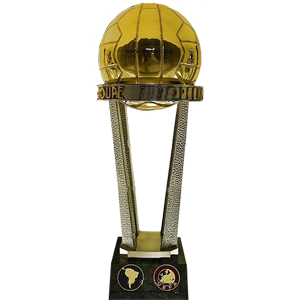
Ayala scores to win the Intercontinental Cup
 Atlético Madrid2:0
 IndependienteIntercontinental Cup Second leg · April 10, 1975 · Location: Madrid Stadium: Estadio Vicente Calderón
Atlético replace European champions Bayern Munich in the Intercontinental Cup. After losing 1–0 at Independiente, goals from Irureta and Ayala secure a 2–0 return-leg win at the Calderón. The club win the intercontinental title despite having missed out on the European Cup.
The derby final is decided on penalties
The cup final at the Vicente Calderón remains goalless through extra time. Real Madrid win the shootout 4–3, denying Atlético another trophy only months after their Intercontinental Cup triumph.
Gárate’s final great goal
Gárate scores the decisive goal in the 1–0 cup final win over Zaragoza. It proves to be his last goal for Atlético. Now coaching the side, Luis Aragonés wins the cup alongside several former playing colleagues.
Champions at their city rivals’ ground
A 1–1 draw away to Real Madrid seals the championship with a round remaining. Rubén Cano scores at the Bernabéu, and the later equaliser cannot take the title away. Luis Aragonés now wins the league as Atlético’s coach as well as a former player.


1980–1989
Real take the League Cup
Atlético win the League Cup final’s first leg 3–2 at the Calderón, but Real Madrid take the return 2–0 at the Bernabéu to win 4–3 on aggregate. Atlético’s Spanish cup final follows a fortnight later.
Hugo Sánchez scores twice
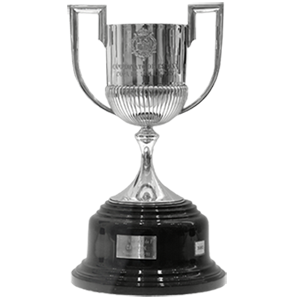
Hugo Sánchez scores both Atlético goals in a 2–1 win over Athletic. The club regain the Spanish Cup after nine years. The Mexican striker subsequently leaves for Real Madrid, but the final remains a high point of his Atlético career.
The first Spanish Super Cup
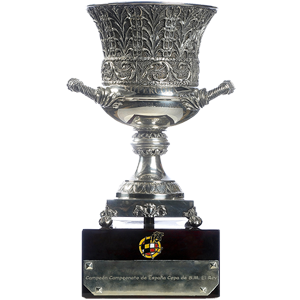
A 3–1 first-leg win at the Calderón is enough despite a 1–0 defeat in Barcelona. Atlético add their first Supercopa de España to June’s cup victory, with Luis Aragonés guiding the club to both trophies.
Dynamo Kyiv prove too strong in Lyon
Atlético reach their third Cup Winners’ Cup final, but Dynamo Kyiv win 3–0 in Lyon. The match at Stade de Gerland ends Luis Aragonés’s European cup campaign without another trophy.
Jesús Gil becomes president
Following Vicente Calderón’s death, Jesús Gil is elected president in 1987. Paulo Futre arrives as a prominent international signing. Gil’s long tenure brings major sporting successes, frequent coaching changes and later serious institutional conflict.
Arconada settles the shootout
Atlético equalise twice against Real Sociedad, but after a 2–2 draw and scoreless extra time the Basque side win the shootout 4–2. The final at La Romareda comes at the very beginning of Jesús Gil’s presidency.



1990–1999
Alfredo decides it in extra time
Mallorca keep the final level until Alfredo Santaelena scores the only goal in extra time. Atlético win the cup with Iselín Santos Ovejero in charge for the final, ending a six-year wait for a major trophy.
Barcelona prevail over two legs
After losing 1–0 at the Calderón, Atlético need an away win at Camp Nou, but the return ends 1–1. Barcelona take the Supercopa 2–1 on aggregate, leaving Madrid’s cup winners without a second trophy that year.
Conversion to a sporting company
Atlético are converted into a Sociedad Anónima Deportiva in 1992. The legal form becomes part of the official name Club Atlético de Madrid, S.A.D., replacing the former association structure with ownership determined by shares.
Schuster and Futre at the Bernabéu
Bernd Schuster scores a free-kick and Paulo Futre makes it 2–0 against Real Madrid. Atlético retain the cup at their rivals’ ground, adding another major coaching success for Luis Aragonés at his former club.
Another Super Cup defeat to Barcelona
Atlético Madrid1:2 FC BarcelonaSpanish Super Cup Second leg · November 11, 1992 · Location: Madrid Stadium: Estadio Vicente Calderón
Barcelona win the first leg 3–1 and the return at the Calderón 2–1. Atlético cannot add the Super Cup to their successfully retained Spanish cup, losing the tie 5–2 on aggregate to the league champions.
Pantić opens the road to the Double
Milinko Pantić heads the extra-time winner against Barcelona at La Romareda. The 1–0 victory gives Radomir Antić’s team the first part of their eventual Double, with the league championship still to be secured.
The Double is complete
Simeone and Kiko score in a 2–0 win over Albacete to add the ninth league championship to the cup already won. Radomir Antić’s team finish with 87 points and complete Atlético’s first league and cup Double.
A final at La Peineta
Atlético Madrid3:1FC BarcelonaSpanish Super Cup Second leg · August 28, 1996 · Location: Madrid Stadium: Estadio de la Comunidad de MadridThe Double winners move the Super Cup return leg to La Peineta. A 3–1 victory cannot overturn the 5–2 loss in Barcelona. Atlético thus play at the ground in 1996, long before its later redevelopment as the new Metropolitano.
The murder of Aitor Zabaleta
Real Sociedad supporter Aitor Zabaleta is fatally attacked near the Vicente Calderón before the UEFA Cup match. Atlético win 4–1 and progress, but the murder overshadows the result and leaves a lasting mark on relations between the two sets of supporters.
Valencia win at La Cartuja
Atlético lose the Seville final 3–0 to Valencia. Claudio Ranieri’s team win convincingly at La Cartuja, beginning a run of two consecutive Spanish cup final defeats for Atlético.
Placed under judicial administration
On December 22, 1999 the club’s management are replaced by a court-appointed administrator. Luis Manuel Rubí Blanc takes charge during the ongoing investigation. The intervention deepens a turbulent period in which organisational conflict and sporting difficulties overlap.


2000–2009
A long top-flight spell ends
A 2–2 draw at Oviedo confirms relegation. With 34 points from 36 games and two matches left, Atlético can no longer reach seventeenth place and safety. The long top-flight spell begun with the return of 1934 comes to an end.
No consolation from the cup
After relegation has been confirmed, the final against Espanyol offers one last chance of a trophy. Atlético instead lose 2–1 at Mestalla, ending a painful season with disappointment in both league and cup.
Fernando Torres makes his debut
Seventeen-year-old Fernando Torres comes on against Leganés in the second division as Atlético win 1–0 at the Calderón. Developed in the club’s academy, the striker becomes a leading figure in the rebuilding years and later the captain.
Promotion comes on a day without a match
Atlético had drawn 3–3 with Nàstic the previous day. Recreativo’s 2–1 loss to Leganés and Oviedo’s 1–1 draw at Murcia now make promotion mathematically certain. With four rounds remaining, Atlético can no longer fall outside the three promotion places.
Segunda División champions
Two weeks after securing promotion, Atlético beat Extremadura 3–2 to clinch the Segunda División championship as well. Diego Alonso and Fernando Correa score the goals. Luis Aragonés ends the two-year second-tier spell with the title; Atlético eventually finish with 79 points.
One hundred years of Atlético
On the club’s hundredth birthday, supporters carry a huge red and white flag through Madrid to the Calderón. The celebration brings together generations of fans and former players. Osasuna win the evening league match 1–0, but the day is chiefly a celebration of shared club history.
Reina blocks the route to the UEFA Cup
Atlético Madrid2:0a.e.t. · 1:3 on pens Villarreal CFUEFA Intertoto Cup Second leg · August 24, 2004 · Location: Madrid Stadium: Estadio Vicente Calderón
Atlético overturn Villarreal’s 2–0 first-leg lead at the Calderón, but the aggregate score remains level after extra time. Villarreal win the shootout 3–1 to claim the UEFA Cup place, leaving Atlético beaten in one of that summer’s three Intertoto finals.
Back to Europe through the Intertoto
After losing 2–1 at Gloria Bistrița, Atlético win the return 1–0 and qualify for the UEFA Cup on away goals. They are one of eleven Intertoto qualifying winners that year; the overall trophy is later awarded to Hamburger SV.
Back in the Champions League group stage
 Atlético Madrid4:0
 Schalke 04UEFA Champions League Second leg · August 27, 2008 · Location: Madrid Stadium: Estadio Vicente Calderón
Atlético lose the qualifying first leg at Schalke 1–0, then respond with a 4–0 home win through Agüero, Forlán, Luis García and Maxi Rodríguez. Javier Aguirre’s team return to the Champions League group stage for the first time since 1996/97.


2010–2019
Forlán ends the European wait
Diego Forlán scores both goals in the 2–1 extra-time win over Fulham in Hamburg. Quique Sánchez Flores leads Atlético to the Europa League, bringing a major European trophy back to the club 48 years after their first European triumph.
Sevilla win a week later
Only a week after their Europa League triumph, Atlético lose the cup final 2–0 to Sevilla. Diego Capel and Jesús Navas score at Camp Nou, denying Atlético two major trophies within a few days.
Reyes and Agüero against Inter
Atlético beat Champions League winners Inter 2–0 in Monaco. José Antonio Reyes and Sergio Agüero score after the interval, and David de Gea saves a late penalty. The Europa League triumph is followed by the club’s first UEFA Super Cup.
Diego Simeone returns as coach
Diego Simeone takes charge of the first team on December 23, 2011. The former Double-winning player builds around compact organisation, intense defensive work and a strong bond with supporters. His tenure restores Atlético to the leading group of European clubs.
Falcao’s final in Bucharest
3:0Radamel Falcao scores twice and Diego adds the third in a 3–0 win over Athletic in Bucharest. Atlético win the Europa League for the second time, securing a European trophy only months after Simeone’s return as coach.
Falcao’s hat-trick against Chelsea
Falcao scores a first-half hat-trick against Chelsea before Miranda adds another. Atlético win 4–1 in Monaco to claim their second UEFA Super Cup, confirming the side’s growing strength in Europe.
Miranda ends the long derby wait
1:2a.e.t.Diego Costa cancels out Real Madrid’s opener before Miranda heads the extra-time winner. Atlético’s 2–1 victory at the Bernabéu ends their competitive derby win drought stretching back to 1999 and brings Simeone the club’s tenth Spanish Cup.
An away goal makes the difference
1:10:0David Villa scores against his former club Barcelona in the first leg, before Neymar equalises for 1–1. The return is goalless, allowing Barcelona to take the Supercopa on away goals despite neither side winning a match.
Farewell to Luis Aragonés
Luis Aragonés dies on February 1, 2014. A player, prolific scorer and later coach, he had linked several major eras of the club. League titles, cup wins, the Intercontinental Cup and the 2002 promotion form part of his lasting Atlético legacy.
Godín’s header in Barcelona
Atlético need a point in their direct title decider at Camp Nou. Despite early injury substitutions and falling behind, Diego Godín heads the equaliser for a 1–1 draw. The tenth championship ends the wait since 1996 and rewards Simeone’s established team.
The stoppage-time equaliser
4:1a.e.t.A week after winning the league, Atlético lead Real Madrid through Godín in the Champions League final. Sergio Ramos equalises in stoppage time to force extra time, when Real pull away for a 4–1 win. Atlético narrowly miss Europe’s leading club trophy again.
Mandžukić decides the return leg
1:11:0After a 1–1 draw at the Bernabéu, Mario Mandžukić scores the only goal early in the return leg at the Calderón. Atlético beat Real Madrid 2–1 on aggregate, adding their second Spanish Super Cup to the league championship.
Fatal violence beside the Manzanares
2:0Serious clashes between supporters take place beside the Manzanares before the home match against Deportivo. Deportivo fan Francisco Javier Romero Taboada, known as Jimmy, dies. Atlético’s 2–0 win is overshadowed as the violence prompts renewed debate over the treatment of ultra groups.
Another derby final slips away
1:1a.e.t. · 5:3 on pensCarrasco cancels out Real Madrid’s opener in the Milan final, but a 1–1 draw and extra time lead to another shootout. Real win 5–3 after Juanfran hits the post, defeating Atlético in the final for the second time in three years.
The last league evening at the Calderón
Atlético close the Vicente Calderón’s league history with a 3–1 win over Athletic. Fernando Torres scores twice and Ángel Correa adds the third. After more than fifty years beside the Manzanares, fans and former players remember the old ground’s great moments.
Moving into the Wanda Metropolitano
Antoine Griezmann scores in a 1–0 win over Málaga in Atlético’s first league match at their new home. The major redevelopment has transformed the La Peineta athletics ground into the Wanda Metropolitano. The move and a redesigned crest begin a new chapter in the club’s public identity.
A third Europa League triumph
Antoine Griezmann scores twice against Marseille and Gabi completes a 3–0 win in Décines-Charpieu near Lyon. Atlético’s third Europa League title becomes a highlight of their first season at their new Madrid ground.
Two farewell goals for Fernando Torres
Four days after the Europa League triumph, Fernando Torres bids farewell to Atlético and scores both goals in a 2–2 draw with Eibar. The Metropolitano honours a player who had grown from the second-tier years’ young hope into an international symbol of the club.
Four goals in the European derby
2:4a.e.t.Diego Costa scores twice against Real Madrid to take the match into extra time. Saúl and Koke then secure a 4–2 win in Tallinn. Atlético claim their third UEFA Super Cup and beat their city rivals in a European final for the first time.




2020–2029
A goalless final in Jeddah
0:0a.e.t. · 4:1 on pensAtlético reach the final against Real Madrid in the first four-club Spanish Super Cup. After 120 goalless minutes, Real win the shootout 4–1 at King Abdullah Sports City in Jeddah.
Correa and Suárez turn the finale around
Atlético fall behind at Valladolid on the final day, but Ángel Correa and Luis Suárez turn the match around for a 2–1 win. The club claim their eleventh championship with 86 points in a season played behind closed doors because of the pandemic.
Koke overtakes Adelardo
Koke makes his 554th competitive appearance in a 2–0 win at Sevilla, surpassing Adelardo’s previous record. The academy-developed captain becomes Atlético’s leading appearance holder, with the team marking his milestone through an away victory.
Griezmann becomes the record scorer
Antoine Griezmann scores his 174th competitive Atlético goal against Real Madrid in the Super Cup semi-final, overtaking Luis Aragonés. The personal record comes in a 5–3 extra-time defeat, establishing a new landmark in the club’s long goalscoring history.
The traditional badge returns
Atlético return to the traditional badge on July 1, 2024 following a binding members’ vote the previous year. Restoring the familiar bear, strawberry tree and red and white stripes reconnects the modern club with a widely cherished visual identity.
Apollo become majority shareholders
The shareholders’ meeting confirms the new ownership structure on March 12, 2026, with Apollo Sports Capital as majority shareholders. Enrique Cerezo remains president and Miguel Ángel Gil chief executive. A capital increase of up to €100 million is also authorised for the club’s further development.
Real Sociedad prevail on penalties again
Atlético return to the Spanish cup final for the first time since 2013. After a 2–2 draw with Real Sociedad and extra time, Madrid lose the shootout 4–3. As in 1987, penalties decide the final in the Basque club’s favour.


