


The history of Greuther Fürth
Milestones and background from the club's history, in chronological order.
Categories
Competitions
Nicknames through the years Three names tell a story of near misses, late goals and an unbeaten season. Read the storiesClose the stories
1900–1909
Footballers organise within Turnverein
The footballers establish Spielvereinigung des Turnvereins Fürth at the Balzer restaurant.
They confirm their committee and adopt rules; this department becomes the foundation of the later Cloverleaf.
Spielvereinigung becomes independent
Spielvereinigung separates from Turnverein Fürth to become an independent club.
The withdrawal resolution was passed on September 21; the footballers wanted their own ground and the admission of young players.
1910–1919
The Ronhof becomes home
Spielvereinigung open their new Ronhof ground with a 2–2 draw against reigning German champions Karlsruher FV.
The site is then outside Fürth’s city boundary; Ronhof is incorporated into the city only in 1927.
The Viktoria comes to Fürth
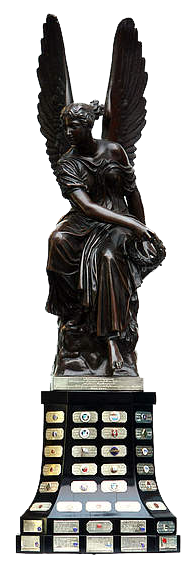
SpVgg Fürth beat VfB Leipzig 3–2 after extra time in the German championship final.
An exceptionally long match on Magdeburg’s Victoria ground finally decides the title. The passing football shaped by William Townley reaches its first national peak.

Season review: a third southern German title
A 1–1 draw with Fürth at Union-Platz completes the southern German final round.
The unbeaten Kickers finish with ten points and two against, topping southern Germany for the third time.


1920–1929
A Franconian championship final
 1. FC Nürnberg2:0
 SpVgg FürthGerman Championship Location: Frankfurt am Main Stadium: Germania-Platz an den Sandhöfer Wiesen Neutral venue
Fürth lose 2–0 to 1. FC Nürnberg in the first German final after the First World War.
The derby on Frankfurt’s Sandhöfer Wiesen highlights Franconian strength, but this time the rival takes the Viktoria.
Four goals bring a second championship
Fürth win the German final against Hertha BSC 4–1 at Frankfurt’s Waldstadion.
Under William Townley, the Viktoria returns after twelve years; the team secures an emphatic final victory.
A third title against Hertha
Spielvereinigung beat Hertha BSC 3–2 in the final in Nuremberg.
A third German championship confirms Fürth’s place among the leading interwar clubs. No further German championship has followed.

1930–1939
Political control replaces club autonomy
Nazi political control reaches Spielvereinigung: Hans Pfeiffer becomes the club’s appointed leader.
Democratic club governance gives way to the leadership principle; the sporting history cannot be separated from this political intervention.
1940–1949
War damage at the Ronhof
A fire destroys the Ronhof main stand in February.
American troops initially use the ground after the war. The stand is rebuilt in 1951, and the club remains at this venue in the long term.
1950–1959
The bid for a fourth national title ends in the semi-final
Fürth lose the German championship semi-final to VfB Stuttgart 4–1.
After returning to the top flight in 1949 and winning the southern championship in 1950, they reach the last four once more. Eventual German champions Stuttgart end the run at Frankfurt’s Waldstadion.
First league match at the new Riederwald
One week after the new Riederwald stadium opens, Eintracht beat SpVgg Fürth 4–1 in its first league match.
After years of using other grounds, the club have a home of their own again.


1960–1969
Outside the new Bundesliga
Fürth are not selected for the new Bundesliga when it is introduced.
Spielvereinigung enter Regionalliga Süd, ending their long-standing place in the national top flight.
1970–1979
The new second division
Fürth become a founding member of the two-section 2. Bundesliga.
Admission from Regionalliga Süd is not promotion to a higher tier: each competition forms the second level in its respective league structure.
1980–1989

First Bundesliga 2 championship
A 3-3 draw against Fürth secures the second-division title with 51 points.
Hertha BSC had still been able to draw level before the final matchday.
The Ronhof is sold
The indebted club sell the Ronhof to Horst Brandstätter.
Spielvereinigung remain at their traditional home as tenants but lose ownership of the historic ground.

A fourth Bundesliga promotion
A late comeback against SpVgg Fürth delivers promotion.
Martin Kubosch equalises before Walter Krause heads the winner in a 3–2 victory. Lothar Buchmann’s Kickers return to the Bundesliga with two matches remaining; it remains their most recent promotion to the top flight.
Two results seal relegation
Fürth lose 3–0 in Augsburg while Union Solingen beat Waldhof Mannheim 2–0.
Only the combination of both results seals relegation from the 2. Bundesliga. Before the final match, Fürth had 31 points and Solingen 30 under the two-points-for-a-win system; their rival’s victory takes them ahead on 32.


1990–1999
A fourth-tier side eliminate Dortmund
Fourth-tier SpVgg Fürth beat Borussia Dortmund 3–1 in the DFB-Pokal.
Despite an early dismissal, the Ronhof witnesses one of Fürth’s great cup upsets. Oliver Zettl scores twice.
The deciding match opens the way to Bayernliga
Fürth win the promotion play-off against 1. FC Nürnberg’s reserves 2–1.
On neutral ground in Bayreuth, they return from the fourth to the third tier after several unsuccessful attempts.
Fürth become Greuther Fürth
TSV Vestenbergsgreuth’s competitive football department joins Spielvereinigung, now named SpVgg Greuther Fürth.
This does not create an entirely new club or dissolve TSV. The contemporary crest combines the cloverleaf and the wooden shoe.
The return to professional football is secured
A 3–0 win against SG Egelsbach secures Fürth’s return to the 2. Bundesliga.
The decisive Ronhof victory comes before the end of the season. Promotion also marks the start of the stadium’s modernisation.

Haching reaches the Bundesliga for the first time
Hannover’s goalless draw with Tennis Borussia already secures Unterhaching’s first Bundesliga promotion: neither rival can reach Haching’s 59 points. The following evening brings a 4–1 home win over Fürth and celebrations with the supporters. Köstner’s side eventually finishes runner-up in the second division.

The back-to-back climb is complete
A goalless draw with Greuther Fürth takes Ulm into the Bundesliga on the final day.
SSV finish third with 58 points, one ahead of Karlsruhe. Martin Andermatt completes the back-to-back climb after Ralf Rangnick’s spring departure for Stuttgart.


2000–2009
TuSpo becomes part of Spielvereinigung
TuSpo Fürth merge with SpVgg Greuther Fürth.
The partner club was re-established on November 14, 1948 and traced its tradition to 1895. This merger differs from the admission of Vestenbergsgreuth’s football department in 1996.

Back in the Bundesliga after 36 years
Saarbrücken’s 1–0 win against Greuther Fürth secured Alemannia’s promotion.
Aachen had 61 points and could no longer be caught by more than two clubs. Its Bundesliga return was therefore assured before its own match against Bochum.
Promotion to the Bundesliga
A 5–0 win over Greuther Fürth seals promotion to the Bundesliga.
Having reached the second division in 2007, Ralf Rangnick's team climbs again a year later and finishes the season in second place.

Victory on the second-division debut
FC Ingolstadt 04’s first second-division match ended in a 3–2 victory over Greuther Fürth.
At the renovated Tuja-Stadion, Valdet Rama, an own goal and Ersin Demir turned the match around after an early deficit. The first team had moved from MTV-Stadion to ESV’s former home for the new division.


2010–2019
The cup final slips away at the last moment
Fürth lose their DFB-Pokal semi-final 1–0 to Borussia Dortmund through a goal at the end of extra time.
The Ronhof sees the club’s greatest cup run to that point, but no final. Dortmund’s Bundesliga visit to Fürth follows in the next season.
The first Bundesliga promotion becomes mathematically certain
A 1–1 draw at FSV Frankfurt removes the last mathematical doubts about Fürth’s first Bundesliga promotion.
Bernd Nehrig scores the crucial equaliser from the penalty spot. The city had already celebrated after Düsseldorf’s defeat in Dresden on April 16; the large goal-difference advantage made promotion practically certain then, but it was not yet finally decided.
The Bundesliga debut at the Ronhof
Fürth’s first Bundesliga match ends in a 3–0 defeat by Bayern Munich.
Almost fifty years after the competition’s introduction, Spielvereinigung finally enter the Bundesliga. Their first season later ends without a home win.
Wolfsburg end a run of three cup wins
Kickers Offenbach2:0Greuther FürthDFB-Pokal Match 1 · August 18, 2012 · Location: Offenbach am Main Stadium: Sparda-Bank-Hessen-StadionKickers Offenbach2:0 Union BerlinDFB-Pokal Match 2 · October 31, 2012 · Location: Offenbach am Main Stadium: Sparda-Bank-Hessen-StadionKickers Offenbach2:0
 Fortuna DüsseldorfDFB-Pokal Match 3 · December 18, 2012 · Location: Offenbach am Main Stadium: Sparda-Bank-Hessen-StadionKickers Offenbach1:2
 VfL WolfsburgDFB-Pokal Match 4 · February 26, 2013 · Location: Offenbach am Main Stadium: Sparda-Bank-Hessen-Stadion
After three 2–0 wins over Greuther Fürth, Union Berlin and Fortuna Düsseldorf, Kickers lose the quarter-final to Wolfsburg 2–1.
The third-tier club had eliminated two Bundesliga sides and a second-division opponent. The new stadium witnesses a memorable cup campaign.

A comeback to secure survival
3:13:0A 3–1 victory over Fürth and Düsseldorf’s 3–0 defeat in Hanover take Augsburg to 15th and safety.
The comeback succeeds after only nine points in the first half of the season; 15th is also the club’s lowest Bundesliga finish, repeated in 2019 and 2023.
Final-day results bring relegation
3:03:11:2Fortuna lose 3–0 away to Hannover 96. At the same time, FC Augsburg beat Greuther Fürth and Hoffenheim win away to Borussia Dortmund.
Both rivals move ahead, leaving Düsseldorf seventeenth and relegated after a single Bundesliga season.
Away goals prevent an immediate return
0:0Bundesliga promotion/relegation play-off First leg · May 15, 2014 · Location: Hamburg Stadium: Imtech Arena1:1Bundesliga promotion/relegation play-off Second leg · May 18, 2014 · Location: Fürth Stadium: Trolli ArenaFollowing a 0–0 draw in Hamburg, Fürth draw the return leg of the Bundesliga promotion play-off 1–1 with HSV.
The away-goals rule then in force favours Hamburg. Despite remaining unbeaten in both matches, the Cloverleaf miss an immediate return after relegation in 2013.
The Ronhof is secured for the long term
The lease between landowner Conny Brandstätter and the City of Fürth is extended until 2050; Spielvereinigung use the Ronhof as subtenants.
This long-term commitment provides the basis for the new main stand; from February 2016 the venue is named Sportpark Ronhof | Thomas Sommer.

Grönemeyer sings Bochum before the home match
Herbert Grönemeyer performed the stadium anthem in person before kick-off.
VfL then won the second-tier match against Greuther Fürth.

Four goals seal promotion
A 4–0 win away to Greuther Fürth seals Köln's immediate promotion in 2019.
Jhon Córdoba scores a hat-trick at the Sportpark Ronhof, with an own goal completing the result. FC return to the Bundesliga after one season in the second division.






2020–2029

Fürth and Kiel deliver direct survival
1:21:1KSC win 2–1 in Fürth and secure direct survival together with Kiel’s 1–1 draw against Nürnberg.
Dominik Kother cancels out the early deficit and Philipp Hofmann converts the decisive penalty. Survival is confirmed only after the later final whistle in Kiel: Karlsruhe finish 15th ahead of Nürnberg on goal difference with equal points.

Five goals are not enough to stay up
5:31:2A 5–3 victory over St. Pauli took Wehen Wiesbaden to 34 points. Karlsruhe’s simultaneous 2–1 victory at Fürth gave KSC 37, leaving SVWW seventeenth and directly relegated to the 3. Liga.
Back to the Bundesliga with ten men
3:22:3Fürth turn the final match against Fortuna Düsseldorf into a 3–2 win despite being reduced to ten men.
At the same time, Holstein Kiel lose 3–2 to Darmstadt 98. Only the combination of both results lifts Fürth into second place and secures direct promotion.

7–1 against Fürth: record home win and four goals for Schick
On December 4, 2021, Bayer 04 beat Greuther Fürth 7–1 at the BayArena to record their biggest Bundesliga home win to that point. Patrik Schick scores four second-half goals, in the 49th, 69th, 74th and 76th minutes, becoming the first Leverkusen player to score four times in a Bundesliga match. Goals from Amine Adli, Edmond Tapsoba and Piero Hincapie had given the Werkself a 3–1 half-time lead.
The second Bundesliga spell also ends in relegation
A 4–1 defeat by Bayer Leverkusen makes Fürth’s second Bundesliga relegation mathematically certain.
The remaining three matches cannot bring them up to the play-off position. Their second top-flight spell ends after one season.

Fürth eliminated by the Oberliga side
A 2–0 win over Greuther Fürth takes the Kickers into the DFB-Pokal second round.
The fifth-tier side beat opponents recently relegated from the Bundesliga.

Stoppage time to remember forever
Two stoppage-time goals turn a 2-1 deficit into a 3-2 victory in Regensburg.
Jan-Niklas Beste equalises from the penalty spot before Tim Kleindienst scores the decisive goal. Heidenheim reach the Bundesliga for the first time and win the second-division title ahead of Darmstadt on goal difference.

Harres fires Homburg into the last sixteen
After Fürth equalise, Phil Harres settles the match with a late goal for a 2–1 win.
Homburg beat a second higher-tier opponent to reach the DFB-Pokal round of sixteen.

First second-division survival is secured
Elversberg are safe before playing Hertha.
Rostock’s 2-1 defeat against Karlsruhe and Braunschweig’s 3-3 draw in Fürth settle it: Rostock and Osnabrück can no longer reach 40 points, while their remaining head-to-head match means Braunschweig and Wiesbaden cannot both catch SVE.
Relegation to the 3. Liga
Fortuna lose their final match of the season 3–0 away to Greuther Fürth.
Arminia Bielefeld’s simultaneous 6–1 victory over Hertha BSC leaves Düsseldorf seventeenth. The club are relegated from the second division and enter the 3. Liga in 2026/27.
Two goals preserve second-tier status
 Rot-Weiss Essen1:0Greuther Fürth2. Bundesliga promotion/relegation play-off First leg · May 22, 2026 · Location: Essen Stadium: Stadion EssenGreuther Fürth2:0Rot-Weiss Essen2. Bundesliga promotion/relegation play-off Second leg · May 26, 2026 · Location: Fürth Stadium: Sportpark Ronhof | Thomas Sommer
After losing the first leg 1–0 in Essen, Fürth win the return play-off at the Ronhof 2–0.
A 2–1 aggregate victory secures their place in the 2. Bundesliga. Survival is decided in the return leg, rather than when they first reach the play-off position.


