The history of Celtic
Milestones and background from the club's history, in chronological order.
Categories
Competitions
Nicknames through the years Three names tell a story of near misses, late goals and an unbeaten season. Read the storiesClose the stories
1880–1889
A club with a charitable purpose
Celtic was founded in the hall of St Mary’s in Glasgow’s East End on November 6, 1887.
Brother Walfrid intended the football club to raise money to feed poor children. Irish Catholic roots and a charitable purpose shaped its identity; the team began playing the following year.
The first match: beating Rangers 5–2
Celtic played its first match on May 28, 1888, beating Rangers 5–2 at the original Celtic Park.
Neil McCallum scored the club’s first goal. The team wore white shirts with green collars and a Celtic cross; the famous green and white hoops followed in 1903.
1890–1899
The first Scottish Cup
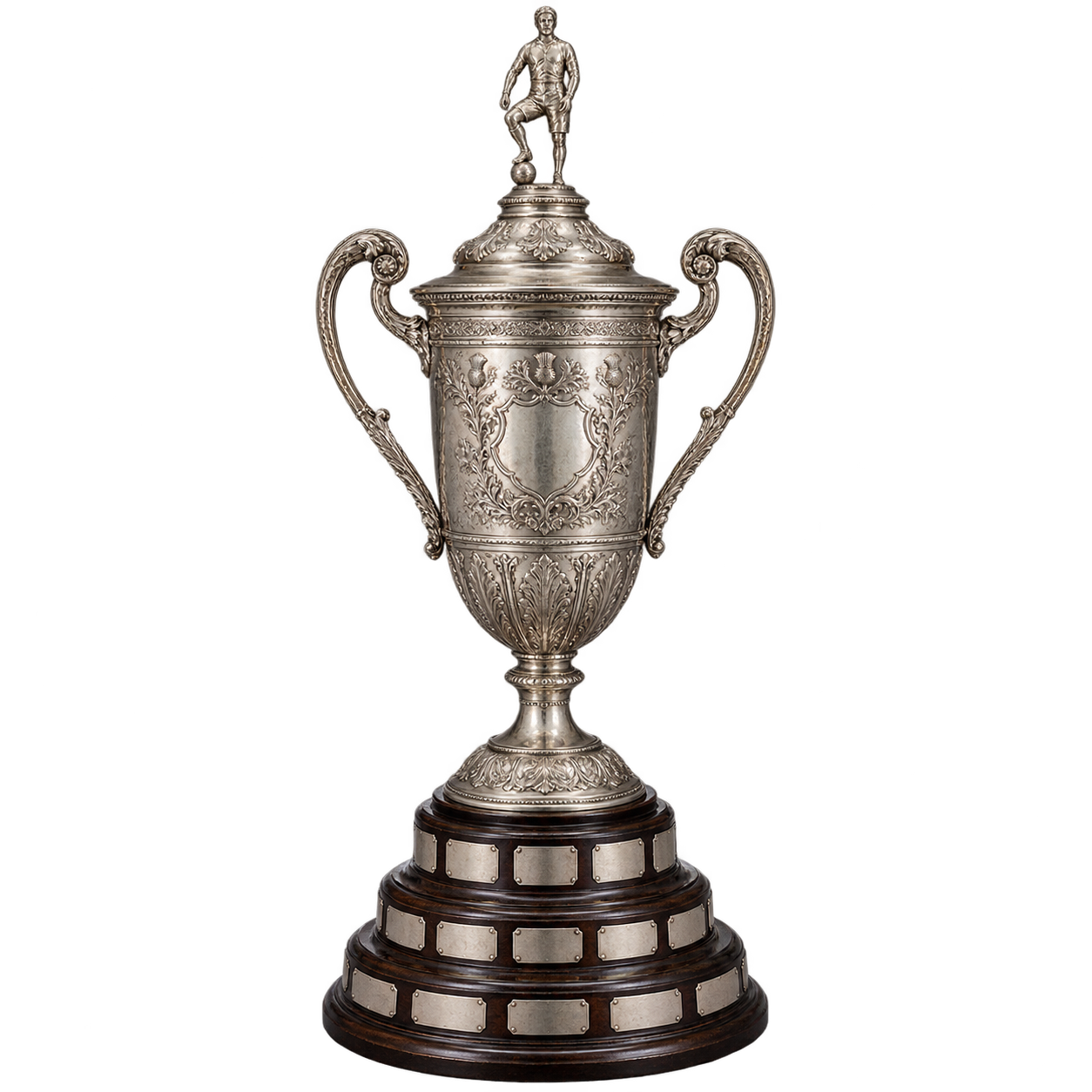
Celtic won the Scottish Cup for the first time by beating Queen’s Park 5–1 on April 9, 1892.
The final took place at the old Ibrox Park, a separate ground from the later Ibrox Stadium. Only a few years after its debut, Celtic had established itself among Scotland’s leading clubs.
A new home at Celtic Park
Celtic won the first league fixture at the new Celtic Park 4–3 against Renton on August 20, 1892.
Increased rent at the neighbouring original ground had prompted the move. The new stadium became the club’s permanent home, commonly known as Paradise or Parkhead.

East End moves to St James’ Park
After West End collapsed, East End took over the St James’ Park lease, remaining assets and some players.
East End lost 1–0 to Celtic in its first match at the new home. Sporting continuity came from East End.
The first league title is secured
A 3–1 win against Leith Athletic on May 9, 1893 secured Celtic’s first Scottish league title.
Under the two-point system, Celtic reached 29 points, moving beyond Rangers, whose season had already finished with 28. A subsequent defeat against Third Lanark could no longer change the outcome.

The first Scottish Cup
Rangers won its first Scottish Cup by beating Celtic 3–1 on February 17, 1894.
The final took place at the second Hampden Park, later known as Cathkin Park. Today’s Hampden Park is a separate stadium that opened in 1903.


1910–1919
An unbeaten run of 62 league matches
A 2–0 home defeat by Kilmarnock on April 21, 1917 ended Celtic’s unbeaten run of 62 league matches.
The sequence had begun against the same opponents in November 1915. Willie Maley’s team combined exceptional consistency with the difficult circumstances of football during the First World War.

1920–1929
The cup drought ends
A 4–0 Scottish Cup final win over Celtic on April 14, 1928 ended a 25-year wait for the trophy.
It formed part of Bill Struth’s first league-and-cup double. Bob McPhail and his teammates recorded an emphatic derby victory at Hampden Park.
1930–1939
The death of John Thomson
Goalkeeper John Thomson suffered a severe head injury in a collision with Sam English during the goalless derby against Rangers on September 5, 1931.
The 22-year-old died later in hospital. Grief shaped the club beyond football, and Thomson remained remembered as the Prince of Goalkeepers.
A cup triumph before a record crowd
Celtic beat Aberdeen 2–1 in the Scottish Cup final on April 24, 1937.
Hampden Park recorded a crowd of 147,365, an extraordinary European club-match attendance record. The team associated with Jimmy McGrory made history both through its football and its ability to draw enormous crowds.
A record attendance at Ibrox Park
A crowd of 118,567 watched Rangers beat Celtic 2–1 at Ibrox Park on January 2, 1939.
The attendance set the British record for a league match. It also illustrates the scale of the great standing terraces before the later conversion to an all-seater stadium.
1950–1959
Floodlights at St James’ Park
Newcastle beat Celtic 2–0 in the stadium’s first floodlit match.
The new lighting widened the possibilities for evening matches and modernised the old ground.
Hampden in the Sun
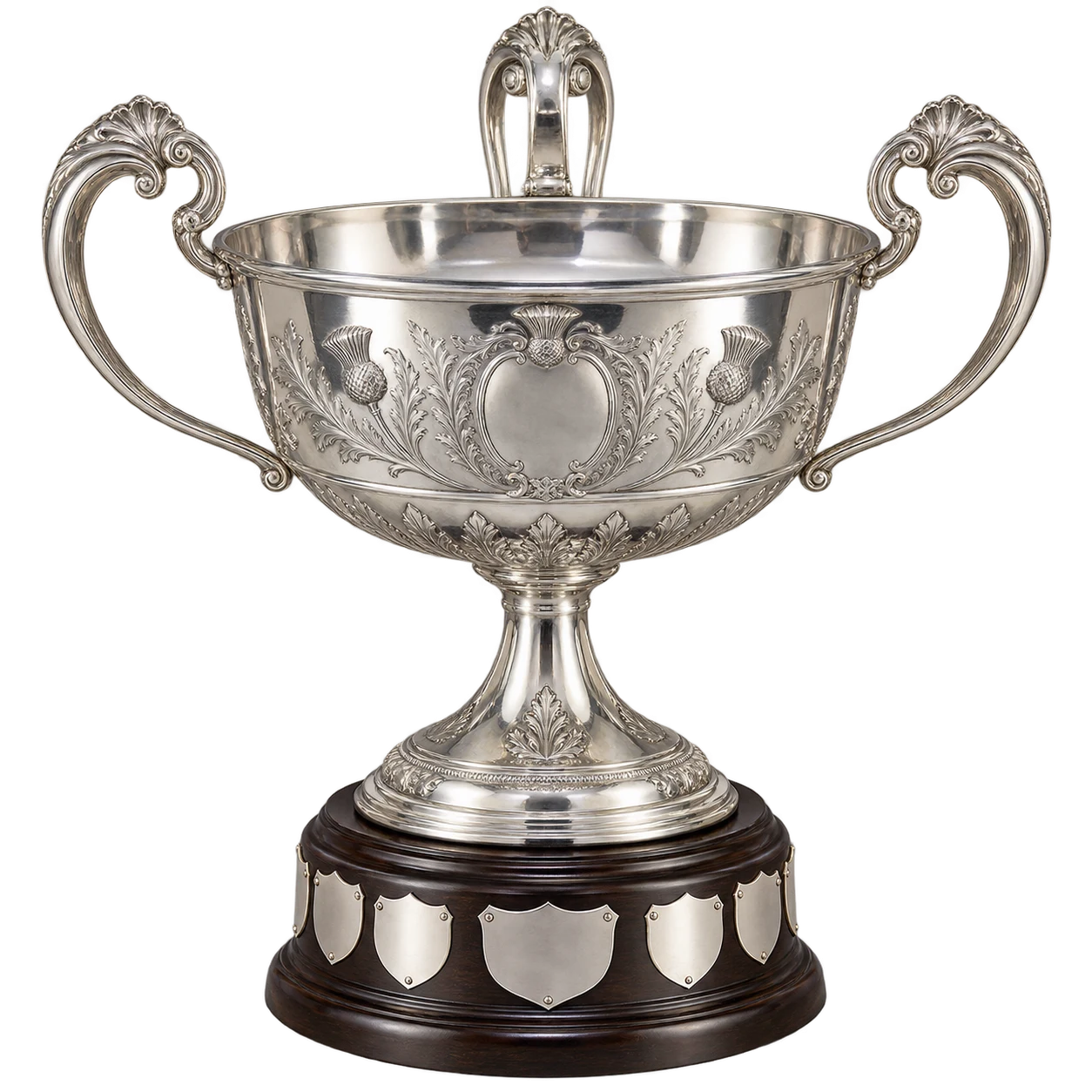
Celtic defeated Rangers 7–1 in the League Cup final on October 19, 1957.
Billy McPhail scored a hat-trick, and the victory became celebrated in the song Hampden in the Sun. The extraordinary derby result remained a highlight of an era in which Celtic trophies were far from routine.
1960–1969
A European debut in Valencia
Celtic played its first European competitive match in a 4–2 defeat at Valencia on September 26, 1962.
Jimmy McGrory’s team faced the defending Inter-Cities Fairs Cup holders. The match at Mestalla opened Celtic’s European story; the Fairs Cup was organised independently of UEFA.
The first European night at Celtic Park
Celtic hosted its first European competitive match at Celtic Park on October 24, 1962.
The Inter-Cities Fairs Cup return against Valencia ended 2–2. Following the 4–2 first-leg defeat, Celtic went out 6–4 on aggregate; its first international home match nevertheless began a long tradition of European nights in Glasgow.
A UEFA debut and Hughes hat-trick in Basel
Celtic played its first match in a UEFA-organised European competition in a 5–1 win at Basel on September 17, 1963.
John Hughes scored three times in the European Cup Winners’ Cup, with John Divers and Bobby Lennox also on target. Hughes recorded Celtic’s first European hat-trick. The venue was the old St. Jakob-Stadion, rather than the St. Jakob-Park later built on the site.
Jock Stein’s first cup triumph
A 3–2 Scottish Cup final win over Dunfermline Athletic on April 24, 1965 brought Celtic its first major trophy since 1957.
Bertie Auld scored twice before Billy McNeill headed the late winner. Newly appointed manager Jock Stein was beginning the era that would transform the club.
A controversial semi-final exit at Anfield
Celtic missed the European Cup Winners’ Cup final after a 2–0 defeat at Liverpool FC on April 19, 1966.
Bobby Lennox had secured a 1–0 first-leg win at Celtic Park. Liverpool FC overturned the tie in the return, while a late Lennox effort was disallowed for offside. The controversial decision became part of Celtic’s memory of a semi-final lost 2–1 on aggregate.
The road to Lisbon begins against Zurich
Celtic won its first European Champion Clubs’ Cup match 2–0 against FC Zurich on September 28, 1966.
After a goalless first half, Tommy Gemmell scored Celtic’s first goal in the competition with a long-range shot, before Joe McBride made it 2–0. Jock Stein’s team opened the European campaign at Celtic Park that would end with victory in Lisbon the following May.
McNeill’s late header keeps the European dream alive
 Vojvodina1:0
 CelticEuropean Champion Clubs’ Cup First leg · March 1, 1967 · Location: Novi Sad Stadium: Stadion Vojvodine
Celtic reached the European Champion Clubs’ Cup semi-finals with a 2–0 win over Vojvodina on March 8, 1967.
Following a 1–0 defeat in Novi Sad, Stevie Chalmers first levelled the tie. Billy McNeill’s last-minute header settled it 2–1 on aggregate. The late goal spared Celtic an additional play-off and kept the route to its eventual European title open.
The Lisbon Lions conquer Europe
Celtic won the European Champion Clubs’ Cup by beating Inter Milan 2–1 on May 25, 1967.
Tommy Gemmell and Stevie Chalmers overturned the deficit at Estádio Nacional in Oeiras near Lisbon. Jock Stein’s attacking Lisbon Lions became the competition’s first British winners, crowning an exceptional season.



1970–1979
A crowd of 136,505 against Leeds
Celtic beat Leeds United 2–1 before 136,505 spectators at Hampden Park on April 15, 1970, reaching another European final.
After Celtic’s 1–0 win at Leeds, Billy Bremner put the visitors ahead in the return, before John Hughes and Bobby Murdoch turned the match around. Celtic advanced 3–1 on aggregate. The attendance is a record for a European club competition match; Celtic remained the home team at the alternative venue.
Defeat in a second European Cup final
Celtic lost its second European Cup final 2–1 after extra time to Feijenoord in Milan on May 6, 1970.
Tommy Gemmell’s opener was not enough, with Ove Kindvall deciding the game late in extra time. In Scotland, however, Stein’s era brought nine consecutive league championships from 1966 to 1974.

The Ibrox disaster
After the 1–1 derby against Celtic on January 2, 1971, 66 people died in a crush on Stairway 13 at Ibrox Park.
The disaster left profound grief and prompted fundamental stadium and safety changes. Rangers continues to commemorate the victims; the football result was entirely overshadowed.

Through Glasgow to the first European Cup final
A goalless first leg at Celtic is marked by rough play and three Atlético dismissals. A 2–0 return-leg win at the Calderón then takes Juan Carlos Lorenzo’s team into the European Cup final for the first time.

Blank’s winner against Celtic
After a 1–1 draw at Celtic Park, Hartmut Blank scored in the fourth minute of the return in Zwickau. Sachsenring defended the 1–0 lead in front of packed terraces and reached the semi-finals. It remains the club’s greatest international achievement.
Ten men win the league
Celtic won the decisive derby against Rangers 4–2 on May 21, 1979 to secure the league title.
John Doyle’s dismissal left the team with ten men. The comeback and Murdo MacLeod’s final goal made Ten Men Won the League an enduring part of Celtic folklore.


1980–1989
The Souness era wins its first trophy
A 2–1 League Cup final victory over Celtic on October 26, 1986 brought Graeme Souness his first Rangers trophy.
Ian Durrant and Davie Cooper scored. The player-manager and signings including Terry Butcher and Chris Woods began an era of renewed prominence in Scottish football.
A double in the centenary season
A 2–1 Scottish Cup final victory over Dundee United on May 14, 1988 completed Celtic’s centenary-season double.
Frank McAvennie scored both late goals to turn the final around. Billy McNeill, now manager, delivered a special anniversary success two decades after captaining the Lisbon Lions.


1990–1999
Fergus McCann rescues and rebuilds the club
Fergus McCann took control of Celtic on March 4, 1994, averting the threat of insolvency.
New investment and stadium redevelopment established a stronger financial foundation. Celtic played at Hampden Park during the 1994/95 season; the rescue did not create a new sporting club.

League Cup triumph over Celtic
After a 2–2 draw following extra time, Raith beat Celtic 6–5 on penalties.
At Ibrox Stadium, goalkeeper Scott Thomson saves Paul McStay's decisive kick. The trophy takes Raith into the UEFA Cup.
Stopping Rangers’ ten in a row
A 2–0 win over St Johnstone on May 9, 1998 secured Celtic’s first league championship since 1988 under Wim Jansen.
Henrik Larsson and Harald Brattbakk scored the goals. Rangers’ sequence stopped at nine consecutive titles, restoring Celtic to the top after its financial rebuilding.
Dick Advocaat’s team completes a treble
Rod Wallace scored the only goal against Celtic in the Scottish Cup final on May 29, 1999.
The 1–0 win completed a treble in Dick Advocaat’s first Rangers season. The Dutch manager combined international recruits with established players to win all three major Scottish trophies.

2000–2009
Martin O’Neill’s treble
Celtic beat Hibernian 3–0 in the Scottish Cup final on May 26, 2001, completing its first domestic treble since 1969.
Jackie McNamara and Henrik Larsson, twice, scored. Martin O’Neill’s first season united the league, League Cup and Scottish Cup, opening another successful period.
Thompson and Hartson conquer Anfield
Celtic reached the UEFA Cup semi-finals with a 2–0 win at Liverpool FC on March 20, 2003.
After a 1–1 draw at Celtic Park, Alan Thompson’s free-kick and John Hartson’s long-range strike settled the return at Anfield. Martin O’Neill’s team won the British tie 3–1 on aggregate and continued towards its eventual final in Seville.
Seville: a final and a supporters’ story
Celtic lost the UEFA Cup final 3–2 after extra time to Porto on May 21, 2003.
Henrik Larsson twice equalised at Estadio La Cartuja, but Porto won the trophy. Tens of thousands of travelling Celtic supporters also made Seville a defining experience in the club’s fan culture, earning international recognition for their conduct.
Helicopter Sunday
Rangers won 1–0 at Hibernian on May 22, 2005 while Celtic surrendered its lead at Motherwell and lost 2–1.
Together, the results made Rangers champions on the final day. Nacho Novo’s goal and Scott McDonald’s late goals in the parallel fixture shaped the dramatic Helicopter Sunday.
Nakamura and Boruc secure a first Champions League last 16
Celtic secured its first UEFA Champions League last-16 appearance on November 21, 2006.
In the 1–0 win over Manchester United, Shunsuke Nakamura scored a free-kick before Artur Boruc saved Louis Saha’s late penalty. Benfica’s simultaneous 3–1 win over Copenhagen was also needed: Copenhagen could no longer catch Celtic. Celtic and Manchester United had nine points and Benfica seven, with United and Benfica meeting on the final matchday. Celtic held the head-to-head advantage in a tie with United, so qualification was confirmed that evening.

A new home on Leckwith Road
Cardiff City4:0 Scunthorpe UnitedMatch 2 · August 8, 2009 · Location: Cardiff Stadium: Cardiff City Stadium
Cardiff City Stadium officially opened with a goalless friendly against Celtic. Built on a separate site, the new ground replaced Ninian Park. The first league fixture brought a 4–0 win over Scunthorpe United.
The ground became the centre of a new era for the club. Expansion of the Ninian Stand in 2014 increased its size, while Wales internationals and major concerts also became part of its programme.


2010–2019
FC Barcelona beaten at Celtic Park
One day after its 125th anniversary, Celtic beat FC Barcelona 2–1 in the Champions League on November 7, 2012.
Victor Wanyama and young Tony Watt scored, with Lionel Messi’s late goal unable to change the outcome. The night showcased Celtic Park’s atmosphere on Europe’s biggest club stage.
The Invincible Treble
Tom Rogic’s late winner in the 2–1 Scottish Cup final victory over Aberdeen on May 27, 2017 completed the Invincible Treble.
Brendan Rodgers’ team remained unbeaten in all domestic competitive matches that season. The cup final made the extraordinary achievement complete.
Three consecutive trebles
Celtic won its third consecutive domestic treble by beating Hearts 2–1 on May 25, 2019.
Odsonne Édouard scored both goals after Celtic had fallen behind. Neil Lennon completed the season begun by Brendan Rodgers, with the Treble Treble delivering nine consecutive domestic trophies.



2020–2029
A fourth treble in a delayed final
Celtic won the pandemic-delayed 2019/20 Scottish Cup final against Hearts on December 20, 2020.
A 3–3 draw after extra time was followed by a 4–3 penalty shoot-out victory. Conor Hazard saved twice and Kristoffer Ajer converted the decisive kick, completing a fourth consecutive domestic treble.

The 55th championship is secured
Dundee United’s 0–0 draw with Celtic on March 7, 2021 mathematically secured the title for Rangers, who did not play that day.
Steven Gerrard’s team won its first Scottish championship since 2011, marking a defining milestone in the journey from the restart.
An eighth domestic treble
Celtic beat Inverness Caledonian Thistle 3–1 in the Scottish Cup final on June 3, 2023.
Kyogo Furuhashi, Liel Abada and Jota scored. Ange Postecoglou’s team completed the club’s eighth domestic treble, crowning a second successful season under the Australian manager.
A 56th league title in a direct decider
Celtic won its 56th Scottish league championship by beating Hearts 3–1 at Celtic Park on May 16, 2026.
The title was decided in the direct meeting on the final day, with Celtic overturning Hearts’ lead. Victory secured a fifth consecutive league title after an uneven season.
The Scottish Cup completes the double
Celtic beat Dunfermline Athletic 3–1 in the Scottish Cup final on May 23, 2026.
Daizen Maeda, Arne Engels and Kelechi Iheanacho scored. One week after the league championship, the double was complete, bringing the club its 43rd Scottish Cup triumph.