The history of Hamburger SV
Milestones and background from the club's history, in chronological order.
Categories
Competitions
Nicknames through the years Three names tell a story of near misses, late goals and an unbeaten season. Read the storiesClose the stories
Founding clubs and first championships
Roots in SC Germania
SC Germania von 1887 is formed by two Hamburg sports clubs.
The later HSV adopts Germania’s foundation date as its traditional founding date.
Hamburger FC is founded
Pupils at Wilhelm-Gymnasium establish Hamburger FC von 1888.
It is the continuing club joined by Germania and Falke in 1919.
Germania, Hamburg 88 and Falke united
Germania’s accession completes the union of the three founding clubs.
Falke had already joined HSV von 1888 in May; the diamond becomes their shared emblem.
A final without an ending
HSV’s first German championship final is abandoned at 2–2 after 189 minutes because of darkness.
A replay is required.
The replay is abandoned too
The replay against Nürnberg is also abandoned, with the score at 1–1.
Following association rulings and HSV’s renunciation of the title, 1922 has no German champion.
First German championship
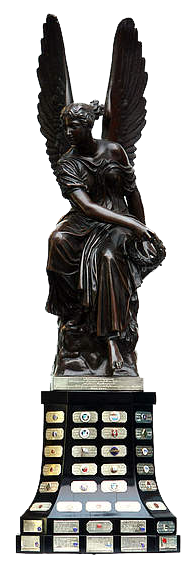
A 3–0 victory over Union Oberschöneweide brings the first recognised German championship.
The Viktoria trophy goes to Hamburg.
Title defence ends in the final
Hamburg loses the final to Nürnberg 2–0 at the Deutsches Stadion.
The Franconian rival takes the title.
Second German championship
In front of a local crowd at the Altonaer Stadion, HSV beats Hertha BSC 5–2.
Hamburg wins the German championship again five years after its first title.
Accommodation with the Nazi dictatorship
HSV accommodates Nazi sports policy.
Jewish members are excluded; the club’s history during this period includes both victims of persecution and perpetrators.


A new beginning and the Uwe Seeler years
British Zone champions
Hamburg wins the final against Borussia Dortmund 1–0 at Düsseldorf’s Rheinstadion.
Alfred Boller scores the decisive goal.
Zone title retained in the city derby
HSV retains the British Zone championship with a 6–1 victory over St. Pauli.
The final is played at Victoria-Platz, the Hoheluft ground.
First DFB-Pokal final
Hamburg loses its first DFB-Pokal final to Karlsruher SC, 3–1.
The match is played at Karlsruhe’s Wildparkstadion.
Dortmund ends the title dream
HSV loses the German championship final to Borussia Dortmund, 4–1.
The final is held at the Niedersachsenstadion.
Runners-up for a second successive year
HSV loses the championship final against Schalke 04, 3–0.
The season again ends as German runners-up.
Uwe Seeler fires HSV to the title
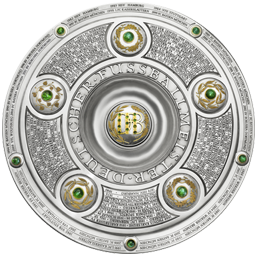
A 3–2 win against 1. FC Köln at Frankfurt’s Waldstadion ends the long wait for a third German title.
Uwe Seeler scores the decisive goal.
First-ever European match
After a first-round bye, Hamburg enters the European Cup with a 5–0 win at Young Boys Bern.
It is the club’s first European match.
Seconds short against Barcelona
A late goal reduces HSV’s 2–0 lead to 2–1.
After a 1–0 first-leg defeat, a play-off for a place in the final is required; Hamburg subsequently loses it.
First DFB-Pokal triumph
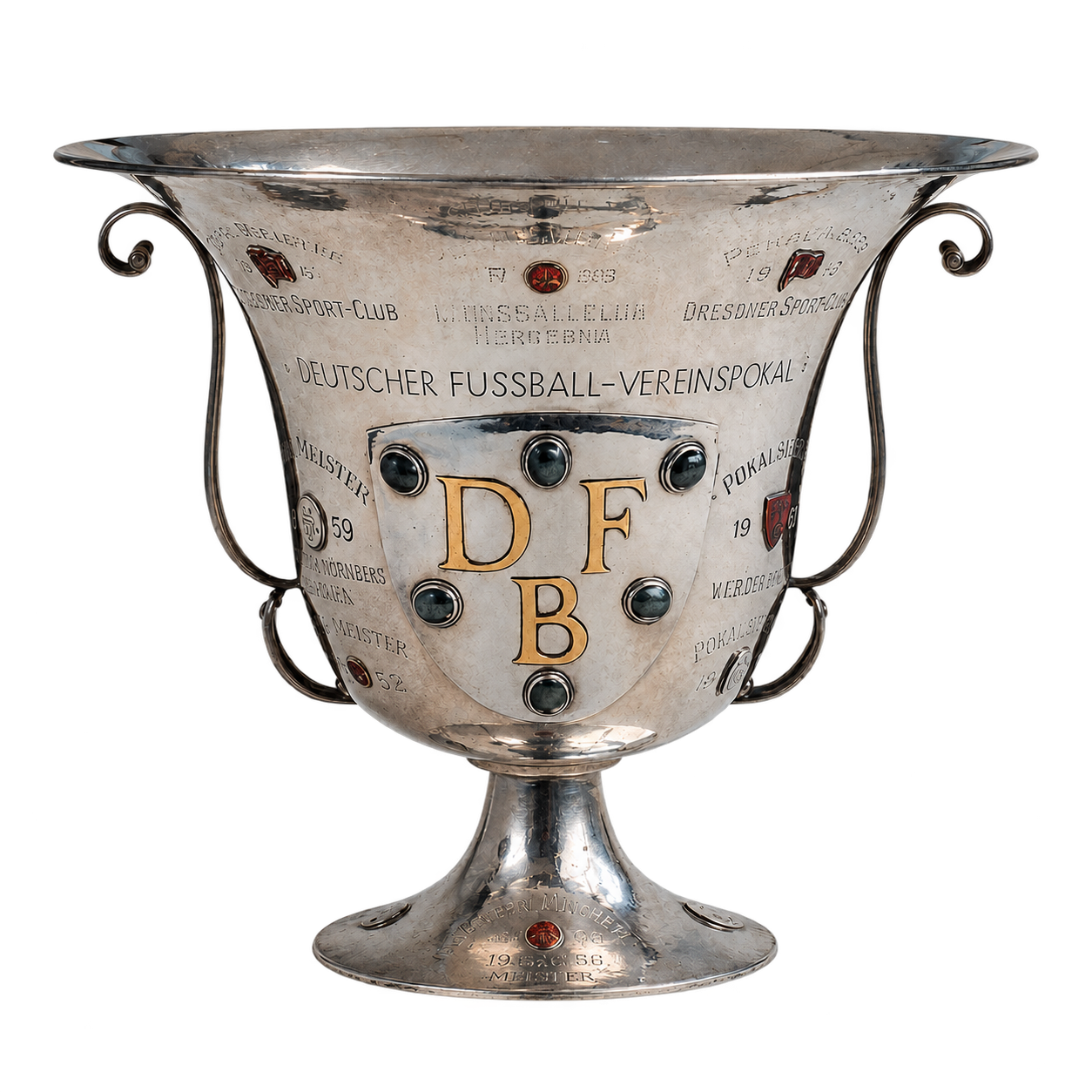
Uwe Seeler scores all three goals in a 3–0 victory against Borussia Dortmund.
Hamburg wins the DFB-Pokal for the first time.
A founding Bundesliga member
Hamburg begins life in the new Bundesliga with a 1–1 draw at Preußen Münster.
Charly Dörfel scores HSV’s first Bundesliga goal.
First Bundesliga win at the Volkspark
Hamburg overturns a 2–0 deficit to beat Saarbrücken 4–2.
With the launch of the Bundesliga, the Volksparkstadion replaces Rothenbaum as the regular league home.


At the top of Germany and Europe
Biggest Bundesliga victory
The 8–0 win against Karlsruher SC is Hamburg’s biggest Bundesliga victory.
It also remains the club’s home record.
Cup final defeat by Bayern
The DFB-Pokal final in Stuttgart ends in a 4–0 defeat by Bayern Munich.
As runners-up, Hamburg enters the Cup Winners’ Cup because Bayern is the defending champion of that competition.
First European final
Hamburg loses 2–0 to AC Milan in the Cup Winners’ Cup final.
The match is played at De Kuip in Rotterdam.
Winners of the first League Cup
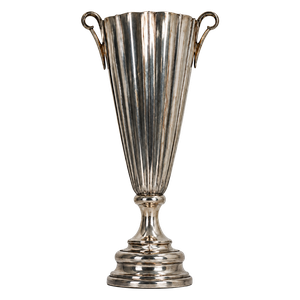
HSV wins the first German League Cup with a 4–0 victory over Borussia Mönchengladbach.
The final is played at the Volksparkstadion.
Cup final decided in extra time
Hamburg forces extra time against Frankfurt but loses 3–1.
Delayed because of the World Cup, the final belongs to the 1973/74 season.
Second DFB-Pokal triumph
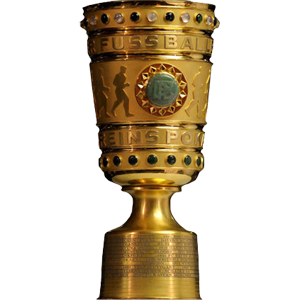
Hamburg beats Kaiserslautern 2–0 in the final.
Peter Nogly and Ole Bjørnmose both score before half-time.
First European trophy
Late goals from Georg Volkert and Felix Magath decide the Amsterdam final against Anderlecht, 2–0.
HSV wins the European Cup Winners’ Cup.
First Bundesliga championship
A 0–0 draw in Bielefeld and Stuttgart’s simultaneous 4–1 defeat by Köln make Hamburg champions with one match left.
Under the two-point rule, a three-point lead is unassailable.
Real Madrid swept aside, 5–1
After losing the first leg 2–0, Hamburg turns the semi-final around with a 5–1 win against Real Madrid.
HSV reaches the European Cup final for the first time.
Final defeat against Nottingham Forest
Hamburg loses its first European Cup final 1–0.
Nottingham Forest retains the trophy in Madrid.
The 4–3 comeback in Munich
Hamburg turns a 3–1 deficit at Bayern into a 4–3 win.
Horst Hrubesch scores the late winner in the title race.
UEFA Cup final lost
After losing 1–0 in Gothenburg, Hamburg also loses the return leg 3–0.
IFK wins the UEFA Cup 4–0 on aggregate.
Championship definitively secured
The 3–3 draw against Karlsruhe mathematically secures the title.
After the draw in Düsseldorf a week earlier, Hamburg had been virtually champions on goal difference, but Köln could still have drawn level on points.
Record run ends after 36 games
The 3–2 defeat in Bremen ends Hamburg’s run of 36 unbeaten Bundesliga games.
The league record of the time is only surpassed decades later.
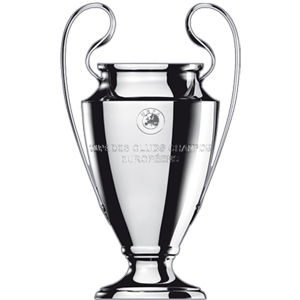
European champions
Felix Magath’s early goal decides the Athens final against Juventus, 1–0.
The European Cup is HSV’s greatest international success.
League title successfully defended
The 2–1 win at Schalke and Werder’s 3–2 victory over Bochum leave both rivals on 52 points.
Hamburg retains the title with a goal difference of +46 against +38.
Intercontinental Cup final in Tokyo
Hamburg loses the Intercontinental Cup final to Grêmio, 2–1 after extra time.
Renato scores both Brazilian goals.
Cup triumph as Happel bows out
Hamburg wins the DFB-Pokal for the third time, beating Stuttgarter Kickers 3–1.
Ernst Happel’s successful spell as coach ends with a trophy.








European nights and missed finals
First Champions League qualification
After a 2–0 away victory, a 0–0 draw with Brøndby seals a group-stage berth.
HSV reaches the main round of the competition renamed Champions League in 1992 for the first time.
A 4–4 draw on Champions League debut
Hamburg and Juventus trade goals in a spectacular first group match.
After HSV trails 3–1, the game ends 4–4.
A 3–1 triumph at Juventus
HSV wins 3–1 at Juventus on the fifth group matchday at the Stadio delle Alpi.
Roy Präger, Anthony Yeboah and Andrej Panadić score for Hamburg.
Second League Cup triumph
A 4–2 win against Borussia Dortmund at Mainz’s Bruchwegstadion brings the League Cup.
It is HSV’s first national cup triumph since 1987.
Intertoto triumph opens the route to Europe
After a 1–0 first-leg win, a goalless draw in Valencia is enough.
Hamburg wins one of the three Intertoto finals and reaches the UEFA Cup.
Into the UEFA Cup through the Intertoto Cup
A 4–0 win against Dacia Chișinău after a 1–1 first leg secures entry to UEFA Cup qualifying.
Hamburg is one of the eleven winners of the third Intertoto round.
Paper ball and semi-final heartbreak
A 3–2 defeat by Bremen ends the UEFA Cup final dream despite a 1–0 first-leg victory.
A paper ball causes the unusual corner before Werder’s third goal.
Home final slips away
Fulham comes from behind to win the semi-final return leg 2–1.
After a 0–0 draw in Hamburg, HSV misses out on the Europa League final at its own stadium.




Survival, relegation and promotion
Survival on away goals
1:1After a 0–0 first leg, a 1–1 draw in Fürth secures survival.
Hamburg stays in the Bundesliga under the away-goals rule then in force.
Members approve the football spin-off
The general meeting approves the transfer of professional football to a stock corporation.
HSV e. V. continues as the parent club.
Heaviest Bundesliga defeat
The 8–0 defeat at Bayern Munich is HSV’s heaviest Bundesliga loss.
The same scoreline is repeated at the same ground in February 2017.
Survival through a late equaliser and extra time
1:2a.e.t.Marcelo Díaz forces extra time with a stoppage-time equaliser.
Nicolai Müller then seals a 2–1 win in Karlsruhe; after a 1–1 first leg, HSV remains in the top flight.
First relegation and lowest Bundesliga finish
4:12:1Wolfsburg’s 4–1 win against Köln seals HSV’s first Bundesliga relegation.
Hamburg’s later-completed 2–1 victory against Gladbach cannot change it: 17th is the club’s lowest Bundesliga finish.
Promotion missed against Hertha
After winning 1–0 in Berlin, Hamburg loses the return leg 2–0.
HSV’s first promotion play-off ends without a return to the Bundesliga.
Direct promotion slips away in Regensburg
Hamburg wins 1–0 at Sandhausen but must wait for the result in Regensburg.
Heidenheim’s two stoppage-time goals for a 3–2 win push HSV into the play-off place.
Stuttgart also blocks promotion
1:3After a 3–0 defeat in Stuttgart, Hamburg also loses the return leg 3–1.
A sixth season in the second tier follows.
Back in the Bundesliga after seven years
A 6–1 victory against Ulm secures direct promotion with one match remaining.
After seven seasons in the 2. Bundesliga, HSV returns to the top flight.