

The history of Erzgebirge Aue
Milestones and background from the club's history, in chronological order.
Categories
Competitions
Nicknames through the years Three names tell a story of near misses, late goals and an unbeaten season. Read the storiesClose the stories
1900–1909
The early roots of football in Aue
FC Aue 1908 established an early organised football tradition in the town.
Its membership included men who later helped build Jung Deutschland and Alemannia.
1910–1919
A new club called Jung Deutschland
Eight football enthusiasts founded FC Jung Deutschland at Kaffee Hohenzollern.
Former FC Aue members were among them, and the new club developed into Alemannia.
Jung Deutschland becomes Alemannia
The club adopted the name FC Alemannia Aue. The new identity accompanied its growing importance in regional football.
1920–1929
A football club becomes a sports club
Alemannia was entered in the register of associations as a sports club. Expansion beyond football brought the name SV Alemannia Aue e. V.
A stadium in the Lößnitz valley
The municipal stadium opened with a local derby against VfB Aue-Zelle. Alemannia lost 2–1, but the new ground provided an important foundation for its development.


1930–1939
Alemannia and VfB form SV Aue
SV Alemannia Aue and VfB Aue-Zelle merged in March to form SV Aue. The merger united two previously independent local clubs that had also met as opponents.
1940–1949
Dissolution and a difficult restart
SV Aue was dissolved after the Second World War.
Former players and officials began organising sport again in the summer, under Soviet occupation and without the former club structure.
The birthday of the post-war tradition
March 4, 1946 became the founding date celebrated by the present club and its anniversaries.
The new football community drew on local experience while developing its own post-war history.
Sportgemeinschaft Aue takes formal shape
Sportgemeinschaft Aue was formally established.
It gave the resumed sporting activities an organisational framework before links with local industry shaped the following years.
Pneumatik becomes the sponsoring enterprise
SG Aue became the company sports association Pneumatik Aue. Football remained its leading section within a multi-sport organisation.
1950–1959
The connection with mining begins
SAG Wismut became the sponsoring enterprise and the club took the name Zentra Wismut Aue. Its connection with uranium mining shaped its resources and mining identity for decades.
The first league match at the new ground
Aue played its first league match at the newly built Otto-Grotewohl-Stadion.
A 1–0 defeat by Freiheit Wismut Lauter formed part of a poor start before a long unbeaten run.
The first promotion to the Oberliga
The DS-Liga South title and promotion to the top division were settled on March 18, when Aue beat Motor Nordhausen 6–1. On the same Sunday, the last challenger still capable of catching Aue, Freiheit Wismut Lauter, also lost at Zeitz; the earlier win over Einheit Ost Leipzig had not yet settled the race.
A winning top-flight debut
Aue opened its first Oberliga campaign with a 3–2 victory over Fortschritt Meerane. Captain Paul Süß and his teammates began what became a long stay in East Germany’s top division.
The first championship narrowly slips away
Wismut finished level on points with SG Dynamo Dresden at the top of the Oberliga.
Aue lost the deciding match in Berlin 3–2 after extra time and finished runners-up.
Karl-Marx-Stadt in the name, Aue as home
The football team was assigned to SC Wismut Karl-Marx-Stadt.
Although the sports club was based in the district capital, the footballers and their home matches remained in Aue, separating the name from the team’s actual home.

A first East German championship
A 2–0 victory over Wismut Aue made Turbine East German champions.
The final-day home win took Erfurt to 39 points, beyond Chemie Leipzig’s reach. Coach Hans Carl, captain Helmut Nordhaus and leading scorer Siegfried Vollrath helped shape the side that claimed the title after the disappointment of 1951.

The champions retain their title
A 1–1 draw at SC Lokomotive Leipzig and Wismut’s 0–0 in Berlin settled the title race.
Erfurt finished with 34 points. SC Wismut Karl-Marx-Stadt took only one point at SC Dynamo Berlin and ended on 33. The draw at Leipzig’s Stadion des Friedens was therefore enough for a second successive East German championship.
The first major cup
Wismut won the FDGB-Pokal final against Empor Rostock 3–2 after extra time. Armin Günther’s 111th-minute goal at Leipzig’s Bruno-Plache-Stadion secured the club’s first major national trophy.
East German champions for the first time
A 1–0 victory over SC Lokomotive Leipzig secured Wismut’s first East German championship with matches still to play.
With 38 points, the team could no longer be caught and completed its rise into the country’s leading clubs.
Easter football across the German divide
Wismut travelled to Kaiserslautern and Mainz over Easter.
A 4–1 defeat at the Betzenberg was followed by a 2–1 win at the Bruchweg, as football maintained personal links across the German divide.
A European debut decided by drawing lots
 SC Wismut Karl-Marx-Stadt1:1a.e.t.
 Gwardia WarszawaEuropean Cup Match 3 · October 15, 1957 · Location: Berlin Stadium: Friedrich-Ludwig-Jahn-Sportpark Neutral venue
Wismut’s first European tie against Gwardia Warsaw required three matches.
After each side won 3–1 at home, the Berlin play-off also ended level after extra time, and drawing lots sent Aue through.
Ajax ends the first European campaign
Ajax Amsterdam ended Wismut’s first European campaign.
A 3–1 home defeat was followed by a 1–0 loss at the Olympisch Stadion, but these first international competitive appearances had taken the club beyond East Germany.
Champions despite defeat at Brieske
Wismut lost 1–0 at Brieske but nevertheless retained the championship.
Vorwärts Berlin’s simultaneous 1–1 draw with SC Lokomotive Leipzig left the challengers on 33 points, below Aue’s 34 with two postponed matches still to play.
A European play-off in Kyiv
SC Wismut Karl-Marx-Stadt4:0 Petrolul PloiestiEuropean Cup Match 3 · October 12, 1958 · Location: Kyiv Stadium: Republikanisches Chruschtschow-Stadion Neutral venue
A 4–2 win in Aue and a 2–0 defeat in Ploiești forced another play-off.
Wismut won 4–0 in Kyiv to eliminate Petrolul from the European Cup.
Wismut reaches the European quarter-finals
Wismut recovered from two goals down to draw 2–2 in Gothenburg.
A 4–0 home win over the Swedish champions then took the club into the last eight of the European Cup.
One step short of the semi-finals
Two draws against Young Boys forced a third quarter-final match.
Wismut lost 2–1 in Amsterdam, where Willy Tröger’s late goal could not extend the club’s deepest European Cup run.
The third championship
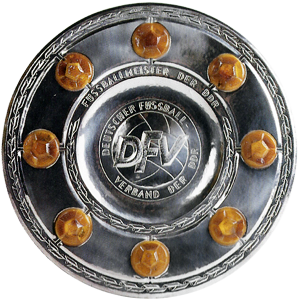
A 2–0 win at SC Lokomotive Leipzig secured Wismut’s third East German championship.
Following the titles of 1956 and 1957, it marked another peak for the team associated with Manfred Kaiser and Willy Tröger.
A cup final lost in the replay
 SC Dynamo Berlin0:0a.e.t.SC Wismut Karl-Marx-StadtFDGB-Pokal Match 1 · December 6, 1959 · Location: Dresden Stadium: Heinz-Steyer-Stadion Neutral venueSC Dynamo Berlin3:2SC Wismut Karl-Marx-StadtFDGB-Pokal Match 2 · December 13, 1959 · Location: Leipzig Stadium: Bruno-Plache-Stadion Neutral venue
A goalless final after extra time in Dresden forced Dynamo Berlin and Wismut to meet again.
Dynamo won the Leipzig replay 3–2, denying the newly crowned champions a league and cup double.





1960–1969
Progress without playing Glenavon
Glenavon were drawn against Wismut in the European Cup preliminary round.
The Northern Irish club withdrew, allowing Wismut to advance without playing the tie.
Rapid wins the deciding match in Basel
Wismut answered a 3–1 defeat in Vienna with a 2–0 home win.
Rapid finally settled the tie with a 1–0 victory in a neutral play-off in Basel, ending Wismut’s European Cup era.
Manfred Kaiser becomes the first Footballer of the Year
Manfred Kaiser won the inaugural East German Footballer of the Year award.
The playmaker embodied Aue’s successful generation and was also an influential national-team player.
BSG Wismut Aue again
The football section returned from the sports-club structure to BSG Wismut Aue. The town’s name reappeared in the club identity while top-flight football and the connection with mining continued.
The birth of the Violets
Wismut wore violet and white for the first time in a 2–1 win over Chemie Leipzig.
The colours became the club’s lasting identity and gave rise to its familiar nickname, the Violets.


1970–1979

Relegation three years after the title
On the final day, FCK lose their home match against Wismut Aue 2–1, played in Halle because of a ground suspension. Nineteen points are insufficient for survival, and the former champions must leave the Oberliga.
Four goals in the regional derby
A 4–0 victory over Wismut Aue gives FCK an emphatic derby success. The performance at the Fischerwiese becomes one of the memorable encounters in this long-standing Saxon rivalry during the 1970s.

Past Aue and into the final
Away goals settled the Saxon semi-final against Wismut Aue. A 1–0 victory in Zwickau was followed by a 2–1 defeat in Aue, but Sachsenring’s away goal secured a place in the final. A third cup remained within reach.
The new scoreboard records five FCK goals
Karl-Marx-Stadt inaugurate their electronic scoreboard with a 5–1 win over Wismut Aue. After falling behind, FCK unleash a second-half scoring burst, combining an improvement to their ground with a celebrated derby victory.

Wismut knocked out of the cup
FSV Lokomotive beat top-flight Wismut Aue 1–0 after extra time in the FDGB-Pokal to reach the last sixteen.
1980–1989
A fifth title is secured in Aue
A 3–1 victory at Wismut Aue secured another championship on matchday 22. Five successive titles underlined the consistency of Jürgen Bogs’s team.
A European return against Dnipro
After a long absence following its European Cup years, Wismut entered the UEFA Cup.
Dnipro won 3–1 in Aue and 2–1 in Kryvyi Rih, ending the return in the first round.
Away goals decide the Valur tie
After a goalless home draw, Wismut drew 1–1 in Reykjavík.
The away goal decided the UEFA Cup tie against Valur in the Violets’ favour.
The UEFA Cup run ends in Vlorë
Wismut took a 1–0 first-leg lead against Flamurtari Vlorë.
A 2–0 defeat in Albania reversed the tie and ended the club’s second UEFA Cup campaign.
The thousandth Oberliga match under floodlights
Wismut’s goalless draw with Magdeburg was its thousandth Oberliga match.
The new floodlights at the Otto-Grotewohl-Stadion were inaugurated on the same evening, shortly before the political upheavals of autumn 1989.


1990–1999
FC Wismut becomes an independent football club
The company sports association’s football section became Fußballclub Wismut Aue e. V. The new independent association formed part of the reorganisation of East German sport and faced different financial and organisational demands.
A 4–1 win cannot prevent the first relegation
 Eisenhüttenstädter FC Stahl2:0
 BSG Fortschritt BischofswerdaDDR-Oberliga Match 2 · May 26, 1990 · Location: Eisenhüttenstadt Stadium: Sportanlage der Hüttenwerker
Aue won 4–1 at FC Berlin on the final day but suffered its first Oberliga relegation.
Eisenhüttenstadt beat Bischofswerda 2–0 and stayed ahead of Wismut on goal difference despite finishing level on points.

One goal decides the championship
FSV won 9–0 at Tiefenort on the final day. Wismut Aue simultaneously beat Weimar 4–1, leaving both rivals on 46 points. Zwickau’s goal difference of +53 beat Aue’s +52 to secure the NOFV-Liga Group B title. The subsequent promotion round did not bring a place in the 2. Bundesliga.
Wismut’s withdrawal threatens the club’s future
The end of Wismut’s funding removed the club’s former financial foundation.
Regional support, new backers and the efforts of club officials kept football in Aue alive.
Wismut becomes Erzgebirge Aue
The club adopted the name FC Erzgebirge Aue. Following the end of its former enterprise backing, the identity and support of the wider region became central.
Ten goals against Türkiyemspor
Aue beat Türkiyemspor Berlin 10–0 in the Regionalliga.
The club’s biggest league victory provided an exceptional result during its years outside professional football.
The first Saxony Cup final goes to penalties
Aue reached its first Saxony Cup final but lost 4–3 on penalties in Chemnitz after a 1–1 draw.
The first regional cup triumph would have to wait.



2000–2009
The first Saxony Cup
Aue won the Saxony Cup for the first time at its own Erzgebirgsstadion.
A 2–2 draw with VfB Leipzig was followed by a 5–3 shoot-out victory, beginning a successful cup sequence.
The cup stays in the Erzgebirge
Aue retained the Saxony Cup with a 3–1 victory at FSV Zwickau.
The Westsachsenstadion witnessed the club’s second successive regional cup title.
Three successive Saxony Cups
Another final in Zwickau was decided by penalties.
Aue won the shoot-out 5–4 after a 1–1 draw to claim the Saxony Cup for a third successive year.
Gerd Schädlich takes Aue into the 2. Bundesliga
A 4–1 victory at Dresdner SC Fußball 98 secured Aue’s first promotion to the 2. Bundesliga.
Coach Gerd Schädlich and his team brought professional league football to the Erzgebirge after years in regional competition.
The Regionalliga title follows promotion
One week after securing promotion, Aue beat Borussia Dortmund II 2–1 at the Erzgebirgsstadion.
The team also claimed the Regionalliga Nord championship and celebrated an exceptional season with its supporters.

Relegation follows the cup run
Weeks after the DFB Cup semi-final, a 5–0 defeat at Aue sealed relegation.
Jena then entered the newly established 3. Liga.
The first second-division spell ends
A 2–2 draw at Koblenz confirmed relegation from the 2. Bundesliga.
After five seasons, Aue had to rebuild in the newly established 3. Liga.


2010–2019
Le Beau’s header secures promotion
Pierre le Beau scored the late winner in a 2–1 victory over Eintracht Braunschweig.
Aue secured promotion with matches still to play and returned to the 2. Bundesliga after two seasons.

Third-tier champions and an immediate return
VfL won 1–0 at Burghausen to secure an immediate return to the 2. Bundesliga.
Aue’s simultaneous defeat at Werder Bremen II also made Osnabrück 3. Liga champions. A total of 69 points and an unassailable lead over both rivals crowned coach Karsten Baumann’s season.
No cup to follow promotion
Aue lost the Saxony Cup final 3–2 to Chemnitzer FC.
Promotion to the second division remained the season’s major achievement.

2. Bundesliga title secured
A 2–0 win away to Erzgebirge Aue secures the 2010/11 second-division title. Bundesliga promotion had already been confirmed two matchdays earlier.
Adrián Ramos scored early and Rob Friend added a second before half-time. This match secured the title; the later trophy presentation was not the deciding match.
A late equaliser is not enough
Aue recovered to draw 2–2 at Heidenheim but were relegated on the final day.
Finishing level on points with 1860 Munich, the Violets went down on goal difference.

A derby draw seals the third-division championship
A 1–1 draw with Erzgebirge Aue secures the 3. Liga championship with two matches remaining.
Michael Hefele puts Dresden ahead before Mario Kvesić equalises. Having already secured promotion, Uwe Neuhaus’s team now add the championship.
Straight back to the 2. Bundesliga
A 2–0 win at Fortuna Köln secured immediate promotion.
Just one season after relegation, Aue returned to the second division.
Promotion and a fourth Saxony Cup
Three days after securing promotion, Aue beat Zwickau 1–0 in the Saxony Cup final.
Mario Kvesić’s goal completed a particularly successful season with the club’s fourth regional cup.
All four rebuilt stands open
All four new stands at the Erzgebirgsstadion were available for the first time against Braunschweig.
The 3–1 defeat marked an important stage in the transformation from an athletics ground to a compact football stadium.
Survival through the play-offs
After a goalless draw in Karlsruhe, Aue won the return leg of the play-offs 3–1. The Violets secured another season in the 2. Bundesliga.
Schalke visits for the stadium ceremony
Aue celebrated completion of the stadium redevelopment with a friendly against Schalke 04. A 1–0 victory accompanied the inauguration of the rebuilt football ground at its familiar location in the Lößnitz valley.


2020–2029
Restart behind closed doors
After the coronavirus suspension, Aue resumed the second-division season with a 3–1 win over Sandhausen.
The match was played without spectators, reflecting the exceptional conditions in professional football.

Another cup upset
Ulm beat second-division Erzgebirge Aue 2–0 to reach the DFB-Pokal second round again.
The Regionalliga club once more demonstrate their ability to defeat higher-level opposition. Both goals come at the Donaustadion.
A 6–0 defeat confirms relegation
A heavy defeat at Darmstadt ended Aue’s hopes of staying in the second division.
With two matches remaining, the gap was beyond reach, ending a six-season spell and sending the club back to the 3. Liga.
Dresden wins the final in extra time
After a goalless 90 minutes, Aue lost the Saxony Cup final in Dresden 2–0 after extra time. Two late goals from Panagiotis Vlachodimos denied the club its fifth cup.
Penalties decide the final in Probstheida
The final at Lok Leipzig remained goalless after 120 minutes.
Aue lost the penalty shoot-out 6–5 and again had to wait for another Saxony Cup.
The ground becomes eins-Erzgebirgsstadion
A new naming partnership gave the home ground the name eins-Erzgebirgsstadion.
The established site remained the club’s home and an important focal point for supporters across the region.
SchAchtzig: 80 years of post-war tradition
Under the SchAchtzig motto, the club marked the 80th anniversary of its founding date. The anniversary connected the post-war beginnings with the mining tradition and the club’s close ties to the Erzgebirge.
Relegation to the Regionalliga
A 2–2 draw with Wehen Wiesbaden confirmed relegation from the 3. Liga.
Aue could no longer reach safety and returned to the Regionalliga after more than two decades in nationwide professional leagues.
A fifth Saxony Cup offers consolation
A 2–0 victory at FSV Zwickau earned Aue its fifth Saxony Cup.
After the painful league relegation, the final brought a positive sporting result at the end of the season.