


The history of VfL Osnabrück
From Osnabrück’s early football clubs and the Gartlage side to memorable cup nights and dramatic promotions to the second tier.
Categories
Competitions
Nicknames through the years Three names tell a story of near misses, late goals and an unbeaten season. Read the storiesClose the stories
Four roots and a new name
FC 1899 lays the foundation
Young footballers founded FC 1899 Osnabrück.
The present VfL traces its founding date to this oldest predecessor. The street teams Germania, Minerva and Antipodia developed into an organised club that helped establish football in the city.
Teutonia joins Osnabrück’s football scene
FC Teutonia became another early football club.
Teutonia and Olympia, founded in 1903, later became important parts of VfL’s tradition. Whereas FC 1899 and Ballspielverein attracted many young workers, these two clubs drew heavily on school pupils and students.
Olympia becomes another predecessor
FC Olympia Osnabrück was founded.
Together with Teutonia it later formed the Spiel und Sport football section within Osnabrücker Turnverein. Both early clubs remained independent until after the First World War.
Ballspielverein von 1905 is established
Osnabrücker Ballspielverein von 1905 was founded.
Alongside FC 1899 it became a strong local football club. Their union after the First World War formed one of the two main branches of the later VfL.
Two mergers bring clubs together
FC 1899 and BV 05 merged into Ballspielverein von 1899. Teutonia and Olympia formed the Spiel und Sport section within Osnabrücker Turnverein.
Following the losses of the war, the clubs sought to rebuild their sides and recover their earlier strength.
Spiel und Sport becomes independent
The Spiel und Sport footballers separated from Osnabrücker Turnverein and became an independent club.
This preceded their later merger with Ballspielverein. The gymnastics club itself continued separately.
SuS and BV 1899 unite
Spiel und Sport and Ballspielverein von 1899 merged.
The new union initially retained the name Spiel und Sport, bringing together four of Osnabrück’s oldest football traditions. A year later the club adopted the name still in common use today.
Spiel und Sport becomes VfL
The merged club adopted the name Verein für Leibesübungen Osnabrück.
SC Rapid was founded as a separate football club in the same year. Rapid played in purple and white and had close links with the former Ballspielverein’s football tradition.
The Gartlage side, Rapid and the war years
The founding year 1899 enters the name
VfL added the year 1899 to its name, explicitly recalling the oldest of its predecessor clubs.
The characteristic diamond had already been part of the club’s identity in the 1920s.
Rapid joins VfL and leaves a purple and white legacy
Under pressure from Nazi sports policy, SC Rapid was merged into VfL.
Rapid’s purple and white became VfL’s colours. Rapid also brought Bremer Brücke into the club, although the Gartlage side initially continued playing on its existing ground.
VfL moves to Bremer Brücke
VfL moved its home matches from Gartlage to Bremer Brücke.
The ground built by Rapid was expanded for its new occupants and received 500 seats. The Schinkel venue became the central home of the club’s purple and white culture.
The Gartlage side defeats the German champions
VfL beat reigning German champions Hannover 96 by 3–0. The side featuring goalkeeper Heinz Flotho and striker Addi Vetter became known as the Gartlage team.
Osnabrück also won the Gauliga Niedersachsen that season and reached the German championship finals for the first time.
A second Lower Saxony championship
VfL won the Gauliga Niedersachsen again and returned to the German championship finals.
The Gartlage side remained among northern Germany’s leading clubs after moving to Bremer Brücke. The war increasingly shaped the conditions under which football was played.
Felix Löwenstein falls victim to Nazi persecution
Jewish cattle trader Felix Löwenstein had supported Osnabrück football as a benefactor and football committee official.
Following exclusion, persecution and deportation, he died at Sandbostel camp in 1945. His life later became an important focus of remembrance work by the club and its supporters.
A new beginning after war and dissolution
After the war and the dissolution of sports clubs, Osnabrück football was reorganised.
The club appeared as 1. Fußballsportverein Osnabrück. The VfL name returned in 1946, continuing the older tradition under new organisational conditions.

Oberliga, championships and new leagues
Der Alte Fritz becomes a familiar nickname
The nickname Der Alte Fritz appeared in club newsletters in 1947. It accompanied VfL in the early post-war years and shaped how people spoke about the club.
The reason for choosing this particular name remained unclear even in later retrospectives.
A return to the national championship finals
As the third-placed side in Oberliga Nord, VfL reached the German championship finals.
Osnabrück lost 2–1 to VfB Stuttgart in Cologne. Stuttgart went on to win the title, while VfL’s participation reflected its strength in the Oberliga Nord.
The finals fill the enlarged Bremer Brücke
VfL and VfB Stuttgart drew without goals in their opening championship finals match.
Bremer Brücke’s terraces had been enlarged for the group stage, and around 32,500 spectators crowded in to watch the eventual champions. National competition and packed stands became defining images of the club’s Oberliga years.
The Bundesliga begins without Osnabrück
VfL was not selected for the new Bundesliga.
Osnabrück continued in the second-tier Regionalliga Nord. The following years brought large crowds and repeated attempts to reach the Bundesliga.
Three championships inspire new hopes
VfL won the Regionalliga Nord in 1969 and repeated the achievement in 1970 and 1971. Coach Radoslav Momirski and a prolific attack shaped the first championship.
Despite the three titles, the club failed to gain the coveted Bundesliga place in the subsequent promotion rounds.

A second Bundesliga promotion
A 3–1 victory over Osnabrück secured a return to the Bundesliga. RWE had 13 points from seven group matches and, with one game left, no rival could overtake them.
A founding member of the 2. Bundesliga Nord
VfL became a founding member of the 2. Bundesliga Nord.
The new competition replaced the Regionalligen at the second level. This began a long spell in the second tier that continued after the divisions were combined into a single league in 1981.

Second-tier football and memorable cup nights
Floodlights bring evening football to the Brücke
On February 11, 1975, VfL Osnabrück inaugurated Bremer Brücke’s new floodlights with a friendly against Borussia Mönchengladbach, losing 3–4.
They enabled matches after dark and added to the atmosphere of the compact ground. Floodlit evenings became a familiar part of the club’s most memorable occasions.
Five goals at Bayern
Second-tier VfL Osnabrück beat Bayern Munich 5–4 in the DFB-Pokal.
Andreas Wagner scored three goals, with Reinhold Nordmann and Michael Strunck adding the other two. The away victory at the Olympiastadion became one of the greatest cup upsets in the club’s history.

The 3–0 win over Osnabrück secures promotion
Victory over Osnabrück took Waldhof to 52 points and guaranteed one of the two direct promotion places. Fans had already celebrated after the 3–3 draw at Duisburg a week earlier, when the goal-difference advantage made promotion practically secure.
Klaus Schlappner combined young players with experienced professionals in a side that made the name Waldhof-Buwe famous across Germany. It was the club’s first promotion to the Bundesliga.
The first relegation from the 2. Bundesliga
Even a 6–4 win over Wattenscheid 09 could not save VfL on the final day.
Oberhausen’s simultaneous victory put that rival out of reach, and Osnabrück were relegated to the Oberliga Nord. Their first uninterrupted ten-year spell in the 2. Bundesliga ended.
Five wins generate promotion excitement
A 2–1 win over Rot-Weiss Essen gave VfL a fifth successive promotion-round victory.
The side now had ten points and a large goal advantage. Celebrations began at Bremer Brücke even though the chasing clubs still had mathematical chances that depended on their remaining fixtures.
Essen’s draw secures an immediate return
Rot-Weiss Essen’s 2–2 draw with Eintracht Heessen secured a top-two promotion-round finish for VfL.
Essen could now reach only nine points, while the remaining head-to-head fixture prevented Heessen and Tennis Borussia from both reaching Osnabrück’s ten. The Oberliga Nord champions returned to the 2. Bundesliga after one year.

First second-division survival secured
Meppen beat Osnabrück 3–0 to reach 34 points. Defeats for Ulm and Bayreuth left four clubs unable to reach that total, securing Meppen’s survival.
A second relegation from the second tier
VfL beat Freiburg 3–2 on the final day but remained below the survival line.
St. Pauli’s win over Hannover and Unterhaching’s victory against Remscheid kept both rivals ahead of Osnabrück. After another eight years in the second tier, the club returned to the Oberliga Nord.
German amateur champions after a comeback
VfL won the German amateur championship final at Stuttgarter Kickers by 4–2 after extra time.
Frank Hartmann and Kai Lammert brought Osnabrück back from two goals down. Lammert and Ralf Balzis settled extra time to secure the club’s first national title.
Champions after a final-day contest with Lübeck
 VfL Osnabrück1:0
 Arminia HannoverRegionalliga Nord Match 1 · May 21, 1999 · Location: Osnabrück Stadium: Piepenbrock-Stadion an der Bremer Brücke
A 1–0 win over Arminia Hannover and Lübeck’s 2–1 defeat at Kiel gave VfL the Regionalliga Nord title.
Lübeck had led by a point before the final day. Osnabrück finished with 75 points and advanced to the second-tier promotion play-off.

Kujat’s goal brings a return to the 2. Bundesliga
VfL Osnabrück1:0Chemnitzer FC2. Bundesliga promotion play-offs First leg · May 30, 1999 · Location: Osnabrück Stadium: Bremer BrückeChemnitzer FC2:0VfL Osnabrück2. Bundesliga promotion play-offs Second leg · June 6, 1999 · Location: Chemnitz Stadium: Stadion an der GellertstraßeAfter losing 1–0 at the Bremer Brücke, CFC turn the promotion tie against Osnabrück around. Danilo Kunze and Ronny Kujat score in a 2–0 second-leg win. Three years after relegation, Chemnitz return to the second tier.

Two defeats in the three-club round
 Kickers Offenbach2:0Eintracht Trier2. Bundesliga promotion round Match 1 · June 6, 1999 · Location: Offenbach am Main Stadium: Stadion am Bieberer Berg
After losing 2–0 at Offenbach, Trier also lose their home match against Osnabrück 3–2. Two defeats end their chance of the remaining second-division place before the rivals’ final meeting.
Offenbach ends the promotion hopes
VfL Osnabrück1:0Chemnitzer FCPromotion round to the 2. Bundesliga Match 1 · May 30, 1999 · Location: Osnabrück Stadium: Piepenbrock-Stadion an der Bremer BrückeChemnitzer FC2:0VfL OsnabrückPromotion round to the 2. Bundesliga Match 2 · June 6, 1999 · Location: Chemnitz Stadium: Stadion an der GellertstraßeEintracht Trier2:3VfL OsnabrückPromotion round to the 2. Bundesliga Match 3 · June 13, 1999 · Location: Trier Stadium: MoselstadionVfL Osnabrück1:2Kickers OffenbachPromotion round to the 2. Bundesliga Match 4 · June 19, 1999 · Location: Osnabrück Stadium: Piepenbrock-Stadion an der Bremer BrückeA 2–1 home defeat to Kickers Offenbach ended Osnabrück’s second chance of promotion.
VfL had previously lost the champions’ play-off against Chemnitz despite winning its home leg. Even an away win at Trier in the subsequent three-club group was insufficient, and Offenbach took the second-tier place.
Lübeck’s dropped points bring another title
Lübeck drew 0–0 with Göttingen 05 and could no longer catch VfL.
Osnabrück had reached 72 points by winning 4–3 at Cloppenburg the previous day, while Lübeck’s maximum was now 70. Another northern title set up the champions’ play-off against Union Berlin.
Uwe Brunn becomes the promotion hero
 Union Berlin1:1VfL OsnabrückPromotion round to the 2. Bundesliga First leg · May 28, 2000 · Location: Berlin Stadium: Stadion An der Alten FörstereiVfL Osnabrück1:1a.e.t. · 8:7 on pensUnion BerlinPromotion round to the 2. Bundesliga Second leg · June 1, 2000 · Location: Osnabrück Stadium: Piepenbrock-Stadion an der Bremer Brücke
After two 1–1 draws, a penalty shoot-out at Bremer Brücke decided the promotion tie with Union Berlin.
VfL won the shoot-out 8–7. Goalkeeper Uwe Brunn scored himself and saved Berlin’s final attempt, returning Osnabrück to the 2. Bundesliga after seven years.





Promotions, play-offs and the diamond crest
A draw in Duisburg is not enough
A 2–2 draw at Duisburg was not enough for VfL to stay up on the final day.
Bielefeld simultaneously beat Saarbrücken to remain ahead of Osnabrück. The promoted club returned to the Regionalliga Nord after just one season.
Victory over Kiel brings another promotion
VfL secured the second promotion place with a 2–0 final-day win over Holstein Kiel.
Rot-Weiss Essen could no longer catch Osnabrück. Finishing with 65 points behind champions Aue, the club returned to the 2. Bundesliga after two Regionalliga seasons.
Relegation is confirmed at the old Tivoli
A 2–1 defeat at Aachen confirmed another relegation for VfL.
With 27 points and three matches remaining, the survival positions were beyond reach. Another second-tier spell ended after a single season.

A seventh Bundesliga promotion
A goalless draw in Osnabrück secured immediate promotion.
Mainz also drew 0–0 in Regensburg, while Cottbus lost 0–2 in Unterhaching. Neither could catch Arminia with one match remaining.

Two points short of the Bundesliga
A 3–2 final-day win over Osnabrück is not enough. Mainz beats Trier 3–0 and takes the promotion place. Jørn Andersen’s team ends the season on 53 points, two short of third place.
The first Lower Saxony Cup
VfL won the Lower Saxony Cup for the first time.
Following a 1–1 draw with Wolfsburg’s reserves, Osnabrück won the shoot-out 5–4. Goalkeeper Tobias Langemeyer saved two attempts to become the decisive figure in the final at Bremer Brücke.
Promotion in a contest with Magdeburg
VfL beat Rot Weiss Ahlen 2–1 while Magdeburg drew 1–1 with St.
Pauli. Osnabrück overtook the previous runners-up and earned promotion with 61 points. Bremer Brücke witnessed the club’s third promotion to the second tier since the turn of the millennium.
A new north stand at the Brücke
Bremer Brücke received a new north stand and undersoil heating.
The redevelopment renewed an important part of the ground while retaining its close relationship with the surrounding neighbourhood. The expansion was completed in 2011.
One event, several perspectives

The survival finale: staying in the second division
A 3-0 victory over Köln saves Kaiserslautern from dropping into the third tier on the final matchday.
Offenbach simultaneously lose 3-0 in Osnabrück and are relegated. FCK finish the season in 13th place.
From the history of Kickers OffenbachRelegation on the final day
A 3–0 defeat at Osnabrück and 1. FC Kaiserslautern’s simultaneous 3–0 win over Köln seal relegation from the second division on the final day.
Kickers enter the relegation places for the first time that season. The following campaign takes them into the newly founded 3. Liga.

The temporary-home season starts with a cup win
During stadium reconstruction, FSV play their home matches at the Commerzbank-Arena.
They begin competitive football there by beating Osnabrück 2–0 in the DFB-Pokal.

Relegation confirmed despite an away win
Wehen Wiesbaden won 1–0 at Oberhausen but could still reach no more than 33 points. Osnabrück’s simultaneous 2–1 win over Aachen took the last reachable rival to 35, putting even the play-off place out of reach.
Paderborn wins both play-off matches
After losing 1–0 at Paderborn, VfL also lost the home leg by the same score.
Osnabrück dropped into the 3. Liga while Paderborn were promoted. The reintroduced play-off system thus brought a painful end to the season.
HSV is beaten on penalties
Following a 3–3 draw after extra time, VfL defeated Hamburger SV 4–2 in the shoot-out.
The third-tier side advanced through the second DFB-Pokal round. Bremer Brücke again hosted a spectacular victory over Bundesliga opposition.
Dortmund also falls at Bremer Brücke
A 3–2 victory over Borussia Dortmund took VfL into the DFB-Pokal quarter-finals.
After defeating Hamburg, Osnabrück had eliminated another Bundesliga club. The cup run combined recovery in the 3. Liga with memorable home evenings.
Third-tier champions and an immediate return
VfL won 1–0 at Burghausen to secure an immediate return to the 2. Bundesliga.
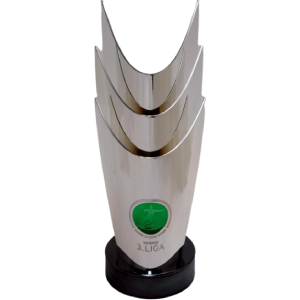
Aue’s simultaneous defeat at Werder Bremen II also made Osnabrück 3. Liga champions. A total of 69 points and an unassailable lead over both rivals crowned coach Karsten Baumann’s season.

The comeback secures second-division survival
1:0Oberhausen’s defeat in Aachen and Osnabrück’s loss in Paderborn secured FC Ingolstadt 04’s survival.
Both rivals could now reach only 34 points, while the Schanzer already had 35. Under Benno Möhlmann, the club had mounted a successful comeback after being second from bottom at the winter break.
The final day brings relegation to the third tier
0:1A 3–1 defeat in Cottbus and Osnabrück’s 1–0 win in Ingolstadt settle the battle for the play-off place. RWO remains on 28 points and finishes seventeenth, ending its three-season spell in the 2. Bundesliga.
Dresden prevails in extra time
Following a 1–1 draw in Dresden, extra time at Bremer Brücke decided the play-off tie.
Dynamo won the return match 3–1. Osnabrück were relegated to the 3. Liga again and faced another sporting restart.

3. Liga champions
Despite a 2–1 home defeat to Heidenheim, Sandhausen remain top on the final day as challengers Aalen lose 4–0 to Osnabrück. Their 66 points secure the 3. Liga title and crown the promotion season.
Hille’s header delivers promotion
Sebastian Hille scored the only goal against Osnabrück.
The 1–0 win with one match remaining secured promotion back to the 2. Bundesliga under Stefan Krämer.

The draw against Hansa secures promotion
1:0KSC return immediately to the 2. Bundesliga following their 1–1 draw against Hansa Rostock and Bielefeld’s 1–0 win over Osnabrück.
Karlsruhe reach 76 points, while Osnabrück can now finish with no more than 73; the other challengers cannot catch KSC either. The championship remains undecided.
The lead is not enough against Dynamo
1:02:0VfL won the first play-off match against Dresden 1–0 but lost the away leg 2–0. Dynamo stayed in the 2. Bundesliga, while Osnabrück missed promotion and continued in the 3. Liga.
The repeat of the 2011 tie again ended in disappointment for VfL.
The second Lower Saxony Cup
Two days after the unsuccessful promotion play-off, VfL won the cup final at Wilhelmshaven 4–2. A side featuring young players secured the club’s second Lower Saxony Cup.
The success provided some consolation after the missed return to the second tier.

The Burghausen draw confirms relegation
FCS drew 1–1 against Burghausen and could reach at most 38 points from its new total of 32. Unterhaching had reached forty the previous evening by beating Osnabrück 3–0. Relegation from the 3. Liga was confirmed.
Cup celebrations after penalties at Meppen
After a goalless final, VfL won the shoot-out at Meppen 5–4. Daniel Heuer Fernandes saved Martin Wagner’s decisive attempt.
In front of 10,662 spectators, Osnabrück claimed a third Lower Saxony Cup; the competition went directly to penalties without extra time.

Osnabrück’s draw confirms promotion
2:2While Dynamo are still playing in 1. FC Magdeburg, Osnabrück draw 1–1 with Mainz II.
The team previously in third place can no longer catch Dresden. Uwe Neuhaus’s side finish their own match 2–2 and celebrate automatic promotion with four rounds remaining.
The diamond and Bremer Brücke return
For the 2017/18 season, VfL returned to its traditional diamond crest.
The stadium also regained the name Bremer Brücke. Both changes deliberately recalled the club’s history and its supporters’ identification with the Schinkel neighbourhood.

Relegated on sporting results
0:0Paderborn draw 0-0 at Osnabrück.
Werder Bremen II’s simultaneous 1-0 victory over Aalen pushes the SCP into 18th place and the relegation zone. Only the subsequent licensing process allows them to remain in the 3. Liga.
Tigges decides the cup final
Steffen Tigges scored the only goal in the final against Lüneburger SK Hansa.
VfL won 1–0 at home to claim its fourth Lower Saxony Cup. Another major cup occasion against Hamburger SV followed a few months later.
Another HSV upset with ten men
Despite an early sending-off, VfL beat Hamburger SV 3–1. The third-tier side eliminated Bundesliga opposition in the first DFB-Pokal round.
The victory again showed how difficult Osnabrück could be to beat at Bremer Brücke.










Dramatic returns and the eighth promotion
Remembrance work receives the Julius Hirsch Prize
The Tradition lebt alliance around VfL, the museum and supporters received the DFB’s third Julius Hirsch Prize.
Its work remembered Jewish members and opposed antisemitism. Felix-Löwenstein-Weg at Bremer Brücke also made this remembrance visible around the stadium.
VfL ends eight years in the 3. Liga
A 2–0 win over Aalen secured automatic promotion for VfL.
Their 73 points were beyond the reach of the clubs outside the top two. Coach Daniel Thioune returned Osnabrück to the 2. Bundesliga after eight years.
Victory at Cottbus makes VfL champions
A week after promotion, VfL won 2–1 at Cottbus to secure the championship.
Osnabrück’s 76 points were now beyond Karlsruhe’s reach. For the second time after 2010, the club finished at the top of the 3. Liga.
An eighth Bundesliga promotion, watching from home
4:01:1Hamburg’s 1–1 draw against Osnabrück confirmed Arminia’s eighth Bundesliga promotion.
The team had beaten Dresden 4–0 the previous day. The pandemic prevented the usual celebration together with supporters inside the stadium.
Second-division farewell against Osnabrück
A 2–2 draw with Osnabrück on the final day confirms relegation to the 3. Liga.
Dynamo surrender a two-goal lead and finish bottom on 32 points. A survival chance that had been only theoretical before kick-off because of goal difference is now definitively gone.

The second-division stay ends against Osnabrück
The 3–1 home defeat sealed relegation with two rounds remaining. On 21 points, Kickers could no longer reach the relegation play-off position.
The comeback against Ingolstadt falls short
3:03:1After losing 3–0 at Ingolstadt, VfL won the home leg 3–1. One more goal was needed to turn the play-off tie around.
Osnabrück returned to the 3. Liga after two seasons in the second tier.
Two late goals bring promotion
VfL overturned a deficit against Borussia Dortmund II in stoppage time to win 2–1. Ba-Muaka Simakala and Jannes Wulff scored in the final minutes.
Osnabrück secured automatic promotion because Freiburg’s reserve side, which finished above them, was ineligible to go up.
Tesche’s double brings a fifth cup
VfL won 2–1 at Atlas Delmenhorst to claim its fifth Lower Saxony Cup.
Robert Tesche scored both Osnabrück goals. Following the dramatic promotion at Bremer Brücke, the club ended the season with another trophy.

First 2. Bundesliga victory
Elversberg win 1-0 at fellow promoted club Osnabrück.
Matchday five brings the first second-division victory in the club’s history.
Relegation at a temporary home
Structural problems at Bremer Brücke forced VfL to host Schalke at Millerntor behind closed doors.
The 4–0 defeat confirmed automatic relegation. Osnabrück could no longer reach the play-off place and returned to the 3. Liga after one season.

Return to the Bundesliga
The 3–1 home win over VfL Osnabrück mathematically secured promotion.
After 13 years in the second tier, St. Pauli returned to the Bundesliga for 2024/25.
Lohne wins the final at Bremer Brücke
VfL lost the Lower Saxony Cup final to Blau-Weiß Lohne by 4–2. The fourth-tier visitors prevailed in front of a large crowd at the third-tier club.
After a difficult league season, Osnabrück also missed out on another cup triumph.
The city approves renewal of the Brücke
Osnabrück’s city council approved renovation of Bremer Brücke.
The east, west and south stands are to be replaced, while the north stand will remain. Work is planned to begin after the 2026/27 season, preserving the traditional site as VfL’s home.

125 years of black and yellow history
At the first home match after its 125th birthday, Alemannia marked the anniversary with a supporters’ march and a major stadium display.
Aachen lost 3–0 against Osnabrück on the pitch. The celebration connected its present in the 3. Liga with the memory of December 1900.
Essen’s defeat secures an eighth promotion
Rot-Weiss Essen lost 6–1 at VfB Stuttgart’s reserve side.
This secured VfL’s eighth promotion to the 2. Bundesliga. Osnabrück had 73 points, and after Essen’s defeat only Cottbus could still exceed that total.
Duisburg’s win brings a third 3. Liga title
Duisburg beat Energie Cottbus 2–1 to make VfL champions before their own match began.
Neither club could now reach Osnabrück’s 73 points. Under Timo Schultz, VfL became the first club to win the 3. Liga three times and later finished the season with 80 points.


