


The history of Ipswich Town
Milestones and background from the club's history, in chronological order.
Categories
Competitions
Nicknames through the years Three names tell a story of near misses, late goals and an unbeaten season. Read the storiesClose the stories
1870–1879
Founded as Ipswich Association
Ipswich Association Football Club was founded on October 16, 1878.
It began as an amateur club and retained that status for many decades.
1880–1889
Portman Road becomes home
In 1884 the club moved to Portman Road, previously used mainly for cricket.
The ground remained home to the first team through professionalisation and successive redevelopments.
Association becomes Town
The club adopted the name Ipswich Town in 1887.
It merged with the local rugby club the following year.
1930–1939
The move into professional football
After decades of amateur football, Ipswich turned professional in 1936 and joined the Southern League.
The Cobbold family played a central role in developing the club in this new era.
Champions in the first professional season
A 3–0 win over Yeovil & Petters United secured the Southern League championship in Ipswich’s first professional season.
More than 10,000 watched the victory at Portman Road.
The first Football League appearance
Following election to the Football League, Ipswich won its first match 4–2 against Southend United.
The club entered the regional Third Division South, then the third tier.

1950–1959
Scott Duncan takes Ipswich up for the first time
 Newport County1:2
 Ipswich TownFootball League Third Division South Match 1 · April 26, 1954 · Location: Newport Stadium: Somerton Park
 Crystal Palace1:1
 Brighton & Hove AlbionFootball League Third Division South Match 2 · April 28, 1954 · Location: London Stadium: Selhurst Park
The 2–1 win at Newport had taken Ipswich to 62 points.
Brighton’s 1–1 draw at Crystal Palace then limited its maximum to 61, mathematically confirming the championship and Ipswich’s first second-tier promotion.
Alf Ramsey takes charge
Alf Ramsey became manager after relegation.
His tactical work and the development of a close-knit team would take Ipswich from the third tier to the top of English football within a few years.
The first second-tier season ends in relegation
 Notts County2:1Ipswich TownFootball League Second Division Match 1 · April 30, 1955 · Location: Nottingham Stadium: Meadow Lane
Ipswich lost 2–1 at Notts County on the final day.
Plymouth’s simultaneous 2–0 win over Stoke took the rivals to 31 points; Ipswich finished with 29 and returned to the Third Division South.
Goal average decides the championship
 Southampton FC0:2Ipswich TownFootball League Third Division South Match 1 · May 1, 1957 · Location: Southampton Stadium: The DellCrystal Palace1:1
 Torquay UnitedFootball League Third Division South Match 2 · May 1, 1957 · Location: London Stadium: Selhurst Park
Ipswich won 2–0 at Southampton while Torquay drew 1–1 at Crystal Palace.
Both contenders finished on 59 points; Ipswich’s superior goal average decided the championship and the sole promotion place.


1960–1969
Promotion to the top flight for the first time
A 4–0 win over Sunderland secured Ipswich’s first promotion to the First Division.
The club reached 57 points, beyond the maximum available to contenders outside the two promotion places.
Four goals at Derby secure the second-tier title
Two days after promotion, Ipswich won 4–1 at the Baseball Ground.
Its 59 points now exceeded Sheffield United’s remaining maximum of 58, securing the second-tier championship.
English champions in the debut top-flight season
Ray Crawford’s two goals beat Aston Villa 2–0.
Burnley’s simultaneous 1–1 draw with Chelsea completed the title decision: Ipswich had 56 points and Burnley could reach only 55 with its remaining game.

Five goals at champions Ipswich
Tottenham won the Charity Shield emphatically away to the English champions.
The final was played at Ipswich’s Portman Road.
European debut in Malta
Ipswich’s first European match ended in a 4–1 win at Floriana.
It was played at the Empire Stadium in Gżira.
Ten goals against Floriana
The 10–0 return-leg win over Floriana remains Ipswich’s biggest professional victory.
A 14–1 aggregate success took the club into the next round of the European Cup.
Milan ends the first European campaign
After losing 3–0 in Milan, Ipswich won the return match 2–1.
It was not enough to progress; the eventual European champions advanced 4–2 on aggregate.
Ramsey leaves for England
Alf Ramsey left Ipswich to manage England.
Jackie Milburn succeeded him, leaving the club to negotiate the transition after its exceptional championship success.

Ten goals on Boxing Day
Fulham beat Ipswich Town 10–1 on Boxing Day.
Graham Leggat scored four goals and Bobby Howfield three. This extraordinary afternoon at Craven Cottage captured the attacking side of the Haynes era and remains Fulham’s biggest top-flight victory.
A surprising response to the 10–1 defeat
Fulham FC10:1 Ipswich TownFootball League First Division First leg · December 26, 1963 · Location: London Stadium: Craven CottageIpswich Town4:2Fulham FCFootball League First Division Second leg · December 28, 1963 · Location: Ipswich Stadium: Portman Road
On Boxing Day Ipswich lost 10–1 at Fulham, its heaviest defeat.
Just two days later the same teams met at Portman Road, where Ipswich produced a surprising 4–2 victory.

The betting scandal shakes the club
In 1964, bets by Peter Swan, David Layne and Tony Kay on their own defeat at Ipswich on 1 December 1962 were exposed. The affair led to criminal proceedings and long bans for the players involved.
A parallel match confirms relegation
Birmingham’s 3–1 win over Liverpool took the rivals to 27 points.
With one game remaining, Ipswich could reach only 25, confirming relegation two years after winning the English championship.

Two goals in John Atyeo’s farewell
John Atyeo scored twice in his final league appearance, a 4–1 victory over Ipswich. He retired after 597 league appearances for Bristol City. The striker became one of the club’s defining figures, and the new north stand would later bear his name.
Back as champions under Bill McGarry
A 1–1 draw with Blackburn took Ipswich to 59 points, above the maximum of both nearest rivals.
Bill McGarry’s team returned to the First Division as second-tier champions.
Bobby Robson begins his era
Bobby Robson took charge early in 1969.
Despite difficult initial seasons, he used young players and carefully chosen signings to build a team that regularly challenged at home and in Europe.




1970–1979
The Suffolk Punch crest is introduced
John Gammage’s design introduced the Suffolk Punch horse to the club crest in 1972.
The working horse represents Suffolk, while the waves below refer to Ipswich’s location on the River Orwell.
Ipswich wins the Texaco Cup
Ipswich won both final legs against Norwich 2–1, taking the Texaco Cup 4–2 on aggregate.
The Anglo-Scottish invitational competition was not a UEFA tournament.
Ipswich eliminates Real Madrid
After winning the home leg 1–0, Ipswich held Real Madrid to a goalless draw away.
The narrow aggregate victory was an early highlight of Robson’s development in Europe.

Arsenal’s win confirms Leeds as champions
Liverpool’s 1–0 home defeat by Arsenal confirmed Leeds’ second English championship.
United had reached 60 points with a 3–2 win over Ipswich, while Liverpool could now reach only 59. Revie’s side had begun the campaign with 29 unbeaten league matches.
A record crowd of 38,010 at Portman Road
A goalless FA Cup quarter-final against Leeds drew 38,010 spectators.
It remains Portman Road’s record attendance, set during the era of large standing terraces.

A second English championship
Ipswich’s 1–1 draw at Manchester City confirmed Derby as English champions before County’s final fixtures. Dave Mackay brought the club back to the summit three years after its first title.
Barcelona overturns a three-goal deficit
Ipswich’s 3–0 home victory over Barcelona was not enough to progress.
After a 3–0 loss at Camp Nou and a goalless extra period, Town lost the penalty shoot-out 3–1.
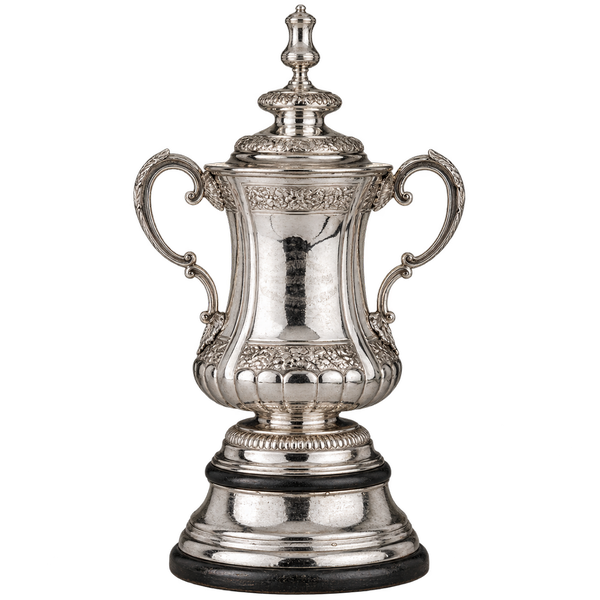
Roger Osborne wins the FA Cup for Ipswich
Roger Osborne scored the only goal of the FA Cup final against Arsenal.
Bobby Robson’s team won the club’s first major cup trophy at the original Wembley Stadium.

Five goals in the Charity Shield
Forest won the FA Charity Shield with a 5–0 victory over FA Cup holders Ipswich Town on August 12, 1978. Peter Withe and Martin O’Neill scored twice each, with John Robertson adding the other goal.
At Wembley the champions extended their successful run before their first European Cup campaign.


1980–1989
Six goals despite three missed penalties
Ipswich beat Manchester United 6–0.
United goalkeeper Gary Bailey saved three penalties, yet the match still became one of the most memorable victories of the Robson era.
Two victories against Saint-Étienne
A 4–1 win at Saint-Étienne was followed by a 3–1 victory at Portman Road.
Ipswich advanced to the UEFA Cup semi-finals 7–2 on aggregate.

Ipswich stop Köln in the UEFA Cup semi-finals
Köln lose both semi-final matches against Ipswich Town 1–0.
After dramatic victories over Barcelona and Stuttgart, the run ends one round short of the final. Ipswich advance 2–0 on aggregate and go on to win the UEFA Cup.

English champions again after 71 years
 Middlesbrough FC2:1
 Ipswich TownFootball League First Division Match 1 · May 2, 1981 · Location: Middlesbrough Stadium: Ayresome Park
Villa lost 2–0 at Arsenal FC but became champions when Ipswich were beaten 2–1 at Middlesbrough FC.
Ipswich could no longer reach Villa’s 60 points. Ron Saunders used only 14 players across the league season, with the club’s seventh championship built on an unusually settled side.
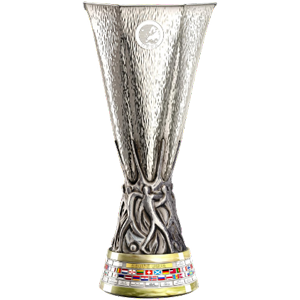
The UEFA Cup crowns Robson’s team
Ipswich’s 3–0 first-leg win built the decisive advantage.
Despite losing 4–2 to AZ 67 at Amsterdam’s Olympic Stadium, Town won the UEFA Cup 5–4 on aggregate.
Robson leaves after thirteen years
Bobby Robson left for England in 1982.
Bobby Ferguson took over; after cup triumphs and two league runner-up finishes, Ipswich faced a difficult sporting transition.

English league title number 13
Under Bob Paisley, Liverpool won its 13th English championship.
Ipswich lost to Nottingham Forest and could reach no more than 83 points. This was the first English league season under the three-points-for-a-win system. Liverpool now had 86 points, while the nearest challenger could finish with no more than 83.

The fall into the Second Division
Stoke City0:2 Everton FCFootball League First Division Match 1 · April 20, 1985 · Location: Stoke-on-Trent Stadium: Victoria Ground
A 2–0 defeat by Everton leaves Stoke with a maximum of 38 points. Away wins for Ipswich and West Ham simultaneously take those clubs beyond that figure, confirming relegation. Stoke finish the season with only 17 points and three victories.
Oxford’s win ends eighteen top-flight years
Oxford United won its final match 3–0 against Arsenal and overtook Ipswich.
Town had completed its season with 41 points and was relegated after eighteen years in the First Division.

Shirtliff saves Charlton in extra time
Charlton Athletic2:1a.e.t. Leeds UnitedFootball League Second Division Match 5 · May 29, 1987 · Location: Birmingham Stadium: St Andrew’s Neutral venue
After overcoming Ipswich in the semi-final, Charlton faced Leeds. Two 1–0 home wins forced a deciding match in Birmingham. Peter Shirtliff’s two late extra-time goals turned that game into a 2–1 victory and kept Charlton in the First Division.
In this first play-off season, a First Division club had to defend its place against Second Division challengers. Charlton followed a 0–0 draw at Ipswich with a 2–1 semi-final home win. The two final legs against Leeds did not settle the tie, so St Andrew’s staged a neutral decider.




1990–1999

Back in the top flight after 68 years
A 2–1 win at Ipswich Town secures one of the three automatic promotion places. Joe Royle’s side returns to the First Division after 68 years, the club’s biggest league breakthrough since its first promotion in 1910.
A point and Charlton’s win secure the title
Gavin Johnson’s equaliser at Oxford took Ipswich to 81 points.
Charlton’s simultaneous 2–0 win over Leicester limited the latter’s maximum to 80; Middlesbrough and Derby could no longer overtake Town either. The title and promotion were secured.

Four results end the Premier League stay
United twice lead at Chelsea but lose 3–2. Everton’s win over Wimbledon and draws for Ipswich and Southampton FC lift the three immediate rivals above United’s 42 points. The Blades are relegated on the final day.
The 9–0 defeat at Old Trafford
Manchester United beat Ipswich 9–0, with Andy Cole scoring five goals.
The nine-goal margin set the Premier League record at the time and deepened Town’s difficult season.
Everton’s victory confirms relegation
Everton’s 2–0 win over Newcastle confirmed Ipswich’s relegation.
The Premier League was reduced from 22 to 20 teams that summer, requiring four clubs to leave the top flight.

Level on points but relegated
 Huddersfield Town0:1
 Portsmouth FCFootball League First Division Match 2 · May 5, 1996 · Location: Huddersfield Stadium: Alfred McAlpine Stadium
Millwall’s goalless draw at Ipswich and Portsmouth’s 1–0 win at Huddersfield left both clubs on 52 points. Goals scored were then the first tie-breaker: Portsmouth had 61 to Millwall’s 43. The Lions were relegated to the Second Division.

Palace decide the promotion final
Sheffield United1:1 Ipswich TownFootball League First Division – Play-offs Match 1 · May 10, 1997 · Location: Sheffield Stadium: Bramall LaneIpswich Town2:2Sheffield UnitedFootball League First Division – Play-offs Match 2 · May 14, 1997 · Location: Ipswich Stadium: Portman Road
 Crystal Palace1:0Sheffield UnitedFootball League First Division – Play-offs Match 3 · May 26, 1997 · Location: London Stadium: Wembley Stadium Neutral venue
Two draws against Ipswich take United into the play-off final on away goals. David Hopkin then strikes late for Crystal Palace. A 1–0 defeat at the old Wembley prevents a return to the Premier League.
Other results secure promotion and the title
 Middlesbrough FC1:1
 Wolverhampton WanderersFootball League First Division Match 2 · April 29, 1998 · Location: Middlesbrough Stadium: Riverside Stadium
Sunderland’s 2–0 defeat at Ipswich Town on April 28, 1998 secured Forest’s automatic promotion.
Middlesbrough’s 1–1 draw with Wolves a day later also confirmed the Second Division title. Forest had 93 points; Middlesbrough could reach no more than 91 and Sunderland no more than 90. Dave Bassett’s team finished with 94 points, powered by the goals of Pierre van Hooijdonk and Kevin Campbell.

Mendonca’s hat-trick and Ilic’s save bring promotion
Charlton Athletic4:4a.e.t. · 7:6 on pens Sunderland AFCFootball League First Division Match 3 · May 25, 1998 · Location: London Stadium: Wembley Stadium Neutral venue
Two 1–0 wins over Ipswich took Charlton to Wembley. The Sunderland final finished 4–4 after extra time, with Clive Mendonca scoring a hat-trick. Sasa Ilic saved Michael Gray’s decisive penalty to complete a 7–6 shoot-out victory.
Richard Rufus scored his first competitive Charlton goal in the final to force extra time. Mendonca kept the side alive there too. After the shoot-out, captain Mark Kinsella led the club into its first Premier League season.




2000–2009
QPR’s win confirms an immediate return
Ipswich lost 3–1 at QPR, making Charlton’s automatic promotion to the Premier League mathematically certain. Confirmation came a day after Charlton’s own draw against Portsmouth.

Gary Megson’s final-day escape
West Bromwich Albion2:0Charlton AthleticFootball League First Division Match 1 · May 7, 2000 · Location: West Bromwich Stadium: The HawthornsWest Bromwich Albion beat Charlton Athletic 2–0 to stay in the second tier. Walsall’s simultaneous 2–0 defeat at Ipswich leaves their direct rivals below Albion. Appointed in March, Gary Megson guides the club away from immediate relegation danger.
A dramatic semi-final against Bolton
After drawing 2–2 at Bolton, Ipswich won the return leg 5–3 after extra time.
A 7–5 aggregate victory took George Burley’s team into the promotion final after several unsuccessful attempts.
Four goals bring a Premier League return
Ipswich won the promotion final 4–2 against Barnsley at the original Wembley.
George Burley took his former club back to the Premier League after five second-tier seasons.

Relegation from the top flight 2000/01
The displayed results made the season’s decision definitive for the first time.
Wins were worth two points before 1981; goal average separated tied teams through 1975/76. Any preceding City fixture retains its actual date.
Season review: fifth as a promoted club
The final 1–1 draw at Derby completed an exceptional season: Ipswich finished fifth with 66 points.
That placing brought UEFA Cup football.
Inter ends the European campaign
Alun Armstrong’s goal had given Ipswich a 1–0 home win over Inter.
Town then lost 4–1 in Milan and was eliminated 4–2 on aggregate.
Relegation is confirmed at Liverpool
A 5–0 defeat at Liverpool confirmed relegation on the final day.
One year after finishing fifth, Ipswich returned to the second tier.
Financial crisis and administration
Ipswich entered administration on February 10, 2003.
Relegation, reduced income and the financial burden of stadium redevelopment had brought a serious economic crisis.

Palace stop an immediate return
Ipswich Town1:0West Ham UnitedFootball League First Division Play-offs Match 1 · May 15, 2004 · Location: Ipswich Stadium: Portman RoadWest Ham United2:0Ipswich TownFootball League First Division Play-offs Match 2 · May 18, 2004 · Location: London Stadium: Boleyn GroundCrystal Palace1:0West Ham UnitedFootball League First Division Play-offs Match 3 · May 29, 2004 · Location: Cardiff Stadium: Millennium Stadium Neutral venueWest Ham United overcome Ipswich Town in the play-off semi-final. Crystal Palace win the final at the Millennium Stadium 1–0, however. The chance of an immediate return to the Premier League is lost.
Promotion under Mick McCarthy
Sunderland AFC2:1 Leicester CityFootball League Championship Match 2 · April 23, 2005 · Location: Sunderland Stadium: Stadium of Light
Sunderland beat Leicester 2–1 to return to the Premier League.
Ipswich’s 1–1 draw at Leeds was also necessary, leaving only Wigan able to exceed Sunderland’s 88 points. Mick McCarthy led the club back from the Championship two years after its relegation with just 19 points.
Zamora decides it in Cardiff
West Ham United2:2Ipswich TownFootball League Championship Play-offs Match 1 · May 14, 2005 · Location: London Stadium: Boleyn GroundIpswich Town0:2West Ham UnitedFootball League Championship Play-offs Match 2 · May 18, 2005 · Location: Ipswich Stadium: Portman Road Preston North End0:1West Ham UnitedFootball League Championship Play-offs Match 3 · May 30, 2005 · Location: Cardiff Stadium: Millennium Stadium Neutral venue
After beating Ipswich Town in the semi-final, West Ham United return to the play-off final. Bobby Zamora’s goal in a 1–0 win over Preston North End secures promotion this time. Alan Pardew’s side return to the Premier League after two seasons away.

Administration and the first descent to the third tier
Leeds entered administration on May 4, 2007 and received a ten-point deduction.
This definitively confirmed the first relegation to League One, after a 1–1 draw with Ipswich had left only a theoretical chance. The club would play in the third tier for the first time.
Marcus Evans takes majority ownership
Marcus Evans acquired majority ownership of the club.
The investment addressed immediate financial problems but, despite numerous managerial changes, did not deliver the hoped-for lasting return to the Premier League.

The last league match at Ninian Park
A 3–0 defeat by Ipswich Town brought Cardiff City’s league football at Ninian Park to an end. Since 1910 the ground had witnessed title races, cup victories, European nights and crises. The side prepared to move across Sloper Road.




2010–2019
Arsenal turns the League Cup semi-final around
1:03:0Ipswich won the first semi-final leg against Arsenal 1–0 through Tamás Priskin’s goal.
A 3–0 defeat in the return match ended hopes of reaching the final.
The derby ends promotion hopes
After a 1–1 draw at Portman Road, Ipswich lost the play-off return leg at Norwich 3–1.
The 4–2 aggregate defeat ended the promotion attempt in the semi-finals.

The away win is not enough
3:0Rovers won 3–1 at Brentford. Nottingham Forest beat Ipswich Town 3–0 and finished above Blackburn on goal difference with both on 51 points. Birmingham’s 1–0 win at Bristol City secured 53 points for the other rivals.
Forest finished with a goal difference of −10 and Rovers with −12. The 1995 Premier League champions had to enter League One. Tony Mowbray remained in charge of the rebuilding effort.
Back in the third tier for the first time since 1957
A 1–1 draw against Birmingham confirmed relegation from the Championship.
The first team would play in the third tier for the first time in 62 years.


2020–2029
Gamechanger takes over the club
Gamechanger 20 acquired Ipswich from Marcus Evans.
The new ownership group began rebuilding with investment in the team, training conditions and Portman Road.
McKenna’s first match brings a victory
Following his appointment in December, Kieran McKenna won his first match 1–0 against Wycombe.
It began an era that took Ipswich from League One to the Premier League.
Six goals secure a Championship return
Ipswich beat Exeter 6–0 to secure automatic promotion.
McKenna’s team reached 97 points, beyond Sheffield Wednesday’s remaining maximum.
Sarmiento’s late winner against Southampton
Jeremy Sarmiento’s stoppage-time goal secured a 3–2 win over Southampton.
The dramatic home victory kept Ipswich in the race for automatic Premier League promotion.
Two promotions in two years
A 2–0 win over Huddersfield secured automatic promotion to the Premier League.
With 96 points, the team completed successive promotions from League One.
Newcastle confirms another relegation
A 3–0 defeat at Newcastle mathematically confirmed Ipswich’s relegation.
The Premier League stay ended after one season.
An immediate return to the Premier League
Ipswich beat Queens Park Rangers 3–0 on the final day.
Second place with 84 points secured an immediate automatic return; Hirst, Philogene and McAteer scored the goals.


