


The history of Nottingham Forest
Milestones and background from the club's history, in chronological order.
Categories
Competitions
Nicknames through the years Three names tell a story of near misses, late goals and an unbeaten season. Read the storiesClose the stories
The beginnings and the first FA Cup
Red from the beginning
Members of a group of shinney players met at the Clinton Arms in Nottingham in 1865 and agreed to form a football club.
J. S. Scrimshaw proposed the change, and the founders chose red caps in the colour associated with Giuseppe Garibaldi’s followers. Forest took their name from the Forest Recreation Ground, their first playing field.
The first game against the neighbours
Forest first faced Notts County at the Forest Recreation Ground on March 22, 1866. The goalless local encounter began a rivalry that still links the two Nottingham clubs.
These early players represented Forest long before organised league football.
Fourteen goals at Clapton
Forest won 14–0 away to Clapton in the first round of the FA Cup on January 17, 1891. Alex Higgins scored five goals and Tinsley Lindley four.
The game at the Old Spotted Dog Ground remained Forest’s largest competitive victory, demonstrating their attacking strength before they joined the Football League.
Football League football at the Town Ground
 Everton FC2:2
 Nottingham ForestFootball League First Division Match 1 · September 3, 1892 · Location: Liverpool Stadium: Goodison ParkNottingham Forest3:4
 StokeFootball League First Division Match 2 · September 10, 1892 · Location: Nottingham Stadium: Town Ground
After winning the Football Alliance in 1891/92, Forest joined the expanded Football League in 1892. A 2–2 draw at Everton on September 3 was followed a week later by their first league home game, a 4–3 defeat to Stoke at the Town Ground.
Forest entered the First Division and finished their opening season tenth.
The first FA Cup
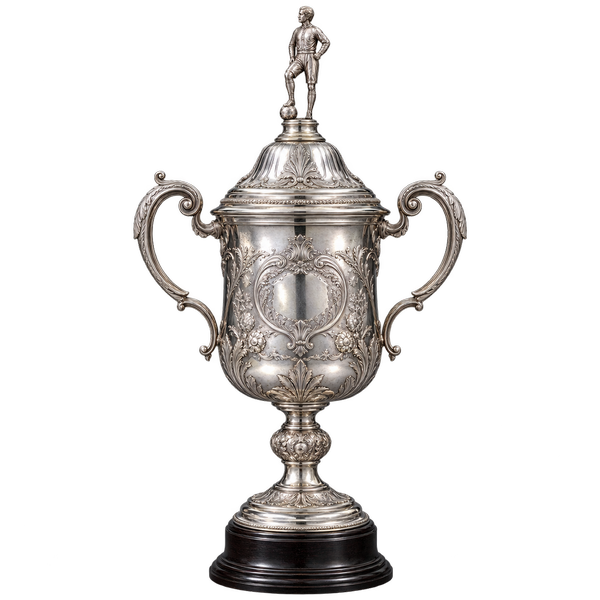
Forest beat Derby County 3–1 at Crystal Palace on April 16, 1898 to win their first FA Cup.
Arthur Capes scored twice and John McPherson added the third. Victory over their regional rivals brought Forest their first major cup, a few months before the move to the present City Ground.
A new home beside the Trent
The present City Ground officially opened with a league game against Blackburn Rovers on September 3, 1898. Forest lost 1–0 in front of about 15,000 spectators.
The ground in West Bridgford, on the south bank of the Trent, replaced the earlier Town Ground and became the club’s permanent home.



Between divisions and Wembley
Second Division champions at Leicester
Nottingham Forest3:1 West Bromwich AlbionFootball League Second Division Match 1 · April 13, 1907 · Location: West Bridgford Stadium: City Ground
 Leicester Fosse1:2Nottingham ForestFootball League Second Division Match 2 · April 20, 1907 · Location: Leicester Stadium: Filbert Street
A 3–1 win over West Bromwich Albion on April 13, 1907 secured Forest’s promotion.
The 2–1 victory at Leicester Fosse a week later confirmed the Second Division title: Forest had 58 points, while Chelsea could reach no more than 57. They finished the 1906/07 season with 60 points from 38 matches.

English champions 1907/08
Nottingham Forest3:1 Manchester CityFootball League First Division Match 2 · April 11, 1908 · Location: Nottingham Stadium: The City Ground
United won the English championship for the first time under Ernest Mangnall.
Manchester City’s defeat at Nottingham Forest and Wednesday’s loss at Bolton put United beyond reach; Billy Meredith and the Turnbulls were among the team’s defining players.
Twelve goals against Leicester Fosse
Forest beat Leicester Fosse 12–0 at the City Ground on April 21, 1909. It remains the club’s largest league victory.
Alf Spouncer, Bill Hooper and Enoch West scored three goals each, Grenville Morris added two and Edwin Hughes one. Forest already led 8–0 at half-time.
The Second Division title against Leeds
Nottingham Forest3:1StokeFootball League Second Division Match 1 · April 22, 1922 · Location: West Bridgford Stadium: City GroundNottingham Forest1:0 Leeds UnitedFootball League Second Division Match 2 · April 29, 1922 · Location: West Bridgford Stadium: City Ground
Forest secured promotion with a 3–1 win against Stoke on April 22, 1922. A 1–0 victory over Leeds United on April 29 also settled the Second Division championship: their 55 points were beyond Stoke and Barnsley, whose maximum was 52. Noah Burton scored the winner.
Forest finished the 1921/22 season on 56 points.

Leaving the First Division
A goalless draw with West Bromwich Albion is insufficient. Wins for Chelsea FC and Nottingham Forest make Oldham’s relegation certain. The final record is 22nd place and 30 points; a top-flight return will not come until 1991.

The championship slips away on goal average
Cardiff City drew 0–0 at Birmingham, with Len Davies missing a penalty. Huddersfield beat Nottingham Forest 3–0 on the same day. Both clubs finished with 57 points, but Huddersfield’s narrowly superior goal average decided the championship.
At the time, goals scored were divided by goals conceded. Cardiff’s 61–34 record produced a ratio of about 1.794, compared with Huddersfield’s 60–33 and approximately 1.818. Second place remains City’s highest finish in the English top flight.

An immediate return
Middlesbrough FC1:0Nottingham ForestFootball League Second Division Match 1 · April 20, 1929 · Location: Middlesbrough Stadium: Ayresome Park Notts County1:2
 Grimsby TownFootball League Second Division Match 2 · April 20, 1929 · Location: Nottingham Stadium: Meadow Lane
Boro beat Nottingham Forest 1–0. Together with Grimsby’s 2–1 victory at Notts County, this secured a return to the First Division. The team responded to relegation with an immediate promotion.
110 goals and the southern title
The 2–1 win over Newport County on May 2, 1951 confirmed Forest as Third Division South champions and secured promotion to the Second Division.
Billy Walker’s team finished the season with 70 points and 110 goals. Relegated in 1949, Forest had spent two seasons in the third tier.

Bury’s win confirms relegation
Bury beat Nottingham Forest 2–0, leaving Southampton unable to reach safety despite beating Blackburn 6–1 on the same day. Three decades in the Second Division ended with relegation to Third Division South.
Back in the top flight
A 4–0 win at Sheffield United on April 27, 1957 returned Forest to the top flight after 32 years.
They reached 54 points, while Liverpool, their last remaining challenger, could earn no more than 53. Forest finished the 1956/57 Second Division season as runners-up to Leicester City.
Ten men win at Wembley
Forest won the FA Cup with a 2–1 victory over Luton Town on May 2, 1959. Roy Dwight and Tommy Wilson scored early, but Dwight broke his leg before half-time.
With substitutions unavailable, Forest defended their lead with ten men. Billy Walker brought the cup back to the club 61 years after their first triumph.
A final victory cannot prevent relegation
Leeds beat Nottingham Forest 1–0 but finished in the relegation places on 34 points.
Birmingham’s simultaneous 1–0 win over Blackburn took the decisive rivals to 36. Four top-flight seasons came to an end, setting the stage for the later rebuilding under Don Revie.

The start of European competition
A 2–0 win over Nottingham Forest opens Valencia’s first Fairs Cup campaign. They follow it with a 5–1 victory in England. Their first entry ends with the trophy the following year.
A hat-trick against Everton
Ian Storey-Moore scored all three Forest goals in the 3–2 FA Cup quarter-final victory over Everton on April 8, 1967. Watched by 47,510 spectators, the win took Forest into the semi-finals.
Johnny Carey’s team also finished league runners-up to Manchester United, their best league placing to that point.
Fire in the Main Stand
A fire broke out beneath the Main Stand during the home game against Leeds United on August 24, 1968. The match was abandoned at half-time with the score 1–1, and the stand was destroyed.
Forest temporarily played at Meadow Lane before returning to the City Ground.
The tree becomes the club emblem
Forest adopted a new emblem in 1974: a stylised tree above the waves of the Trent, with the word Forest below.
David Lewis created the winning design in a public competition. The simple shape replaced the city arms and became the symbol of the team that would conquer Europe a few years later.





Clough, Taylor and the summit of Europe
Brian Clough takes charge
Brian Clough became manager of the Second Division club on January 6, 1975. Two days later Forest won his first game, an FA Cup replay at Tottenham, 1–0. His work, followed by a renewed partnership with Peter Taylor, transformed the club from a mid-table Second Division team into champions of England and Europe.

Into the third tier for the first time
A 1–0 defeat at Nottingham Forest and Bristol Rovers’ draw with Bristol City confirmed relegation. Wednesday would play in the Third Division for the first time.
Clough’s first trophy
 Nottingham Forest4:0
 OrientAnglo-Scottish Cup Second leg · December 15, 1976 · Location: West Bridgford Stadium: The City Ground
Forest won the Anglo-Scottish Cup in December 1976. A 1–1 draw at Orient was followed by a 4–0 victory at the City Ground on December 15, making the aggregate score 5–1. Colin Barrett scored twice in the second leg.
This was Clough’s first trophy with Forest, preceding promotion and the league championship in the next two years.
Wolves settle Forest’s promotion
Forest completed their Second Division fixtures with a 1–0 win over Millwall on May 7 and a total of 52 points.
Promotion was confirmed a week later when Bolton lost 1–0 at home to Wolves and could no longer overtake Forest. They went up in third place behind Wolves and Chelsea, and won the English championship a year later.
League Cup glory in the replay
After a goalless final at Wembley, Forest beat Liverpool 1–0 in the replay at Old Trafford on March 22, 1978. John Robertson converted the decisive penalty.
Chris Woods deputised for Peter Shilton, who was cup-tied after appearing for Stoke earlier in the competition. Forest had won their first League Cup.
Promoted, then champions of England
The goalless draw at Coventry City on April 22, 1978 secured Forest’s first English championship.
The promoted team, led by Brian Clough and Peter Taylor, had held off Liverpool. They finished with 64 points from 42 games under the two-points-for-a-win system. The league title and League Cup made 1977/78 an extraordinary first season back in the First Division.
Five goals in the Charity Shield
Forest won the FA Charity Shield with a 5–0 victory over FA Cup holders Ipswich Town on August 12, 1978. Peter Withe and Martin O’Neill scored twice each, with John Robertson adding the other goal.
At Wembley the champions extended their successful run before their first European Cup campaign.
The holders are knocked out
Forest met holders Liverpool in the first round of the European Cup.
Garry Birtles and Colin Barrett scored in the 2–0 win at the City Ground on September 13; a goalless draw at Anfield two weeks later secured progress. On their European Cup debut, Forest had eliminated their strongest English rivals.
42 league games unbeaten
Liverpool ended Forest’s run of 42 unbeaten league games with a 2–0 win at Anfield on December 9, 1978. The sequence had begun in November 1977 and included their championship season.
It remained the top-flight record until Arsenal’s longer run in 2004.
The League Cup stays in Nottingham
Forest retained the League Cup by beating Southampton 3–2 at Wembley on March 17, 1979. Garry Birtles scored twice and Tony Woodcock added the third.
The victory confirmed the team’s strength in a spring that would end with their first European Cup triumph.
Bowyer sends Forest to Munich
After a spectacular 3–3 draw at the City Ground, Forest won the European Cup semi-final second leg at 1. FC Köln 1–0 on April 25, 1979. Ian Bowyer scored the only goal at the Müngersdorfer Stadion.
A 4–3 aggregate victory took Forest to the final in their first European Cup campaign.
European champions at the first attempt
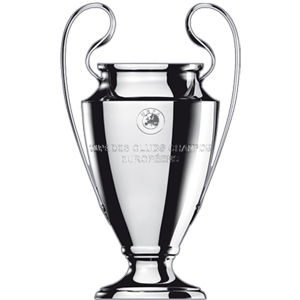
Trevor Francis headed Forest to a 1–0 victory over Malmö FF at Munich’s Olympiastadion on May 30, 1979. The recently signed forward converted John Robertson’s cross.
Forest won the European Cup at their first attempt, reaching the summit of European club football only two years after promotion.

A first top-flight away win ends Forest’s run
Gerry Ryan’s goal brings a 1–0 victory at reigning European champions Nottingham Forest.
Albion record their first First Division away win and end Forest’s 49-match unbeaten home league run. The result helps the newcomers establish themselves.
UEFA Super Cup success against Barcelona
Forest won the 1979 UEFA Super Cup in January and February 1980. Charlie George scored the only goal in the 1–0 first-leg win at the City Ground.
A 1–1 draw at Camp Nou on February 5, with Kenny Burns scoring for Forest, secured a 2–1 aggregate victory over Barcelona.

A historic win at the holders
Hans-Jürgen Riediger scored the only goal in a 1–0 win at Nottingham Forest.
BFC became the first German club to win a European Cup match on English soil. Victory over Brian Clough’s side became one of the club’s most famous results.
Wolves deny a third straight League Cup
Forest reached a third consecutive League Cup final in 1980 but lost 1–0 to Wolves on March 15. Andy Gray capitalised on a misunderstanding between Peter Shilton and David Needham at Wembley.
Their bid for a third straight League Cup ended shortly before another successful European title defence.
Forest turn the quarter-final around
Nottingham Forest won 3–1 at the Jahn-Sportpark to overturn BFC’s first-leg victory.
The Berlin side went out 3–2 on aggregate, and Forest went on to retain the trophy.
Forest triumph in Madrid too
Forest retained the European Cup with a 1–0 victory over Hamburger SV at the Santiago Bernabéu on May 28, 1980. John Robertson scored in the first half, and Peter Shilton and a disciplined defence protected the lead.
Forest now had two European Cups despite having won the English league championship only once.

The first Spanish UEFA Super Cup winners
Following a 2–1 defeat at Nottingham Forest, Valencia win the return 1–0 through Fernando Morena. The away-goals rule settles the 2–2 aggregate score in Valencia’s favour, making them the first Spanish UEFA Super Cup winners.
Nacional win in Tokyo
The 1980 Intercontinental Cup was played in Tokyo on February 11, 1981. Forest lost 1–0 to Nacional of Montevideo at the National Olympic Stadium.
Waldemar Victorino scored the only goal early in the game. After their two European triumphs, Forest missed out on the intercontinental title.

English league title number 13
Under Bob Paisley, Liverpool won its 13th English championship.
Ipswich lost to Nottingham Forest and could reach no more than 83 points. This was the first English league season under the three-points-for-a-win system. Liverpool now had 86 points, while the nearest challenger could finish with no more than 83.
The controversial Anderlecht semi-final
A 2–0 home victory was followed by a 3–0 defeat at Anderlecht on April 25, 1984, eliminating Forest from the UEFA Cup.
A disallowed Forest goal and a penalty for the hosts made the match controversial. A payment from Anderlecht’s management to referee Emilio Guruceta later became public. The UEFA ban imposed on Anderlecht in 1997 was overturned by the Court of Arbitration for Sport on procedural and jurisdictional grounds.









Cups, farewells and quick returns
Forest win the centenary tournament
Forest won the Football League Centenary Tournament at Wembley on April 17, 1988. The final against Sheffield Wednesday ended goalless after 60 minutes, and Forest won the penalty shoot-out 3–2. The Football League’s hundredth-anniversary tournament took place over one weekend with shortened matches.

Forest prevails in extra time
In the club’s second League Cup semi-final, a 1–1 draw at Nottingham was followed by a 1–0 extra-time defeat at Ashton Gate. Nottingham Forest won the tie 2–1 on aggregate.
A third League Cup
Forest beat Luton Town 3–1 in the League Cup final on April 9, 1989. Nigel Clough and Neil Webb turned the game around after Forest fell behind, with Clough scoring twice.
Thirty years after their 1959 FA Cup final, the same clubs met at Wembley and Forest again won the trophy.
The Hillsborough disaster
The FA Cup semi-final between Liverpool and Forest on April 15, 1989 was abandoned after a few minutes.
A fatal crush developed in the overcrowded Leppings Lane pens. In total, 97 Liverpool supporters died as a result of their injuries. Remembrance of the victims links both clubs, and the match remains one of football’s gravest tragedies.
Seven goals in the Full Members’ final
Forest won the Full Members’ Cup by beating Everton 4–3 after extra time on April 30, 1989. Garry Parker scored the winner at Wembley.
The high-scoring victory completed a spring with two cup triumphs and added a competition created after English clubs’ exclusion from European football to Forest’s honours.
Another successful defence
Nigel Jemson’s goal gave Forest a 1–0 win over Oldham Athletic in the League Cup final on April 29, 1990. Forest retained the trophy and won the competition for the fourth time.
As in 1978 and 1979, Brian Clough’s side had secured back-to-back League Cups.
One event, several perspectives

Relegation on the final day
Wednesday lost 3–0 to Nottingham Forest at Hillsborough. Luton’s simultaneous 3–2 win at Derby brought them level on points, sending Wednesday down on goal difference.
 From the history of Luton Town
Final-day survival
Luton won 3–2 at Derby County. Nottingham Forest’s simultaneous 3–0 victory at Sheffield Wednesday kept Luton in the First Division on goal difference.
Seven goals against Chelsea
Forest beat Chelsea 7–0 at the City Ground on April 20, 1991. Roy Keane opened the scoring, and Stuart Pearce, Garry Parker, Nigel Clough and Ian Woan also found the net.
It was an exceptional result in the spring before the FA Cup final and one of the club’s largest top-flight wins.

The title is secured before Arsenal kicks off
Liverpool FC’s 2–1 defeat at Nottingham Forest makes Arsenal champion before its own evening match begins.
Arsenal then celebrates with a 3–1 win over Manchester United at Highbury. The team loses only once throughout the league season; even a two-point deduction following the confrontation with United does not prevent the title.
The FA Cup slips away in extra time
Forest lost the FA Cup final to Tottenham 2–1 after extra time on May 18, 1991. Stuart Pearce put Forest ahead with a free-kick; Gary Lineker missed a penalty before Paul Stewart equalised.
Des Walker’s own goal settled the match. The FA Cup remained the major domestic trophy Brian Clough never won as Forest manager.
A last Full Members’ Cup triumph
Forest won the last Full Members’ Cup final, beating Southampton 3–2 after extra time on March 29, 1992. Scot Gemmill scored the winner.
It was their second triumph in the competition, which ended as English league football was reorganised.
Manchester United win the final
Two weeks after their Full Members’ Cup triumph, Forest lost the League Cup final to Manchester United 1–0 on April 12, 1992. Brian McClair scored the only goal at Wembley.
This was Forest’s sixth League Cup final under Brian Clough and the last major cup final of his tenure.
Relegation and Clough’s farewell
The 2–0 home defeat to Sheffield United on May 1, 1993 confirmed Forest’s relegation in the inaugural Premier League season.
Brian Clough had already announced his retirement, and this was his last home match as the club’s manager. After 18 years featuring a league title, European Cups and four League Cups, his tenure ended with relegation.

Millwall’s draw confirms promotion
Millwall and Nottingham Forest draw 2–2 at the new Den.
Millwall can no longer mathematically catch Palace, confirming automatic promotion. Palace’s 1–0 win at Luton the previous day creates the decisive advantage, but promotion is confirmed only by the rival’s result.
Frank Clark brings Forest back
A 3–2 win at Peterborough United on April 30, 1994 secured Forest’s immediate return to the Premier League.
Stan Collymore scored twice and Stuart Pearce also found the net. Frank Clark, a member of the 1979 European Cup-winning team, had succeeded Clough and took Forest up as runners-up.
Seven goals at Hillsborough
Forest won 7–1 at Sheffield Wednesday on April 1, 1995. Bryan Roy and Stan Collymore scored twice each.
The promoted side finished third in the Premier League and qualified for the UEFA Cup. Roy’s creativity and Collymore’s attacking power were central to this remarkable return to the top flight.
Bayern end the European run
Forest reached the UEFA Cup quarter-finals in 1995/96. A 2–1 defeat in Munich was followed by a 5–1 home loss to Bayern on March 19, 1996. The eventual winners advanced 7–2 on aggregate.
Forest would not play European football again for almost three decades.
Other results secure promotion and the title
 Middlesbrough FC1:1
 Wolverhampton WanderersFootball League First Division Match 2 · April 29, 1998 · Location: Middlesbrough Stadium: Riverside Stadium
Sunderland’s 2–0 defeat at Ipswich Town on April 28, 1998 secured Forest’s automatic promotion.
Middlesbrough’s 1–1 draw with Wolves a day later also confirmed the Second Division title. Forest had 93 points; Middlesbrough could reach no more than 91 and Sunderland no more than 90. Dave Bassett’s team finished with 94 points, powered by the goals of Pierre van Hooijdonk and Kevin Campbell.
Manchester United score eight
Forest lost 8–1 to Manchester United at the City Ground on February 6, 1999. Substitute Ole Gunnar Solskjær scored four goals late in the game.
The defeat became a defining image of a difficult return to the Premier League, which ended in relegation a few months later.
The beginning of the long years away
A 2–0 defeat at Aston Villa on April 24, 1999 confirmed another relegation from the Premier League.
The appointment of Ron Atkinson had failed to save the team. Last place began a long period outside the top flight, and Forest would not return until 2022.


The long years outside the Premier League

From the Forest drama to defeat in Cardiff
 Nottingham Forest1:1Sheffield UnitedFootball League First Division – Play-offs Match 1 · May 10, 2003 · Location: West Bridgford Stadium: The City GroundSheffield United4:3a.e.t.Nottingham ForestFootball League First Division – Play-offs Match 2 · May 15, 2003 · Location: Sheffield Stadium: Bramall LaneSheffield United0:3
 Wolverhampton WanderersFootball League First Division – Play-offs Match 3 · May 26, 2003 · Location: Cardiff Stadium: Millennium Stadium Neutral venue
After a 1–1 draw in Nottingham, United win the return against Forest 4–3 after extra time. The dramatic semi-final takes them to Cardiff, where Wolverhampton Wanderers beat the Blades 3–0 in the promotion final.
Neil Warnock’s side reach the semi-finals of both major national cups and the promotion play-off final in one season. None of the three runs delivers the hoped-for final reward.
Remembering Brian Clough
Brian Clough died on September 20, 2004 at the age of 69. His championship side and two European Cup triumphs had made Forest known around the world.
The stand bearing his name at the City Ground and the statue in Nottingham preserve his place in the club’s memory.
The fall into the third tier
A 2–1 defeat at Queens Park Rangers on April 30, 2005 confirmed Forest’s relegation from the Championship.
The club would play third-tier football for the first time since 1951. Gary Megson, appointed during the season, had been unable to halt the decline.
Yeovil turn the play-off around
After a 2–0 away win at Yeovil, Forest appeared close to the League One play-off final in 2007. They instead lost the return leg at the City Ground 5–2 after extra time on May 18. Yeovil advanced 5–4 on aggregate, leaving Forest to face a third year in the third tier.
Automatic promotion on the final day
Forest beat Yeovil 3–2 at the City Ground on May 3, 2008 while Doncaster lost 2–1 at Cheltenham.
The two results together lifted Colin Calderwood’s team into second place in League One and secured automatic promotion to the Championship. Their three-season stay in the third tier was over.

Promotion is confirmed before the home match
Nottingham Forest’s goalless draw against Cardiff confirmed Newcastle’s promotion in the afternoon.
Chris Hughton’s team could no longer fall outside the top two before its own evening match.

Sinclair’s hat-trick brings Premier League football
Nottingham Forest0:0Swansea CityFootball League Championship Play-offs Match 1 · May 12, 2011 · Location: West Bridgford Stadium: City GroundSwansea City3:1Nottingham ForestFootball League Championship Play-offs Match 2 · May 16, 2011 · Location: Swansea Stadium: Liberty Stadium Reading FC2:4Swansea CityFootball League Championship Play-offs Match 3 · May 30, 2011 · Location: London Stadium: Wembley Stadium Neutral venue
Swansea City beat Reading 4–2 in the Championship play-off final. Scott Sinclair scores a Wembley hat-trick. Brendan Rodgers leads the club into the Premier League as its first Welsh representatives since the competition’s creation in 1992.
A goalless draw at Nottingham Forest is followed by a 3–1 Swansea home win. A 3–0 half-time lead in the final is followed by a Reading fightback to 3–2, before Sinclair’s third goal settles it. Stephen Dobbie scores Swansea’s other goal.

Ten men turn the derby around
After an early red card for Frank Fielding, Derby fell behind at Nottingham Forest. Jamie Ward and Jeff Hendrick turned the match around for a 2–1 win. Victory after playing almost the entire game with ten men became a treasured derby memory.
Nigel Doughty dies
Nigel Doughty died on February 4, 2012 at the age of 54. Forest’s owner and former chairman had funded the club since 1999. His death came during a difficult second-tier season and began a new phase in the club’s ownership history.

The away win is not enough
3:0Rovers won 3–1 at Brentford. Nottingham Forest beat Ipswich Town 3–0 and finished above Blackburn on goal difference with both on 51 points. Birmingham’s 1–0 win at Bristol City secured 53 points for the other rivals.
Forest finished with a goal difference of −10 and Rovers with −12. The 1995 Premier League champions had to enter League One. Tony Mowbray remained in charge of the rebuilding effort.
Evangelos Marinakis takes over
Evangelos Marinakis and Sokratis Kominakis took over Forest from Fawaz Al-Hasawi on May 18, 2017. He was already involved in football through Olympiacos.
After turbulent years in the Championship, the new ownership era would eventually bring Forest back to the Premier League.

Wilbraham’s late goal saves Bolton
Two late goals turned the match against Nottingham Forest into a 3–2 win. Barnsley lost 4–1 at Derby and Burton lost 2–1 at Preston. Bolton finished above both rivals on 43 points and survived.
Adam Le Fondre equalised in the 85th minute and Aaron Wilbraham headed the winner shortly afterwards. Barnsley and Burton remained on 41 points and were relegated. The final day became one of the most emotional moments in the club’s recent history.

McFadzean crowns the second return
2:1Kyle McFadzean’s late goal secures a 2–1 win over Nottingham Forest.
The Sky Blues play in Coventry again following their Birmingham exile. The former Ricoh Arena is now called the Coventry Building Society Arena.
Steve Cooper takes over the bottom club
Steve Cooper became Forest manager on September 21, 2021. The team had collected only one point from their first seven league games.
Cooper took them to fourth place in the Championship and then through the play-offs to the Premier League.





The return and new European nights

No More Red: a white shirt against youth violence
Arsenal wears an all-white special kit against Nottingham Forest in the FA Cup.
The initiative with Adidas supports young people and raises awareness of knife violence. The sporting result is a 1–0 defeat; the social purpose is the focus of this milestone.

Moore sends Bournemouth back up
1:0Kieffer Moore scored the late winner against Nottingham Forest.
The 1–0 victory over a direct rival secured promotion before the final day. Scott Parker’s team had made the second automatic promotion place certain. After two years in the Championship, Bournemouth prepared for a second spell in the top flight.
Samba’s saves send Forest to Wembley
Forest won the first play-off leg at Sheffield United 2–1 but lost the return at the City Ground 2–1 after extra time.
With the aggregate score tied at 3–3 on May 17, 2022, penalties decided the tie. Brice Samba saved three Sheffield United attempts and Forest won the shoot-out 3–2 to reach the final.
Back in the Premier League after 23 years
Forest beat Huddersfield Town 1–0 in the Championship play-off final on May 29, 2022. Levi Colwill’s own goal shortly before half-time decided the game at Wembley.
Steve Cooper’s side ended a 23-year absence from the Premier League, completing a remarkable journey from their poor start to promotion.
Awoniyi’s goal secures survival
Forest beat Arsenal 1–0 at the City Ground on May 20, 2023 to secure Premier League survival before the final day.
Taiwo Awoniyi scored the winner. In a season featuring many new signings, Steve Cooper’s side had built their survival campaign mainly on results at home.
A four-point deduction
An independent commission deducted four points from Forest on March 18, 2024 for breaching the Premier League’s Profitability and Sustainability Rules.
Their appeal was unsuccessful. Nuno Espírito Santo’s team faced an additional obstacle in the relegation battle but remained in the division at the end of the season.
Wood completes the survival task
Two early Chris Wood goals gave Forest a 2–1 win at Burnley on May 19, 2024 and confirmed survival.
Despite the four-point deduction, Forest finished seventeenth, six points clear of Luton.
Seven goals against Brighton
7:0Forest beat Brighton 7–0 at the City Ground on February 1, 2025. Chris Wood scored a hat-trick, with Morgan Gibbs-White, Neco Williams and Jota Silva also on target after an own goal opened the scoring.
A week after losing 5–0 at Bournemouth, Nuno Espírito Santo’s team responded with one of their largest Premier League victories.
European football is secured again
The 2–2 draw against Leicester City on May 11, 2025 guaranteed Forest at least seventh place and a return to European competition.
Morgan Gibbs-White and Chris Wood scored the goals. Despite the late equaliser, the chasing teams could no longer overtake Forest. They finished seventh with 65 points, returning to the European stage for the first time since their 1996 UEFA Cup campaign.

Champions League qualification despite a home defeat
0:12:00:1Newcastle lost to Everton but qualified for the Champions League again.
Aston Villa lost at Manchester United, and Nottingham Forest lost to Chelsea. Newcastle stayed fifth on 66 points, ahead of Villa on goal difference.
A point on the return to Europe
Forest drew 2–2 at Real Betis in the Europa League on September 24, 2025. Igor Jesus scored both visiting goals at the Estadio de La Cartuja.
Almost three decades after their elimination by Bayern, Forest returned to UEFA competition and began the league phase with an away point.
Remembering John Robertson
John Robertson died on December 25, 2025 at the age of 72. His cross supplied Trevor Francis’s winner in the 1979 European Cup final, and in 1980 he scored the decisive goal himself.
The Scottish winger was a central figure in Clough’s team and remained closely associated with Forest’s greatest successes.
Gibbs-White takes Forest into the semi-finals
After a 1–1 draw at Porto, Forest won the Europa League quarter-final second leg 1–0 on April 16, 2026. Morgan Gibbs-White scored early at the City Ground.
A 2–1 aggregate victory took Vítor Pereira’s side to their first European semi-final since 1984.
Aston Villa end the European run
1:04:0Forest won the Europa League semi-final first leg against Aston Villa 1–0 on April 30, 2026. They lost the return at Villa Park 4–0 on May 7. Villa reached the final with a 4–1 aggregate victory, ending Forest’s first European campaign in three decades at the semi-final stage.
Oliver Glasner begins a new managerial era
Oliver Glasner took charge of the team in July 2026 and led the first pre-season training session at the Nigel Doughty Academy on July 13. The Austrian coach began preparations for a new Premier League campaign following Forest’s European run.
His arrival opened the next chapter in the club’s sporting development.
Approval for the City Ground expansion
Rushcliffe Borough Council’s Planning Committee resolved to approve Forest’s City Ground expansion plans on September 16, 2026. The decision provided a basis for the next steps at the club’s historic home.
The larger ground was still a future project, and the season began with a capacity of 31,212.


