

The history of Crystal Palace
Milestones and background from the club's history, in chronological order.
Categories
Competitions
Nicknames through the years Three names tell a story of near misses, late goals and an unbeaten season. Read the storiesClose the stories
1900–1909
The professional club is established
The Football Association approves Crystal Palace’s entry into professional football.
Edmund Goodman assembles the team associated with the exhibition building. The modern club also claims roots in an amateur club founded in 1861. Unbroken continuity between that organisation and the professional club is historically disputed, so the professional club’s documented founding year remains 1905.
Palace join the Southern League
Crystal Palace are admitted to the Southern League Second Division.
The new professional club initially also face reserve teams. In their first season, 1905/06, Palace win the championship and gain promotion to the Southern League First Division.
A cup shock at Newcastle
The Southern League club defeat Newcastle United 1–0 in the FA Cup.
Horace Astley scores the decisive goal against one of England’s strongest teams of the era. The victory brings Palace recognition far beyond south London.

1910–1919
War forces Palace out of their original home
The Admiralty requisitions the Crystal Palace grounds during the First World War.
The club have to leave their original home and move to Herne Hill. Losing the ground ties the club’s history to wartime disruption in London.
The Nest becomes a temporary home
Palace move to Croydon Common’s former ground on Selhurst Road.
The Nest serves as their home for six years after the war. The small ground provides the club with a settled base before Selhurst Park is built.
1920–1929
Champions in their first Football League season
A 2–2 draw at Northampton secures the new Third Division title and promotion.
Under the two-points system, Palace reach 57 points; Southampton can achieve at most 56 and Queens Park Rangers at most 55. This point makes the outcome mathematically certain. The regional title Third Division South applies from the following season.
Selhurst Park opens its gates
Palace open Selhurst Park with a 1–0 defeat to The Wednesday.
The ground designed by Archibald Leitch replaces The Nest. Despite defeat in the inaugural fixture, the match begins the club’s lasting relationship with its present-day home.

Champions and a first promotion to Division Two
 Crystal Palace1:0
 Brighton & Hove AlbionFootball League Third Division South Match 1 · May 4, 1929 · Location: London Stadium: Selhurst Park
 Walsall0:2Charlton AthleticFootball League Third Division South Match 2 · May 4, 1929 · Location: Walsall Stadium: Fellows Park
A 2–0 win at Walsall brought the Third Division South championship and a first promotion to Division Two. Crystal Palace beat Brighton 1–0 on the same day. With both clubs on 54 points, Charlton’s better goal average decided the title.
A win was worth two points, and tied clubs were separated by goals scored divided by goals conceded. Charlton’s 86–60 record produced a higher ratio than Palace’s 83–62. The title was decided on the final day.


1940–1949

Don Clark’s 36-goal league season
A goalless draw at Crystal Palace closed the 1946/47 season. Don Clark had scored 36 league goals, a new club record, and City finished third.
1950–1959

Scott Duncan takes Ipswich up for the first time
 Newport County1:2Ipswich TownFootball League Third Division South Match 1 · April 26, 1954 · Location: Newport Stadium: Somerton Park
 Crystal Palace1:1Brighton & Hove AlbionFootball League Third Division South Match 2 · April 28, 1954 · Location: London Stadium: Selhurst Park
The 2–1 win at Newport had taken Ipswich to 62 points.
Brighton’s 1–1 draw at Crystal Palace then limited its maximum to 61, mathematically confirming the championship and Ipswich’s first second-tier promotion.
Goal average decides the championship
 Southampton FC0:2Ipswich TownFootball League Third Division South Match 1 · May 1, 1957 · Location: Southampton Stadium: The DellCrystal Palace1:1
 Torquay UnitedFootball League Third Division South Match 2 · May 1, 1957 · Location: London Stadium: Selhurst Park
Ipswich won 2–0 at Southampton while Torquay drew 1–1 at Crystal Palace.
Both contenders finished on 59 points; Ipswich’s superior goal average decided the championship and the sole promotion place.
1960–1969
A fourth-tier crowd of 37,774
A crowd of 37,774 watches the 2–0 defeat to Millwall at Selhurst Park.
The match establishes a remarkable Fourth Division attendance record. The turnout illustrates the club’s potential despite playing in the Football League’s lowest division.
Real Madrid under the new floodlights
Real Madrid win the friendly 4–3.
Ferenc Puskás and Alfredo Di Stéfano feature in the famous side making their first appearance in London. Palace recover part of a 4–1 half-time deficit, with the occasion celebrating the upgraded floodlights.
Glad All Over becomes part of club culture
The programme for the 1–0 win over Peterborough contains the first printed reference to “Glad All Over”.
John Henty connects the Dave Clark Five hit with home matches at Selhurst Park. The song becomes an enduring part of Palace’s identity.
A return to the second tier is confirmed
 Peterborough United1:1Crystal PalaceFootball League Third Division Match 1 · April 18, 1964 · Location: Peterborough Stadium: London Road
Watford’s 2–2 draw with Brentford confirms Palace’s promotion without a Palace fixture that day.
Palace have 59 points after drawing 1–1 at Peterborough. Watford reach 56 and can obtain at most 58 in their final game; the other challengers also cannot displace Palace. The club return to the Second Division after 39 years.

Champions and promoted after a dramatic finish
Coventry City1:0 Colchester UnitedFootball League Third Division Match 1 · April 25, 1964 · Location: Coventry Stadium: Highfield Road
George Hudson scores the only goal against Colchester.
Combined with defeats for Crystal Palace and Watford, the win gives Coventry the title and promotion. Both Coventry and Palace finish on 60 points, with the contemporary goal-average rule deciding the championship; the outcome was still open before this matchday.

The Second Division title
A 3–1 win over Millwall secures the championship for Coventry.
Johnny Key, John Tudor and Ernie Machin score in the final fixture. Wolverhampton simultaneously lose 4–1 at Crystal Palace and remain on 58 points. Under the two-points-for-a-win system, Coventry reach 59; both results settle the championship.
Top-flight promotion for the first time
Palace overturn a two-goal deficit to beat Fulham 3–2.
Steve Kember scores the decisive goal as Bert Head’s team secure their first promotion to the First Division. Within a decade, the club have climbed from the fourth tier to the first.
A point on the top-flight debut
Palace draw 2–2 with Manchester United in their first top-flight fixture.
Mel Blyth scores the club’s first First Division goal. The promoted side earn an opening point against United’s famous team.


1970–1979
Don Rogers dismantles Manchester United
Palace beat Manchester United 5–0.
Don Rogers first creates two goals for Paddy Mulligan and then scores twice himself. Television coverage of the extraordinary afternoon also earns the club lasting supporters in Scandinavia.
The Glaziers become the Eagles
Malcolm Allison changes the club’s public identity.
Red and blue replace claret and light blue, an eagle becomes the crest symbol and “The Eagles” becomes the nickname. The name retains its connection to the glass exhibition building.

A narrow cup defeat by Crystal Palace
Scarborough returned to the FA Cup third round proper, where Crystal Palace won 2–1 at the Athletic Ground. The eventual semi-finalists ended the non-League club’s cup run, with Scarborough’s biggest success of the season still to come.
The third-tier side surprise Chelsea
Palace win 3–2 at Chelsea in the FA Cup.
The third-tier side continue their unexpected cup run wearing the white kit with its later-famous red and blue sash. Malcolm Allison’s side subsequently reach the club’s first FA Cup semi-final.

The Palace chants establish the Seagulls
Sammy Morgan scores both goals in a 2–0 win over Crystal Palace.
Brighton supporters answer chants of “Eagles” with “Seagulls”. The nickname takes hold, replacing the short-lived Dolphins identity, and a seagull crest follows in 1977.
The first semi-final dream ends
Southampton end Palace’s cup run with a 2–0 semi-final victory.
The match is played at the neutral venue of Stamford Bridge. Palace miss out on a first major final, while Southampton go on to lift the FA Cup.

An immediate return
Crystal Palace drew 0–0 with Chesterfield. Millwall could no longer be displaced from the three promotion places. Gordon Jago’s team returned to the Second Division after one season.
The Burnley night brings promotion and the title
Palace beat Burnley 2–0 in the last outstanding league fixture.
Terry Venables’ young side win promotion and the Second Division championship together. Under the two-points system, Palace move from 55 to 57 points, overtaking Brighton on 56. The match becomes the defining night for the “Team of the Eighties” generation.



1980–1989

Paul Canoville’s debut and pioneering legacy
Paul Canoville made his debut as a substitute in the 1–0 win at Crystal Palace.
Chelsea’s first Black first-team player faced racist abuse from sections of his own club’s support. His resilience and later performances made him an important pioneer, and the club explicitly remembers the injustice he experienced.

One year in the Second Division
Burnley lost 1–0 at Crystal Palace, confirming relegation. The previous year’s promotion had lasted for only one season.
Steve Coppell begins the rebuilding job
Steve Coppell takes charge aged just 28.
The former England international rebuilds the team with limited resources. His work and the later partnership of Ian Wright and Mark Bright shape a particularly successful era for the club.

Howard Wilkinson leads a top-flight return
A 1–0 home win over Crystal Palace secured one of the three automatic promotion places. Howard Wilkinson ended Wednesday’s 14-year absence from the First Division.
The comeback against Blackburn
Palace win the play-off final second leg against Blackburn 3–0 after extra time.
After losing the first leg 3–1, the Eagles level the tie before Ian Wright’s extra-time goal seals promotion. A 4–3 aggregate victory returns Coppell’s team to the First Division.
Nine goals conceded at Anfield
Liverpool beat newly promoted Palace 9–0.
The defeat exposes the difficulty of adapting to the First Division. Only months later, the same opponents give Palace an opportunity for a remarkable response in the FA Cup semi-final.


1990–1999
Revenge against Liverpool leads to the final
Palace beat Liverpool 4–3 after extra time at Villa Park.
Alan Pardew scores the decisive goal in a dramatic FA Cup semi-final. Following the 9–0 league defeat, victory becomes a famous reversal and sends the club to its first FA Cup final.
A 3–3 draw followed by replay defeat
Manchester United win the FA Cup final replay 1–0.
Five days earlier, Palace draw 3–3 after extra time at the old Wembley, with substitute Ian Wright scoring twice. Lee Martin’s goal settles the replay, leaving Palace without the trophy.
The Full Members’ Cup goes to south London
Palace beat Everton 4–1 after extra time in the Wembley final.
Following a 1–1 draw after 90 minutes, Ian Wright and Mark Bright each finish with two goals. Marketed as the Zenith Data Systems Cup, the competition gives Coppell’s team a national cup success distinct from the later first FA Cup triumph.
Season review: the highest top-flight finish
A 3–0 victory over Manchester United closes the club’s most successful top-flight season.
Palace finish third on 69 points behind Arsenal and Liverpool. Despite that position, there is no UEFA Cup place: England’s restricted allocation following readmission to European competition benefits Liverpool. Third place remains the club’s highest top-flight finish.
Palace begin the Premier League era
Palace draw 3–3 with Blackburn on the opening day of the newly established Premier League.
Mark Bright scores the club’s first Premier League goal. The Eagles are founder members of the new competition.

The great escape
After beating Liverpool 3–2 on 5 May, Oldham defeats Southampton FC 4–3. Crystal Palace simultaneously loses 3–0 at Arsenal FC. Oldham survives in the Premier League on 49 points, ahead of Palace on goal difference.
Millwall’s draw confirms promotion
Millwall and Nottingham Forest draw 2–2 at the new Den.
Millwall can no longer mathematically catch Palace, confirming automatic promotion. Palace’s 1–0 win at Luton the previous day creates the decisive advantage, but promotion is confirmed only by the rival’s result.
A second second-tier championship
Palace win 3–2 at Middlesbrough to secure the First Division title.
Since the Premier League’s creation, this competition is the second tier. Alan Smith’s team reach 90 points, with Gareth Southgate among the leading figures in the immediate return to the top flight.
Farewell to the Holmesdale Terrace
The 2–0 defeat to Watford is the final match in front of the old Holmesdale terrace.
The championship, already secured, is celebrated that day. The subsequent rebuilding permanently changes Selhurst Park.

Cantona’s attack and suspension
After being sent off, Eric Cantona attacked a spectator.
The incident led to a lengthy suspension and legal consequences. United lost its central creative player for the decisive part of the season.

Van der Laan secures Premier League football
Derby beat Crystal Palace 2–1 at the Baseball Ground. Robin van der Laan scored the decisive goal. The victory secured a return to the top flight and the club’s first promotion to the Premier League.

Claridge’s late promotion winner
Steve Claridge scored late in extra time to beat Crystal Palace 2–1 in the play-off final. Leicester City returned immediately to the Premier League.
Hopkin’s late curler decides Wembley
David Hopkin scores the only goal in the play-off final against Sheffield United.
His late strike secures a 1–0 victory and returns Palace to the Premier League. A year after the painful final defeat to Leicester, the club achieve success at the old Wembley.
The first major administration crisis
The club’s operating company enters administration.
Financing has collapsed following Mark Goldberg’s takeover and relegation. The team continue playing, but the crisis places the club’s financial survival in serious doubt.


2000–2009
Freedman saves Palace at Stockport
 Huddersfield Town1:2
 Birmingham CityFootball League First Division Match 2 · May 6, 2001 · Location: Huddersfield Stadium: McAlpine Stadium
Dougie Freedman’s late goal gives Palace a 1–0 victory at Stockport County.
Huddersfield simultaneously lose 2–1 at home to Birmingham. Palace reach 49 points and overtake Huddersfield on 48; this combination saves the club from third-tier relegation on the final day.

Back at the top after sixteen years
A 2–0 win over Crystal Palace secures West Bromwich Albion’s promotion to the Premier League. Gary Megson’s side finish second with 89 points, ahead of Wolverhampton Wanderers. Albion return to the top flight after sixteen years.

A Premier League return becomes certain
Crystal Palace beats Sunderland AFC 3–0. Sunderland AFC can no longer catch Norwich City, whose existing 85 points now guarantee automatic promotion.
Shipperley scores for promotion in Cardiff
Palace win the play-off final against West Ham 1–0.
Neil Shipperley converts a rebound to complete the transformation under Iain Dowie, who inherited a team near the bottom in winter. Wembley’s rebuilding means the final is played at the Millennium Stadium.
The Great Escape
West Bromwich Albion begin the final day bottom of the table and escape with a 2–0 win over Portsmouth FC. Crystal Palace, Norwich and Southampton FC all fail to win. Bryan Robson’s side stay in the Premier League with 34 points.
Geoff Horsfield and Kieran Richardson score at The Hawthorns. Albion become the first club bottom at Christmas since the Premier League began in 1992 to avoid relegation. The celebrations as the other results arrive make the day a defining memory for supporters.

Three goals at Selhurst Park
 Crystal Palace0:3Watford FCFootball League Championship – Play-offs First leg · May 6, 2006 · Location: London Stadium: Selhurst ParkWatford FC0:0Crystal PalaceFootball League Championship – Play-offs Second leg · May 9, 2006 · Location: Watford Stadium: Vicarage Road
Watford won the first play-off leg 3–0 at Crystal Palace, then a goalless return at Vicarage Road secured a place in the final. Aidy Boothroyd’s side moved within one match of a Premier League return.
One event, several perspectives

Derby’s defeat confirms promotion
Derby’s 2–0 defeat at Crystal Palace confirmed Sunderland’s promotion.
Derby could now reach no more than 84 points, below Sunderland’s existing 85. Roy Keane had transformed the side after a poor start. The championship remained undecided until the final day.
From the history of Birmingham CityPalace’s win makes promotion certain
Crystal Palace’s 2–0 victory over Derby County secured Birmingham City’s automatic return. Derby could no longer dislodge the Blues from the top two after that defeat.

Trundle and McIndoe open the way to Wembley
Crystal Palace1:2Bristol CityFootball League Championship · Play-offs First leg · May 10, 2008 · Location: London Stadium: Selhurst ParkBristol City2:1a.e.t.Crystal PalaceFootball League Championship · Play-offs Second leg · May 13, 2008 · Location: Bristol Stadium: Ashton GateCity won 2–1 at Crystal Palace. Lee Trundle and Michael McIndoe scored in extra time in the return to deliver another 2–1 victory and a 4–2 aggregate win, taking City to the Championship play-off final.

Deepdale’s redevelopment is complete
The new Invincibles Pavilion opens for the 2–0 win over Crystal Palace. The fourth rebuilt stand completes Deepdale’s transformation into a modern 23,404-seat stadium while preserving the club’s historic home.


2010–2019
Administration and a ten-point deduction
A creditor places the club into administration again.
The automatic ten-point deduction turns a play-off challenge into a relegation battle. Player departures and the search for a buyer deepen uncertainty for the team, staff and supporters.
Survival Sunday at Hillsborough
A 2–2 draw at Sheffield Wednesday secures Palace’s survival.
Wednesday have to win the direct final-day encounter to overtake Palace. The Eagles preserve their advantage, sending the hosts down to League One instead.
Supporters and CPFC 2010 secure the future
Following supporters’ protests outside Lloyds headquarters, an agreement is reached to save the club and Selhurst Park.
The CPFC 2010 consortium led by Steve Parish establishes the basis for a new start. This agreement is distinct from the later legal completion of the takeover and administration process.

Eleven years in the second tier end
1:0The 1–0 defeat by Cardiff City and Crystal Palace’s 1–0 win over Leeds United confirm Preston’s relegation. With no more than 45 points still attainable, safety is now out of reach. Phil Brown cannot reverse the difficult season.

The Blades fall into the third tier
 Doncaster Rovers1:1
 Leicester CityFootball League Championship Match 2 · April 30, 2011 · Location: Doncaster Stadium: Keepmoat Stadium1:1
United draw 2–2 with Barnsley. Draws for Doncaster and Crystal Palace make relegation certain: both rivals reach 48 points, while United could have reached only 47 even had they beaten Barnsley.
Zaha decides the derby at Brighton
0:00:2Football League Championship Second leg · May 13, 2013 · Location: Brighton and Hove Stadium: Amex StadiumWilfried Zaha scores both goals in the 2–0 play-off semi-final second-leg victory at Brighton.
After a goalless first leg, his double sends Palace to the Wembley final. Victory at their rivals becomes a defining match of the promotion season.
Phillips’ penalty brings Palace back
Palace beat Watford 1–0 after extra time in the play-off final.
Kevin Phillips converts the decisive penalty. Three years after the existential crisis, this victory begins the club’s longest uninterrupted spell in the top flight.
Palace stay in the Premier League for the first time
Mile Jedinak’s penalty gives Palace a 1–0 win at West Ham.
Survival is secured on 43 points because three rivals can no longer mathematically reach that total. Tony Pulis leads the club to their first successful survival season following promotion to the Premier League.

Hazard’s goal secures a fifth championship
Eden Hazard scored the decisive goal in the 1–0 win over Crystal Palace after his penalty had initially been saved.
Chelsea reached 83 points, beyond Manchester City’s possible maximum of 82. The side led for much of the season and added the championship to the League Cup.

The best Premier League season
Swansea City finish the 2014/15 Premier League season eighth with 56 points. A final-day 1–0 defeat at Crystal Palace does not change their best finish in the competition. Garry Monk establishes Swansea in the top half.
The second FA Cup final dream ends in extra time
1:2a.e.t.Manchester United beat Palace 2–1 after extra time in the FA Cup final.
Jason Puncheon gives the Eagles the lead, Juan Mata equalises and Jesse Lingard decides the match. Twenty-six years after 1990, Palace are still waiting for their first FA Cup victory.

Four goals seal relegation
A 4–0 defeat at Crystal Palace made Hull’s relegation final.
With 34 points and only one match remaining, Swansea’s 38 points were beyond reach. Marco Silva’s earlier run of home successes could not prevent the drop.
Chelsea victory ends the historic false start
Palace beat reigning champions Chelsea 2–1.
They have previously lost seven league matches without scoring. The first league victory under Roy Hodgson ends the record start and provides the turning point for eventual survival.

Ten Premier League years come to an end
A 2–1 home defeat by Crystal Palace confirms relegation. Stoke can reach only 33 points. With Swansea and Southampton still due to meet, at least one of those rivals is also certain to finish beyond reach. After ten seasons, Stoke return to the Championship.

Son opens the new stadium with a goal
2:0Son Heung-min scored the first competitive goal at Tottenham Hotspur Stadium, followed by Christian Eriksen.
The first team returned from Wembley to the High Road.

The second Premier League season also ends in relegation
A 3–2 defeat by Crystal Palace confirmed Cardiff City’s relegation. An own goal by Martin Kelly and Bobby Decordova-Reid’s late strike were not enough to earn a point. After a single season, the club returned to the Championship again.




2020–2029
Patrick Vieira takes charge
Patrick Vieira is appointed manager.
A younger squad and a changed playing style begin a new phase after Roy Hodgson’s first tenure. The club seek to build a new sporting direction on their established top-flight status.
Defeat at Selhurst Park confirms relegation
A 1–0 defeat at Crystal Palace made Watford’s Premier League relegation certain. Wilfried Zaha scored the decisive penalty, and Roy Hodgson’s side returned to the Championship.

A dramatic comeback secures survival
Everton came back from a 2–0 half-time deficit to beat Crystal Palace 3–2.
Michael Keane, Richarlison and Dominic Calvert-Lewin scored after the interval. The win secured Premier League survival before the final match of the season.
1861 replaces 1905 in the crest
The club unveil their revised crest.
The 2013 design remains largely intact, but the date changes from 1905 to 1861. This makes Palace’s historical claim visible; changing the badge does not independently establish the disputed continuity between the amateur and professional clubs.
Oliver Glasner begins a new era
Oliver Glasner is appointed to succeed Roy Hodgson.
Eintracht Frankfurt’s former Europa League-winning coach is tasked with renewing the team. The appointment leads into the most successful recent cup period in the club’s history.
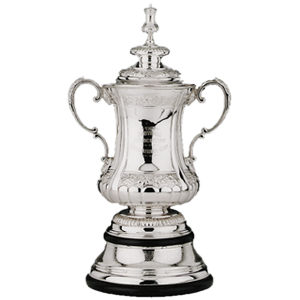
Crystal Palace win the FA Cup for the first time
Palace beat Manchester City 1–0 in the Wembley final.
Eberechi Eze scores from Daniel Muñoz’s delivery and Dean Henderson saves an Omar Marmoush penalty. Oliver Glasner’s team end the wait for a first FA Cup triumph and earn qualification for a major UEFA competition.
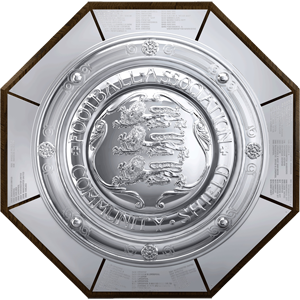
Palace also win the Community Shield
2:23:2 on pensPalace and Liverpool draw 2–2 after 90 minutes.
The Eagles win the shootout 3–2, with Justin Devenny converting the decisive kick. There is no extra time. A first Community Shield follows the FA Cup triumph.
CAS confirms the move to the Conference League
The Court of Arbitration for Sport dismisses Palace’s appeal against UEFA’s decision.
Under the multi-club ownership rules, Lyon retain the Europa League place while Palace move to the Conference League. A European campaign remains possible, but in a different competition from the one initially earned.
A first Conference League victory
Jean-Philippe Mateta’s goal gives Palace a 1–0 win over Fredrikstad.
The Eagles play the first leg of the Conference League play-offs at Selhurst Park and establish a narrow advantage. Earlier Intertoto matches remain part of their European background; this is their debut in the present UEFA competition.

Relegated after eight Premier League years
Crystal Palace’s 0–0 draw with West Ham United mathematically confirmed Wolves’ relegation on 20 April. West Ham had 33 points; with five matches left Wolverhampton could reach at most 32.
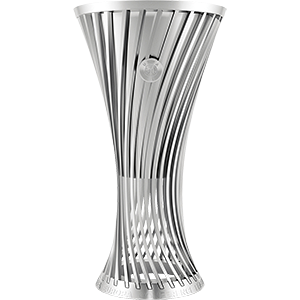
The first European title
Palace beat Rayo Vallecano 1–0 in the Conference League final.
Jean-Philippe Mateta scores the decisive goal in Leipzig. At the end of Oliver Glasner’s tenure, the club win their first European trophy and crown their first Conference League campaign.
Pierre Sage succeeds Glasner
Pierre Sage is appointed Crystal Palace manager.
The French coach inherits a side facing new European challenges after their recent cup successes. His appointment begins the next sporting phase after Glasner’s trophy-winning tenure.