The history of Brighton & Hove Albion
Milestones and background from the club's history, in chronological order.
Categories
Competitions
Nicknames through the years Three names tell a story of near misses, late goals and an unbeaten season. Read the storiesClose the stories
1900–1909
Founded at the Seven Stars
John Jackson establishes the club at a meeting in the Seven Stars on Ship Street.
The initial name Brighton & Hove United becomes Brighton & Hove Albion before the first match. Earlier local clubs were separate organisations.

Eight goals in a lost test match
Brighton & Hove Albion beat Watford 5–3 in the Southern League status test match at West Ham’s Memorial Grounds. Watford returned to the Second Division.

The Western title is retained
The final against Brighton initially ended 1–1 at the Boleyn Ground. Millwall won the replay 2–1 to retain the Western League championship.
1910–1919
The first Southern League title
Brighton beat direct rivals Swindon 3–1 to secure the Southern League First Division championship.
Jack Robson’s team win their first league title. The Southern League operated outside the Football League, so this was not a Football League First Division championship.
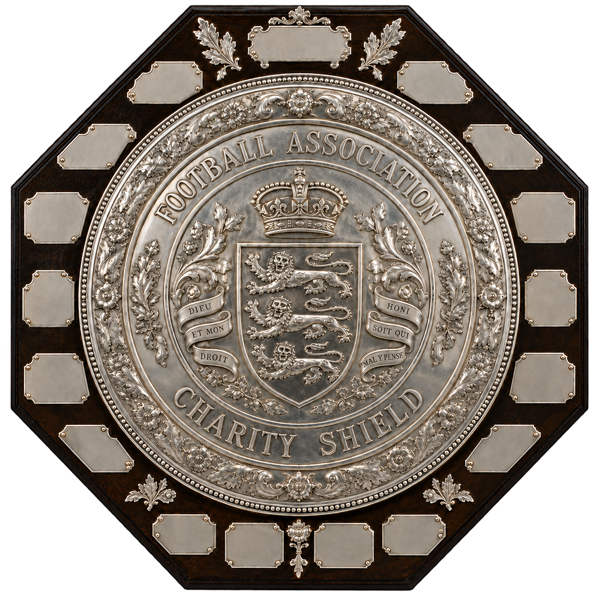
Charlie Webb settles the Charity Shield
Southern League champions Brighton beat Football League champions Aston Villa 1–0.
Charlie Webb scores the decisive goal at neutral Stamford Bridge. The Charity Shield brings the club its first national trophy, and the champions’ meeting explains the local description “Champions of England”.
The move across the Thames
Millwall opened the Den in New Cross with a 1–0 defeat by Brighton. After a quarter-century on the Isle of Dogs, the club moved south of the Thames. The new ground remained its home until 1993.

1920–1929
Albion join the Football League
Brighton join the Football League’s new Third Division.
The competition incorporates many Southern League clubs; its southern section becomes explicitly known as Third Division South in 1921. The organisational change is not a sporting promotion.
A First Division side falls at the Goldstone
Brighton beat Oldham Athletic 4–1 in the FA Cup.
Their first Football League season brings an early cup success against First Division opponents, helping establish Albion’s reputation as difficult cup opposition.

Champions and a first promotion to Division Two
 Crystal Palace1:0
 Brighton & Hove AlbionFootball League Third Division South Match 1 · May 4, 1929 · Location: London Stadium: Selhurst Park
 Walsall0:2Charlton AthleticFootball League Third Division South Match 2 · May 4, 1929 · Location: Walsall Stadium: Fellows Park
A 2–0 win at Walsall brought the Third Division South championship and a first promotion to Division Two. Crystal Palace beat Brighton 1–0 on the same day. With both clubs on 54 points, Charlton’s better goal average decided the title.
A win was worth two points, and tied clubs were separated by goals scored divided by goals conceded. Charlton’s 86–60 record produced a higher ratio than Palace’s 83–62. The title was decided on the final day.

1930–1939
Eleven matches in one FA Cup campaign
After a 2–2 draw at the Goldstone Ground, Brighton lose the replay at West Ham 8–2.
The run ends in the fifth round. Starting in qualifying and playing several replays, Albion contest eleven matches in this single cup campaign.

The first Football League championship
Brentford FC2:1Brighton & Hove AlbionFootball League Third Division South Match 1 · April 26, 1933 · Location: London Stadium: Griffin Park Exeter City0:0
 AldershotFootball League Third Division South Match 2 · April 26, 1933 · Location: Exeter Stadium: St James Park
A 2–1 win over Brighton & Hove Albion secures the Third Division South title and promotion.
Exeter draw 0–0 with Aldershot on the same day. Under the two-points system, Brentford have 59 points and Exeter can now reach at most 58. Three more matches remain, but the outcome is settled. Jack Holliday’s goals and Harry Curtis’s work take the club into the second tier for the first time.

1940–1949
An air raid destroys the North Stand
An air raid destroys the Goldstone Ground’s North Stand in August.
War interrupts the regular league programme and damages Albion’s home. The subsequent rebuilding forms part of the return to regular football.

Billy McCandless leads the return
A 2–0 win at Brighton & Hove Albion secures the Third Division South title and promotion for Swansea Town. Their 59 points are beyond Reading’s maximum of 56. Billy McCandless leads the Swans back into the Second Division.
The championship season finishes with 65 points and 99 goals. It opens a lengthy Second Division spell in which talents such as Ivor Allchurch and Cliff Jones shape both Swansea and Welsh football.
1950–1959

Scott Duncan takes Ipswich up for the first time
 Newport County1:2Ipswich TownFootball League Third Division South Match 1 · April 26, 1954 · Location: Newport Stadium: Somerton Park
 Crystal Palace1:1Brighton & Hove AlbionFootball League Third Division South Match 2 · April 28, 1954 · Location: London Stadium: Selhurst Park
The 2–1 win at Newport had taken Ipswich to 62 points.
Brighton’s 1–1 draw at Crystal Palace then limited its maximum to 61, mathematically confirming the championship and Ipswich’s first second-tier promotion.

Leyton Orient’s defeat secures the title
Brighton’s 1–0 win over Leyton Orient made Bristol City champions and secured promotion while City had no match that day. The final record included thirty wins.
Thorne’s five goals deliver a first Football League title
Adrian Thorne scores five goals in a 6–0 win over Watford.
One point would have secured the Third Division South championship; victory confirms both the title and promotion to the Second Division. After 38 Football League years, Albion reach the second tier for the first time.


1960–1969
Rebuilding culminates in the Fourth Division title
A 3–1 victory over Darlington in Albion’s final league fixture secures the championship and promotion.
It marks recovery after relegations in 1962 and 1963. Oxford and York have already completed their fixtures, so the win settles the remaining title contest.

Ray Henderson makes substitution history
Ray Henderson replaced the injured Ian Butler at Brighton and scored the winner in a 2–1 victory.
He became the Football League’s first substitute to score. The match was played at the Goldstone Ground in Hove.

1970–1979
The deciding point against Rochdale
A 1–1 draw against Rochdale secures a return to the Second Division.
Albion need the point for mathematical certainty under the two-point system. Pat Saward’s team finish second in the Third Division; their earlier goal advantage alone did not guarantee promotion.
Clough’s team lose 8–2 at home
Brian Clough’s brief tenure brings an exceptionally heavy home defeat to Bristol Rovers.
Appointing Derby’s former championship-winning manager does not produce the hoped-for immediate revival. Peter Taylor stays after Clough leaves and contributes to the subsequent rebuilding.
The Palace chants establish the Seagulls
Sammy Morgan scores both goals in a 2–0 win over Crystal Palace.
Brighton supporters answer chants of “Eagles” with “Seagulls”. The nickname takes hold, replacing the short-lived Dolphins identity, and a seagull crest follows in 1977.
Seven goals after half-time
After a goalless first half, Albion beat Walsall 7–0.
Peter Ward scores four and Ian Mellor three. Their extraordinary attacking partnership becomes a defining feature of the team’s journey back to the second tier.
Mullery takes Albion back up
A 3–2 victory over Sheffield Wednesday secures promotion to the Second Division before the last two away fixtures.
Alan Mullery takes forward the side Peter Taylor helped build, with Peter Ward’s goals symbolising Albion’s revival.
Into the top flight for the first time
Brighton win 3–1 at Newcastle on the final day to secure the required promotion place.
After almost eight decades, Albion reach the First Division for the first time. Mullery’s team complete a rise from the third tier to the top flight within three seasons.
A first top-flight away win ends Forest’s run
Gerry Ryan’s goal brings a 1–0 victory at reigning European champions Nottingham Forest.
Albion record their first First Division away win and end Forest’s 49-match unbeaten home league run. The result helps the newcomers establish themselves.




1980–1989

The championship era ends in relegation
 Everton FC2:0
 Southampton FCFootball League First Division Match 1 · April 26, 1980 · Location: Liverpool Stadium: Goodison Park
 Stoke City1:0
 Brighton & Hove AlbionFootball League First Division Match 2 · April 26, 1980 · Location: Stoke-on-Trent Stadium: Victoria Ground
Everton’s win over Southampton and Stoke’s victory over Brighton made Derby’s relegation certain. Five years after its second championship County lost its top-flight place. The club had to rebuild in the Second Division.

Four other results confirm relegation
Birmingham, Leeds, West Bromwich Albion and Sunderland won their matches. Together these results confirmed Middlesbrough’s relegation. Boro’s own win at Swansea that day could no longer prevent a return to the second tier.
Victory at Highbury brings a first cup final
Brighton beat Sheffield Wednesday 2–1 at neutral Highbury.
Jimmy Case and Michael Robinson score, sending Albion into their first FA Cup final while the team are battling relegation in the league.
Four top-flight years end against Manchester City
A 1–0 home defeat to Manchester City confirms relegation from the First Division.
Albion return to the Second Division after four seasons. Their place in the FA Cup final remains, with the Wembley matches still to come later in May.
Manchester United win the replayed final
Following a 2–2 draw after extra time on May 21, Brighton lose the replay 4–0.
Gordon Smith and Gary Stevens score in the first match, and Smith’s late chance goes begging. Albion are FA Cup runners-up rather than winners. Both matches take place at the old Wembley.
Nelson’s goal completes the return
Kevin Bremner and Garry Nelson score in a final-day 2–1 victory over Bristol Rovers.
Barry Lloyd’s side return to the Second Division immediately after relegation, with Nelson’s decisive goal completing a prolific season.




1990–1999

Brighton stops the promotion bid
 Brighton & Hove Albion4:1Millwall FCFootball League Second Division – Play-offs First leg · May 19, 1991 · Location: Hove Stadium: Goldstone GroundMillwall FC1:2Brighton & Hove AlbionFootball League Second Division – Play-offs Second leg · May 22, 1991 · Location: London Stadium: The Den
Millwall lost the play-off semi-final 4–1 at Brighton and 2–1 at the Den. Despite Teddy Sheringham’s 38 goals in all competitions that season, promotion back to the First Division did not follow.
Notts County block the route to the First Division
Brighton lose the play-off final at the old Wembley 3–1 to Notts County.
Dean Wilkins scores only a consolation. The play-off campaign ends without promotion; Albion remain in the Second Division.
Fans United stands against the threat of extinction
Supporters of many clubs gather at the Goldstone Ground in solidarity.
Brighton beat Hartlepool 5–0, with Craig Maskell scoring a hat-trick. Amid the existential crisis over the ground’s sale and league survival, the day demonstrates the force of collective supporter action.
Storer scores the last Goldstone goal
Stuart Storer scores the only goal against Doncaster in the final match at the Goldstone Ground.
Following the sale, Albion must leave their long-standing home and subsequently play in Gillingham. Victory keeps their survival hopes alive, but league status is not decided until Hereford.
Reinelt’s goal preserves Football League status
Robbie Reinelt equalises in a 1–1 draw at Hereford United.
Albion need the point and finish above Hereford because goals scored are the deciding criterion for tied points that season. Survival comes a week after leaving the Goldstone, with the challenge of life without a permanent home ahead.

Promotion on the final day
Lincoln City beats Brighton & Hove Albion 2–1 to reach 75 points. Torquay United’s 2–1 defeat at Leyton Orient leaves it on 74, giving the Imps the final automatic promotion place in the Third Division.
Six goals mark the return to Brighton
After two seasons at Priestfield in Gillingham, Albion play their first league fixture at Withdean Stadium.
A 6–0 win over Mansfield and Darren Freeman’s hat-trick give the return a memorable opening. The athletics stadium remains their temporary home until 2011.


2000–2009
Promotion begins the sporting revival
 Hartlepool United0:1
 Hull CityFootball League Third Division Match 2 · April 14, 2001 · Location: Hartlepool Stadium: Victoria Park
Paul Brooker and Bobby Zamora score in a 2–0 victory at Plymouth.
Brighton reach 81 points. Hartlepool’s 1–0 defeat to Hull limits their maximum to 80, while Rochdale’s draw at Macclesfield limits theirs to 79, confirming promotion. Four years after the threat of extinction, Micky Adams takes the club back up; the championship is not yet conclusively settled.
With the deduction, Albion are already beyond reach
A 4–1 win over Macclesfield puts Brighton beyond reach after Chesterfield’s nine-point deduction.
An appeal against the sanction is still pending. This is the earlier table decision under the standing deduction; unconditional sporting confirmation follows against Chesterfield.
The title is secure even without Chesterfield’s deduction
Danny Cullip scores the only goal against Chesterfield.
Brighton are now more than three points ahead even before the rivals’ deduction, with Chesterfield having only one match left. The Third Division championship is therefore unconditionally secured, whatever happens to the pending appeal.

Le Tissier’s farewell goal at The Dell
Matt Le Tissier’s late goal gave Southampton a 3–2 victory over Arsenal in The Dell’s last league match. A week later the final friendly also ended in victory, with Uwe Rösler scoring the only goal against Brighton & Hove Albion.
Back-to-back championships and promotions
 Brighton & Hove Albion0:0
 Swindon TownFootball League Second Division Match 1 · April 13, 2002 · Location: Brighton Stadium: Withdean Stadium
 Reading FC2:2
 Peterborough UnitedFootball League Second Division Match 2 · April 13, 2002 · Location: Reading Stadium: Madejski Stadium
A goalless draw against Swindon takes Brighton to 87 points.
Reading draw 2–2 with Peterborough and can reach only 86; Brentford’s 0–0 draw at QPR limits them to 85. Together, the results secure the title and promotion to the First Division.

Return to the Premier League
A 2–0 home win over Brighton & Hove Albion on 19 April 2003 secured Leicester City’s immediate return to the Premier League. Despite administration the club finished second in the First Division.

The fall into the third tier
A 1–1 draw at Brighton was not enough for Wednesday. Stoke’s win at Coventry ended the remaining chance of survival and confirmed relegation.
The draw at Grimsby is not enough for survival
 Stoke City1:0Reading FCFootball League First Division Match 2 · May 4, 2003 · Location: Stoke-on-Trent Stadium: Britannia Stadium
Brighton finish the season with a 2–2 draw at Grimsby.
Stoke simultaneously beat Reading 1–0 to stay in the First Division. Albion return to the third tier after one season, with the final results confirming relegation for the first time.
Virgo forces the penalty shoot-out
 Brighton & Hove Albion1:2a.e.t. · 4:3 on pensSwindon TownFootball League Second Division Second leg · May 20, 2004 · Location: Brighton Stadium: Withdean Stadium
After winning 1–0 at Swindon, Albion lose the return leg 2–1 after extra time.
Adam Virgo’s late goal makes the aggregate score 2–2. Brighton win the shoot-out 4–3 to reach the play-off final; promotion itself is still undecided.
Knight’s penalty settles the Cardiff final
Leon Knight converts the deciding penalty in a 1–0 win over Bristol City.
Brighton win the play-off final at the neutral Millennium Stadium to enter the second tier. It is their third promotion in four seasons, rather than another league championship.

A second successive relegation
A 2–1 home defeat by Brighton & Hove Albion confirmed relegation to League Two, Luton’s second successive drop.
Manchester City fall in a shoot-out
Albion hold Manchester City to 2–2 after extra time in the League Cup and win the shoot-out 5–3.
The small Withdean hosts a memorable cup night against higher-division opposition.
Tony Bloom secures the stadium funding
Tony Bloom takes a majority stake and succeeds Dick Knight as chairman.
His funding enables the new stadium at Falmer. The ownership change links financial stability with the end of the long search for a permanent home.






2010–2019
A 4–3 win secures Championship promotion
Brighton fall behind twice against Dagenham & Redbridge.
Liam Bridcutt and Ashley Barnes turn the match into a 4–3 victory and secure promotion to the Championship. Gus Poyet’s team achieve their first objective, with the title following four days later.
The League One title follows at Walsall
A 3–1 victory at Walsall makes Brighton League One champions four days after promotion.
The title is secured with four league fixtures remaining. Their successful final Withdean season takes Albion into the new stadium as champions.
The new home opens against Tottenham
2:3The official opening match at the American Express Community Stadium ends in a 3–2 defeat to Tottenham.
The friendly marks the move from Withdean to a permanent new home at Falmer. After fourteen years without their own stadium, Albion regain a lasting centre.
Buckley turns around the first Amex league match
Will Buckley scores both goals in a 2–1 win over Doncaster.
His late double turns around the first league fixture at the new stadium. Doncaster had also been the opponents in the last Goldstone match in 1997; now they share the opening of a new home chapter.

Zaha decides the derby at Brighton
0:00:2Football League Championship Second leg · May 13, 2013 · Location: Brighton and Hove Stadium: Amex StadiumWilfried Zaha scores both goals in the 2–0 play-off semi-final second-leg victory at Brighton.
After a goalless first leg, his double sends Palace to the Wembley final. Victory at their rivals becomes a defining match of the promotion season.

A late goal costs promotion
Brighton & Hove Albion1:2Derby CountyFootball League Championship Match 1 · May 8, 2014 · Location: Brighton Stadium: American Express Community StadiumDerby County0:1 Queens Park RangersFootball League Championship Match 3 · May 24, 2014 · Location: London Stadium: Wembley Stadium Neutral venue
Derby beat Brighton 2–1 and 4–1 in the semi-final. County could not score against ten-man Queens Park Rangers in the Wembley final. Bobby Zamora’s late winner gave QPR a 1–0 victory and ended Derby’s promotion hopes.

Three results secure a Premier League place
Brighton & Hove Albion0:2Watford FCFootball League Championship Match 1 · April 25, 2015 · Location: Brighton Stadium: American Express Community Stadium Rotherham United1:1
 Norwich CityFootball League Championship Match 3 · April 25, 2015 · Location: Rotherham Stadium: New York Stadium
Watford won 2–0 at Brighton. Fulham’s 4–3 victory over Middlesbrough FC and Norwich’s 1–1 draw at Rotherham made automatic promotion certain, taking Slaviša Jokanović’s side back to the Premier League after eight years.

Straight back to the Premier League
Brighton and Derby drew 1–1. Sam Vokes then scored in Burnley’s 1–0 win over QPR to secure an immediate return. The remaining match between Brighton and Middlesbrough could no longer push the club out of the top two.
One goal short of automatic Premier League promotion
A final-day 1–1 draw at Middlesbrough is not enough for automatic promotion.
Both sides finish on 89 Championship points, with Middlesbrough ahead on goal difference. Brighton must enter the play-offs, missing the direct route to the top flight.
Sheffield Wednesday end the second route to promotion
Sheffield Wednesday2:0Brighton & Hove AlbionFootball League Championship First leg · May 13, 2016 · Location: Sheffield Stadium: Hillsborough StadiumBrighton & Hove Albion1:1Sheffield WednesdayFootball League Championship Second leg · May 16, 2016 · Location: Brighton Stadium: American Express Community StadiumAfter a 2–0 defeat at Hillsborough, Brighton manage only a 1–1 home draw.
Sheffield Wednesday win the play-off semi-final 3–1 on aggregate. A strong Championship season therefore ends without promotion, as their second route to the Premier League is closed.
The Derby result finally confirms promotion
Brighton & Hove Albion2:1 Wigan AthleticEFL Championship Match 1 · April 17, 2017 · Location: Brighton Stadium: American Express Community Stadium
Brighton beat Wigan 2–1 to reach 92 points.
Huddersfield’s later 1–1 draw at Derby limits their maximum to 90, finally confirming promotion. Albion return to the top flight after 34 years and qualify for the Premier League for the first time.

The Championship title on the final day
Newcastle United3:0 Barnsley FCFootball League Championship Match 1 · May 7, 2017 · Location: Newcastle upon Tyne Stadium: St James' Park1:1
Newcastle beat Barnsley while Brighton could only draw at Aston Villa.
Benítez’s team overtook Brighton on the final day and won the Championship with 94 points.
The Premier League debut against Manchester City
0:2Brighton’s first Premier League fixture ends in a 2–0 defeat to Manchester City.
The new top-flight era begins at the Amex. This is a debut in the Premier League founded in 1992, rather than Albion’s first-ever top-flight match.
Gross leads Brighton to their first Premier League win
Pascal Gross scores twice and sets up Tomer Hemed’s goal in a 3–1 victory over West Bromwich Albion.
Brighton win in the Premier League for the first time, giving Chris Hughton’s promoted team valuable early points and confidence.
Victory over United secures survival
1:0Pascal Gross scores the only goal against Manchester United.
Brighton reach 40 points and secure Premier League survival before their last two fixtures. Their first season in the modern top division achieves its decisive objective.

Brighton overturns the cup quarter-final
Millwall led Brighton 2–0 but conceded an equaliser. After the 2–2 draw and goalless extra time, Brighton won the shoot-out 5–4.
Manchester City stop the cup run in the semi-final
1:0Brighton lose the FA Cup semi-final to Manchester City 1–0 at the new Wembley.
Gabriel Jesus scores early, and Albion remain competitive without reaching a second final. Their hopes of another final end here.

English champions 2018/19
1:4The displayed results made the season’s decision definitive for the first time.
Wins were worth two points before 1981; goal average separated tied teams through 1975/76. Any preceding City fixture retains its actual date.




2020–2029
Trossard’s hat-trick on De Zerbi’s debut
Leandro Trossard scores all three Brighton goals in a 3–3 draw at Liverpool.
Roberto De Zerbi’s first match as head coach brings a point at Anfield, with the Belgian defining a memorable start to the new era.

Third-tier Charlton knocks Brighton out of the League Cup
After a goalless 90 minutes, Charlton won the shoot-out against Brighton 4–3. Ashley Maynard-Brewer saved Moisés Caicedo’s effort and Sam Lavelle converted the decisive penalty. Charlton reached the League Cup quarter-finals.
European football is certain for the first time
Evan Ferguson scores twice in a 3–1 win over Southampton.
On 61 points, Brighton cannot finish outside the top seven and qualify for Europe for the first time. A Europa League place is not yet mathematically certain because Aston Villa can still draw level.
Enciso’s goal finally secures the Europa League
1:1Julio Enciso’s long-range strike earns a 1–1 draw against Manchester City.
Brighton reach 62 points, while Aston Villa can achieve only 61. Sixth place and entry to the Europa League group stage are now certain, three days after general European qualification.

European qualification on the final day
Villa beat Brighton 2–1 to secure seventh place, with Douglas Luiz and Ollie Watkins scoring.
The win guaranteed entry to the Conference League play-offs and ended a long absence from Europe. The deciding fixture is correctly identified as a Premier League match.
AEK are the opponents for the first European fixture
Brighton lose their first-ever European fixture to AEK Athens 3–2.
João Pedro converts two penalties, but AEK score a late winner. Albion’s European journey begins in the Europa League group stage.
The first European victory comes against Ajax
João Pedro and Ansu Fati score in a 2–0 victory over Ajax.
Brighton win in Europe for the first time and improve their group position. The team can now renew their hopes of progressing.
João Pedro sends Albion through as group winners
João Pedro’s late goal settles a 1–0 win over Marseille.
Brighton overtake their direct rivals to finish their first Europa League group as winners. Winning the group brings direct entry to the round of 16, rather than a separate European trophy.
The home win is not enough against Roma
1:0UEFA Europa League Second leg · March 14, 2024 · Location: Brighton Stadium: American Express StadiumAfter a 4–0 defeat in Rome, Albion win the round-of-16 return leg 1–0.
Danny Welbeck scores the only goal, but Roma advance 4–1 on aggregate. Brighton’s first Europa League season ends in the round of 16, as their successful group campaign ends against their first knockout opponents.
Fabian Hürzeler takes charge
Thirty-one-year-old Fabian Hürzeler is appointed head coach.
Following promotion with St. Pauli, he succeeds Roberto De Zerbi at Brighton. The appointment begins the next chapter for the now-established Premier League club.

Cole Palmer scores four before half-time
Cole Palmer scored all four Chelsea goals before half-time in the 4–2 win over Brighton.
He became the first player to score four goals in the first half of a Premier League match. His creativity and finishing helped shape the revival under Maresca.

Seven goals against Brighton
7:0Forest beat Brighton 7–0 at the City Ground on February 1, 2025. Chris Wood scored a hat-trick, with Morgan Gibbs-White, Neco Williams and Jota Silva also on target after an own goal opened the scoring.
A week after losing 5–0 at Bournemouth, Nuno Espírito Santo’s team responded with one of their largest Premier League victories.

A win opens the new competitive home
2:0Everton won the first competitive match at Hill Dickinson Stadium 2–0 against Brighton & Hove Albion.
Iliman Ndiaye and James Garner scored, Jordan Pickford saved a penalty and Jack Grealish supplied both assists. The men’s first team began life at its new Bramley-Moore Dock home.

Seventh place brings the Europa League
1:10:32:1A 2–1 win over Chelsea FC, together with the necessary parallel results, secured seventh place and Europa League qualification.
Brentford FC drew 1–1 at Liverpool FC, while Brighton lost 3–0 to Manchester United. Following promotion, Sunderland qualified for Europe for the first time since its 1973 cup triumph. These matches were Premier League fixtures.

Third place and Fernandes’ assist record
0:3The away victory at Brighton completed United’s season in third place.
Bruno Fernandes reached 21 Premier League assists, setting a single-season record. Champions League qualification had already been secured.
125 years of Albion and a new Amex record
3:0Brighton beat Arsenal 3–0 in the official anniversary fixture.
An attendance of 31,944 sets a new Amex record, with the team wearing a special kit inspired by their first shirt in 1901. The day links the founding story to the enlarged home following the North Stand redevelopment.