The history of Arsenal FC
Milestones and background from the club's history, in chronological order.
Categories
Competitions
Nicknames through the years Three names tell a story of near misses, late goals and an unbeaten season. Read the storiesClose the stories
1880–1889
Dial Square: the first match
The workers’ team from Woolwich wins its first match 6–0 against Eastern Wanderers.
David Danskin and his colleagues work at the Royal Arsenal armaments factory; Dial Square is the name of one of its workshops. The match takes place across the Thames on the Isle of Dogs. This team becomes Arsenal Football Club. Royal Arsenal is in use by January 1887, although the traditional account of a Christmas Day renaming cannot be established conclusively.


1890–1899
Royal Arsenal turns professional
Royal Arsenal adopts professional football.
The decision helps retain players being courted by professional clubs and creates a divide with parts of the local amateur game. The name Woolwich Arsenal follows in 1893; it should not be backdated to 1891.
London’s first Football League club
Woolwich Arsenal begins its first Football League season with a 2–2 draw against Newcastle United.
Admission to the Second Division makes the club the league’s first London member. The operating company established in 1893 and the return to the Manor Ground mark a new stage of its professional development.

A new home at Sincil Bank
The first Football League match at Sincil Bank ends in a 1–1 draw with Woolwich Arsenal. A friendly against Gainsborough Trinity had already inaugurated the new ground.

Second-tier championship and promotion 1898/99
The first Second Division championship took City into the top flight for the first time.
The contemporary two-point system and the challengers’ results are accounted for.


1900–1909

A first Second Division championship
A 2–1 win over Woolwich Arsenal also secures the Second Division championship for West Bromwich Albion. Their 53 points cannot be caught before their final match. The already confirmed promotion now comes with a title.
First promotion to the First Division
A goalless home draw with Burslem Port Vale secures Woolwich Arsenal’s first promotion to the top division.
Arsenal reaches 49 points, beyond Manchester United’s maximum of 48, and finishes second behind Preston North End. The opponent is the Burslem Port Vale club that ceased playing in 1907, distinct from the future Port Vale then known as Cobridge Church.
1910–1919
The club is rescued financially
Woolwich Arsenal faces a financial crisis and is rescued through the involvement of Henry Norris and William Hall.
The old operating company is wound up and a new company takes over the football business and assets. This is sporting continuity through a new legal vehicle, rather than an unchanged company surviving throughout.

An away win cannot prevent relegation
 Everton FC1:1
 Middlesbrough FCFootball League First Division Match 3 · April 16, 1910 · Location: Liverpool Stadium: Goodison Park
Bolton won 2–1 at Bury but could reach only 28 points. Bristol’s 1–0 win over Chelsea, Middlesbrough’s 1–1 draw at Everton and Tottenham’s 1–1 draw with Arsenal left no route to survival.
Chelsea and Tottenham still had to play each other. Both could therefore not finish at or below Bolton’s maximum of 28 points. Wanderers’ own victory could not prevent an immediate return to the Second Division.
The only relegation from the top flight
The home defeat to Derby County and Chelsea FC’s win over Tottenham Hotspur make relegation mathematically certain.
Woolwich Arsenal can now reach only 20 points, while Chelsea FC already has 24. The club’s first spell in the top division ends; this remains Arsenal’s only relegation from England’s top flight.
From Woolwich to Highbury
Woolwich Arsenal wins its first home match at Highbury 2–1 against Leicester Fosse.
George Jobey scores Arsenal’s first goal at the new ground and Andy Devine supplies the winner. Moving from south-east London to Islington permanently changes the club’s home and surroundings. Highbury remains Arsenal’s ground until 2006.
Woolwich disappears from the club’s name
Following the move to north London, Woolwich Arsenal becomes Arsenal Football Club.
The company name registered in 1914, The Arsenal Football and Athletic Company Limited, is distinct from the football team’s name. The familiar expression The Arsenal does not establish a separate formal naming phase for the team.

Arsenal beaten in the London final
Millwall beat Arsenal 2–1 in the London Challenge Cup final. The 1914–15 final was played at the Den in December.
Back in the First Division through election
The Football League elects Arsenal, with 18 votes to Tottenham’s eight, to the First Division as it expands to 22 clubs.
The return is an administrative decision rather than the result of a promotion play-off. Arsenal has remained in England’s top division continuously since league football resumed in 1919.



1920–1929

Relegation from the top flight 1921/22
After the war United failed to recover the success of the early years.
The draw at Oldham and the rivals’ results confirmed relegation; the team subsequently finished bottom.
Herbert Chapman begins his era
Herbert Chapman takes charge of Arsenal and shapes its rise into a leading English club.
Tactical work, systematic preparation and professional organisation transform the team. His era also becomes associated with Highbury’s development and the club’s distinctive identity.

A first FA Cup semi-final
A 2–1 win over Arsenal at the Vetch Field sends Swansea Town into their first FA Cup semi-final. A 3–0 defeat by Bolton Wanderers at White Hart Lane ends the run. The newly promoted Second Division club have also made their mark in the national cup.
Frank Eley and Jack Fowler score against Arsenal. In the semi-final Swansea concede three goals inside the opening 25 minutes. Their first Second Division season nevertheless ends with a fifth-place finish.
A football match goes live on the radio
The 1–1 draw with Sheffield United becomes the first league football match broadcast live on British radio.
The BBC uses a numbered pitch grid to help listeners follow the action from Highbury. Arsenal is part of an early transformation in football coverage.
Defeat in the first FA Cup final
Arsenal loses its first FA Cup final 1–0 to Cardiff City.
Hughie Ferguson’s effort settles the match when goalkeeper Dan Lewis cannot hold the ball. Cardiff becomes the first, and still the only, Welsh club to win the trophy.
Dixie Dean reaches 60 league goals
Dixie Dean scored a hat-trick in the 3–3 draw with Arsenal to finish the season with 60 league goals.
The extraordinary record reflected both his finishing and the supply from teammates, particularly Alec Troup. Everton had secured the championship three days earlier.


1930–1939

A first FA Cup semi-final
Hull City reached the FA Cup semi-finals for the first time in 1930.
A 2–2 draw with Arsenal at neutral Elland Road required a replay. Arsenal won 1–0 at Villa Park, ending Hull’s deepest cup run up to that point.
The first major national trophy
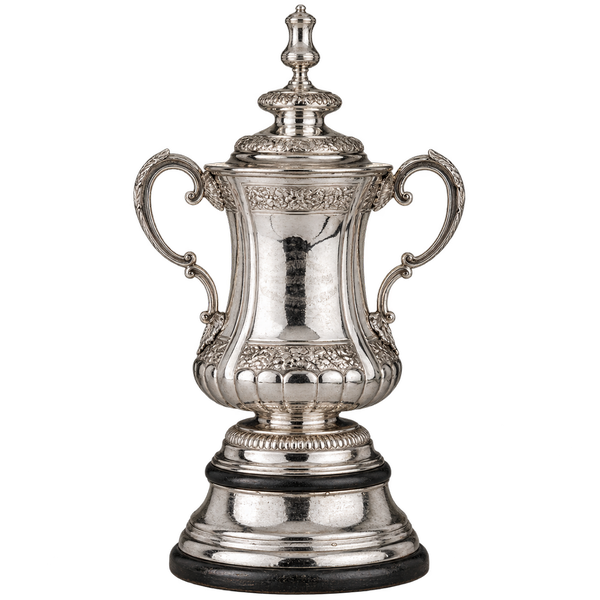
Arsenal wins the FA Cup with a 2–0 victory over Huddersfield Town.
Alex James and Jack Lambert score against Chapman’s former club. Three years after defeat in its first final, Arsenal begins the great trophy-winning era of the 1930s.
English champions for the first time
A 3–1 victory over Liverpool FC secures Arsenal’s first English league championship.
Herbert Chapman’s side settles the title race before the final round of matches. The championship follows the previous year’s FA Cup and confirms the club’s emergence among England’s leading teams.

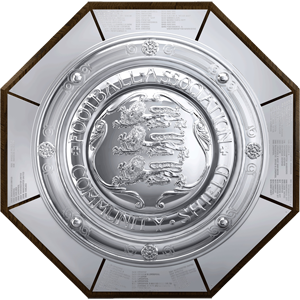
Arsenal win the Charity Shield
West Bromwich Albion lose the Charity Shield 1–0 to Arsenal at Highbury. After an exceptional spring of cup success and promotion, another trophy proves beyond reach. The London league champions win by the narrowest margin.

The controversial cup victory over Arsenal
Jack Allen scored both Newcastle goals.
Before the equaliser, the ball appeared to have crossed the goal line before Jimmy Richardson’s cross. The goal stood, and Newcastle won its third FA Cup.
White sleeves become a trademark
Against Liverpool FC, Arsenal wears red shirts with white sleeves for the first time.
The match is lost 1–0, but the new appearance becomes an enduring symbol of the Gunners. The design is associated with Herbert Chapman’s wish for an instantly recognisable team.
Remembering Herbert Chapman
Herbert Chapman dies of pneumonia at the age of 55.
His death affects a club whose sporting and organisational development he has profoundly shaped. Arsenal continues his work under Joe Shaw and then George Allison; his memory remains visible through his bust and, later, the statue at Emirates Stadium.
Charity Shield 1934: Defeat in the final
City lost the final against Arsenal.
The result was 0–4. Reaching the final did not produce a trophy.

A record crowd of 82,905 against Arsenal
The 1–1 draw with Arsenal attracted 82,905 spectators to Stamford Bridge.
It remains the club’s official record attendance. The crowd demonstrated Chelsea’s appeal long before its later international trophies.

Neil Dewar wins the Charity Shield
Neil Dewar’s goal gave Wednesday a 1–0 win over Arsenal FC at Highbury. The FA Cup holders defeated the league champions to take the Charity Shield.
Ted Drake scores seven goals
Ted Drake scores every Arsenal goal in a 7–1 win at Villa Park.
Seven goals by one player in an English top-flight match constitute an exceptional record. The performance also illustrates the attacking strength of a club that wins five league championships during the 1930s.
Ted Drake decides the second cup triumph
Arsenal beats Sheffield United 1–0 in the FA Cup final.
Ted Drake scores the only goal. Following three successive league championships from 1933 to 1935, a second FA Cup adds to the team’s achievements under George Allison.

The Charity Shield comes to Sunderland
English champions Sunderland beat FA Cup holders Arsenal FC 2–1 at Roker Park to win the Charity Shield.
The victory added another honour for Raich Carter’s team. The competition was then called the Charity Shield; the later Community Shield name does not describe this match.

A record 64,815 watch Arsenal defeated
The FA Cup quarter-final against Arsenal draws 64,815 spectators to The Hawthorns. West Bromwich Albion win 3–1. The match sets the ground’s attendance record and becomes a lasting image of its great cup afternoons.



1940–1949

Cup success in wartime football
After a 1–1 draw at Wembley, Preston wins the replay against Arsenal FC 2–1 at neutral Ewood Park. The Football League War Cup belongs to wartime football while regular national competitions are suspended.

The first Wembley final
Charlton’s first Wembley final ended in a 7–1 defeat to Arsenal. It was the southern wartime cup, played while regular competitions were suspended. Charlton would return to the same final venue a year later.

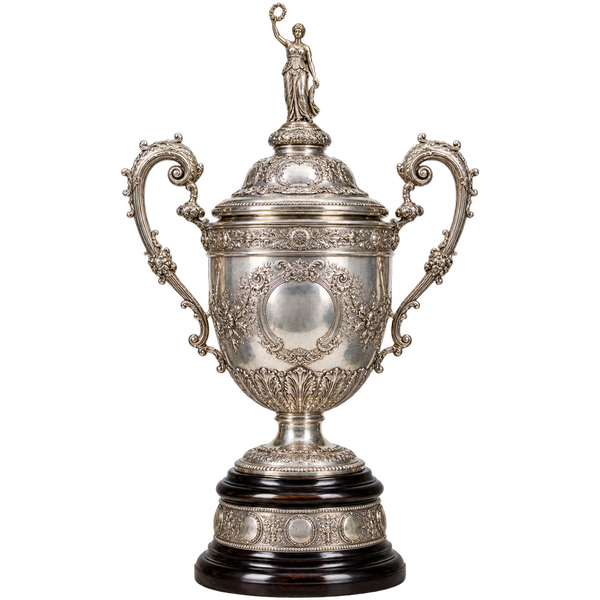
The win behind the Taça Arsenal
Porto beat the English champions 3–2 at Lima.
The friendly victory over Arsenal inspires an exceptional response. Supporters organise a collection for a monumental commemorative trophy: the Taça Arsenal, around three metres tall and weighing approximately 250 kilograms. It preserves the pride attached to the match and later becomes a centrepiece of the club museum.

Charity Shield final defeat 1948
United lost the final against Arsenal FC 3–4.The team was beaten in the final.
1950–1959
Reg Lewis brings the FA Cup to Highbury
Two goals from Reg Lewis secure the FA Cup against Liverpool FC.
Tom Whittaker’s team wins the Wembley final 2–0. After the war and the 1948 league championship, a third FA Cup continues Arsenal’s domestic success.
English champions 1951/52
Matt Busby won United’s first championship since 1911.
The 6–1 victory over Arsenal on the final day settled the season conclusively. The success linked experienced players such as Johnny Carey with the young talent Busby increasingly trusted.
George Robledo decides the successful defence
George Robledo’s header against Arsenal delivered a second successive FA Cup.
Arsenal played much of the game with ten men after Walley Barnes was injured, with substitutions not yet permitted.

57,893 spectators against Arsenal
A goalless league match against Arsenal drew 57,893 spectators to Ninian Park. It remained the largest attendance for a Cardiff City home match at the old ground.
Champions on goal average
Arsenal beats Burnley FC 3–2 in its final league match to become English champion for the seventh time.
Arsenal and Preston North End both finish on 54 points; goal average, the tie-breaker then in force, decides the championship in Arsenal’s favour. Modern goal difference and three-point scoring do not apply to this title race.

The long top-flight spell ends
A 3–1 defeat at Arsenal confirmed relegation. The top-flight spell dating from 1929 ended. Two decades outside the highest division followed.

Keep Right On becomes the Blues’ anthem
Alex Govan sang Harry Lauder’s Keep Right On on coach journeys during the FA Cup run. Team-mates and supporters joined in, and by the final the song had become an expression of the Blues’ solidarity.
The club’s account links the first renditions to the trip to Leyton Orient and its spread among supporters to the Arsenal quarter-final. The song has accompanied the club’s highs and lows ever since.
The long Seed and Bartram eras end
Sam Bartram made his 623rd and final competitive Charlton appearance in a 2–0 victory over Arsenal. Jimmy Seed’s 23-year managerial spell also ended that year. Two defining figures from the club’s most successful years departed.


1960–1969
European debut: seven goals in Copenhagen
Arsenal wins its first European match 7–1 against Stævnet.
Joe Baker and Geoff Strong each score a hat-trick. The Inter-Cities Fairs Cup opponent is a Copenhagen representative team, not FC Copenhagen, founded in 1992. The match is played at the old Idrætsparken; today’s Parken is a later stadium.

English league title number 6
Under Bill Shankly, Liverpool won its 6th English championship.
The 5–0 win over Arsenal made Liverpool English champions just two years after promotion. Liverpool now had 56 points, while the nearest challenger could finish with no more than 53.

Terry Cooper wins the first major trophy
Terry Cooper’s goal gave Leeds a 1–0 League Cup final victory over Arsenal.
It was the club’s first major domestic cup trophy. Success at the original Wembley confirmed the progress of Don Revie’s team and began a particularly successful year.
Swindon delivers Wembley disappointment
Arsenal loses the League Cup final 3–1 after extra time to Third Division side Swindon Town.
Don Rogers decides the match in extra time. Bertie Mee’s team suffers a major disappointment before its great achievements over the next two years.


1970–1979
A comeback brings the first European trophy
Arsenal wins the Inter-Cities Fairs Cup with a 3–0 victory over RSC Anderlechtois at Highbury.
After losing the first leg 3–1, goals from Eddie Kelly, John Radford and Jon Sammels turn the final around. The 4–3 aggregate victory delivers Arsenal’s first international trophy and ends a long spell without major silverware.
Champions at Tottenham Hotspur
Ray Kennedy’s late goal wins Arsenal the league title at White Hart Lane.
A 1–0 victory over Tottenham Hotspur settles the championship ahead of Leeds United. Winning at the north London rival’s ground gives the achievement particular significance for supporters.
Charlie George completes the first Double
Arsenal beats Liverpool FC 2–1 after extra time in the FA Cup final.
Eddie Kelly equalises and Charlie George scores the winner before celebrating on the turf. Five days after the league title, Bertie Mee’s team completes Arsenal’s first league and FA Cup Double.
First appearance in the European Cup
Arsenal begins its first European Cup campaign with a 3–1 victory over Strømsgodset.
The match takes place at Ullevaal Stadion in Oslo, rather than Strømsgodset’s usual home ground in Drammen. The 1971 league championship opens the club’s first route into this competition.

Allan Clarke wins the FA Cup for Leeds
Allan Clarke’s header gave Leeds a 1–0 FA Cup final victory over Arsenal.
After losing the finals in 1965 and 1970, the club won the competition for the first time. Don Revie’s team finally achieved a long-pursued ambition.

English champions for the first time
Liverpool drew 0–0 at Arsenal and Leeds lost 2–1 at Wolves. Only those two results confirmed Derby as English champions. County had already completed its league fixtures and followed the final decisions from afar.
Derby finished on 58 points. In five years Clough and Taylor had taken the club from the second tier to the national championship. The title also opened the way to the European Cup.

Arsenal’s win confirms Leeds as champions
Liverpool’s 1–0 home defeat by Arsenal confirmed Leeds’ second English championship.
United had reached 60 points with a 3–2 win over Ipswich, while Liverpool could now reach only 59. Revie’s side had begun the campaign with 29 unbeaten league matches.

Arsenal wins a close quarter-final
Wrexham lost their FA Cup quarter-final 3–2 to Arsenal. The Third Division side had also reached the League Cup last eight and was approaching its most successful league campaign.

Roger Osborne wins the FA Cup for Ipswich
Roger Osborne scored the only goal of the FA Cup final against Arsenal.
Bobby Robson’s team won the club’s first major cup trophy at the original Wembley Stadium.
The first UEFA Cup match
Arsenal beats 1. FC Lokomotive Leipzig 3–0 on its UEFA Cup debut.
The first home match in this competition takes place at Highbury. The opponent is the Leipzig club that adopts the name VfB Leipzig in 1991, distinct from today’s 1. FC Lokomotive Leipzig, newly founded in 2003.
The five-minute final
Alan Sunderland wins the FA Cup for Arsenal immediately after Manchester United draws level.
A 2–0 lead disappears late on before Sunderland scores the decisive goal for a 3–2 victory. The frantic finish becomes one of the most famous cup endings in Arsenal’s history.
Debut in the Cup Winners’ Cup
Arsenal wins its first Cup Winners’ Cup match 2–0 against Fenerbahçe.
The 1979 FA Cup victory opens this European route for the first time. As both league and cup winner in 1971, Arsenal had entered the European Cup instead.


1980–1989

A third FA Cup from the Second Division
West Ham United beat holders and favourites Arsenal 1–0 in the FA Cup final. Trevor Brooking’s header settles the match. John Lyall’s Second Division side bring the club their third FA Cup.
Valencia wins the shoot-out
After a goalless final, Arsenal loses the Cup Winners’ Cup on penalties.
Valencia wins the shoot-out 5–4 after extra time. Defeat at Brussels’ Heysel Stadium ends a European campaign that has taken Arsenal to this competition’s final for the first time.

English champions again after 71 years
 Middlesbrough FC2:1Ipswich TownFootball League First Division Match 1 · May 2, 1981 · Location: Middlesbrough Stadium: Ayresome Park
Villa lost 2–0 at Arsenal FC but became champions when Ipswich were beaten 2–1 at Middlesbrough FC.
Ipswich could no longer reach Villa’s 60 points. Ron Saunders used only 14 players across the league season, with the club’s seventh championship built on an unusually settled side.
Oxford’s win ends eighteen top-flight years
Oxford United won its final match 3–0 against Arsenal and overtook Ipswich.
Town had completed its season with 41 points and was relegated after eighteen years in the First Division.
The first League Cup under George Graham
Arsenal wins the English League Cup for the first time.
Charlie Nicholas scores both goals in a 2–1 victory over Liverpool FC, overturning Ian Rush’s opener. George Graham’s first season as manager brings a trophy and marks the beginning of a new successful team.

First major cup triumph
Luton won the League Cup by beating Arsenal FC 3–2. Andy Dibble saved a penalty with Luton 2–1 behind; Danny Wilson equalised before Brian Stein scored the late winner.
Michael Thomas and the Anfield decider
Michael Thomas scores in stoppage time to secure the 2–0 victory that brings Arsenal the championship.
After Alan Smith’s opener, Arsenal achieves the required two-goal winning margin at direct rival Liverpool FC. Both teams finish on 76 points with the same goal difference; Arsenal wins the title on goals scored.

Champions Arsenal FC are beaten
Oldham beats reigning English champions Arsenal FC 3–1 in the League Cup. The Second Division club reaches the quarter-finals and strengthens its reputation as a dangerous cup opponent.



1990–1999
The title is secured before Arsenal kicks off
Liverpool FC’s 2–1 defeat at Nottingham Forest makes Arsenal champion before its own evening match begins.
Arsenal then celebrates with a 3–1 win over Manchester United at Highbury. The team loses only once throughout the league season; even a two-point deduction following the confrontation with United does not prevent the title.

The Shield is shared with Arsenal
Tottenham and Arsenal drew without goals at Wembley.
The two London clubs shared the Charity Shield.
Mickey Thomas and Steve Watkin beat Arsenal
Wrexham beat English champions Arsenal 2–1 in the FA Cup. Mickey Thomas equalised with a free kick before Steve Watkin scored the winner, giving the previous season’s bottom fourth-tier club one of the competition’s most famous upsets.

Four goals to open the Premier League era
Norwich City overturns a 2–0 half-time deficit to beat Arsenal FC 4–2. Mike Walker’s team opens the inaugural Premier League season with a surprise victory at Highbury.

League Cup fourth round against Arsenal FC
Scarborough reached the League Cup fourth round in 1992/93, their best run in the competition. Arsenal FC won 1–0 at the McCain Stadium through Nigel Winterburn. The London club went on to win both the League Cup and FA Cup that season.
The first half of the cup Double
Arsenal wins the League Cup with a 2–1 victory over Sheffield Wednesday.
Paul Merson and Steve Morrow turn the final around after Wednesday’s opening goal. Morrow is injured during the celebrations and cannot take part in the subsequent FA Cup final.
The great escape
After beating Liverpool 3–2 on 5 May, Oldham defeats Southampton FC 4–3. Crystal Palace simultaneously loses 3–0 at Arsenal FC. Oldham survives in the Premier League on 49 points, ahead of Palace on goal difference.
Linighan completes the first cup Double
Andy Linighan’s late header settles the FA Cup final replay.
Following a 1–1 draw in the first final, Arsenal beats Sheffield Wednesday 2–1 after extra time. Arsenal becomes the first English club to win the FA Cup and League Cup in the same season.

Charity Shield won 1993
After the 1–1 draw against Arsenal FC, United won the shootout 5–4.
United claimed the trophy.
Alan Smith wins the Cup Winners’ Cup
Arsenal beats Parma AC 1–0 in the Cup Winners’ Cup final.
Alan Smith’s goal and a disciplined defensive performance decide the match at Copenhagen’s new Parken stadium. Following the 1970 Inter-Cities Fairs Cup, Arsenal claims its second major European trophy.

Arsenal is knocked out by Millwall
After a goalless draw at the Den, Millwall won the replay at Highbury 2–0. The second-tier club knocked Arsenal out in the FA Cup third round.
The end of the Graham era
Arsenal dismisses George Graham following the investigation of illicit payments connected with transfers.
The affair ends a managerial spell that brought two league championships and several cup successes. It concerns the integrity of transfer dealings rather than a defeat on the pitch.
Nayim’s final shot denies a successful defence
Arsenal loses the Cup Winners’ Cup final 2–1 after extra time to Real Zaragoza.
Nayim beats David Seaman from long range moments before the end. The attempt to retain the trophy ends at Paris’ Parc des Princes with one of the club’s most painful European defeats.
Wenger’s first win as Arsenal manager
Arsenal wins Arsène Wenger’s first match in the dugout 2–0 at Blackburn Rovers.
Ian Wright scores both goals. Wenger has taken office at the beginning of the month; his work on training, diet, playing style and international recruitment subsequently shapes more than two decades.

The last league match at the Baseball Ground
Derby lost 3–1 to Arsenal in its last league match at the Baseball Ground. Ashley Ward scored County’s final league goal at the old home. After more than a century the club prepared to move.
Tony Adams seals the title
Arsenal secures the league championship with a 4–0 victory over Everton FC.
Tony Adams scores the final goal after advancing from defence. Arsène Wenger wins the title in his first full season, with Manchester United no longer able to catch Arsenal mathematically.
The second Double
Arsenal beats Newcastle United 2–0 in the FA Cup final.
Marc Overmars and Nicolas Anelka score the goals. Combined with the league title already secured, the victory completes the club’s second Double and its first under Arsène Wenger.

Charity Shield final defeat 1998
United lost the final against Arsenal FC 0–3.The team was beaten in the final.

Di Canio’s shove on the referee
During the 1–0 win over Arsenal FC, Paolo Di Canio pushed referee Paul Alcock to the ground after being sent off. The incident overshadowed Lee Briscoe’s late winner and led to a lengthy suspension.
Giggs decides the semi-final
The goalless first semi-final was followed by an eventful replay.
Peter Schmeichel saved Dennis Bergkamp’s late penalty after Roy Keane had been sent off. Ryan Giggs settled the match in extra time with his celebrated solo run.
Charity Shield final defeat 1999
United lost the final against Arsenal FC 1–2.The team was beaten in the final.








2000–2009

The end of the Premier League years
Wednesday surrendered a 3–1 lead at Arsenal FC and drew 3–3. The result confirmed relegation from the Premier League with one game still remaining.
Galatasaray wins the UEFA Cup final
Arsenal loses the UEFA Cup final to Galatasaray on penalties.
After 120 goalless minutes, the Turkish club wins the shoot-out 4–1. Arsenal cannot find a decisive goal at Copenhagen’s Parken despite playing against ten men for much of extra time.
Remembering David Rocastle
David Rocastle dies at the age of 33.
Rocky, who grew up in south London, is a defining player in the title-winning teams of 1989 and 1991 and remains deeply connected with Arsenal supporters. Arsenal and Tottenham fans observing silence together that day demonstrate respect beyond the rivalry.
English champions 2000/01
United beat Coventry while Arsenal lost at home to Middlesbrough.
The results secured a third consecutive English championship. Ferguson had now won seven Premier League titles.

Michael Owen turns the FA Cup final
Two late goals from Michael Owen turned the deficit against Arsenal into a 2–1 win.
After the League Cup, Liverpool had also won the FA Cup.

Le Tissier’s farewell goal at The Dell
Matt Le Tissier’s late goal gave Southampton a 3–2 victory over Arsenal in The Dell’s last league match. A week later the final friendly also ended in victory, with Uwe Rösler scoring the only goal against Brighton & Hove Albion.

Four goals at Highbury
Charlton won 4–2 at Arsenal. Its first Highbury victory since 1956 became a highlight of the renewed top-flight spell. Curbishley’s side showed it could compete with the Premier League’s leading clubs.

A major away victory at Highbury
Deportivo beat Arsenal days after their cup triumph.
Valerón and Naybet score before half-time. The 2–0 win in London becomes one of Deportivo’s great Champions League away performances. Another major success follows the Centenariazo in Madrid within a few days.
Parlour and Ljungberg decide the Cardiff final
Arsenal wins the FA Cup with a 2–0 victory over Chelsea FC.
Ray Parlour and Freddie Ljungberg score at Millennium Stadium while Wembley is being rebuilt. The cup win is the first step towards Wenger’s second Double.
Wiltord completes the Double at Old Trafford
Sylvain Wiltord’s goal gives Arsenal a 1–0 victory at Manchester United and secures the championship.
Four days after the FA Cup final, the team completes the club’s third Double. Arsenal remains unbeaten away from home and scores in every league match that season.

Wayne Rooney steps into the spotlight
Sixteen-year-old Wayne Rooney scored the late winner in a 2–1 victory over Arsenal.
His first Premier League goal ended Arsenal’s long unbeaten league run. Everton was also beginning a sporting rebuild under David Moyes.

Arsenal stop United in the FA Cup semi-final
Another major cup run ends at Old Trafford. Arsenal win the semi-final 1–0, leaving United narrowly short of the final despite a committed performance.
English champions 2002/03
Arsenal’s home defeat by Leeds put United beyond reach.
The team had recovered its winter deficit and won an eighth Premier League championship. Ruud van Nistelrooy was its defining goalscorer.
Robert Pirès helps retain the FA Cup
Arsenal beats Southampton FC 1–0 in the FA Cup final.
Robert Pirès scores the only goal at Millennium Stadium. Wenger and his team successfully retain the cup, although Manchester United wins the league title that season.
Community Shield won 2003
After the 1–1 draw against Arsenal FC, United won the shootout 4–3.
United claimed the trophy.

Arsenal ends the Champions League adventure
After losing 3–2 at Balaídos, Celta also lost the return at Arsenal 2–0. The first Champions League journey ended in the last sixteen. European achievement was already contrasting sharply with an increasingly difficult domestic campaign.
The title at White Hart Lane
 Newcastle United2:1
 Chelsea FCFootball League First Division Match 1 · April 25, 2004 · Location: Newcastle upon Tyne Stadium: St James’ Park
 Tottenham Hotspur2:2Arsenal FCFootball League First Division Match 2 · April 25, 2004 · Location: London
A 2–2 draw at Tottenham Hotspur secures Arsenal’s 2003/04 championship.
Earlier, Chelsea FC loses 2–1 at Newcastle and can no longer overtake Arsenal. Patrick Vieira and Robert Pirès put Arsenal ahead; Tottenham Hotspur’s late equaliser does not alter the title outcome.
The Invincibles complete 38 games unbeaten
Arsenal wins its final league match against Leicester City 2–1 and completes the season without defeat.
Twenty-six wins and twelve draws produce 90 points. The championship was already secured; this day completes the first unbeaten 38-match season in England’s top division.
Community Shield final defeat 2004
United lost the final against Arsenal FC 1–3.The team was beaten in the final.
The golden trophy for the Invincibles

On August 22, 2004, Arsenal receives the golden Invincibles trophy at Highbury before the home match against Middlesbrough FC.
The Premier League honours the unbeaten 2003/04 championship season, with 26 wins and twelve draws. Captain Patrick Vieira accepts the special, smaller version of the league trophy. It is an additional award for that achievement and does not represent another league title. Arsenal then comes back from 3–1 down to win 5–3, equalling Nottingham Forest’s record of 42 league matches unbeaten.
The run ends after 49 league matches
Manchester United ends Arsenal’s run with a 2–0 victory at Old Trafford.
Arsenal had remained unbeaten in 49 league matches since the closing stages of 2002/03. Defeat brings an exceptional record to an end and intensifies the rivalry between the teams.
Liverpool’s defeat confirms fourth place
Liverpool’s 3–1 defeat at Arsenal made Everton’s fourth place mathematically certain.
Everton had beaten Newcastle 2–0 the previous day. David Moyes’ side qualified for the Champions League third qualifying round rather than directly for the group stage.
Vieira’s final kick brings the cup
Arsenal wins the first FA Cup final decided by a penalty shoot-out.
After a goalless match against Manchester United, Patrick Vieira converts the decisive kick for a 5–4 shoot-out victory. It is his final Arsenal appearance and the last cup win before a nine-year wait for major silverware.

Drogba settles the Community Shield
Didier Drogba scored both goals in the 2–1 win over Arsenal at Cardiff.
The league champions added the Community Shield, beginning the new season with another trophy and confirming their changed standing in English football.
Thierry Henry wins at the Bernabéu
Thierry Henry scores the only goal in a 1–0 victory over Real Madrid.
Arsenal becomes the first English club to win a competitive match at the Santiago Bernabéu. The away victory becomes a key step towards its first Champions League final.
Lehmann saves the route to a first Champions League final
A 0–0 draw at Villarreal sends Arsenal to its first Champions League final.
Following Kolo Touré’s first-leg goal, Jens Lehmann saves a late Juan Román Riquelme penalty in the return match. Arsenal wins the semi-final 1–0 on aggregate.
Thierry Henry says farewell to Highbury
Arsenal beats Wigan Athletic 4–2 in the final competitive match at Highbury.
Thierry Henry scores a hat-trick and kisses the turf in farewell. After almost 93 years, Arsenal’s playing life at the ground ends; the retained stand façades become part of Highbury Square.
FC Barcelona overturns the first Champions League final
Arsenal loses its first Champions League final 2–1 to FC Barcelona.
After Jens Lehmann’s early dismissal, Sol Campbell gives the ten-man team the lead. Samuel Eto’o and Juliano Belletti turn the match around at Stade de France in Saint-Denis.
Emirates Stadium opens for Dennis Bergkamp
Arsenal opens Emirates Stadium with Dennis Bergkamp’s testimonial against Ajax.
The 2–1 match features current teams and former colleagues of the Dutchman. The move to a larger ground coincides with the farewell of a player who has profoundly shaped the Wenger era.
The first league match at Emirates Stadium
Arsenal begins competitive life at Emirates Stadium with a 1–1 draw against Aston Villa.
Olof Mellberg scores the ground’s first league goal and Gilberto Silva equalises for Arsenal. Following the July opening, this is the first Premier League match at the new home.

League Cup victory over Arsenal
Didier Drogba’s two goals turned the League Cup final against Arsenal into a 2–1 victory.
Chelsea won the competition for a fourth time. The final took place in Cardiff before England’s major finals returned to the new Wembley.

English champions 2006/07
Chelsea’s draw at Arsenal settled the title race.
Ferguson led a reshaped side featuring Cristiano Ronaldo and Wayne Rooney to its first championship since 2003. The success opened another strong European period.

Sevilla end Arsenal’s unbeaten run
Sevilla came from behind to beat Arsenal 3–1. Seydou Keita, Luís Fabiano and Frédéric Kanouté scored the goals that secured a place in the Champions League last 16. The English league leaders suffered their first competitive defeat of the season.

An away win that turns heads
A 2–1 win at Arsenal became one of the outstanding results of Hull City’s first Premier League season.
Geovanni and Daniel Cousin turned the match around at the Emirates Stadium. The result showed that the newcomers could compete with leading clubs.

English champions 2008/09
The goalless home match against Arsenal was enough for a third consecutive championship.
United drew level with Liverpool’s then record of 18 English league titles. The team had also already won the Club World Cup.




2010–2019

Arsenal turns the League Cup semi-final around
1:03:0Ipswich won the first semi-final leg against Arsenal 1–0 through Tamás Priskin’s goal.
A 3–0 defeat in the return match ended hopes of reaching the final.
Tioté completes the comeback to 4–4
Newcastle trailed Arsenal 4–0 at half-time.
After Abou Diaby’s dismissal, the team recovered, and Cheick Tioté’s volley made it 4–4. It was the first recovery from a four-goal deficit in a Premier League match.

Martins settles Wembley against Arsenal
Birmingham City won the League Cup with a 2–1 victory over Arsenal. After Nikola Žigić’s opener and Robin van Persie’s equaliser, Obafemi Martins capitalised on an Arsenal defensive mix-up to score the late winner.
Ben Foster was named the final’s man of the match. The club’s second major national trophy qualified Birmingham City for the Europa League.
Thierry Henry returns with a winning goal
Thierry Henry decides the FA Cup match against Leeds United after coming on as a substitute.
Returning temporarily from New York, Arsenal’s record goalscorer scores the only goal at Emirates Stadium. The moment connects the present with one of the club’s most important players.
Three Premier League seasons come to an end
A 2–0 home defeat to Arsenal FC confirms Norwich City’s relegation. After three Premier League seasons, the club finishes eighteenth on 33 points.

Community Shield 2014: Defeat in the final
3:0City lost the final against Arsenal.
The result was 0–3. Reaching the final did not produce a trophy.
Four goals to retain the trophy
Arsenal beats Aston Villa 4–0 in the FA Cup final.
Theo Walcott, Alexis Sánchez, Per Mertesacker and Olivier Giroud score. A twelfth victory makes Arsenal the competition’s outright record winner.
Wenger’s seventh FA Cup and Arsenal’s thirteenth
Arsenal wins the FA Cup final 2–1 against Chelsea FC.
Aaron Ramsey scores the winner soon after Chelsea FC equalises. Arsène Wenger reaches seven FA Cup victories as manager and Arsenal extends its club record to 13.

A European night in London
Köln begin their Europa League group campaign with a 3–1 defeat away to Arsenal FC.
Jhon Córdoba gives Köln an early lead before Arsenal FC turn the match around. The trip to London becomes a symbol of the club’s return to a major European stage for many supporters.
Köln beat Arsenal FC
Sehrou Guirassy’s penalty secures a 1–0 home victory over Arsenal FC.
After defeat in London, Köln win the second group meeting with the English side. The result keeps their hopes of reaching the Europa League knockout phase alive until the final matchday.

League Cup 2018: City win the final
City won the final against Arsenal.
The result was 3–0. This added another trophy in the competition.
The final match of the Wenger era
Arsenal wins Arsène Wenger’s final match 1–0 at Huddersfield Town.
Pierre-Emerick Aubameyang scores the goal. Almost 22 years in charge conclude with three league championships, seven FA Cups, the Invincibles and the move from Highbury to Emirates Stadium.
Chelsea FC decides the Europa League final
Arsenal loses the Europa League final 4–1 to Chelsea FC.
At Baku Olympic Stadium, Chelsea FC settles the match after half-time by taking its chances. Unai Emery’s first season ends without the European trophy or the Champions League place available through winning this final.
Mikel Arteta returns as head coach
Arsenal appoints former captain Mikel Arteta as head coach.
Following his work on Manchester City’s coaching staff, the Spaniard returns in a new role. The appointment follows Unai Emery’s dismissal and Freddie Ljungberg’s interim spell.




2020–2029

The final point secures survival
1:3Jack Grealish scored in a 1–1 draw at West Ham United.
Together with Watford FC’s defeat at Arsenal FC, the point secured survival despite AFC Bournemouth’s win at Everton FC. Villa finished on 35 points, one above both direct rivals. All three simultaneous deciding results are recorded.

The final day brings relegation
1:3Watford lost 3–2 at Arsenal, while Bournemouth’s 3–1 win at Everton confirmed the Hornets’ relegation place. After five Premier League seasons the club returned to the Championship.
Arteta’s first trophy: a fourteenth FA Cup
Two Pierre-Emerick Aubameyang goals give Arsenal a 2–1 final victory over Chelsea FC.
The pandemic-delayed FA Cup final takes place without spectators. Mikel Arteta wins his first trophy as Arsenal manager and the club extends its cup record to 14 wins.

Defeat at Arsenal confirms relegation
West Bromwich Albion lose 3–1 at Arsenal to confirm relegation. A managerial change to Sam Allardyce has not produced a lasting recovery. The club return to the Championship after one Premier League season.

A 2–0 win over Arsenal on the Premier League debut
Brentford begin their first Premier League season with a 2–0 victory over Arsenal.
Sergi Canós and Christian Nørgaard score. For the first time, the new stadium hosts a competitive match with a full crowd. The promoted club make an impressive start to their top-flight return.
No More Red: a white shirt against youth violence
Arsenal wears an all-white special kit against Nottingham Forest in the FA Cup.
The initiative with Adidas supports young people and raises awareness of knife violence. The sporting result is a 1–0 defeat; the social purpose is the focus of this milestone.

A long-range goal and a shoot-out against Arsenal
Sporting reaches the Europa League quarter-finals in London.
Pedro Gonçalves equalises from long range in the return leg. Following two draws and extra time, Sporting wins the Emirates Stadium shoot-out 5–3.

Awoniyi’s goal secures survival
Forest beat Arsenal 1–0 at the City Ground on May 20, 2023 to secure Premier League survival before the final day.
Taiwo Awoniyi scored the winner. In a season featuring many new signings, Steve Cooper’s side had built their survival campaign mainly on results at home.
The championship before the Treble
0:31:0Arsenal’s defeat at Nottingham made City English champions for a third successive season.
City’s preceding victory at Everton remains dated May 14. The FA Cup and Champions League finals subsequently completed the Treble.
Community Shield 2023: Defeat in the final
1:14:1 on pensCity lost the final against Arsenal.
The result was 1–1. City lost the shoot-out 1–4. Reaching the final did not produce a trophy.
Rice and the team overcome Real Madrid
Arsenal reaches the Champions League semi-finals with a 2–1 victory in Madrid following a 3–0 first-leg win.
Declan Rice’s two direct free-kicks at Emirates Stadium define the quarter-final. Victories over the holders produce a 5–1 aggregate result and take Arsenal into the last four for the first time since 2009.
Manchester City wins the League Cup final
Arsenal loses the League Cup final 2–0 to Manchester City.
Nico O’Reilly scores both goals in quick succession during the second half. The Wembley final brings Arsenal no trophy, despite the team leading the league race at this stage.

The Saints knock Arsenal out of the FA Cup
Ross Stewart and Shea Charles scored in a 2–1 win over Arsenal. The Championship club defeated the Premier League leaders and reached another Wembley semi-final in the 50th anniversary year of their cup triumph.
Arsenal ends the quarter-final run
Sporting goes out after a goalless draw in London.
The 1–0 home defeat in the first leg remains the only difference between the sides. Sporting’s first quarter-final appearance in Europe’s premier competition for 43 years comes to an end.

Arsenal’s win confirms survival
West Ham’s 1–0 defeat by Arsenal confirmed Leeds’ survival before United’s own trip to Tottenham.
The earlier 3–1 win over Burnley had taken Leeds to 43 points, while West Ham could now reach only 42. Farke’s team secured its first season back in the top flight with matches to spare.
English champions again after 22 years
1:1Manchester City’s 1–1 draw at AFC Bournemouth makes Arsenal English champion.
A four-point lead with only one match remaining cannot be overturned. Arsenal wins its fourteenth league title and its first since the Invincibles in 2004; Mikel Arteta takes the club back to the top.
The second Champions League final is decided on penalties
Arsenal loses the Champions League final to Paris Saint-Germain on penalties after a 1–1 draw.
Kai Havertz gives Arsenal the lead and Ousmane Dembélé equalises from the penalty spot. Following extra time, PSG wins the shoot-out 4–3 at Budapest’s Puskás Aréna. Arsenal continues to await its first title in this competition.
Three goals win the Community Shield in Cardiff
3:0Arsenal beats Manchester City 3–0 in the Community Shield.
Riccardo Calafiori, Kai Havertz and Martin Ødegaard score. The 2026 match takes place at Principality Stadium in Cardiff. The English champion wins the trophy for the eighteenth time, including the shared 1991 title with Tottenham.

125 years of Albion and a new Amex record
3:0Brighton beat Arsenal 3–0 in the official anniversary fixture.
An attendance of 31,944 sets a new Amex record, with the team wearing a special kit inspired by their first shirt in 1901. The day links the founding story to the enlarged home following the North Stand redevelopment.